

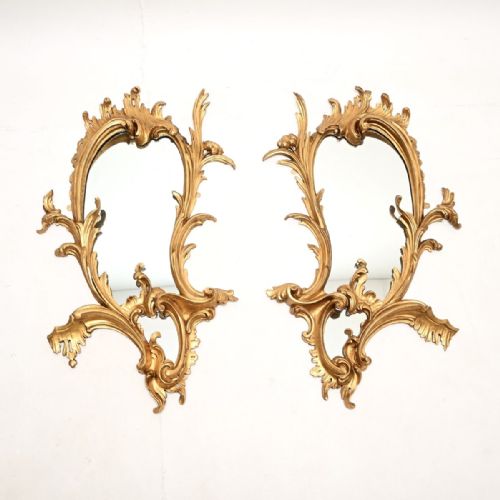
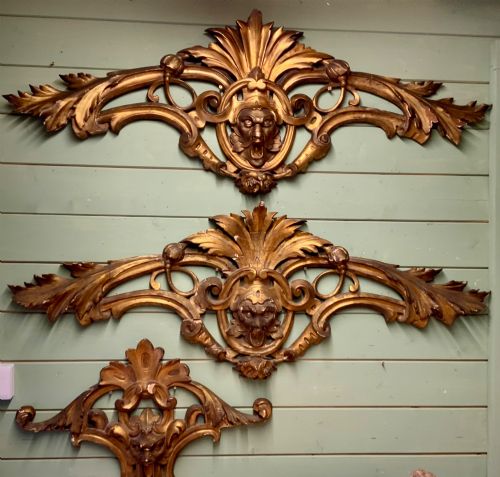
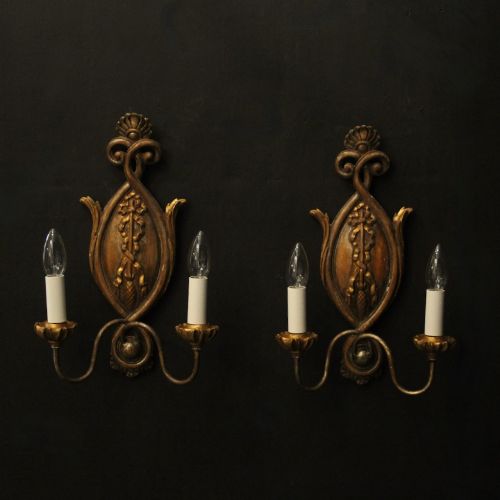
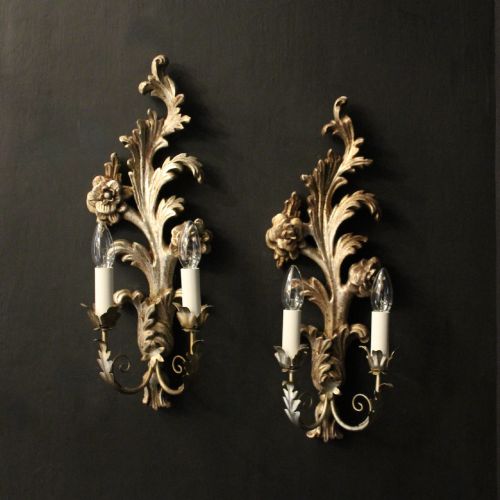


Carved Wood Appliques
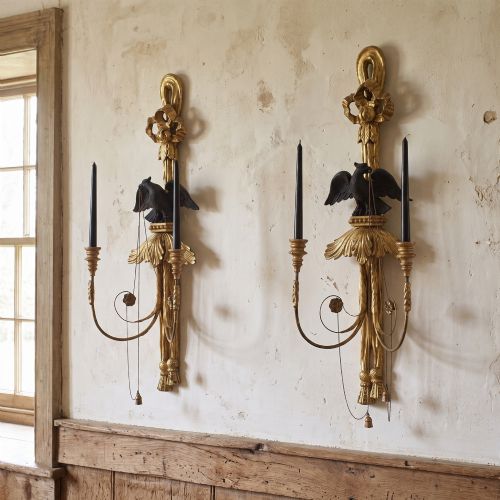
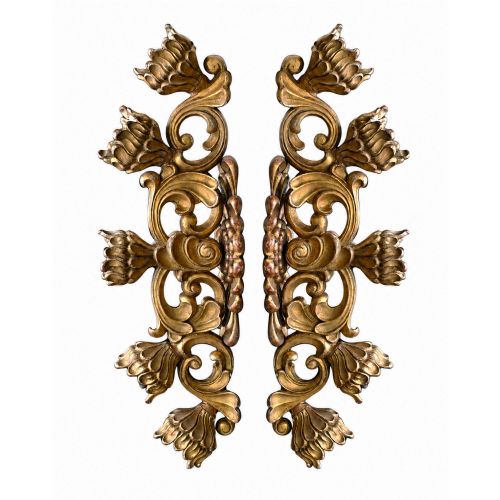
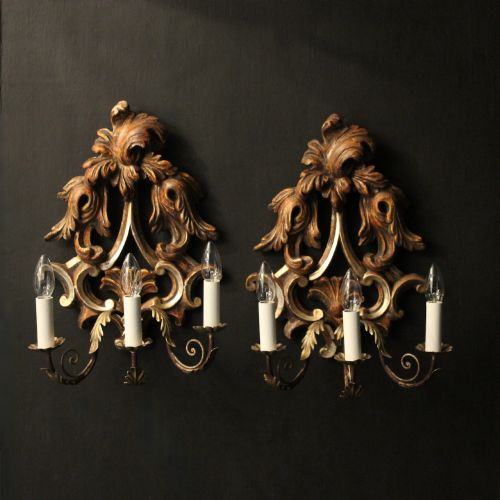
These carved wood appliques bring architectural depth to an interior, functioning primarily as decorative wall lights, sconces, and carved panels.
Carved Wood Appliques
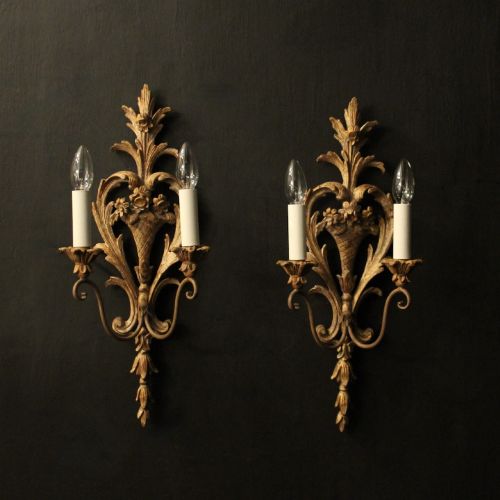
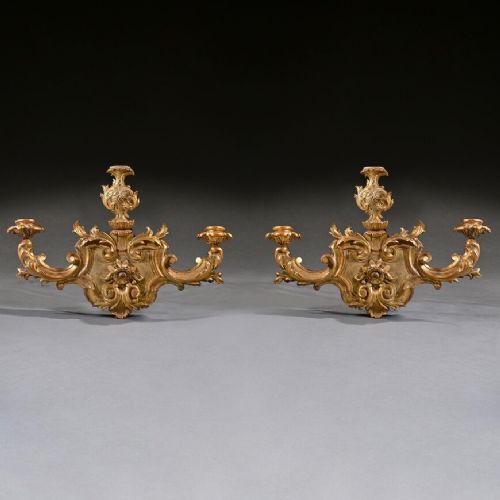
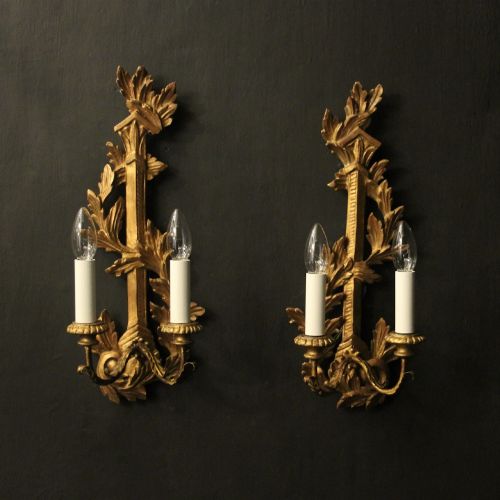
Carved wood appliques span a chronological range from the seventeenth century through to the early decades of the twentieth century, taking the form of wall lights, sconces, architectural salvage, carved panels, and ceiling bosses. Buyers searching this phrase will find that Italian and French pieces dominate the selection, often rendered in Florentine Rococo, Italian Baroque, or French Neoclassical styles.
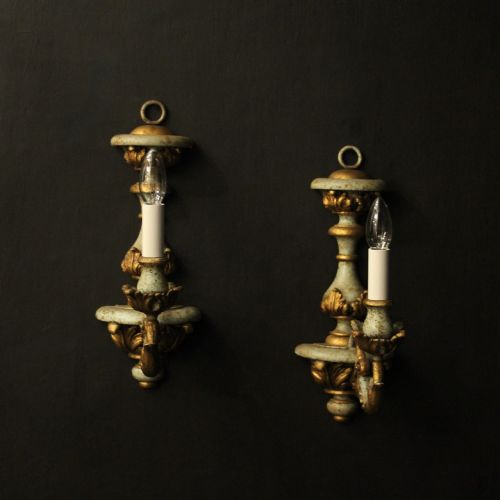
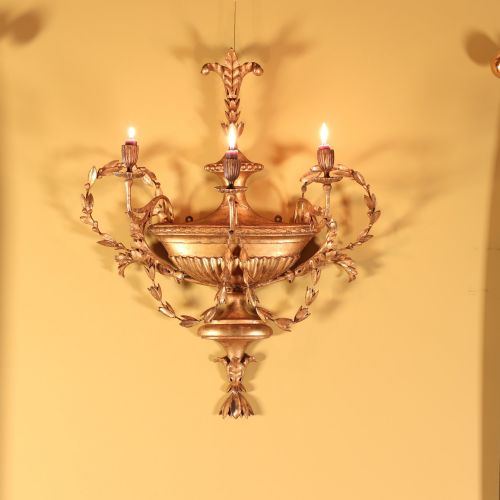
The most common survival from this group is the giltwood wall light or sconce, frequently encountered in pairs or larger sets dating from the nineteen-twenties and nineteen-thirties. These functional decorative elements frequently incorporate arms for multiple candles or electric bulbs alongside traditional wall-mounted carvings.
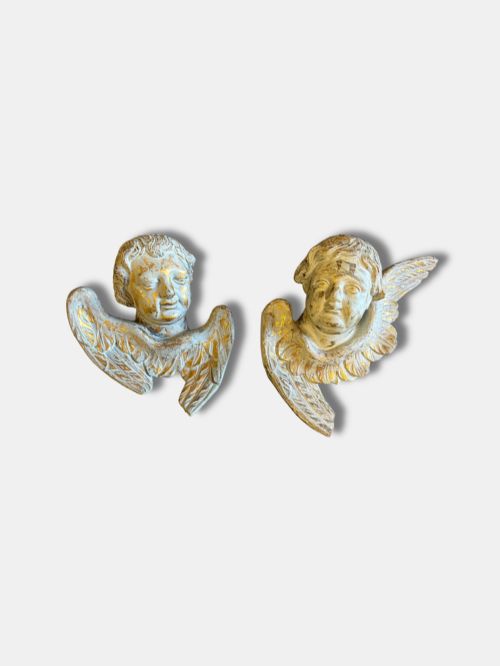
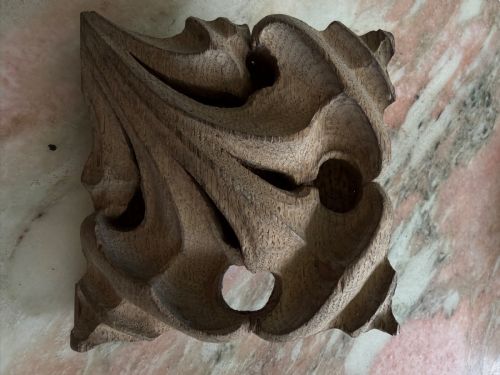
Earlier examples shift from lighting fixtures toward architectural fragments, ceiling panels, and terminal figures carved from oak, limewood, or fruitwood. Pieces span several centuries, including distinct groups from the eighteenth century featuring gesso work and pierced leaf motifs.
How they were made
Carved wood appliques rely primarily on solid timbers such as oak, limewood, and fruitwood, shaped by hand with chisels and gouges before receiving surface decoration. Artisans applied layers of gesso to smooth grain irregularities and provide a stable base for subsequent gilding.
Gilding techniques involve the application of gold leaf or silver leaf over bole, creating a reflective metallic finish that catches interior light. Polychrome finishes also appear, using applied pigments on wood to introduce colour to floral, figural, and architectural subjects.
Carved Wood Appliques Retail Price Guide 2026
Typical asking prices for carved wood appliques among the pieces listed under this phrase on Sellingantiques today, from the lower quarter to the upper quarter. They describe what is for sale here now, not the wider market.
The inventory includes carved wood appliques spanning the seventeenth, eighteenth, nineteenth, and twentieth centuries, utilising giltwood, gesso, metal, iron, and polychrome finishes.
What varies in quality
The quality of carved wood appliques rests upon the crispness and depth of the initial carving, where deep undercut details and expressive figural work demonstrate superior craftsmanship. Softer, shallower relief indicates a more commercial output or later reproduction work.
The integrity of the surface preparation and gilding separates exceptional pieces from standard examples, as genuine gold leaf retains a warmer lustre than base metal alternatives. The preservation of original polychrome or gesso surfaces without extensive modern overpainting remains central to the integrity of each piece.
Thomas Chippendale
The Carved Wood Appliques Glossary
- Applique
- A decorative element applied to a surface, such as a wall or panel, which in lighting terms refers to a wall-mounted sconce or bracket. These items project outward to hold candles or electric fittings.
- Giltwood
- Timber that has been coated with gold leaf or powdered gold over a prepared gesso ground. This technique creates a durable, luminous finish characteristic of decorative wall lights and mirrors.
- Gesso
- A plaster-like mixture applied to wood surfaces to create a smooth base for gilding or painting. It allows craftsmen to carve fine details into the preparation layer before applying metal leaf.
- Ceiling Boss
- A projecting block of carved wood placed at the intersection of ceiling ribs or beams. Examples in these listings feature pierced leaf and Tudor rose designs.
- Polychrome
- The practice of decorating wood surfaces with multiple colours of paint. This finish frequently highlights carved fruit, floral motifs, and figures on Italian and French wall lights.
Carved Wood Appliques: Frequently Asked Questions
How were carved wood appliques used?
These pieces functioned primarily as wall lighting fixtures or decorative architectural ornaments within grand interiors. They held candles to illuminate rooms while adding sculptural relief to plain walls.
Over time, many of these fixtures were adapted for electricity while retaining their original decorative purpose. Architectural fragments and panels served as ornamental details above doorways or within wall panelling.
How do I install wall sconces safely?
Installation requires securing the wooden backplate directly to wall studs or utilising appropriate wall anchors to support the weight of the timber and metal arms. Professional mounting ensures the fixture remains stable.
Wiring older lighting components demands an inspection by a qualified electrician to meet modern safety standards. Many vintage sconces arrive ready for rewiring or require conversion from old candle tubes.
How do I tell eighteenth century pieces apart?
Eighteenth century pieces typically display hand-carved joinery, heavier timber foundations, and traditional gesso preparation beneath genuine gold or silver leaf. Close inspection of the tool marks reveals hand-chiselled depths absent in later machine-milled items.
Stylistic cues such as Florentine Rococo or George III proportions provide reliable dating indicators when compared against standardised twentieth-century reproductions.
How should I clean gilded wood?
Gilded surfaces require gentle dusting with a soft, dry brush to prevent the delicate gold or silver leaf from lifting. Moisture and chemical cleaners damage the underlying gesso and metal leaf.
Preserving the original finish means avoiding abrasive cloths or polishes entirely. Regular, careful maintenance protects the historical patina of antique wall lights.