

Pair Candle Wall Appliques
These pair candle wall appliques bring symmetry and candlelight to a room, drawn largely from French workshops of the nineteenth and early twentieth centuries.
Pair Candle Wall Appliques
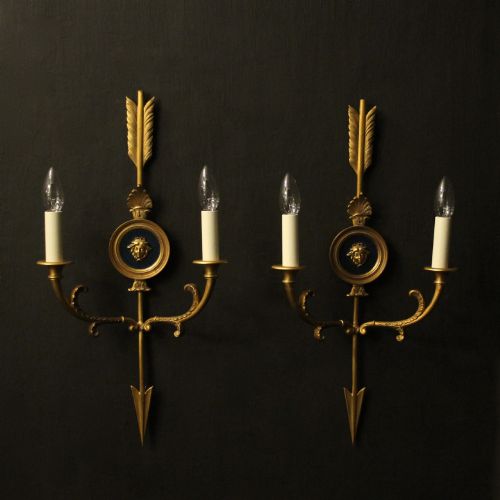
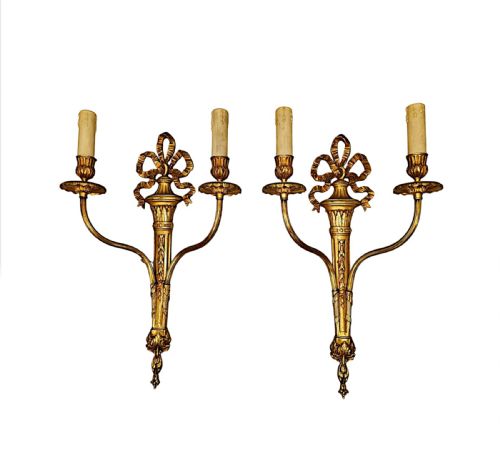
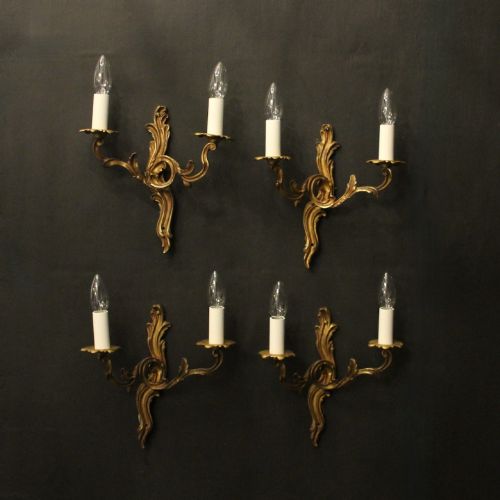
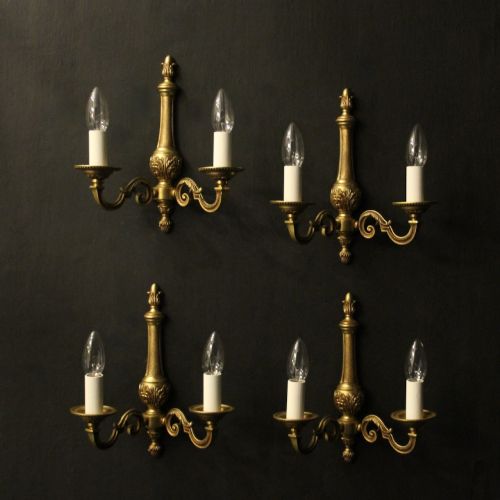
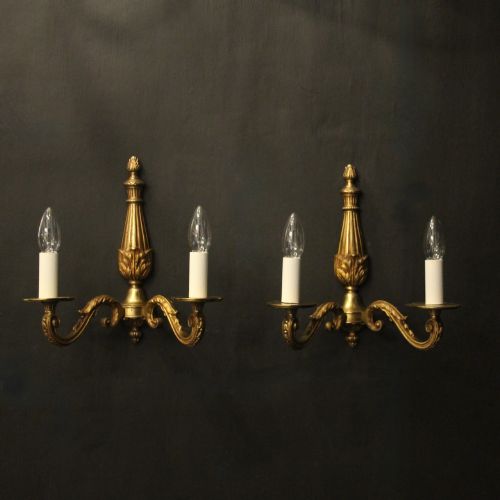
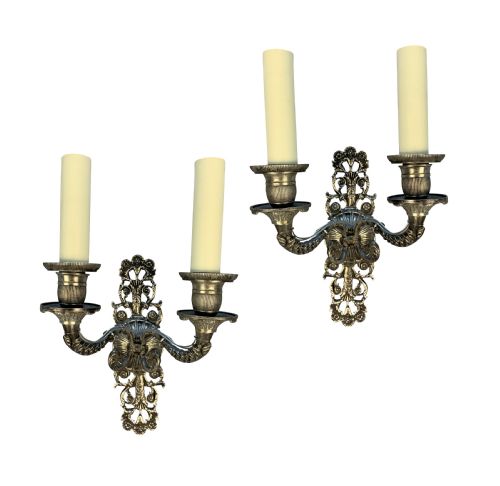
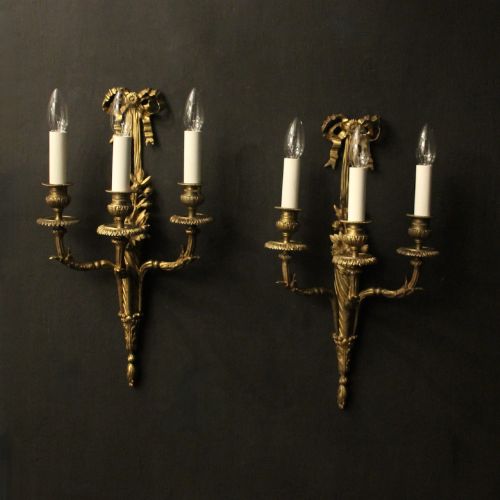
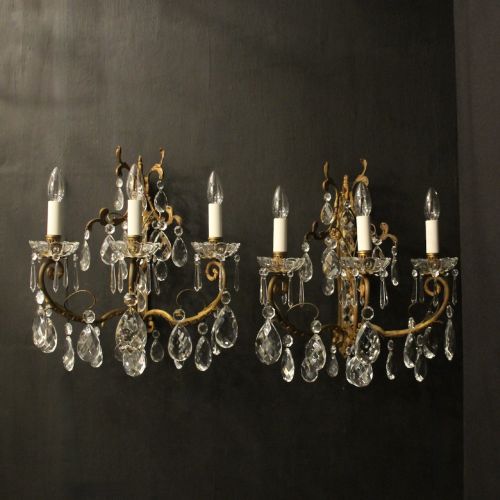
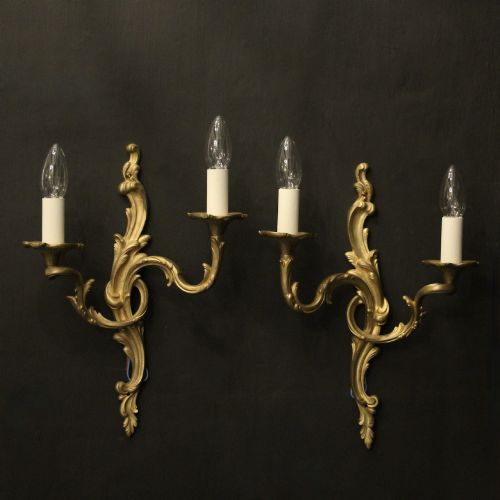
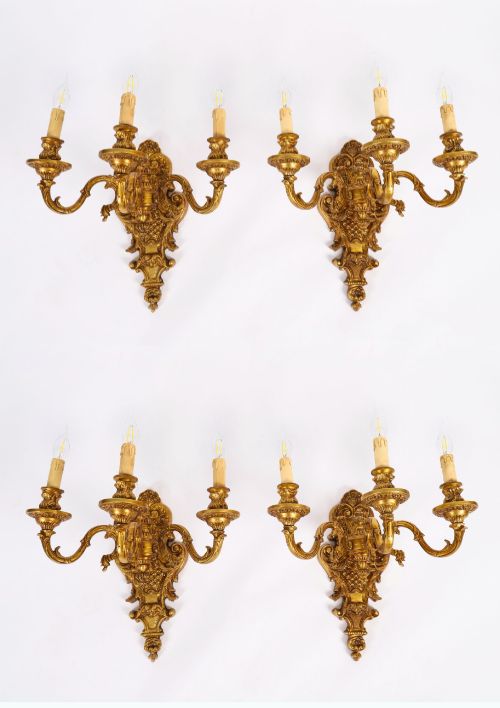
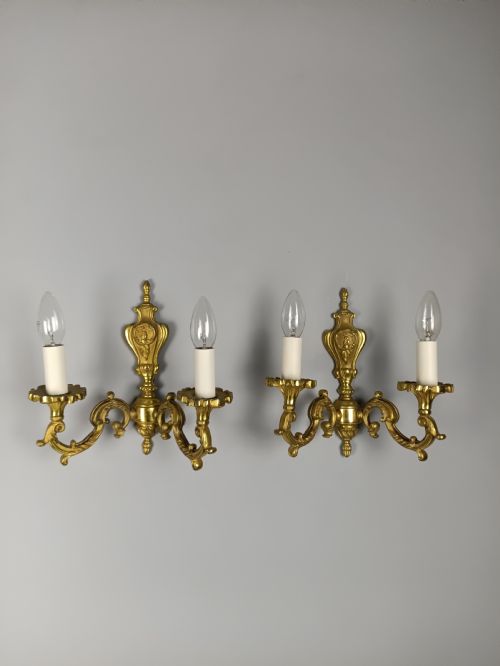
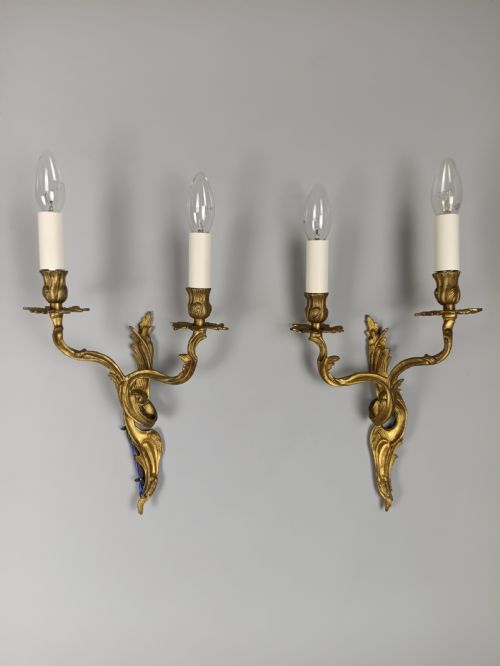
A pair candle wall appliques search reveals matching sets of wall-mounted light fittings designed to hold candles, appearing frequently as twin-arm or triple-arm fixtures. These pieces originate heavily from French traditions, spanning styles from Rococo and Empire to Louis XVI and Neoclassical.
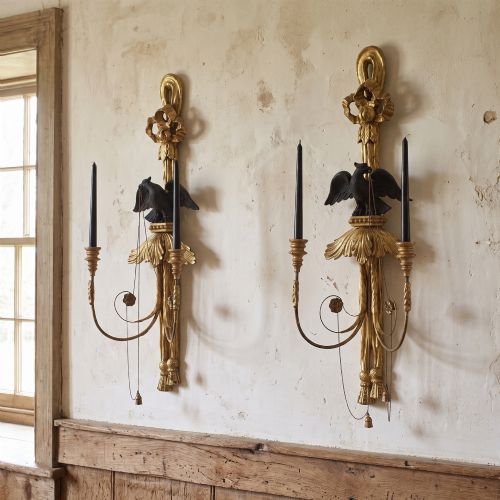
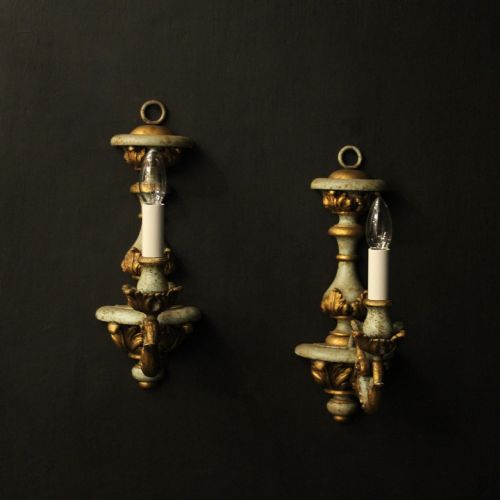
Makers produced these wall lights in configurations ranging from single arms to large multi-branch appliques and half lanterns. Materials lean towards cast metals finished with gilding, alongside carved giltwood variants from Italy and England.
Buyers encounter examples dated from the eighteenth century through to the 1930s, with early twentieth-century interpretations dominating the selection.
How they were made
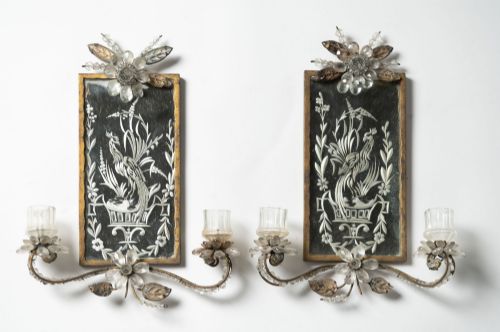
Foundry workers cast bronze, brass, and ormolu into intricate scrollwork, ribbons, and cherub motifs before applying surface gilding or silver plating. Carved wooden examples utilise giltwood construction, sometimes paired with porcelain elements or crystal drops.
Assembly involved joining multiple cast arms to backplates designed for secure wall attachment, integrating drip pans and candle nozzles into the overarching decorative scheme.
Several pairs incorporate delicate porcelain flowers and cheeky cherubs into their candle arms, ensuring your wall illumination comes with a side of botanical mischief.
What varies in quality
Quality rests upon the crispness of the metal casting and the depth of the hand-chased detail visible across the scrollwork and figural ornaments. Finer examples display meticulous finishing that preserves sharp edges and convincing textures in the gilded surfaces.
The weight of the metal and the structural integrity of the arm joints distinguish superior pieces from simpler commercial output, alongside the cohesion of the stylistic references to historical periods.
Maison Baguès
The Pair Candle Wall Appliques Glossary
- Applique
- A wall-mounted light fixture or sconce designed to hold candles or electric bulbs. These fixtures typically project from the wall on decorative brackets.
- Ormolu
- Gilded bronze produced by applying a mercury and gold amalgam to a bronze base. This technique creates a rich golden finish characteristic of French decorative arts.
- Giltwood
- Timber, usually gessoed and carved, coated with a thin layer of gold leaf. It appears frequently in Italian and English wall sconces from various periods.
- Rococo
- An ornate design style marked by asymmetrical scrollwork, C-curves, and naturalistic plant motifs. It heavily influences nineteenth-century French wall lights.
- Empire
- A neoclassical style inspired by ancient Roman and Greek forms, featuring symmetrical lines and military motifs. Pieces in this manner often incorporate classical urns and laurel wreaths.
Pair Candle Wall Appliques: Frequently Asked Questions
How do I install these wall lights?
Most appliques mount directly to wall studs or anchors via a backplate behind the central bracket. Ensure the wall structure can support the weight of cast bronze or carved wood.
Consult a qualified electrician if wiring is required, or use them solely with candles as originally intended.
Are these wired for electricity?
Many surviving pairs retain their original candle-holders or have been adapted for electrical wiring at various points in their history. Conversion methods vary widely among individual pieces.
Inspect the internal fitting of each arm to determine whether it accommodates candles or wired sleeves.
How do I clean gilded bronze?
Dust gently with a soft, dry brush to prevent accumulation in the recessed chasings of the metal. Avoid harsh commercial cleaning agents that strip surface gilding.
Professional conservation care is recommended for fragile or heavily tarnished surfaces.
What rooms suit wall appliques best?
Pairs function effectively flanking mirrors, fireplaces, or doorways to create balanced ambient illumination. Their symmetrical designs anchor wall spaces in living areas and hallways.
Consider the projection from the wall to ensure clearance in narrow corridors or beside furniture.
How do I identify Louis XVI style?
Louis XVI pieces rely on geometric symmetry, straight lines, and classical motifs like urns and ribbons. This style contrasts with the flowing, asymmetrical curves typical of earlier Rococo designs.
Look for architectural proportions and crisp leaf-tip carvings on the backplate.