
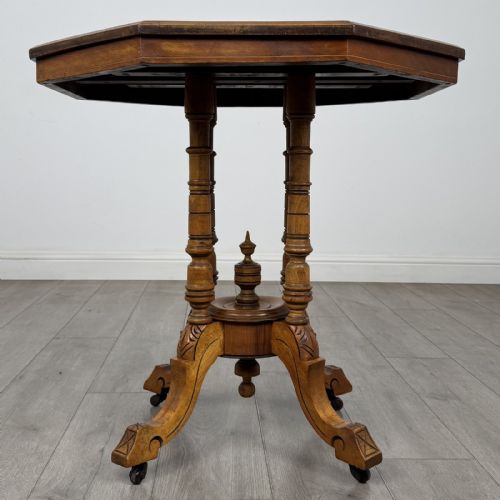
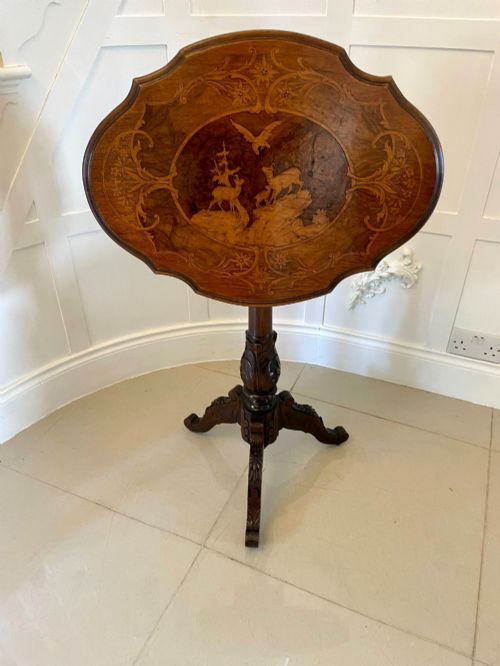
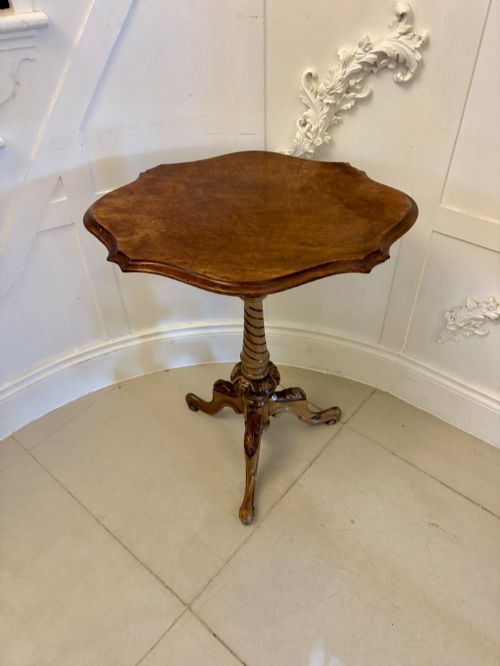
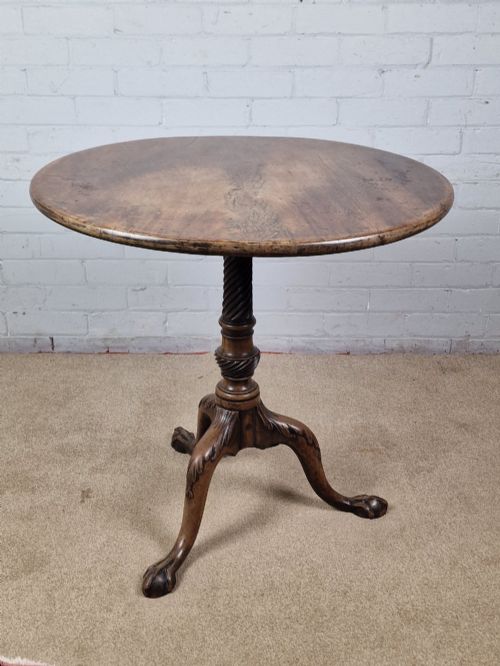
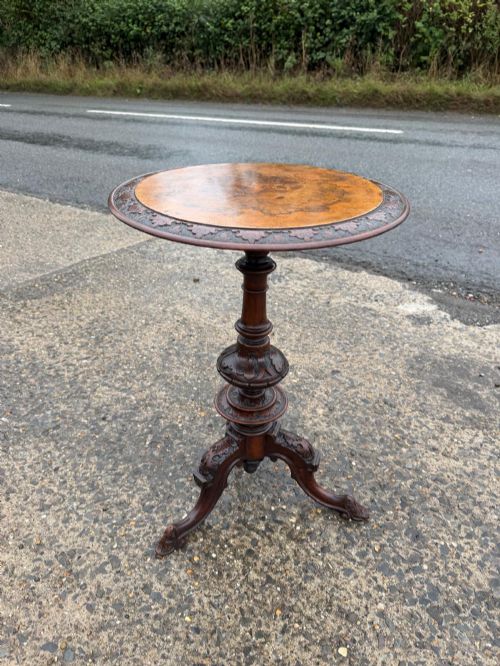
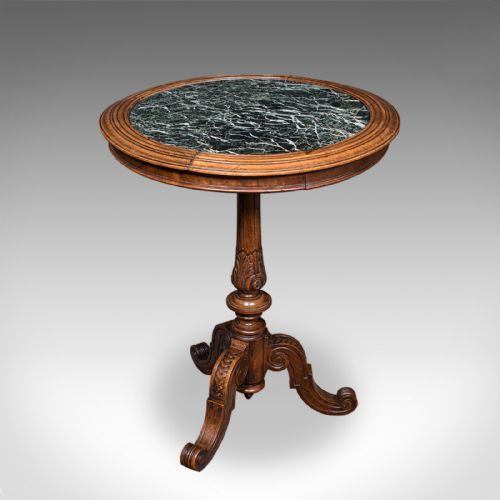
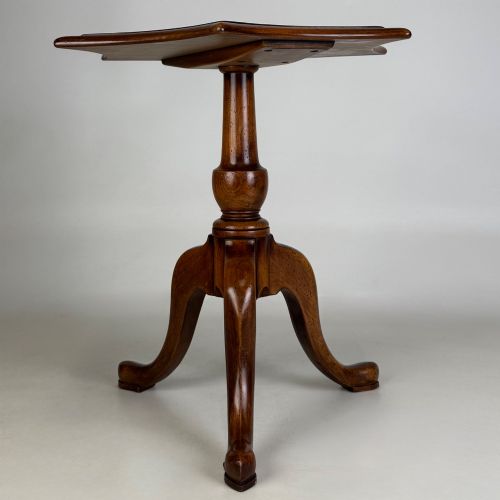
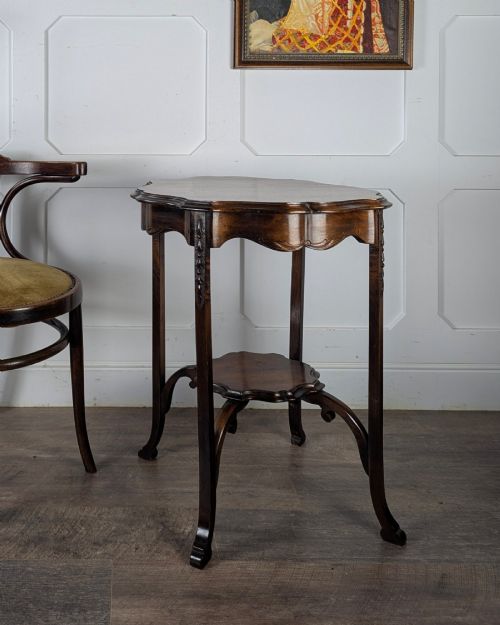
Carved Walnut Wine Table
These carved walnut wine tables combine compact proportions with rich timber, offering a functional surface for drinks or lighting.
Carved Walnut Wine Table
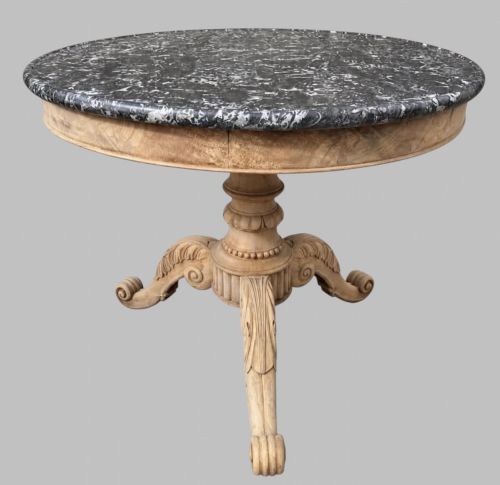
A carved walnut wine table provides a small, elevated surface designed for drinks, lamps, or decorative display in a room. These pieces appear most frequently in Victorian and nineteenth-century forms, often featuring circular or shaped tops supported by a central pedestal and tripod base.
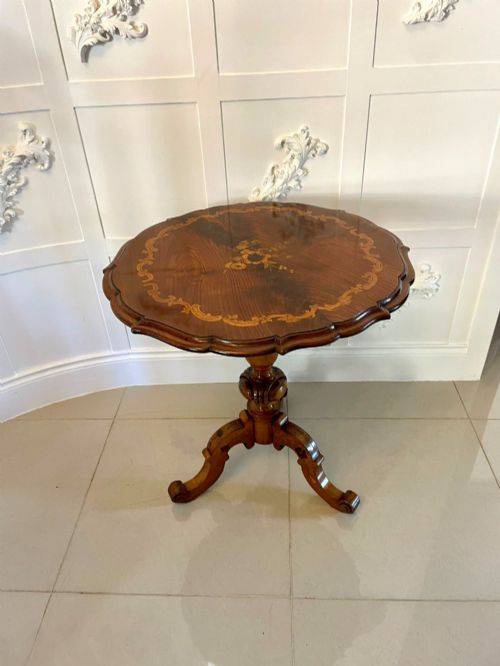
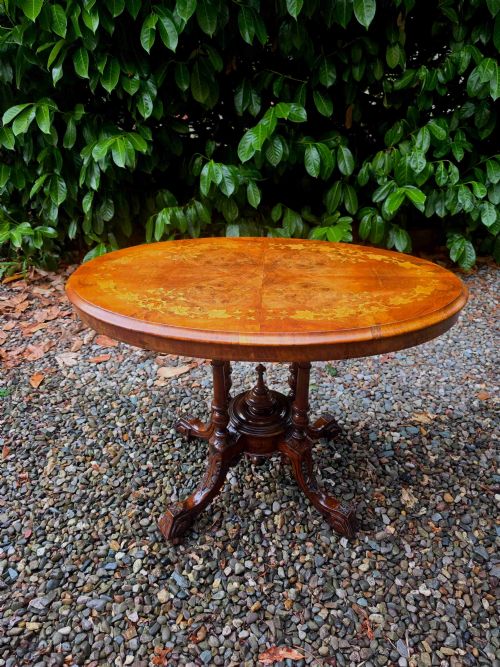
The selection ranges from simple tilt-top examples to pieces enhanced with marquetry inlay, pie crust edges, or barley twist columns. Makers across England, France, Italy, and Ireland produced these tables in various configurations, including occasional and lamp table variants.
Buyers find both straightforward domestic furniture and more decorative continental interpretations, spanning periods from the eighteenth century through to the Edwardian era. The underlying timber varies from plain walnut to figured burr walnut surfaces.
How they were made
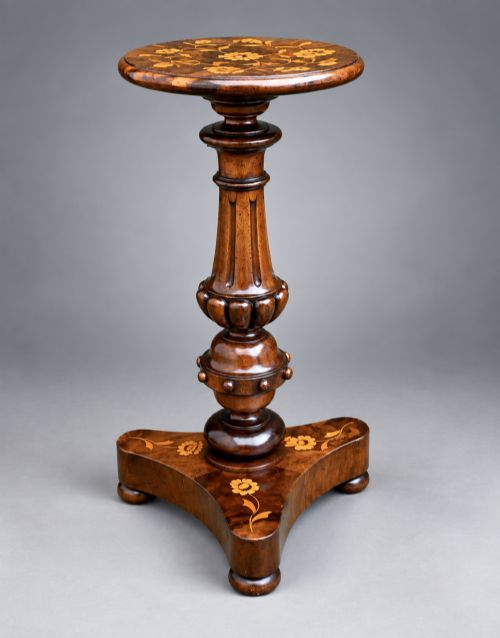
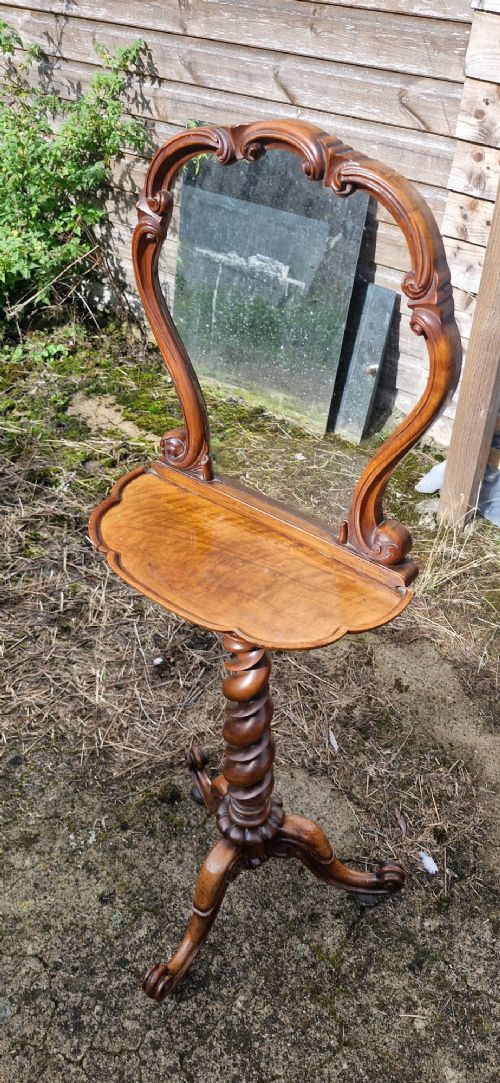
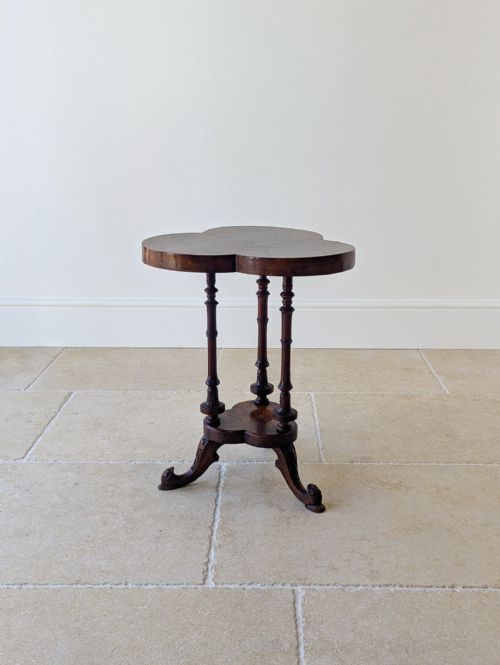
Cabinet makers utilised solid walnut and figured burr walnut veneers applied to secondary timbers, shaping tops with moulded or carved pie crust borders. Pedestals frequently employ turned tripod legs, sometimes featuring barley twist columns or detailed carving.
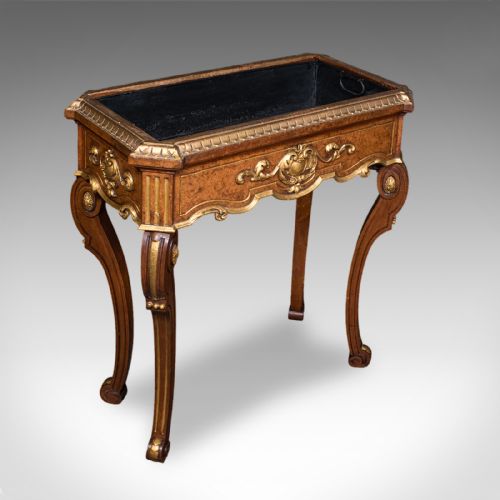
Surface decoration incorporates marquetry inlay, specimen woods, and occasional gilt bronze mounts or brass fittings. Tops are constructed to be fixed or to tilt via hinged mechanisms, supported on three-legged bases for stability.
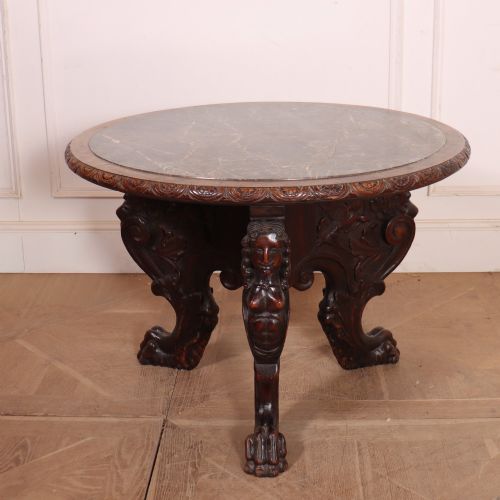
Listings feature walnut, burr walnut, and mahogany timbers, alongside marble inserts and brass mounts across nineteenth-century periods.
What varies in quality
The standard of carving and the selection of timber dictate the distinction between basic and superior pieces. Finer examples display deeply carved tripod legs and intensely figured burr walnut veneers with precise marquetry inlay.
Construction integrity in the pedestal joint and the smoothness of any tilt-top or swivel mechanism indicate the original workshop's competence. Tables retaining their original French polished surfaces and balanced proportions command greater appreciation.
Liberty's
The Carved Walnut Wine Table Glossary
- Burr walnut
- A highly figured timber veneer taken from the warted growth of a walnut tree, prized for its swirling grain patterns. It forms the decorative top surface on many finer nineteenth-century occasional tables.
- Tilt top
- A tabletop mounted on a catch and hinge mechanism that allows the surface to fold vertical when not in use. This clever design saved space in period interiors.
- Pie crust edge
- A raised, carved moulding around the perimeter of a circular tabletop, shaped in subtle undulations resembling pastry crust. It requires skilled hand carving.
- Tripod base
- A support structure comprising three legs radiating from a central turned pedestal. This configuration prevents rocking on uneven floors.
- Marquetry inlay
- The art of applying small pieces of veneer to form decorative pictures or geometric patterns. Walnut tables often use contrasting lighter and darker woods for this detail.
Carved Walnut Wine Table: Frequently Asked Questions
What is a carved walnut wine table used for?
These tables served historically to hold wine glasses and decanters beside seating during social gatherings. Today, they function effectively as lamp tables or occasional surfaces in sitting rooms and hallways.
Their compact scale allows them to fit easily into corners or beside armchairs without dominating the floor space.
How do I identify a Victorian walnut wine table?
Victorian examples typically date between eighteen thirty and nineteen hundred, showing rich walnut or burr walnut timbers. Look for characteristic turned pedestals, tripod bases, and decorative elements such as carved borders or inlay.
Construction details like hand-cut joints and older screw fixings help confirm the nineteenth-century period.
What does a tilt top mechanism do?
The tilt top mechanism allows the circular surface to pivot ninety degrees vertical via a brass or wooden catch. This enabled servants to store the tables flat against walls when rooms needed to be cleared.
In modern homes, a tilt top offers an interesting focal point when the decorative wood grain on the underside is visible.