


Carved Walnut Throne Chair
A carved walnut throne chair commands a room through heavy timber and soaring backs, bringing centuries of regal presence into a modern interior.
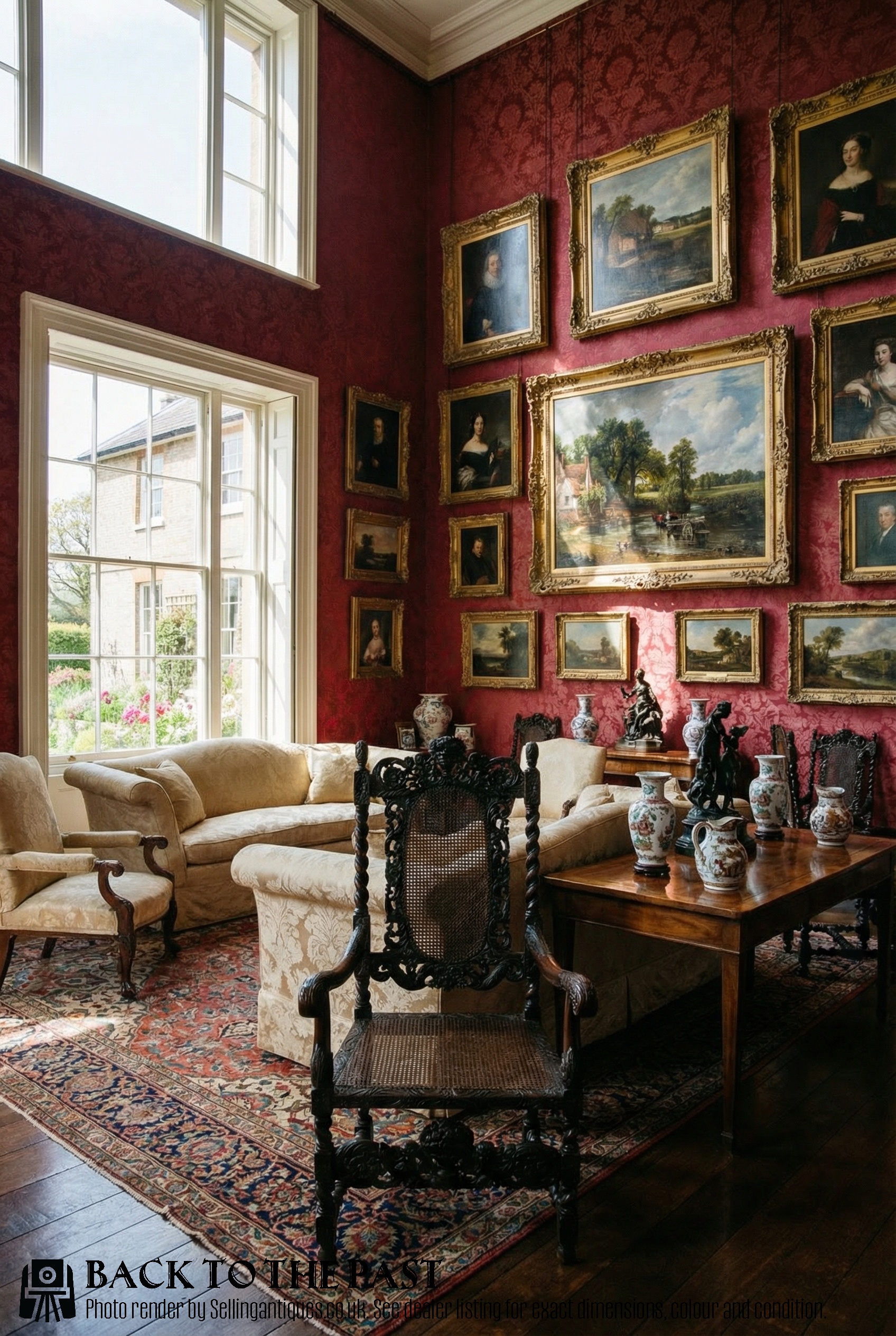
Carved Walnut Throne Chair
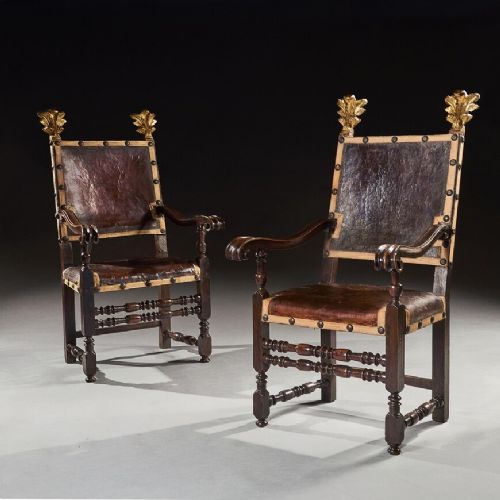
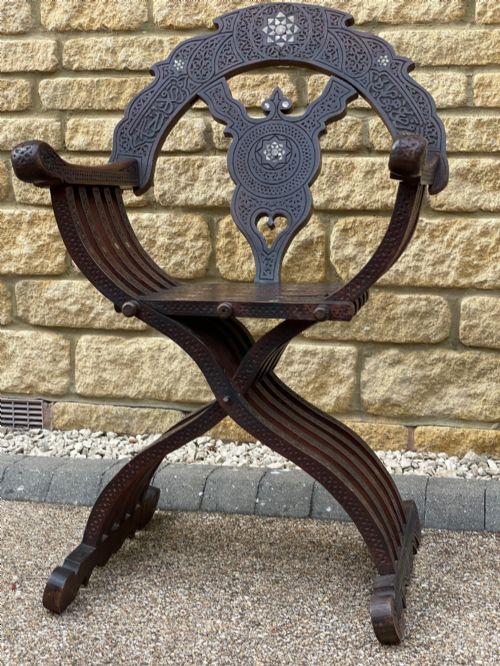
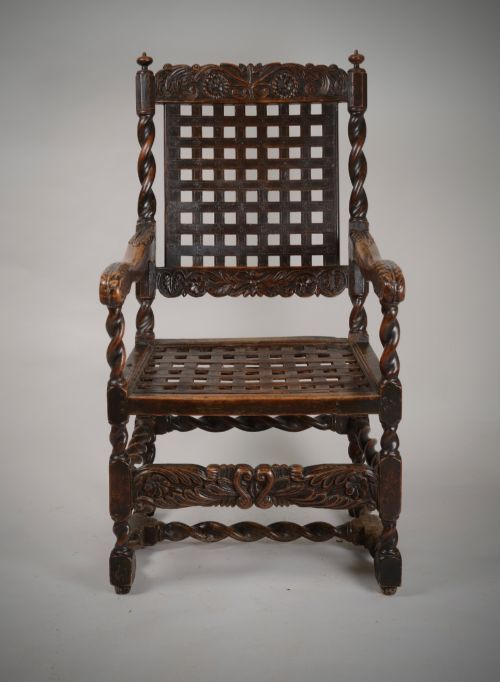
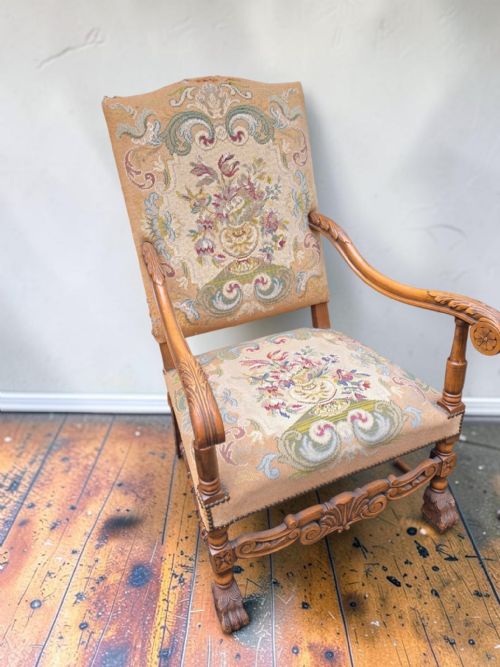
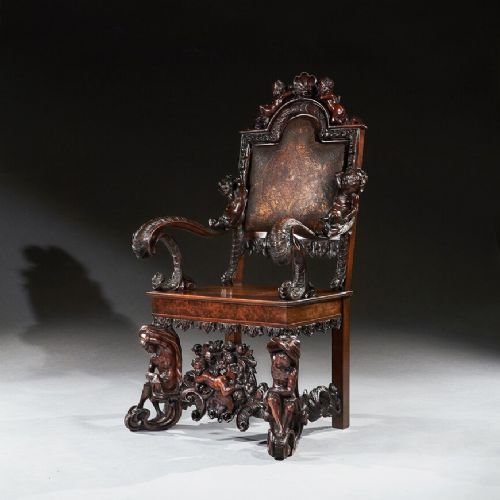
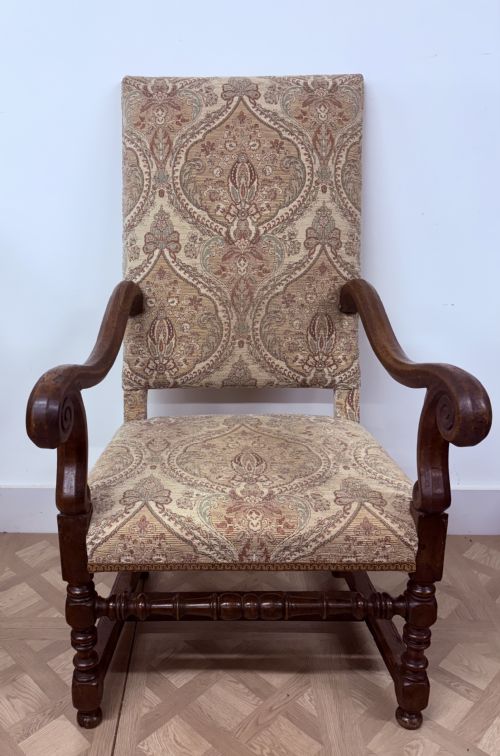
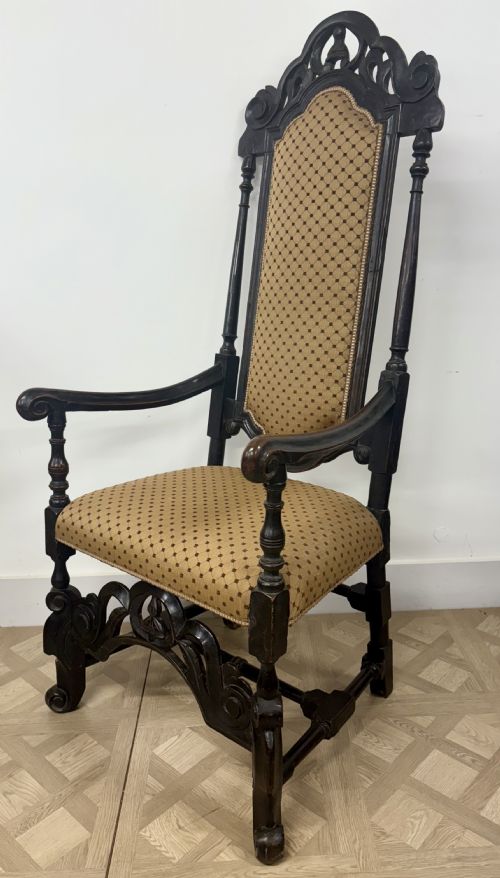
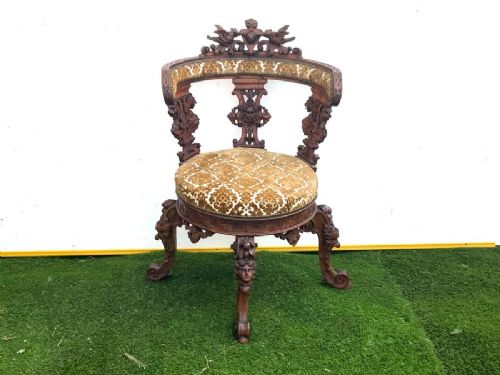
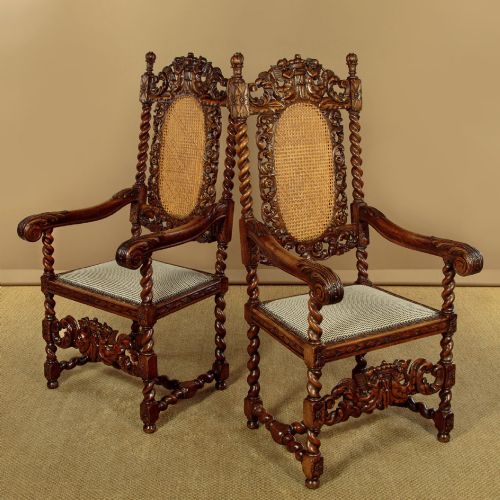
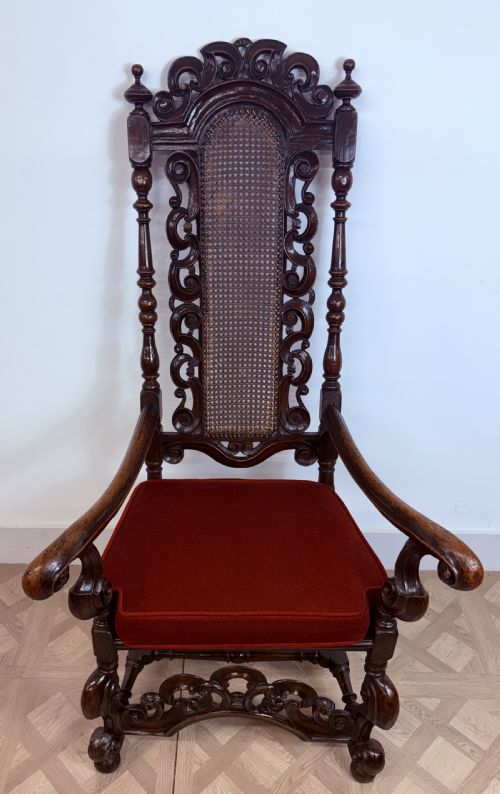
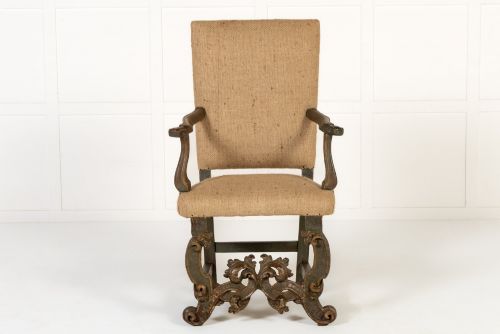
A carved walnut throne chair is an imposing seat designed to dominate an interior, drawing on centuries of historical forms from Italian Baroque to English Carolean styles. Buyers searching for this phrase seek grand seating characterised by high backs, heavy timber frames, and extensive ornamentation. The pieces met on this page span several eras, with 17th century originals sitting alongside 19th century revival interpretations and 1900 examples.
How They Were Made
Construction relies heavily upon solid walnut timber, chosen for its strength, rich grain, and suitability for deep, intricate carving. Artisans shaped the wood using traditional joinery, often augmenting the structural framework with parcel-gilt highlights, brass details, or mother of pearl inlay. Some pieces utilise secondary timbers like beech alongside the primary walnut.
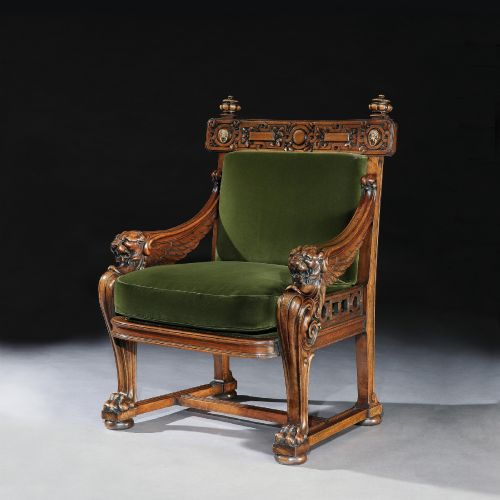
Surface decoration depends on skilled hand-chiselling, producing high-relief figures, scrollwork, monopodia, and botanical motifs. Upholstered elements incorporate traditional textiles such as tapestry, leather, velvet, and cane, secured by hand or replaced during later periods of use.
Carved Walnut Throne Chair Retail Price Guide 2026
Typical asking prices for carved walnut throne chair among the pieces listed under this phrase on Sellingantiques today, from the lower quarter to the upper quarter. They describe what is for sale here now, not the wider market.
Several armchairs are ready for coronations, though a royal decree is not included in the delivery.
What Varies in Quality
The distinction between ordinary and exceptional examples lies in the depth and ambition of the timber carving. Master carvers produced figures, scrolls, and relief work with sharp undercutting and lively expression, whereas lesser pieces show shallower, mechanical detailing. The integrity of the walnut frame and the historical accuracy of the revival style also dictate the standing of a piece.
Original 17th century construction commands attention for its age and period joinery, while top-tier 19th century exhibition pieces achieve greatness through sheer sculptural bravura, such as work after Andrea Brustolon or Thomas Hope. The choice of covering materials, whether original tooled leather, period tapestry, or later quality upholstery, further alters the character and balance of the chair.
Andrea Brustolon·Thomas Hope
The Carved Walnut Throne Chair Glossary
- Carolean
- A British style spanning the reign of Charles II, known for rich walnut frames, scrolled arms, and crown-and-thistle motifs. These pieces often feature high cane or upholstered backs.
- Monopodia
- A decorative furniture support ending in a single animal leg, claw, or paw. This classical motif appears frequently on revival armchairs influenced by designers like Thomas Hope.
- Fauteuil
- An open-armed French armchair with upholstered back and seat, exposing wooden arm supports and frame members. Walnut versions often display refined regional French carving.
- Caquetoire
- A sixteenth-century conversational armchair with a trapezoidal seat and tall, narrow back. These lighter seating forms allow for easy movement during social gatherings.
- Parcel-gilt
- Woodwork partially decorated with applied gold leaf to highlight specific carved details. This technique adds contrast against the dark grain of the walnut timber.
Carved Walnut Throne Chair: Frequently Asked Questions
What is a carved walnut throne chair?
A carved walnut throne chair is a substantial seating piece featuring a tall back and heavy wooden construction. These chairs draw on historical designs from the seventeenth and nineteenth centuries.
They serve as focal points in large rooms, libraries, and halls, offering both sculptural presence and practical seating.
How were throne chairs used historically?
Throne chairs were positioned in reception rooms, great halls, and audience chambers to elevate the status of the person seated. They marked authority during meetings, ceremonies, and formal gatherings.
Over later centuries, wealthy households placed them in libraries and entrance halls as decorative statements rather than everyday seats.
How do I live with a throne chair?
Living with a carved walnut throne chair requires giving the piece adequate floor space to showcase its proportions and high back. It works best as an anchor piece against a blank wall or in a large study.
Pairing the dark walnut timber with neutral surroundings lets the intricate carving and upholstery stand out without overwhelming the room.
How do I tell seventeenth-century pieces from nineteenth-century revivals?
Seventeenth-century originals display the natural wear, tool marks, and timber shrinkage expected from age and early construction methods. The joinery and wood density reflect period workshop practices.
Nineteenth-century revival pieces often feature heavier, highly theatrical carving executed during historical revivals, sometimes adopting exhibition quality finishes or incorporating specific designer influences.