
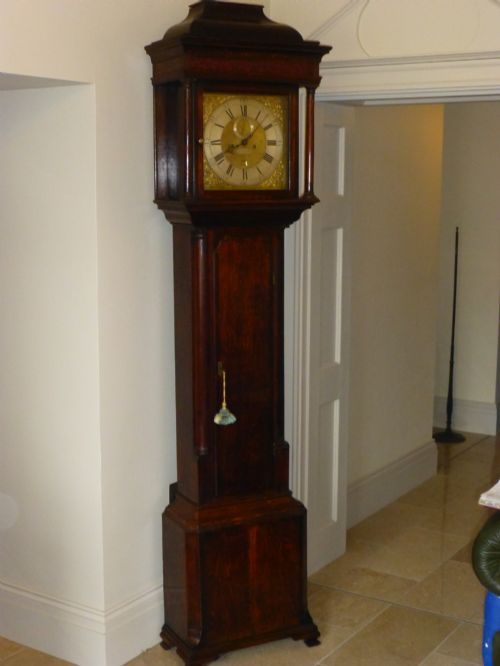


Carved Walnut Longcase Clock
A carved walnut longcase clock brings architectural presence and precision engineering into a room, uniting centuries of cabinetmaking and horology.
Carved Walnut Longcase Clock
When you search for a carved walnut longcase clock, you seek a tall floor-standing timepiece that combines functional movement with sculptural woodwork. These pieces stand as significant vertical furniture, housing weights and a pendulum within a protective wooden case. Surviving examples reflect historical periods from the seventeenth and eighteenth centuries, alongside later revivals.
The versions you are most likely to meet on this page span the 17th Century, 18th Century, and Georgian eras, often incorporating burr walnut veneers alongside solid oak and walnut timbers. Dial sizes and case proportions vary, ranging from substantial London-made eight-day movements to more modest regional productions and miniature interpretations from 1890. Each piece demonstrates the enduring appeal of figured timber combined with intricate dial work in brass and steel.
Makers from London and provincial towns such as Stockport, Nantwich, and Norwich signed these dials, linking regional craftsmanship with metropolitan standards. Whether built during the George II period or constructed in a 17th century style, the longcase clock functions as both an accurate timekeeper and a dominant interior focal point. Buyers select them for their combination of mechanical complexity and rich timber patination.
Factors That Distinguish Quality
The refinement of the carving and the selection of the timber dictate the visual standing of each piece. Finely figured burr walnut veneer carefully matched across the trunk door indicates superior cabinetmaking compared to plain or heavily restored surfaces. Furthermore, the crispness of engraved details on the brass dial and the reputation of the maker elevate the standing of the clock.
Structural integrity and the retention of original components separate top-tier examples from heavily altered ones. A case that maintains its original proportions, feet, and hood mouldings alongside a movement bearing the signature of a recorded maker represents the highest standard of historic horology. Minor adjustments are common in centuries-old machinery, but harmonious integration between movement and case remains paramount.
Every longcase clock houses a hidden heartbeat, keeping rhythmic time with a swinging pendulum that has outlived empires.
Richard Corless of Stockport·Edin Burgis of London·Edward East·Samuel Young Nantwich·Edward Stanton·John Harrington London·Joseph Windmills London·Joseph Oxley Norwich
The Carved Walnut Longcase Clock Glossary
- Longcase clock
- A tall, weight-driven pendulum clock enclosed in a wooden case, commonly referred to as a grandfather clock. These floor-standing pieces protect the delicate internal movement while serving as prominent domestic furniture.
- Burr walnut
- A specialised timber cut from walnut tree growths, producing swirling, highly decorative grain patterns. Makers prized this material for veneering the most visible surfaces of fine cabinetry.
- Chapter ring
- The metal ring on a clock dial that displays the hour and minute numerals. It is frequently silvered and engraved to stand out against the matted or polished brass dial plate.
- Movement
- The internal mechanical assembly of gears, springs, weights, and escapements that drives the clock hands and strikes the hours. Makers signed their names directly onto the brass dial plates attached to these mechanisms.
- Hood
- The upper removable section of a longcase clock that encloses the dial and movement, often featuring glazed side panels and carved mouldings. It lifts off or opens forward to allow access to the clock face.
Carved Walnut Longcase Clock: Frequently Asked Questions
How do I wind an 8 day clock?
You insert the winding key into the holes on the dial face and turn it gently until the weights rise to the top of the case. Care must be taken not to overwind the mechanism.
Most eight-day movements require this attention once a week to maintain accurate timekeeping and ensure the striking train functions properly.
Where should I place a longcase clock?
You should position the clock on a stable, level floor against a solid interior wall away from direct sunlight and temperature fluctuations. Wood and old mechanisms react poorly to damp environments.
Securing the tall case to the wall using a discreet bracket prevents accidental tipping, particularly on historic uneven flooring.
How do I tell George II from earlier periods?
George II pieces often exhibit specific architectural details, such as flatter pediments and bolder mahogany or walnut veneers, aligning with mid-eighteenth-century design preferences. Earlier seventeenth-century examples tend to feature more austere rectilinear cases or rich marquetry and seaweed patterns.
Examining the dial construction, hand styles, and secondary woods inside the case helps clarify the production era.
Why do some clocks have oak bodies?
Makers used oak for internal framing and structural carcases because it offered exceptional strength and resistance to warping under the weight of the movement. Walnut was then applied as a fine veneer over this robust foundation.
This hybrid construction maximised stability while presenting a luxurious exterior appearance to the viewer.