

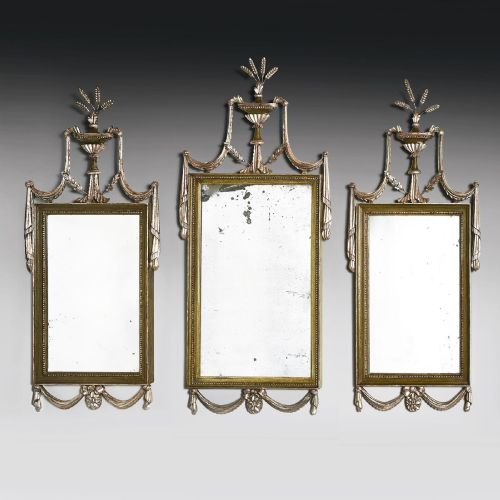


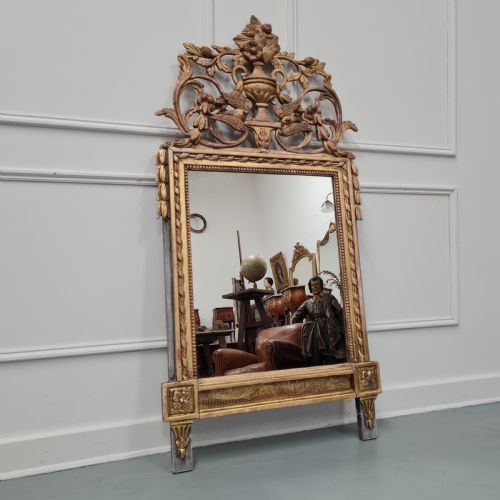


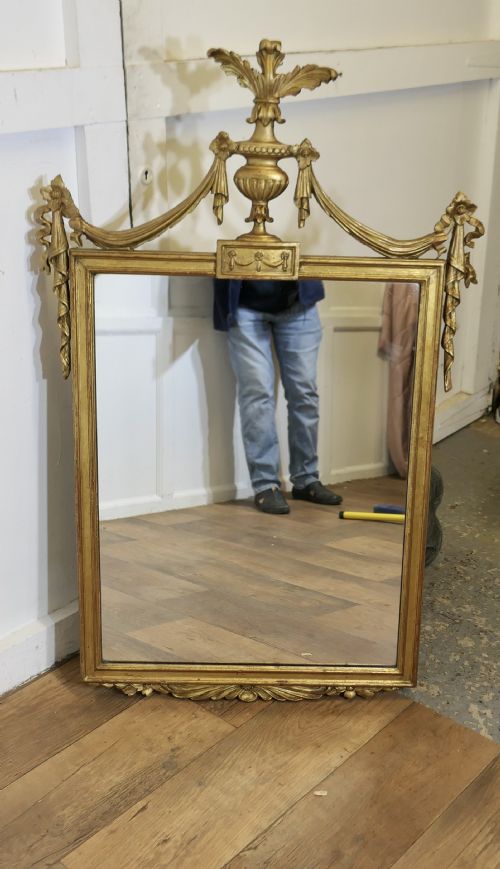
Carved Urn Mirror
A carved urn mirror brings classical balance to a room, offering refined symmetry through carved woodwork and gleaming glass.
Carved Urn Mirror
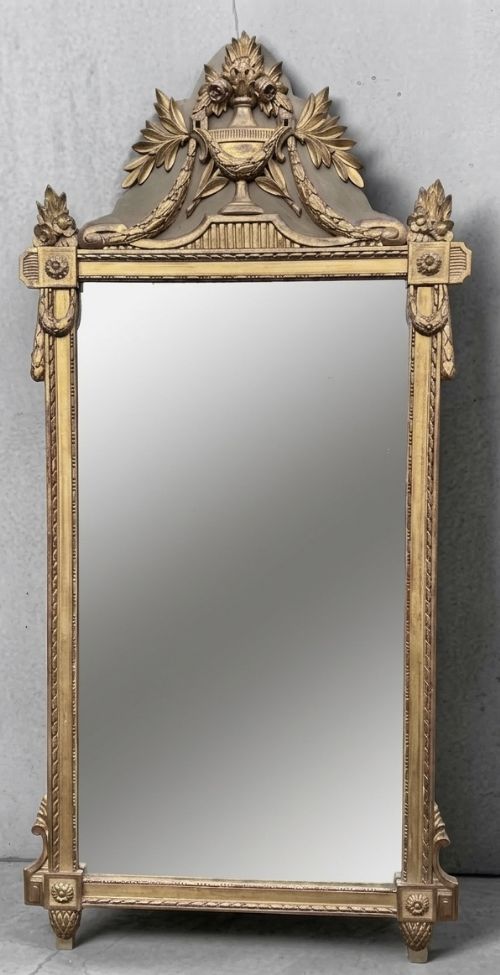
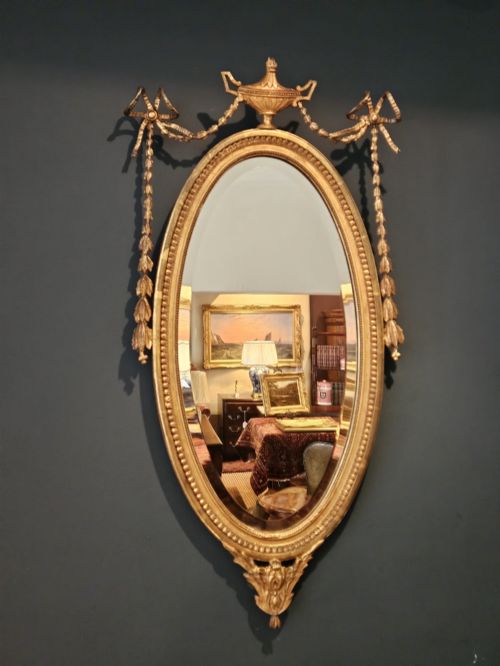
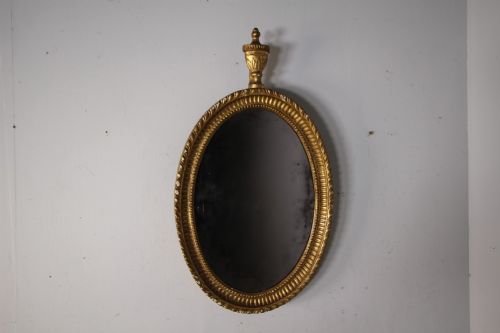
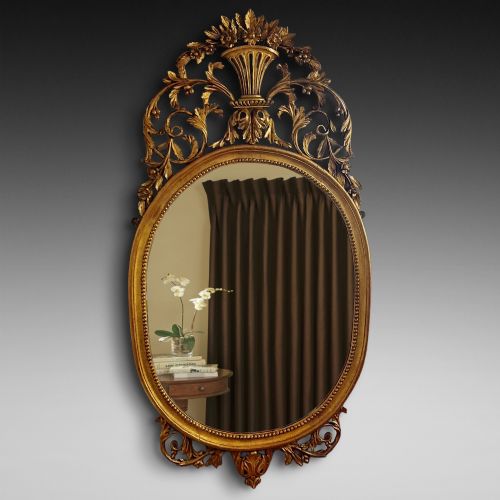
A carved urn mirror takes its name from the traditional motif surmounting the frame, usually executed in neoclassical or Adam revival styles. These pieces function primarily as wall mirrors, overmantel mirrors, or pier glasses designed to reflect light and anchor a room's decorative scheme.
The versions most common on this page span the eighteenth and nineteenth centuries, including Georgian origins and later revivals from the Edwardian era. Makers drew upon French chateau, Swedish Gustavian, and English neoclassical traditions to shape oval and rectangular glass plates within ornate timber frames.
Forms range from compact wall mirrors to large overmantels, occasionally accompanied by dressing tables. The unifying element across these objects is the carved ornamentation atop the frame, which lends a formal, architectural presence to domestic interiors.
How they were made
Craftsmen shaped these frames from solid timbers such as mahogany, oak, and rosewood, applying layers of gesso to build up intricate relief details before carving. Giltwood execution involved laying thin sheets of gold leaf over a prepared base, sometimes complemented by paint in green, cream, or burnt red.
Glass plates were silvered and fitted into rebated frames, secured at the back with traditional wooden panels or pins. The integration of carved wood and gesso allowed artisans to achieve sharp neoclassical motifs, crisp fluting, and delicate swags that define the style.
Carved Urn Mirror Retail Price Guide 2026
Typical asking prices for carved urn mirror among the pieces listed under this phrase on Sellingantiques today, from the lower quarter to the upper quarter. They describe what is for sale here now, not the wider market.
Design influences recorded here include French chateau, Swedish Gustavian, Adam revival, and George III neoclassical styles.
What varies in quality
The depth and crispness of the hand-carved detail separate standard commercial work from superior examples. Skilled carvers achieved sharp undercut foliage and clean urn contours, whereas lesser pieces rely on heavy moulded compo rather than detailed carving.
The quality of the gilding and the preservation of original paint layers also define the upper tier. Giltwood finished with genuine gold leaf ages with a softer warmth compared to mechanical metallic paints applied in later restorations.
Gillows Of Lancaster
The Carved Urn Mirror Glossary
- Giltwood
- Wood that has been coated with gold leaf. This finish gives the frame a warm, metallic sheen that catches natural daylight.
- Gesso
- A plaster-like mixture applied to wood frames to create a smooth surface for carving and gilding. Artisans model fine decorative relief directly into this layer.
- Pier glass
- A tall wall mirror designed to hang on the wall space between windows. These pieces maximise interior light reflection.
- Overmantel mirror
- A wide mirror intended to be hung above a fireplace mantelpiece. Their horizontal proportions balance the hearth below.
- Neoclassical
- A design style inspired by classical antiquity, emphasising symmetry, straight lines, and motifs like urns and swags. This aesthetic dominates the pieces found here.
Carved Urn Mirror: Frequently Asked Questions
Where should I hang a carved urn mirror?
These mirrors suit principal reception rooms, hallways, or above fireplace mantels where their vertical proportions and symmetry can anchor the wall space.
Position them opposite windows to maximise natural light distribution across the room.
How do I identify a Georgian piece?
Georgian examples typically feature hand-carved mahogany or giltwood frames with restrained classical motifs and older mirror plates showing characteristic oxidation.
Later revivals often employ gesso over softer pine bases with machine-rolled glass.
Are original mirror plates common?
Many surviving pieces retain their original glass, which often displays minor foxing, dark spots, and slight distortions from early manufacturing methods.
Replacement glass is sometimes fitted during the lifetime of the piece to maintain reflective clarity.
How do I care for giltwood frames?
Dust gently with a soft, dry brush and avoid using liquid cleaners or polishes that can damage fragile gold leaf and gesso.
Keep the mirrors away from direct sunlight and damp environments to protect the wooden substrates.