

Period Gilt Mirror
A period gilt mirror brings warmth and reflected light into a room, spanning styles from Georgian elegance to Regency convex forms.
Period Gilt Mirror
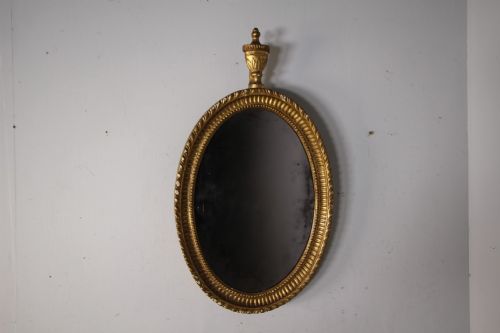
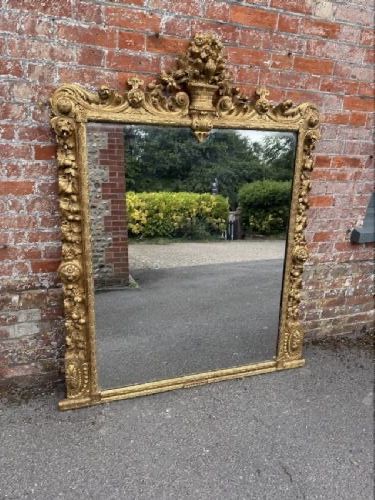
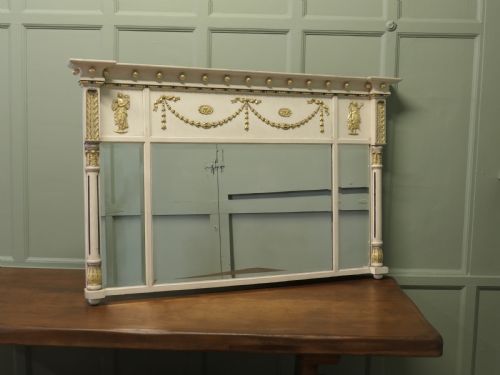
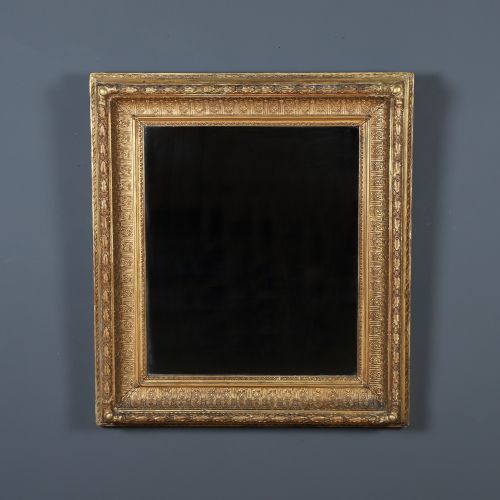
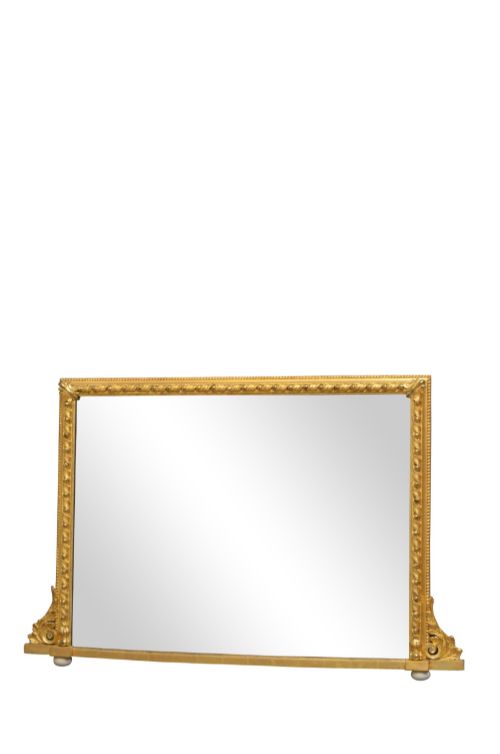
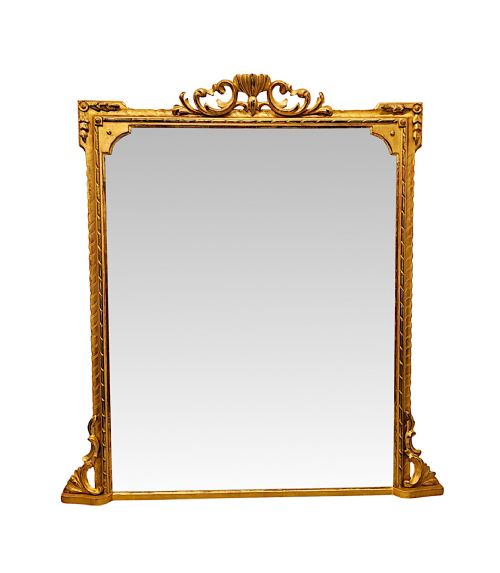
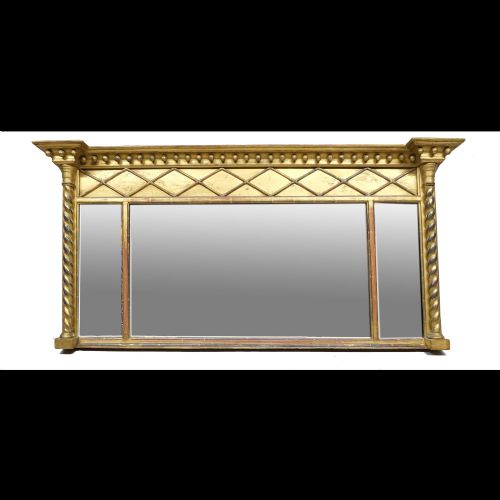
A period gilt mirror serves as a decorative wall focal point or an architectural overmantel, bringing depth and illumination to period interiors. When exploring a period gilt mirror, buyers encounter distinct formats including grand landscape overmantels, circular convex wall pieces, and vertical pier mirrors designed for placement between windows.
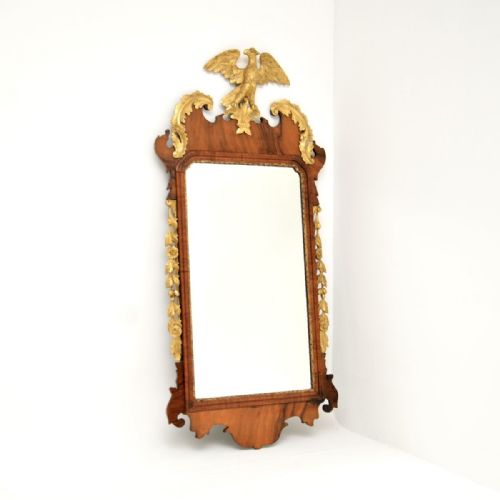
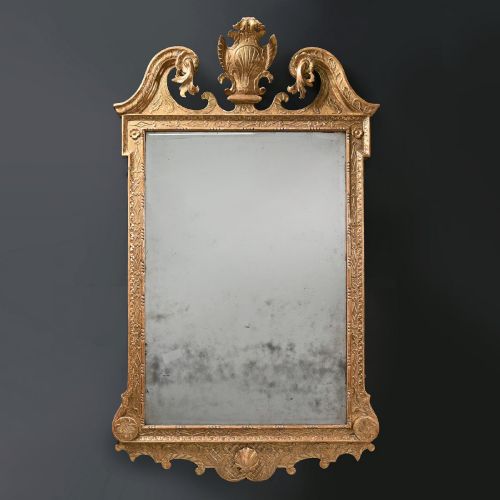
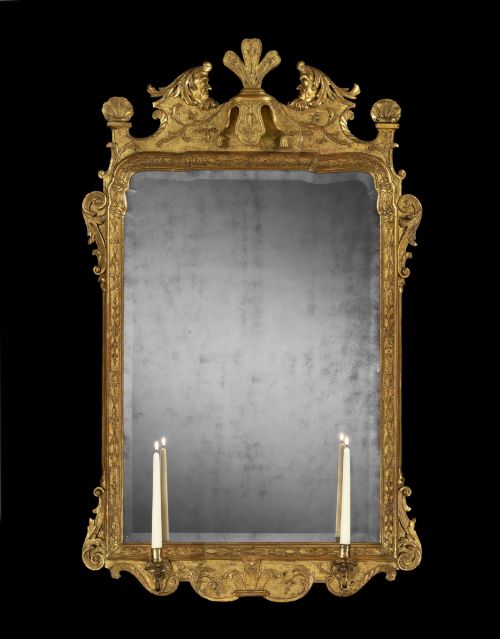
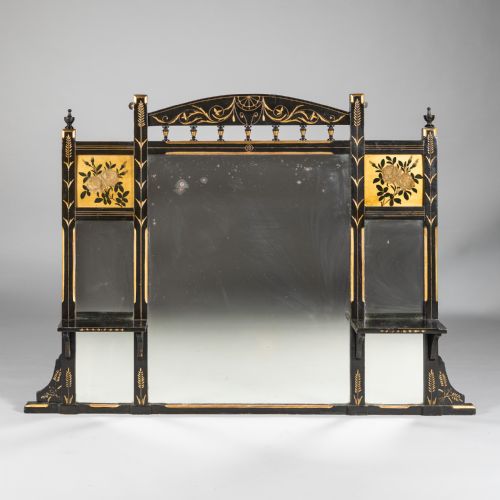
The surviving examples range across the eighteenth, nineteenth, and early twentieth centuries, capturing shifts in design from Georgian fretwork and George II gesso work to Regency convex forms and Victorian aesthetic ebonised framing. Most pieces on this page originate from English and European houses, utilising traditional timber carcases finished with gold leaf or oil gilt.
Materials and construction
Makers built the structural carcases using woods such as mahogany, walnut, sycamore, and pine, often applying layered gesso to create crisp relief details before gilding. Gold leaf or oil gilt was then applied directly to the prepared surfaces, while circular convex frames incorporated heavy turned wood mouldings to hold curved glass plates.
Mirror plates themselves evolved from early mercury and silvered glass to Victorian sheet glass, frequently displaying natural foxing and age spots. Parcel-gilt versions combined exposed dark hardwoods with selective gilt highlights, contrasting the natural grain against bright metallic surfaces.
The inventory records pieces spanning the eighteenth century through the aesthetic movement of the late nineteenth century, executed in giltwood, ebonised wood, and brass.
Distinctions in craftsmanship
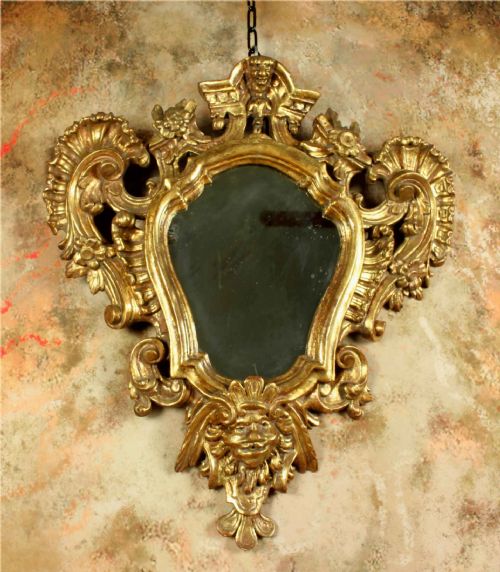
Quality rests in the crispness of the hand-carved ornament and the depth of the gesso modelling beneath the gold leaf, where superior workshops achieved sharper foliage, scrolls, and figural surmounts. Finer examples retain their original mercury or early mirror plates and integrated carved wooden slips rather than later replacements.
The structural integrity of the frame joints and the preservation of the original gilding surface separate exceptional survivals from heavily restored or later revival pieces. Master carvers utilised intelligent timber selection and balanced proportions, ensuring the ornament complemented the scale of the glass without crowding the composition.
William Kent·John Belchier·Thomas Chippendale
The Period Gilt Mirror Glossary
- Giltwood
- Wood that has been coated with gold leaf or metal powder over a prepared gesso base. This finish provides the characteristic metallic brilliance seen on formal mirrors.
- Gesso
- A plaster-like mixture applied to wooden frames to create a smooth surface for intricate carving and gilding. It allows for sharp, durable decorative details.
- Convex mirror
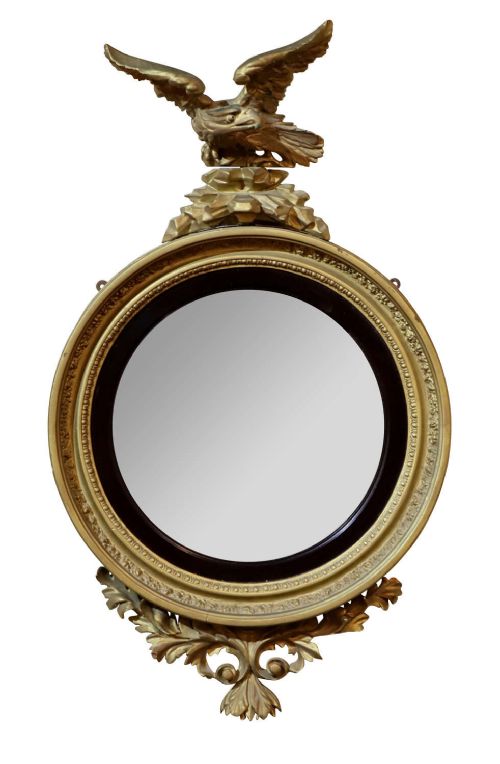
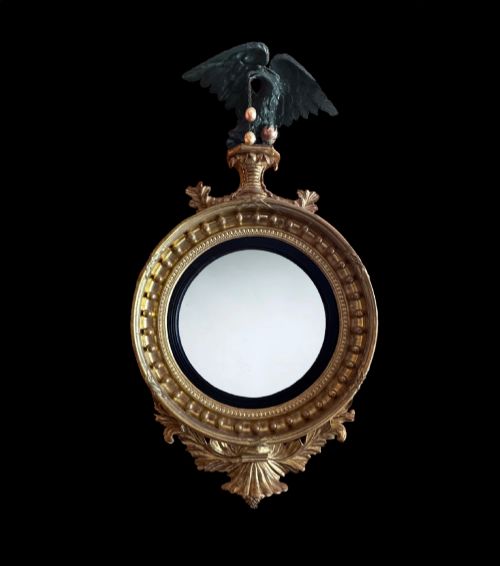
- A circular mirror with an outward-curving glass plate that produces a wide-angle reflection of the interior. These pieces frequently feature eagle surmounts and ball-tooled bezels.
- Parcel-gilt
- A decorative treatment where only specific portions of a wooden object are gilded, leaving the underlying timber grain visible elsewhere. It creates a subtle contrast between wood and gold.
- Overmantel mirror
- A wide horizontal mirror designed specifically to hang above a fireplace mantelpiece. They often feature architectural frames suited to nineteenth-century domestic interiors.
- Foxing
- The natural age-related spotting, darkening, and oxidation that develops within antique mirror plates over decades. This chemical change produces characteristic dark patches in the glass.
Period Gilt Mirror: Frequently Asked Questions
What is a convex mirror?
A convex mirror uses a curved spherical glass plate to capture a wide-angle reflection of an entire room. These circular pieces were popular during the Regency period and often include decorative eagle surmounts.
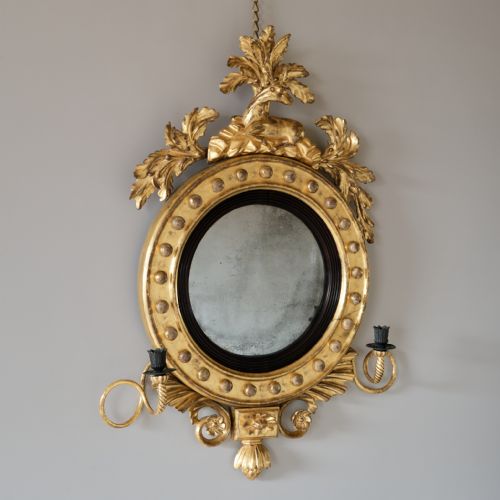
They were typically hung in reception rooms to monitor activity and distribute available daylight across the interior space. The heavy round frames frequently feature candle arms or gilded ball details around the outer edge.
Where should an overmantel mirror hang?
An overmantel mirror hangs directly above a fireplace mantelpiece, serving as the central architectural anchor of the chimney breast. These wide horizontal pieces reflect light from opposite windows into the deepest part of the room.
Historically, they filled the large wall space between the fireplace opening and the cornice above. Pairing them with console tables or placing them in hallways creates a similar sense of expanded space.
What is foxed glass?
Foxed glass refers to the natural oxidation and degradation of the silver backing inside antique mirror plates. This chemical ageing creates cloudy patches, dark spots, and speckled discoloration across the reflective surface.
Collectors prize original foxed plates as authentic indicators of age and undisturbed history. The soft, mottled reflection distinguishes period glass from modern brilliant-cut replacements.
How do I date a gilt mirror?
Dating a gilt mirror involves examining the wood types, construction methods, and stylistic motifs carved into the frame. Eighteenth-century pieces often feature hand-carved gesso rococo scrolls, while Regency examples favor clean neoclassical lines and convex plates.
Supporting evidence such as backboards, original screw fixings, and the composition of the glass plate help confirm the period. Comparing the carved details against documented regional workshop styles provides further chronological context.