

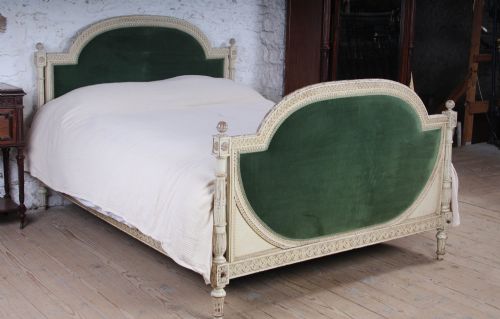


Carved Upholstered Bed Frame
A carved upholstered bed frame brings rich texture and grand proportion to a bedroom, uniting sculptural woodwork with soft fabric panels.
Carved Upholstered Bed Frame
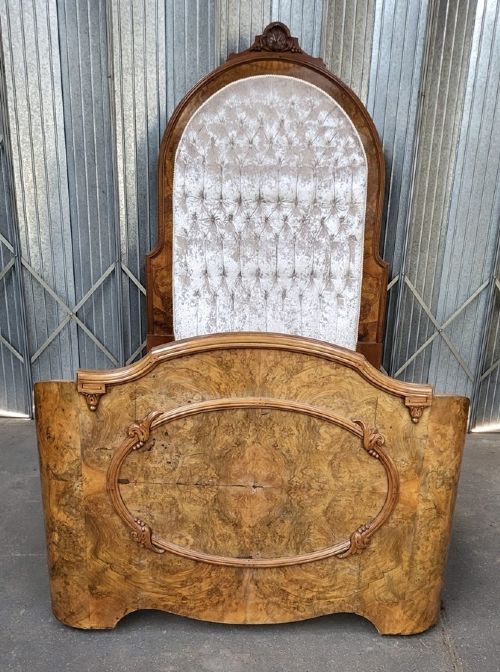
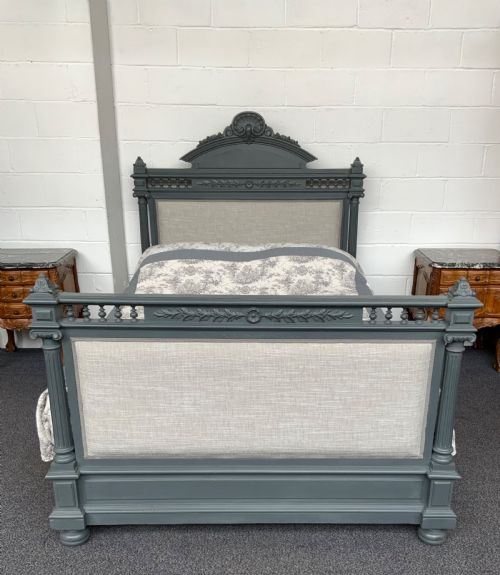
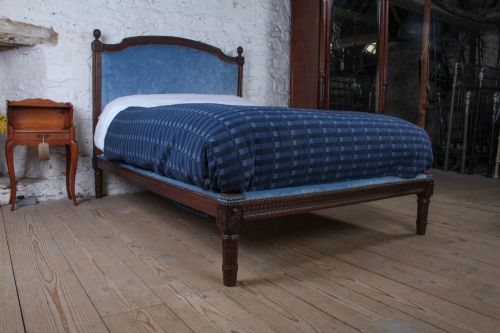
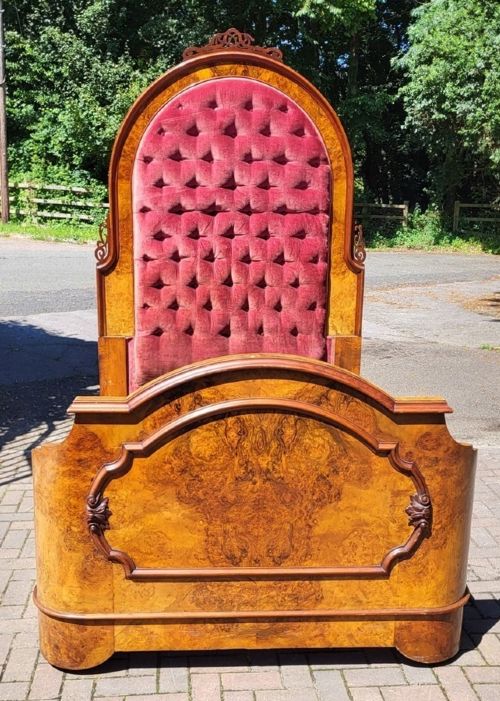
A carved upholstered bed frame combines a substantial wooden structure with padded and fabric-covered headboards or footboards. When buyers search for a carved upholstered bed frame, they encounter various historical interpretations ranging from Victorian walnut designs to continental styles.
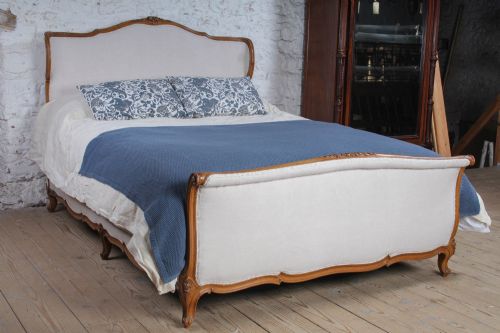
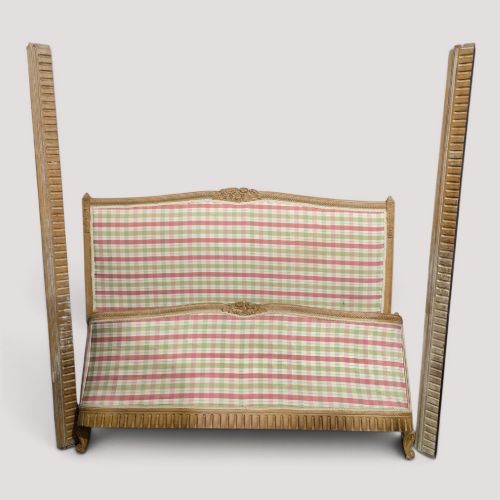
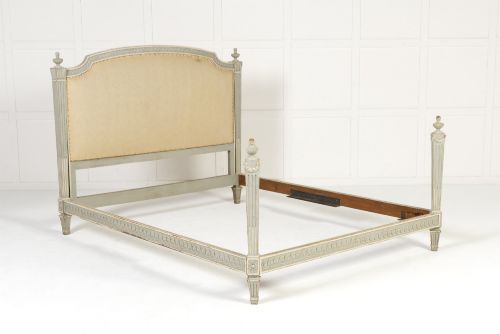
French continental influences dominate the selection, particularly pieces reflecting Louis XV and Louis XVI aesthetics. These often feature painted finishes, limed wood, or gilt decoration alongside generous proportions suited for modern king and double mattresses.
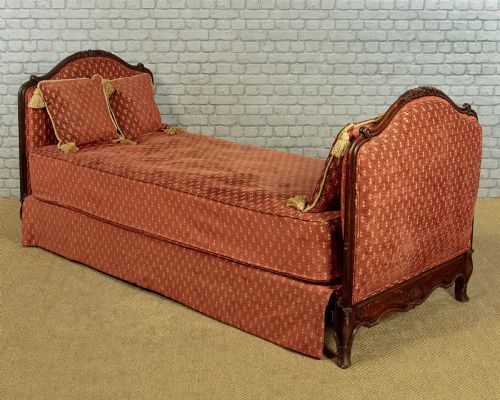
Beyond standard double and king sizes, the selection includes daybeds and chaise longues adapted for sleeping or lounging. Makers from the nineteenth and early twentieth centuries applied elaborate carving to timber frames, pairing them with fresh linen, velvet, or leather upholstery.
How they were made
Cabinetmakers shaped solid timbers such as walnut, mahogany, oak, and ash using traditional hand-carving techniques. Decorative motifs including floral sprays, scrolls, and rococo curves were chiselled directly into the wood before receiving painted, gilt, or polished finishes.
Upholstery techniques involved securing natural stuffing materials within wooden channels and covering them with durable fabrics. Many pieces survive with their original textiles, while others feature newly applied linen, velvet, or embossed leather secured by traditional tacks.
Listings feature wood, painted timber, fabric, linen, and velvet across Victorian, Edwardian, and twentieth-century periods.
What varies in quality
Quality rests primarily in the crispness and depth of the timber carving. Superior examples display sharply defined motifs and balanced proportions executed by skilled hands, whereas simpler pieces show softer, more mechanical detailing.
The integrity of the wooden frame and the quality of the timber selection determine durability. Denser woods like walnut and mahogany provide stable foundations that withstand centuries of assembly and daily use better than softer alternatives.
The Carved Upholstered Bed Frame Glossary
- Bedstead
- A framework of a bed consisting of posts, rails, and headboards without the mattress and bedding. It forms the architectural skeleton that supports the sleeping surface.
- Daybed
- A long seat resembling a couch that can be used for lounging or sleeping. These frames typically feature an upholstered backrest and one or two raised ends.
- Gilt
- Covered thinly with gold leaf or gold paint to impart a lustrous metallic finish. This treatment highlights carved wooden details on continental frames.
- Louis XV Style
- A revival design characterised by asymmetrical curves, cabriole legs, and naturalistic floral carvings. It draws inspiration from mid-eighteenth-century French aesthetics.
- Burr Walnut
- Timber taken from the warted growths on walnut trees, yielding intricate, swirling grain patterns. Cabinetmakers utilised it as a decorative veneer on high-status Victorian furniture.
Carved Upholstered Bed Frame: Frequently Asked Questions
How do I choose the right size?
Check the internal dimensions of the wooden rails to ensure your modern mattress fits comfortably within the antique structure.
Consider the height of the carved headboard in relation to your ceiling clearance and bedroom proportions.
Can I use a standard mattress?
Many antique frames accommodate standard modern mattress sizes, though some European pieces require custom dimensions.
Review the listing specifications for side rail lengths and slat support systems before purchasing.
Are original fabrics durable?
Original textiles carry historical character but may show fragile areas unsuited for heavy daily use.
Many pieces feature newly upholstered panels that combine antique frames with modern fabric durability.
How do I care for carved wood?
Dust the carved wooden elements regularly with a soft, dry cloth to prevent dirt accumulation in the recesses.
Avoid placing the bed near direct heat sources to protect the timber and historic finishes from drying out.