

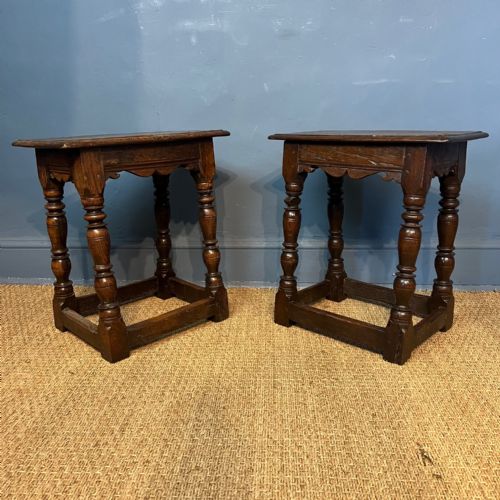
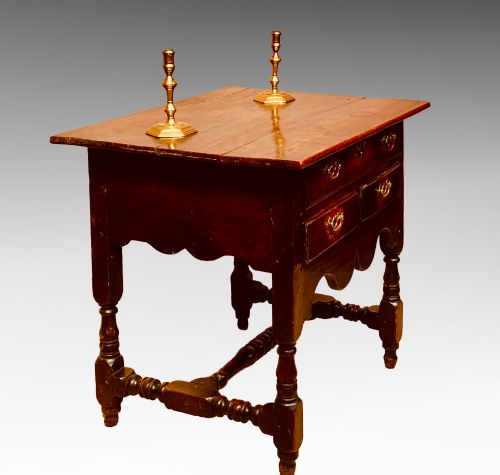
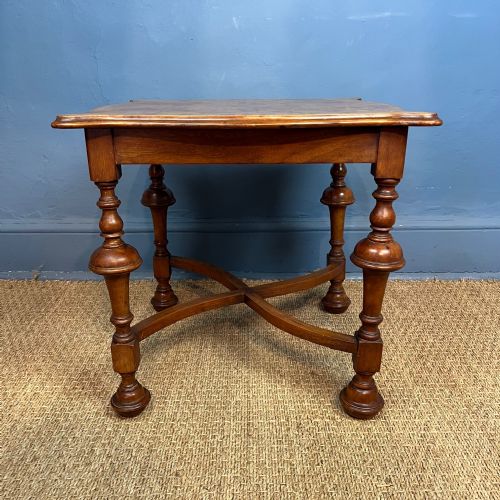
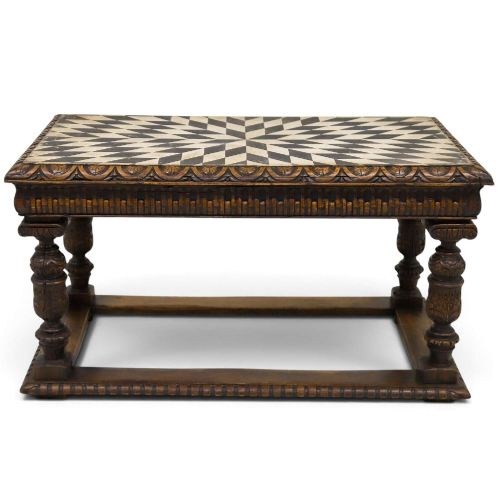
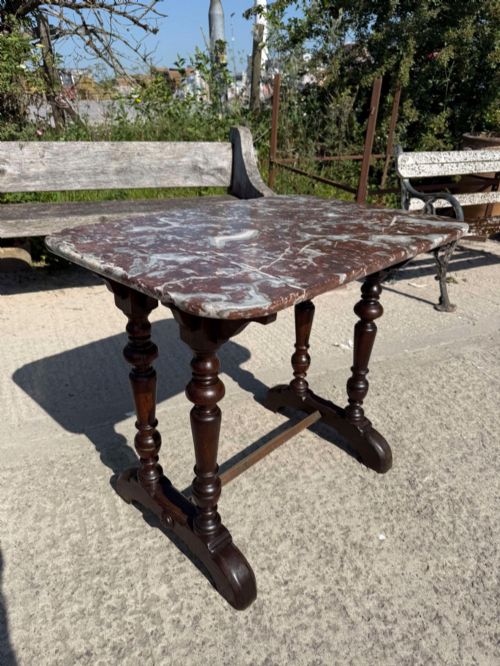
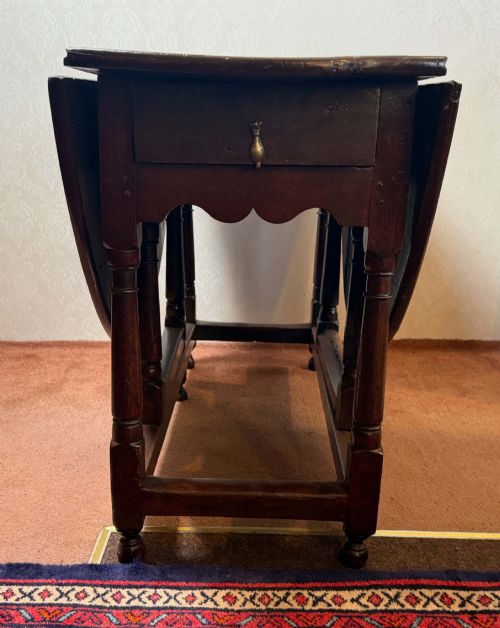
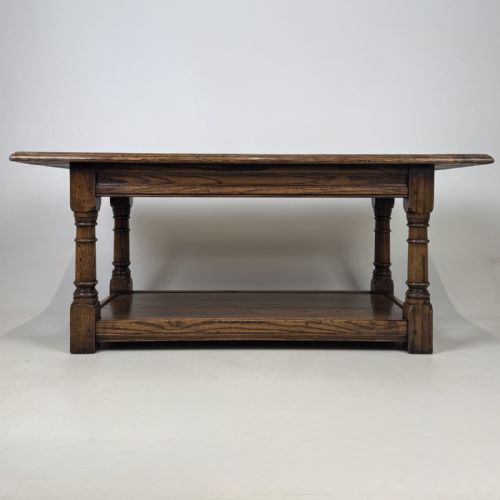

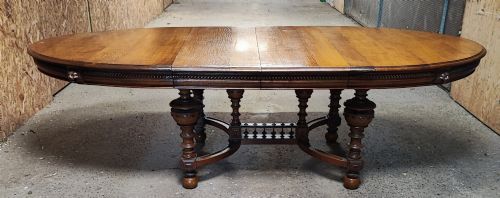
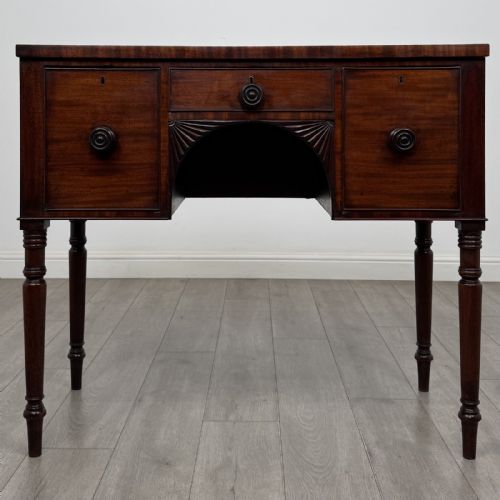
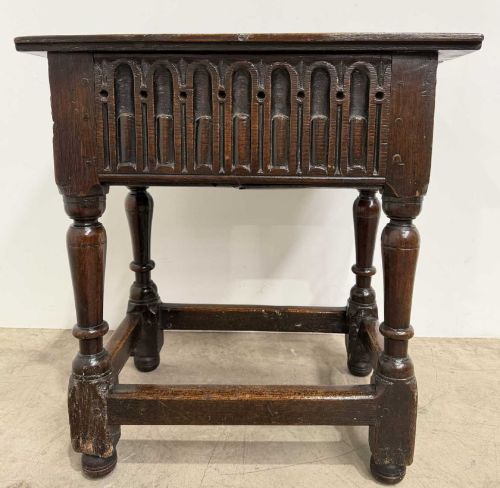
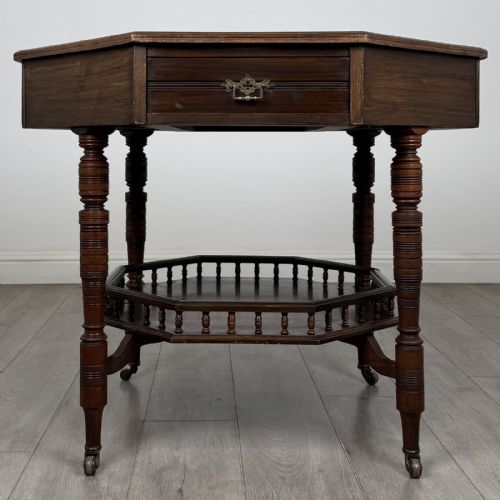
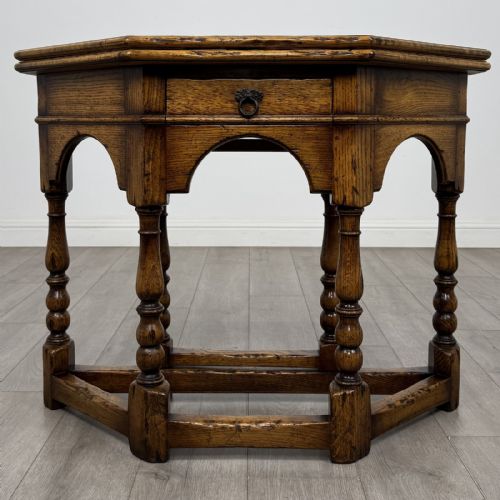
Carved Turned Leg Table
A carved turned leg table brings centuries of hand-carving and lathe-turned detail into a room.
Carved Turned Leg Table
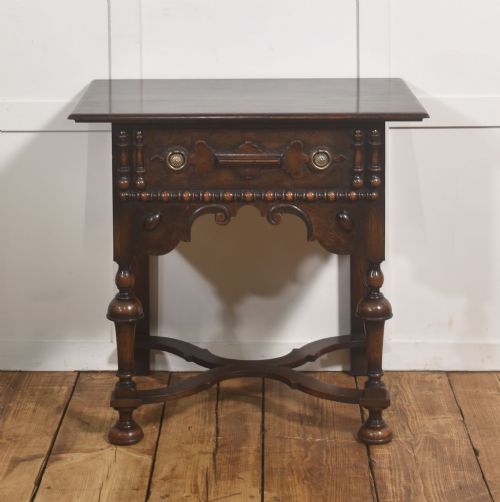
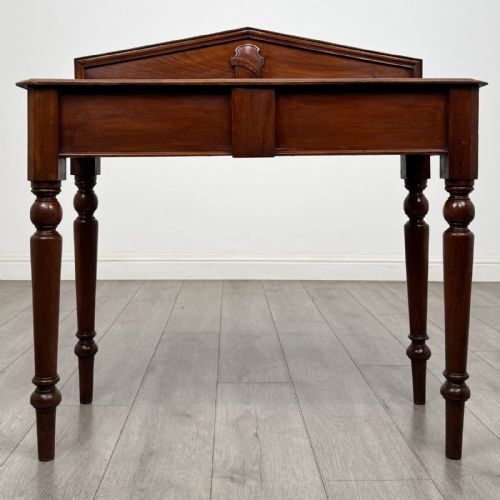
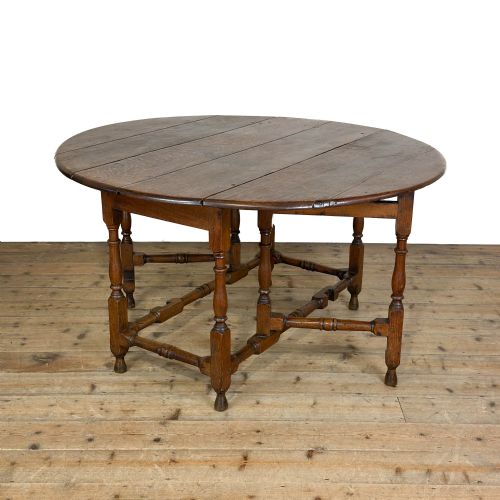
A carved turned leg table unites solid timbers with structural supports shaped on the lathe and detailed with hand-chiselled ornament. When you search for a carved turned leg table, you encounter forms ranging from sturdy seventeenth-century dining pieces to compact Edwardian occasional tables and Victorian side stands.
The version you meet most frequently on this page is the oak side table or dining table, reflecting centuries of domestic utility. These pieces bridge the gap between plain functional furniture and decorative statements through the application of turned profiles and relief carving.
Origins stretch across English country workshops, continental European makers, and later revival periods that looked back to seventeenth-century standards. The surviving examples demonstrate how everyday furniture evolved to incorporate decorative turns and carved motifs along the rails and supports.
How They Were Made
Makers relied primarily on native and imported timbers, with oak dominating the early centuries alongside walnut, mahogany, beech, and occasional exotic woods. Boards were joined using traditional pegged mortise and tenon construction for stability, while table tops often utilised draw-leaf mechanisms or drop leaves.
Turning the legs required a pole lathe or foot-powered lathe to cut bobbins, spirals, or columns into the wood. Craftsmen then added hand-carving such as floral motifs, geometric moulding, or strapwork to the legs, stretchers, and aprons using gouges and chisels.
Carved Turned Leg Table Retail Price Guide 2026
Typical asking prices for carved turned leg table among the pieces listed under this phrase on Sellingantiques today, from the lower quarter to the upper quarter. They describe what is for sale here now, not the wider market.
Listings feature oak, walnut, mahogany, beech, elm, and iron across periods spanning the seventeenth century to the early twentieth century.
What Varies in Quality
The integrity of the timber and the depth of the hand-carving separate ordinary production from superior examples. Crisp execution in the turned bulbs and spirals indicates a skilled hand at the lathe, whereas softer, shallower carving often points to later mass-produced revival work.
Original surface patination and the retention of period joining methods determine the desirability of older items. Pieces that maintain their original hardware, uncompromised stretchers, and honest age-related wear hold greater integrity than heavily restored counterparts.
The Carved Turned Leg Table Glossary
- Bobbin legs
- Turned wooden supports shaped like a string of beads or bobbins on a spindle. This style appears frequently on seventeenth-century pieces and nineteenth-century revivals.
- Draw-leaf
- An extending table mechanism where two hidden leaves slide out from beneath the main top. This design allows the surface area to double with minimal effort.
- Gateleg table
- A table with hinged flaps supported by swing legs that pivot out like a gate. It folds down compactly when not in use.
- Patina
- The surface sheen and colour developed by wood over decades of handling, light, and polishing. A good patination reflects age and natural wear rather than modern chemical finishes.
- Stretcher
- A horizontal wooden brace connecting the legs of a table for extra rigidity. On early tables, stretchers also served to keep feet off damp floors.
Carved Turned Leg Table: Frequently Asked Questions
How do I date a carved table?
Dating relies on identifying the timber species, joinery techniques, and the specific style of the turning and carving. Seventeenth-century pieces typically show pegged joints and heavy oak construction, while later revival pieces adopt lighter proportions.
Hardware, tool marks, and the presence of natural patination also help distinguish authentic period furniture from later reproductions made in historical styles.
Are these tables suitable for daily dining?
Many solid oak and mahogany versions are robust enough for everyday family meals. Draw-leaf and gateleg variants offer flexible surface space for dinner parties and daily use alike.
Care should be taken with antique surfaces by using coasters and mats to protect the old timber and its original polish from moisture and heat.
What is a Jacobean revival table?
A Jacobean revival table is a later piece, often dating from the late nineteenth or early twentieth century, constructed in imitation of seventeenth-century English furniture. These items frequently feature dark oak, geometric moulding, and heavy turned supports.
They offer the look and utility of early furniture while benefiting from sturdier modern glues and manufacturing methods.
How should I care for antique wood?
Keep wooden tables away from direct heat sources and strong sunlight to prevent the timber from warping or splitting. Regular dusting with a dry, soft cloth preserves the surface.
Applying a traditional beeswax polish occasionally helps nourish the wood and maintain its natural lustre without building up sticky layers.