

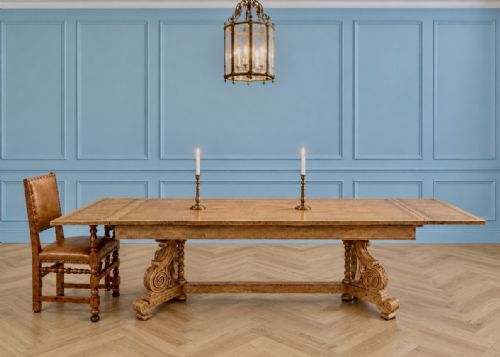
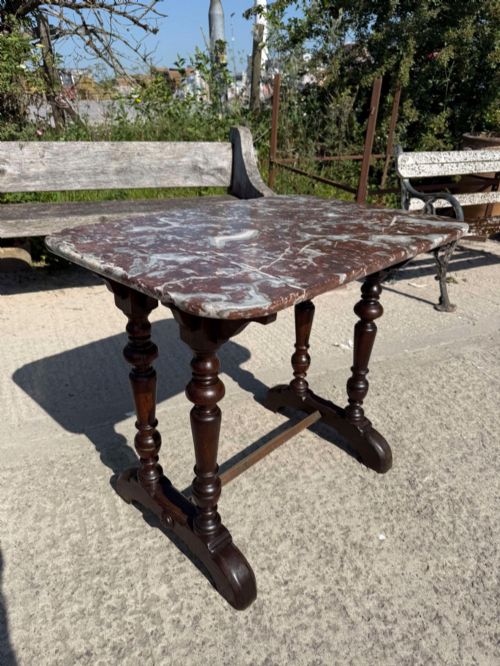
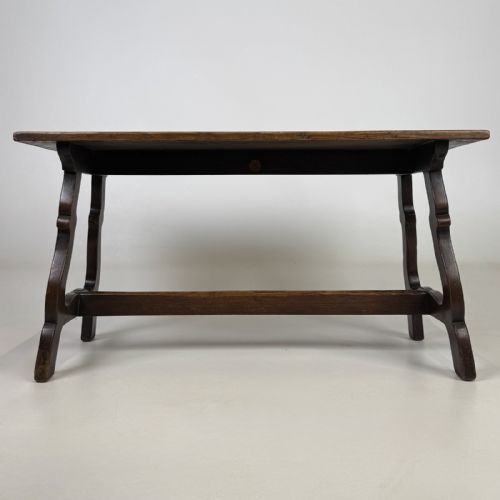
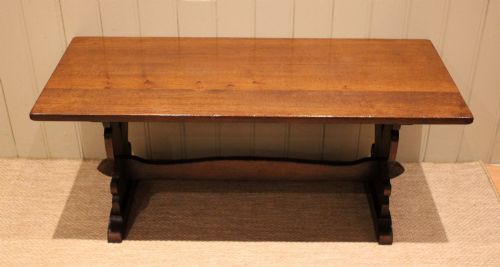

Carved Trestle Base Table
A carved trestle base table brings enduring solidity to a room, rooted in centuries of heavy timber construction.
Carved Trestle Base Table
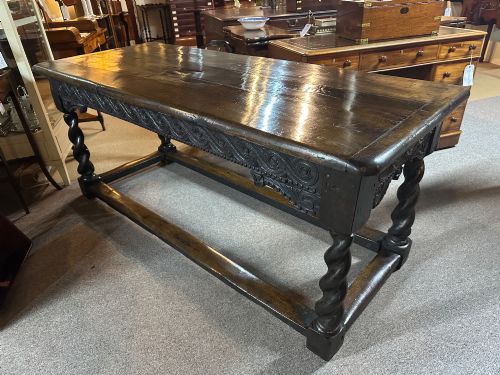
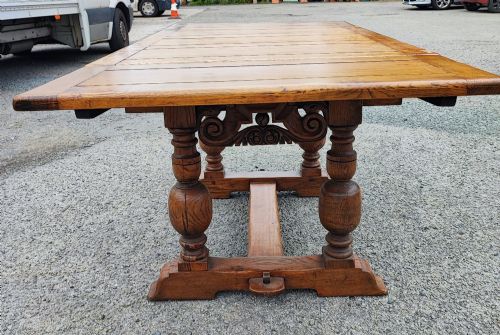
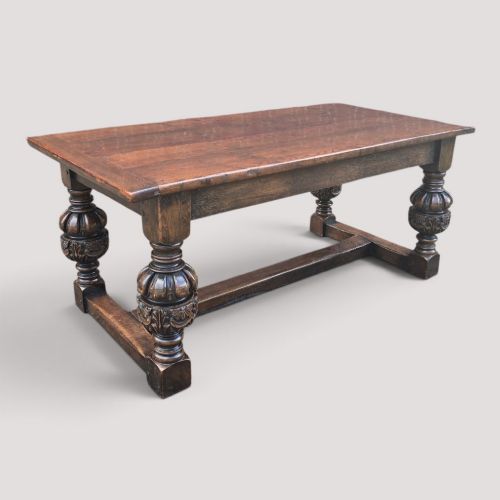
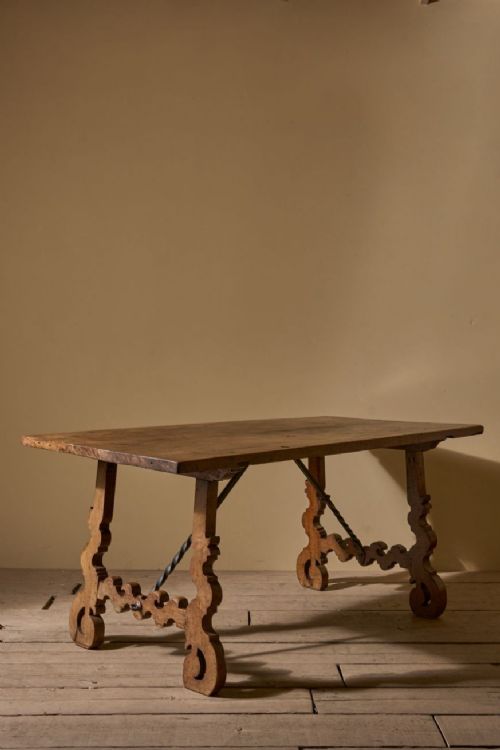
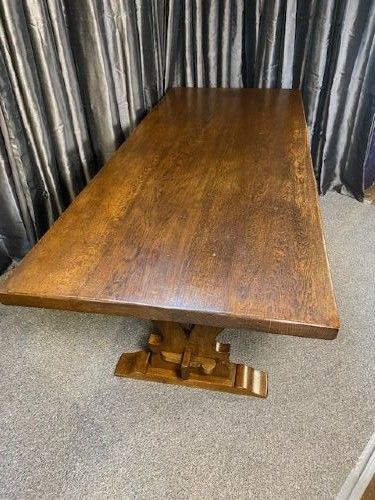
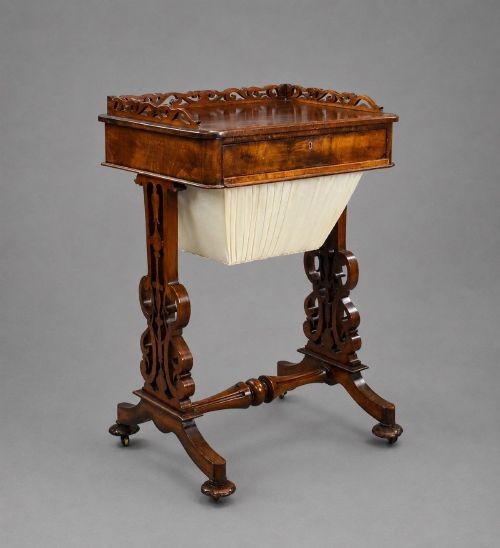
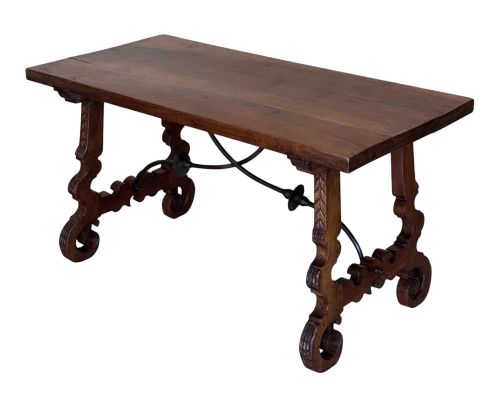
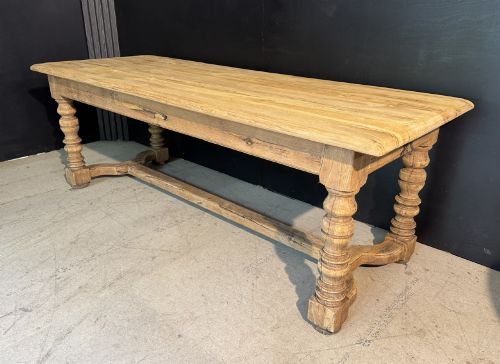
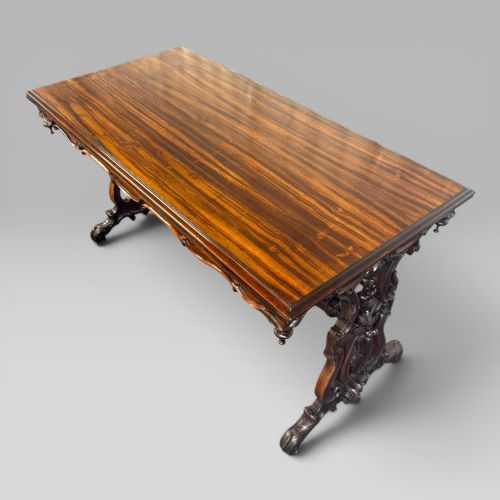
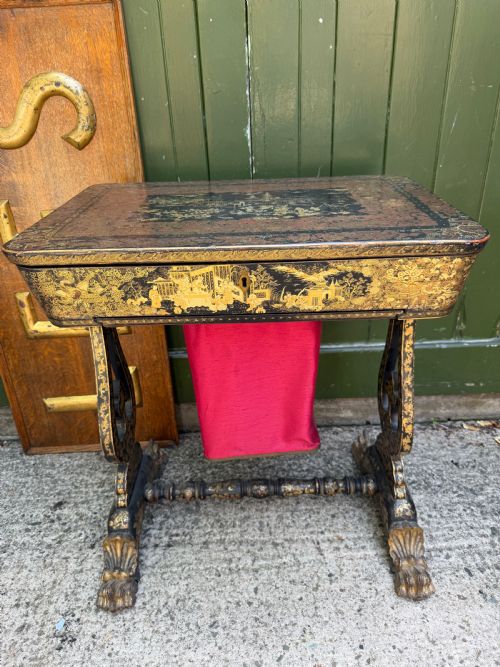
A carved trestle base table provides a sturdy surface supported by upright legs connected to a horizontal stretcher or foot, appearing across domestic and institutional settings. These pieces often take the form of refectory dining tables or heavy library formats designed to seat groups or hold large volumes. Oak examples span from the seventeenth century through later revivals, while walnut and mahogany variations reflect formal nineteenth-century drawing-room tastes.
Materials and construction methods
Timbers such as oak, walnut, and mahogany dominate the construction, selected for structural integrity and grain figure. Joinery relies on traditional pegged mortise and tenon joints to secure the heavy tops to the trestle supports without metal fasteners. Secondary woods appear in drawer linings and internal framing, reflecting the period of manufacture.
Hand-carved details adorn the stretchers, legs, and aprons, utilising gouges and chisels to create strapwork, foliate motifs, or gadrooning. Surfaces finished with wax or polish highlight the natural markings of the timber, from the tight medullary rays of quarter-sawn oak to the rich dark hues of rosewood and Spanish walnut.
Carved Trestle Base Table Retail Price Guide 2026
Typical asking prices for carved trestle base table among the pieces listed under this phrase on Sellingantiques today, from the lower quarter to the upper quarter. They describe what is for sale here now, not the wider market.
Listings incorporate oak, walnut, mahogany, and rosewood across periods ranging from the late sixteenth century to the early twentieth century.
Distinguishing quality in timber and carving
The integrity of the timber dictates the standing of a piece, particularly when evaluating single-plank tops against multi-board surfaces. High-grade examples display crisp, deeply carved relief work executed by hand rather than shallow machine routing. The stability of the trestle base and the tightness of the original joints determine structural longevity.
Proportion and originality separate standard utility pieces from exceptional works. Tables retaining their original timber surface without excessive sanding command greater appreciation. The balance between the mass of the top and the scale of the carved trestles governs the overall visual harmony.
Gillingtons of Dublin·Sir Robert Lorimer·Charles Bevan·AW Pugin·Gillows
The Carved Trestle Base Table Glossary
- Refectory table
- A long dining table historically used in communal dining halls and domestic farmhouses. These tables utilise heavy trestle bases connected by a low longitudinal stretcher for added stability.
- Stretcher
- A horizontal wooden bar connecting the legs of a table to prevent them from bowing outward. On trestle tables, this member often runs near the floor between the two end supports.
- Draw leaf table
- A table equipped with two sliding leaves stored beneath the main top that pull out to extend the surface length. This mechanism allows a compact dining board to accommodate additional guests.
- Quarter-sawn
- A method of milling timber where the log is cut radially into quarters, producing boards with straight grain lines and prominent medullary rays. This cut minimises board warping over centuries of use.
- Gadrooning
- A decorative carved moulding consisting of convex curves or flutes applied along table edges and friezes. This ornamental detail is frequently seen on formal Jacobean and revival pieces.
Carved Trestle Base Table: Frequently Asked Questions
How do I care for an antique oak table?
Maintain the timber by applying a traditional beeswax polish periodically to nourish the grain and protect against surface moisture. Avoid placing solid wood tables near direct heat sources or in extreme humidity fluctuations to prevent splitting.
Use felt pads under objects placed on the surface and wipe spills promptly with a dry or slightly damp cloth. Regular dusting with a soft brush keeps the carved recesses clean without abrading the finish.
Are these tables suitable for daily dining?
Many of these pieces were built precisely for heavy daily use, utilising dense hardwoods like oak and walnut that withstand regular family gatherings. Their sturdy trestle construction distributes weight evenly across the floor.
Care should be taken with historical finishes, employing table mats for hot dishes and liquids. The generous proportions of refectory formats provide ample seating space for modern dining chairs.
How can I tell a 17th-century table from a revival piece?
Examine the underside and joints for tool marks, peg construction, and timber shrinkage that align with early hand-tool methods. Seventeenth-century surfaces exhibit genuine age-related wear patterns and oxidation across the exposed grain.
Revival pieces from the nineteenth or twentieth century often feature machine-sawn components, standardised fixings, or deliberate distressing designed to mimic earlier styles. Comparing the wood density and joinery style helps confirm the true period of production.
What is a trestle base?
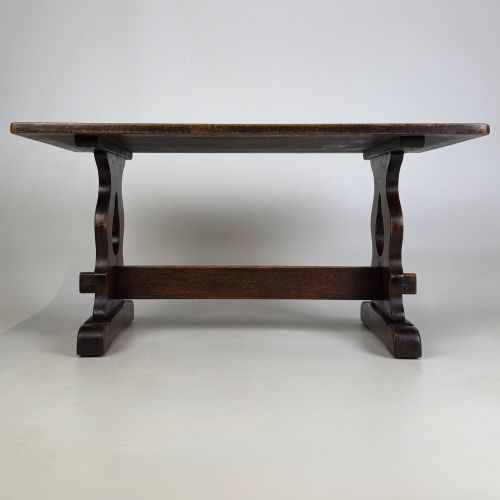
A trestle base consists of two upright supports connected by a horizontal beam or stretcher, eliminating the need for traditional corner legs. This design provides maximum legroom along the length of the table.
Historical examples secure the uprights to heavy feet and support the top through pegged tenons or sliding joints. This structural simplicity allowed carpenters to construct stable surfaces from heavy timber planks.