

Carved Timber Figurine
When you search for a carved timber figurine, you enter a diverse world of hand-shaped wood spanning multiple centuries and global traditions.
Carved Timber Figurine
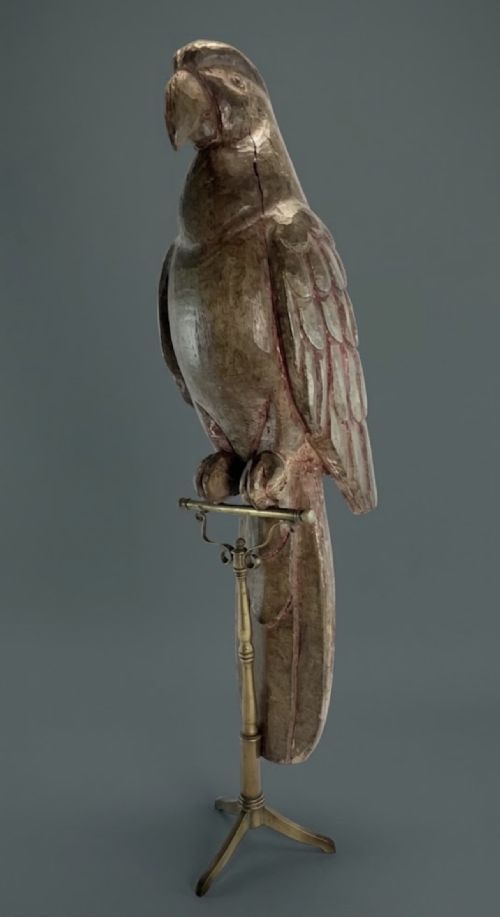
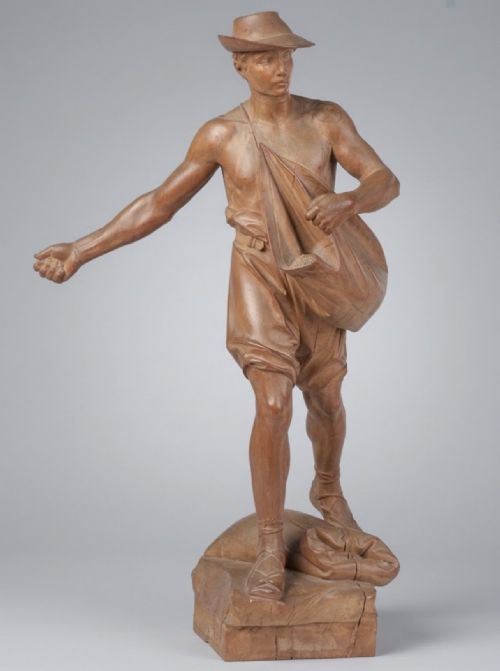
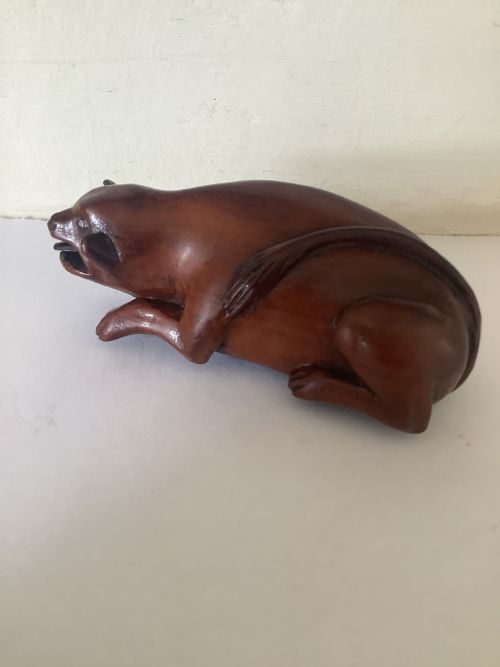
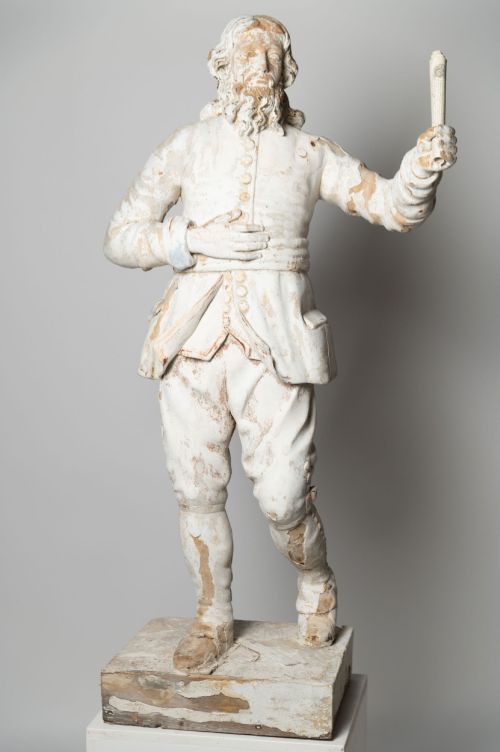
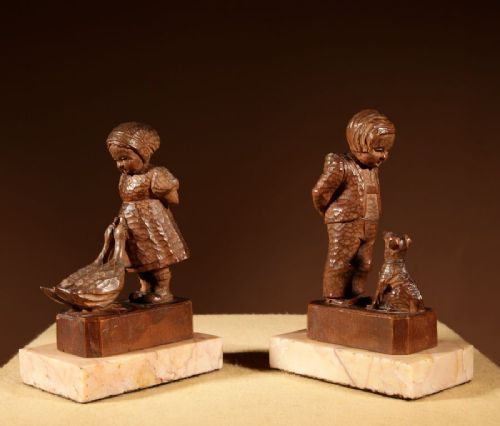
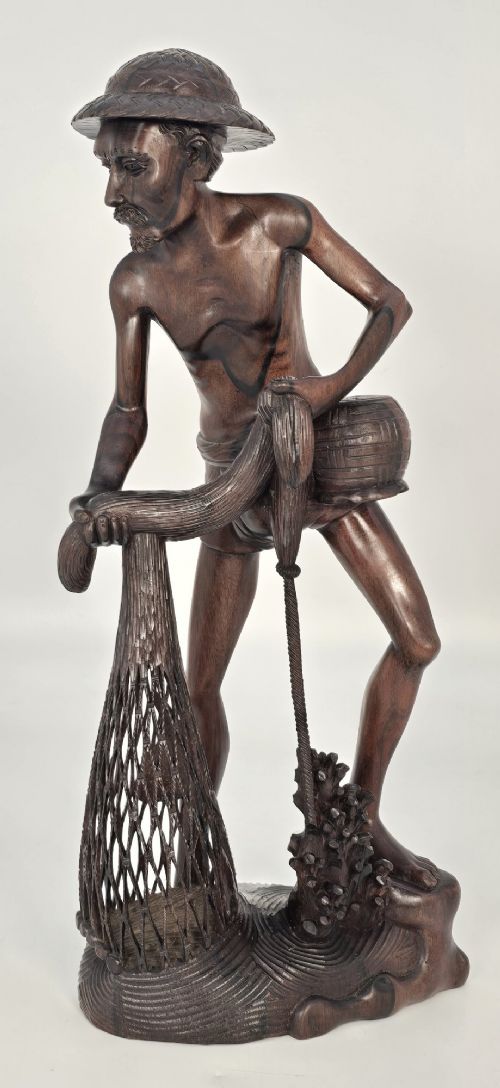
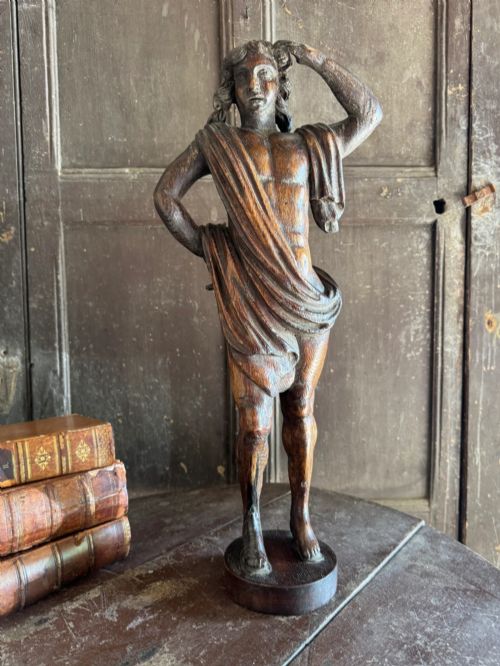
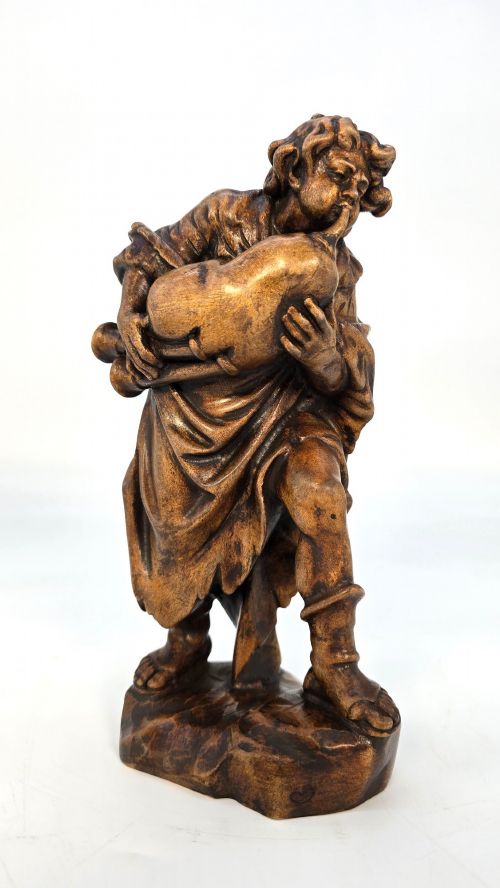
A carved timber figurine represents a wide variety of sculpted human, animal and mythical forms shaped directly from wood by traditional makers. The examples you encounter on this page cross numerous eras, from eighteenth-century classical and religious figures to nineteenth-century Black Forest animals and folk art carvings.
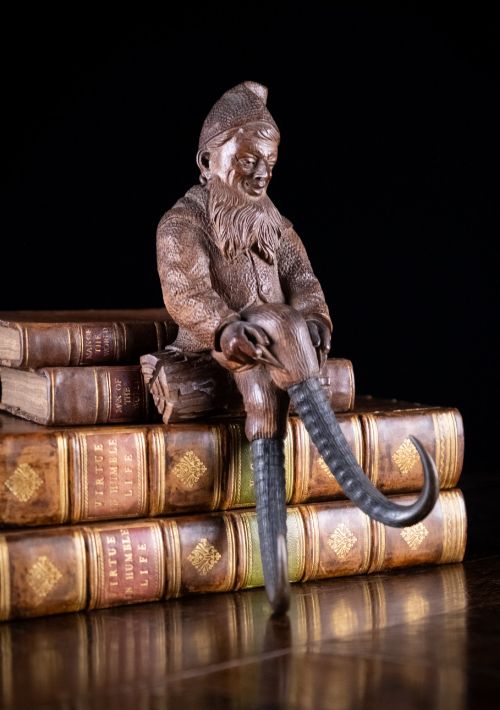
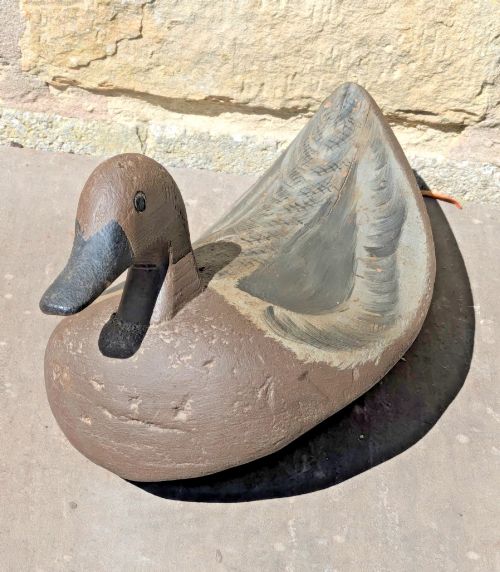
The objects take many forms, appearing as standalone sculptures, decorative wall hooks, snuff boxes, decoy ducks and articulated lay figures. Materials span native European woods like oak, fruitwood, lime and pine alongside denser imported hardwoods.
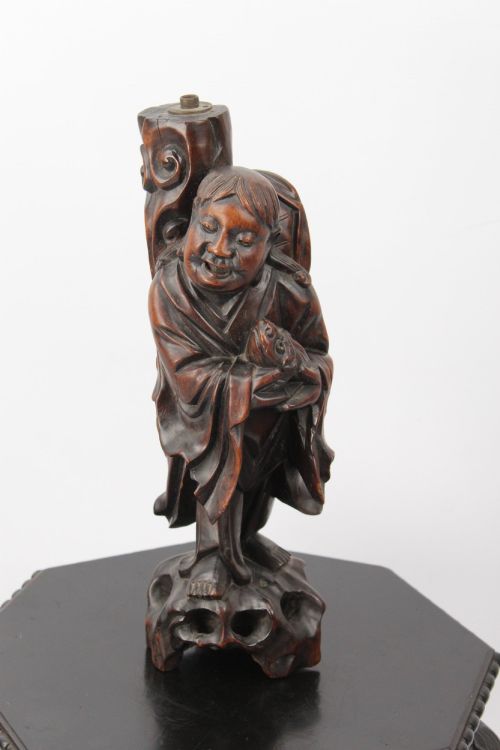
Geographic origins are remarkably broad, including British, European, Asian, African and American pieces. You will find works reflecting distinct regional styles such as Japanese folk art, Qing Dynasty carvings and Swiss Black Forest specialisms.
How they were made
Carvers utilised traditional hand tools such as gouges, chisels and knives to shape solid blocks of timber into intricate three-dimensional subjects. Woods were selected for their grain and density, with softer timbers like linden wood and lime chosen for deep, delicate relief, while harder oak and fruitwood provided enduring strength for detailed human and animal anatomy.
Surface finishes vary significantly depending on origin and period, ranging from plain waxed or polished timber that highlights the natural grain to hand-painted polychrome details and applied pigments. Certain pieces incorporate secondary materials like brass stands or glass stud eyes to complete the design.
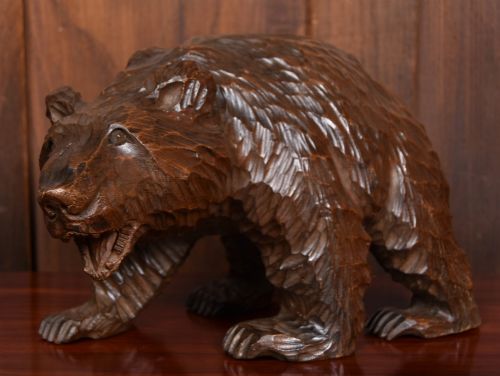
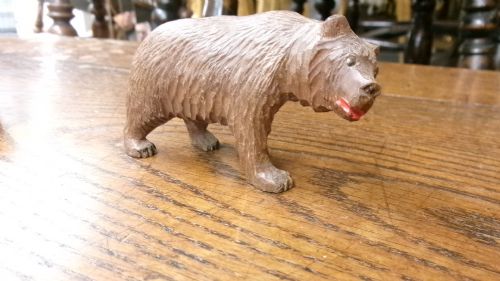
Several bears are hiding in the woodpile here, ranging from tiny pocket-sized companions to massive umbrella stands.
What varies in quality
Material selection and the crispness of the tool work further distinguish finer examples. Skillful execution preserves clean undercuts and subtle textures that elevate a functional object or decorative sculpture into a compelling piece of craftsmanship.
The Carved Timber Figurine Glossary
- Black Forest
- A regional style of wood carving originating from the Brienz region of Switzerland, renowned for realistic depictions of bears, forest animals and human figures.
- Fruitwood
- A collective term for timbers derived from fruit-bearing trees such as pear, apple or cherry, valued by carvers for a fine, tight grain that accepts intricate detail.
- Limewood
- A pale, soft wood with an even texture widely favored by European carvers for intricate and deep sculptural work without splitting.
- Okimono
- A Japanese term for a decorative置物 or freestanding sculpture intended for display on a shelf or tabletop.
- Polychrome
- The practice of decorating architectural elements or sculpture in a variety of colours, seen on painted wooden figures and decoys.
Carved Timber Figurine: Frequently Asked Questions
What woods were used for these carvings?
Carvers utilised a wide variety of timbers depending on local availability and the desired level of detail. Common materials include oak, fruitwood, teak, olive wood and linden wood.
Softer woods allowed for deep undercuts and fine facial expressions, while denser hardwoods provided durability for larger figures and statues.
How do I care for antique wood carvings?
Keep wooden figures away from direct sunlight and sudden temperature changes to prevent the timber from drying out and splitting. Dust gently with a dry, soft brush rather than using wet cloths.
Occasional application of a suitable natural wax helps maintain the lustre of the finish without building up heavy residues.
What is Black Forest carving?
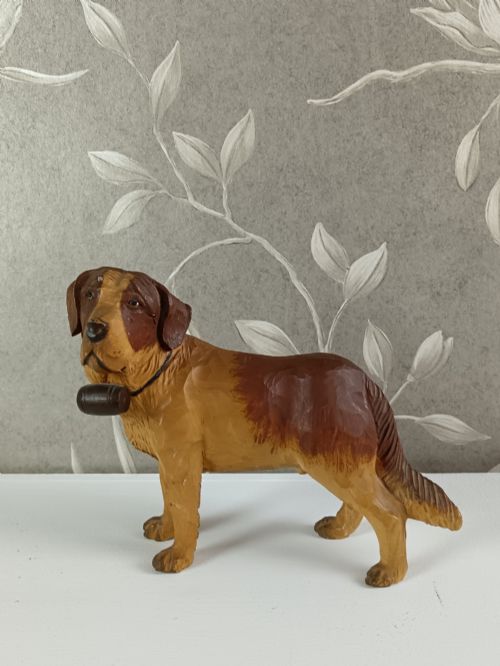
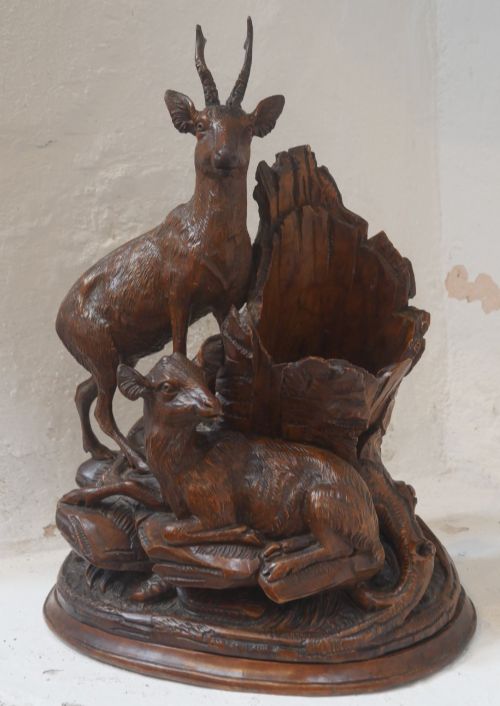
Black Forest carving refers to a distinct style of woodwork that originated in Switzerland during the nineteenth century. These pieces often depict animals such as bears, chamois and dogs in naturalistic poses.
They range from large hall stands and furniture elements down to small desk ornaments and wall hooks.
Are these figures signed by the carver?
Most antique timber figures remain unsigned, as they were produced by regional folk artists, village workshops or anonymous studio carvers. When signatures or monograms do appear, they typically belong to known European or Asian masters.
Stylistic markers and regional techniques are usually the primary guides for dating and attribution.