


Carved Timber Animal Statue
A carved timber animal statue brings the natural world indoors through the direct graft of hand and chisel.
Carved Timber Animal Statue
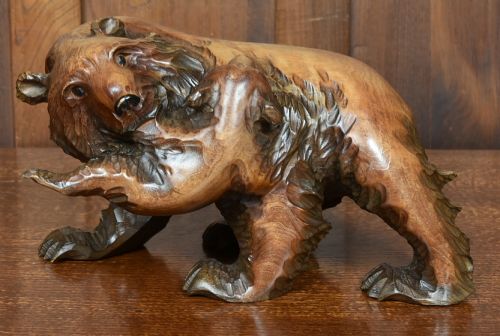
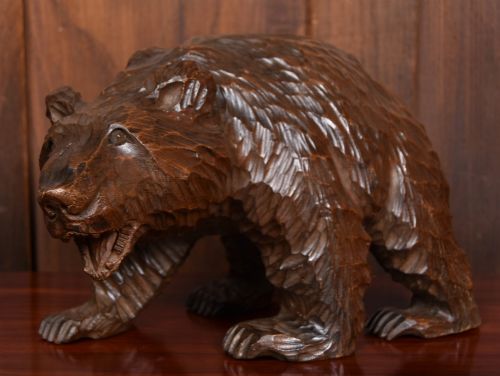
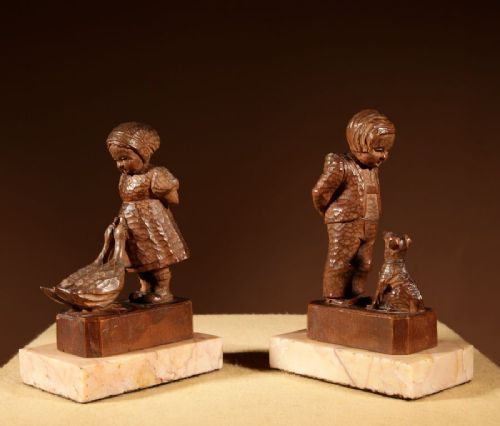
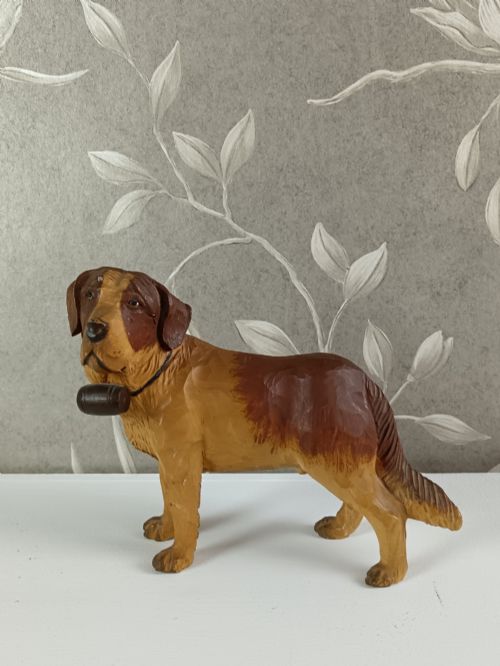
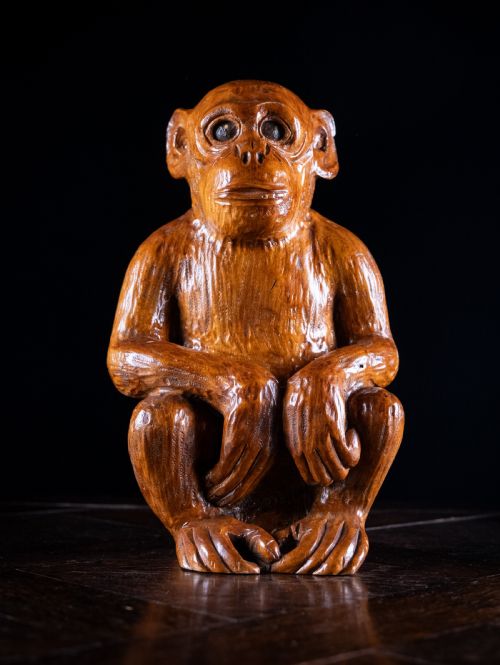
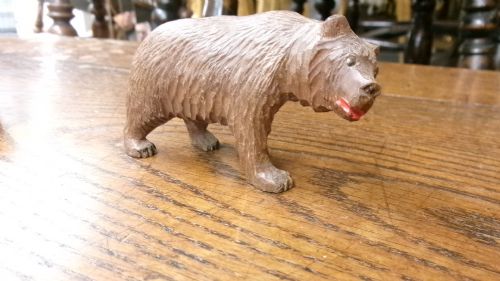
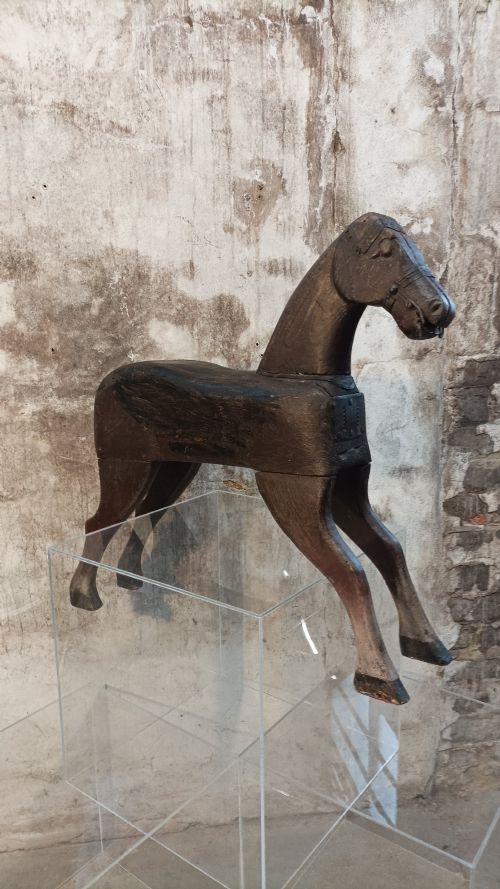
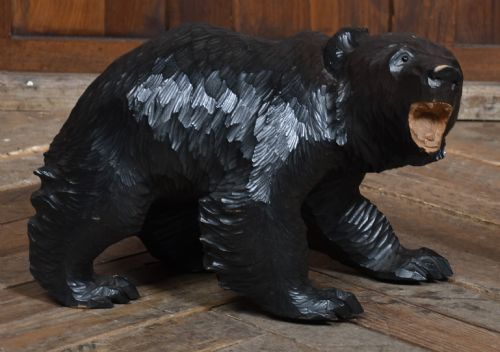
A carved timber animal statue represents beasts, birds and domestic creatures fashioned from various woods across multiple centuries. Buyers searching for a carved timber animal statue encounter bears, lions, elephants, dogs and horses ranging from small desk ornaments to life-size floor figures.
The selections span distinct cultural traditions, including European Black Forest forestry works, Japanese folk carvings and Anglo-Indian Raj period creations. Most pieces date from the nineteenth century, though earlier seventeenth-century survivals and twentieth-century modernist interpretations appear.
Forms include single studies of resting or charging beasts, pairs of flanking figures, and complex groups involving keepers or children. They function purely as decorative objects intended to bring character and texture to a room.
Materials and methods
Artisans carved these figures primarily from solid timbers such as walnut, lime wood, teak, ebony and general hardwoods. The grain and natural colour of the wood dictate the final visual weight, sometimes enhanced with surface paint or dark finishes.
Makers utilised hand chisels, gouges and knives to define muscle, fur texture and anatomical posture from single blocks or joined sections of timber. Details like inset stud eyes or bone components bring realism to the rendered expressions of bears, lions and dogs.
Periods represented stretch from the seventeenth century through to the middle of the twentieth century.
Qualities that separate examples
Quality rests upon the anatomical accuracy and the liveliness captured in the carving of the posture, whether depicting a leaping dog or a resting deer. Superior execution shows deep understanding of bone structure beneath the skin rather than a stiff or formulaic silhouette.
The handling of surface texture, from the individual feather on a duck to the rough pelt of a bear, determines the artistic merit of the piece. Crisp retention of chisel marks without sanding away character separates master carvers from commercial workshops.
The Carved Timber Animal Statue Glossary
- Black Forest
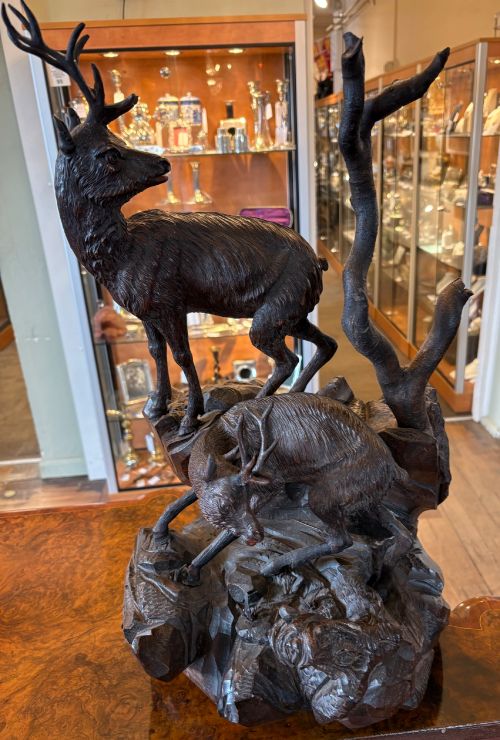
- A style of wood carving originating from the mountainous region of central Europe, famous for realistic depictions of bears, deer and alpine fauna. These pieces often exhibit deep undercutting and varnished walnut surfaces.
- Kibori Kuma
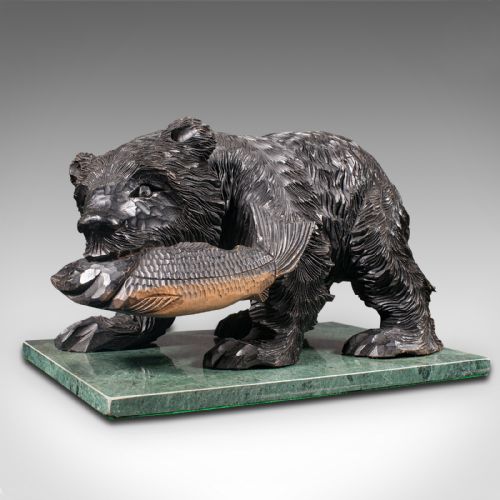
- A traditional style of Japanese wooden bear sculpture, originating in Hokkaido, typically depicted holding a salmon in its jaws. These carvings celebrate the rustic qualities of the timber grain.
- Raj period
- An era of Indian production reflecting British influence, known for dense hardwoods like teak and ebony carved into ceremonial elephants and exotic animals. Detail work on these items frequently includes traditional regalia.
- Grand Tour
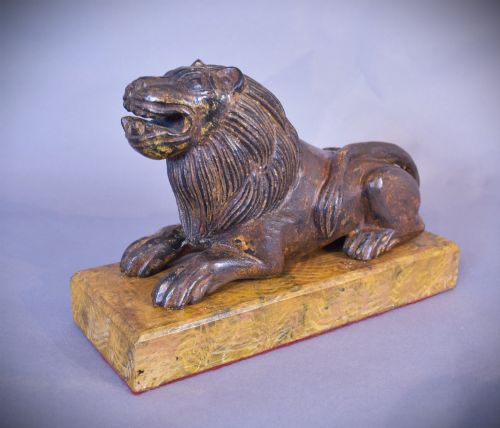
- A nineteenth-century cultural tradition where travellers collected classical souvenirs, such as carved Medici lions, to bring home. These pieces replicate famous European monuments and sculptures in miniature or monumental proportions.
Carved Timber Animal Statue: Frequently Asked Questions
What wood was used?
Carvers utilised a range of timbers including walnut, lime wood, teak, ebony and general dense hardwoods depending on the regional origin of the piece.
European workshops favoured softer lime and rich walnut, while makers in India and Asia worked with heavier tropical woods like ebony and teak.
How do I clean them?
Dust timber sculptures gently with a dry, soft brush to prevent accumulation in the carved recesses of fur and feathers.
Avoid liquid cleaners and damp cloths, which can damage aged wooden surfaces and historic painted finishes.
Are these figures solid wood?
Most animal sculptures from these periods are carved from a single solid block of timber or constructed from joined sections of hardwood.
Larger life-size pieces occasionally utilise seasoned timber boards laminated together to prevent splitting over time.
How old are these statues?
The pieces span from the seventeenth century through the nineteenth century and into the mid-twentieth century.
Nineteenth-century production forms the largest portion of the available selection, particularly pieces from the Victorian and Raj eras.