
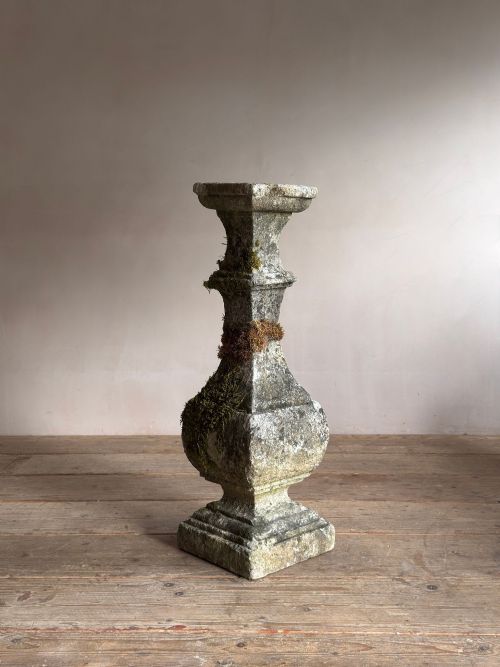
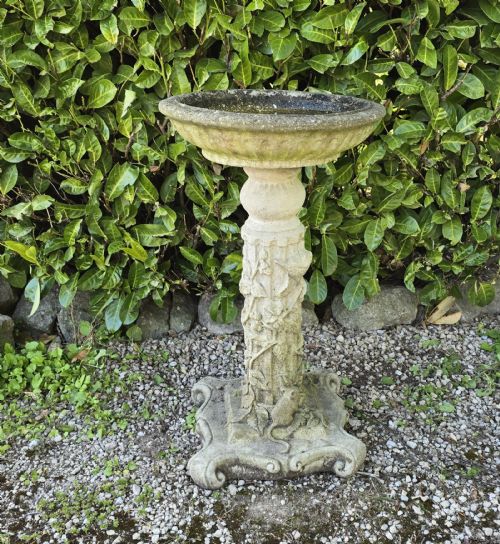


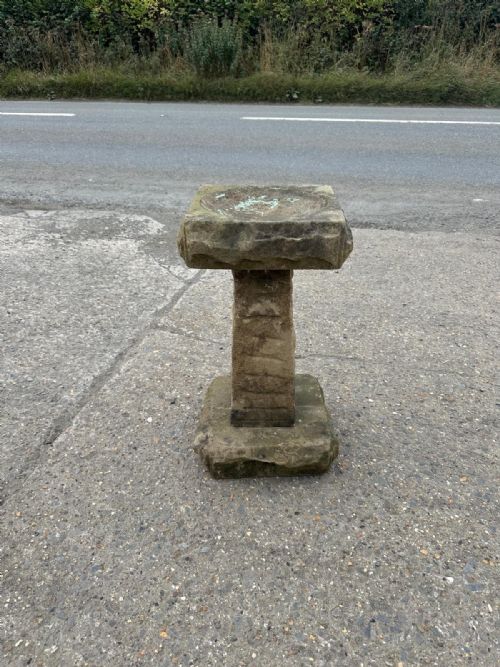


Carved Stone Garden Pedestal
A carved stone garden pedestal anchors architectural planting and statuary, bringing height and proportion to outdoor spaces.
Carved Stone Garden Pedestal
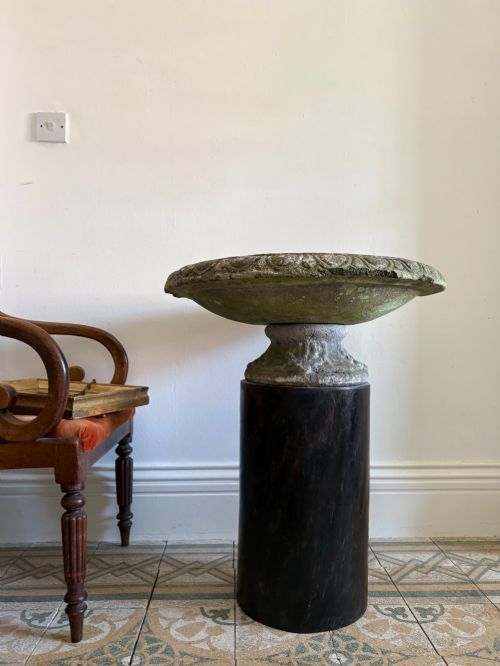
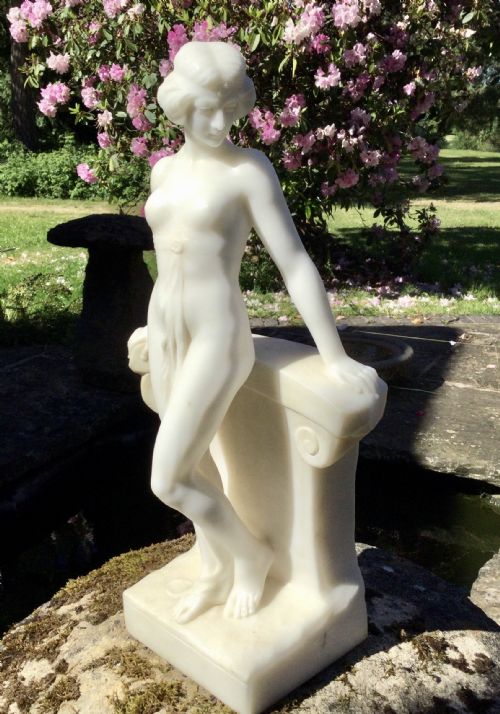
A carved stone garden pedestal provides a sturdy support for urns, sundials, figures and bird baths. These items elevate garden ornaments to catch the eye and improve drainage or visibility among plantings.
The selections span from the eighteenth century through to the mid-twentieth century, encompassing periods such as Georgian, Victorian, Edwardian and the 1930s. Forms range from classical columns and staddle stones to funerary altars and simple plinths.
Buyers will encounter various structural configurations, including single columns, multi-sided bases and matched pairs designed for formal garden layouts. Materials and patination reflect decades or centuries of outdoor weathering.
How they were made
Masons utilised traditional hand-carving techniques on natural media like limestone, sandstone, Purbeck stone, marble and red stone. These durable geological resources resist frost and weathering over long periods.
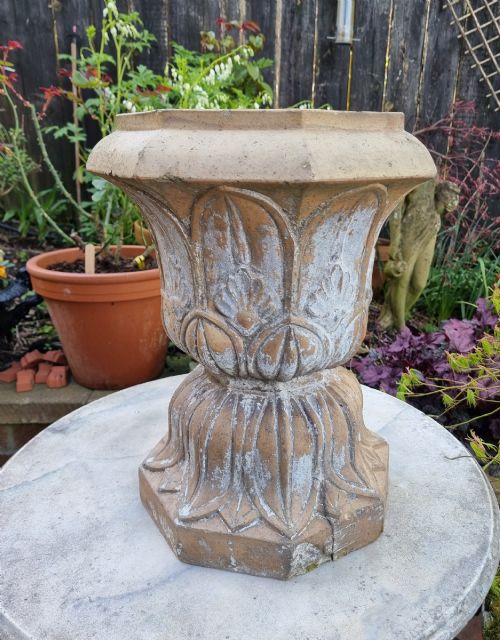
Later pieces incorporate cast stone and reconstituted stone poured into moulds to replicate traditional carved details. Stoneware and terracotta also appear, shaped and fired to withstand outdoor elements.
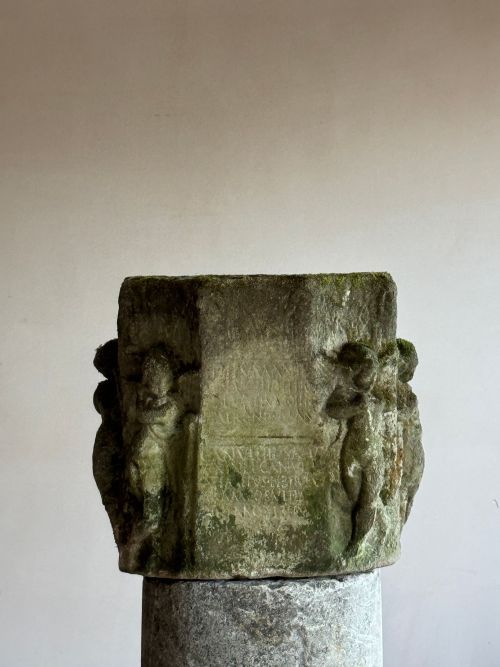
Several pieces show the quiet green kiss of moss, proving that even heavy masonry enjoys a little botanical company in the garden.
What varies in quality
The fineness of the chisel work and the crispness of architectural details, such as Corinthian capitals or moulded panels, distinguish superior examples from simpler utilitarian blocks. Proportion and balance dictate visual success in a landscape setting.
Natural weathering creates desirable organic patination, including moss growth and surface softening, which enhances the historical character. Deep structural fractures differ from benign surface ageing and affect the integrity of weight-bearing sections.
The Carved Stone Garden Pedestal Glossary
- Staddle stone
- A mushroom-shaped support formerly used to elevate granaries above the damp ground and pests. In gardens, they serve as distinctive rustic pedestals or ornaments.
- Tazza
- A shallow cup or urn on a foot and pedestal, frequently carved from marble or stone. These classical forms feature prominently in Italian and British formal gardens.
- Corinthian capital
- The uppermost decorative member of a column, characterised by ornate acanthus leaves and scrolls. They appear on carved stone fragments and architectural supports.
- Patination
- The surface alteration and mellowing acquired by stone through age and exposure to the elements. Natural weathering produces subtle colour shifts and textures.
- Reconstituted stone
- A composite material made from crushed or graded natural stone aggregate mixed with a binder. It is cast in moulds to imitate carved masonry.
Carved Stone Garden Pedestal: Frequently Asked Questions
How do I secure a heavy stone pedestal?
Most heavy stone pedestals and plinths remain stable under their own considerable weight when placed on a level, compacted foundation. Mortar is rarely required unless the piece supports top-heavy statuary in exposed, windy locations.
For elevated urns or figures, a concealed stainless steel dowel drilled into the base and pedestal provides additional security against accidental displacement.
Can these garden pedestals stay outside in winter?
Dense natural stones like limestone, sandstone and Purbeck stone tolerate frost well if water is prevented from pooling in un-drained cavities. Placing slate shims beneath the base prevents moisture absorption from wet soil.
Cast stone and terracotta require more caution during hard freezes to avoid surface spalling caused by expanding moisture within the porous matrix.
How do I clean moss off old stone?
Light brushing with a soft bristle brush and plain water removes loose debris while preserving the desirable patination accumulated over decades. Aggressive wire brushes and chemical acid washes strip away the aged surface character.
Allowing organic growth to remain is standard practice for historic garden ornaments, as it highlights the texture and age of the material.
What is the difference between a plinth and a pedestal?
A plinth generally refers to a lower, simpler block or base that elevates a statue, column or urn from the ground level. Pedestals often possess more architectural definition with distinct capitals, shafts and bases.
In garden architecture, these terms frequently overlap depending on the specific classical style and proportion of the piece.