


Antique Garden Sundial
An antique garden sundial grounds an outdoor space with historic character, marking time through centuries of weathering.
Antique Garden Sundial
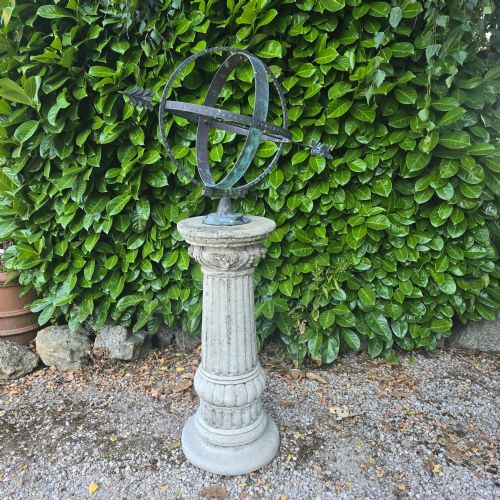
An antique garden sundial serves as a traditional timekeeping ornament for grounds and terraces, incorporating a gnomon to cast shadows across a calibrated plate. These pieces survive in various historic forms, including armillary spheres, pillar-mounted dials, and repurposed architectural elements.
Buyers browsing this selection frequently encounter Victorian examples alongside earlier Georgian and Regency specimens. The inventory spans simple stone or slate markers to substantial bronze spheres and carved plinths.
English country gardens often display these objects as focal points, pairing stone columns or pedestals with cast metal dials. Each piece reflects the functional garden design of its specific period.
How they were made
Makers fashioned these dials from durable outdoor materials such as stone, carved stone, slate, terracotta, lead, brass, and bronze. Metals like brass and bronze provided stable surfaces for precision markings, while stone and slate formed sturdy structural plinths and columns.
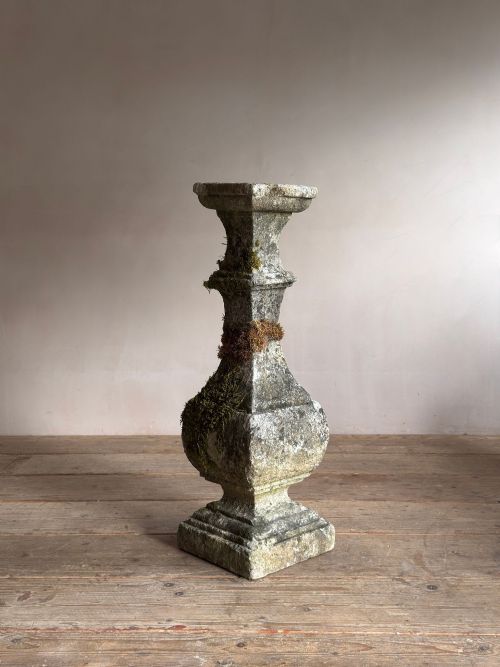
Traditional fabrication involved casting metals like bronze and brass for the dial plates and gnomons, paired with hand-carved stonework for the pedestals. Artisans adapted architectural salvage, such as Victorian chimneys, to serve as unusual mounting plinths.
Antique Garden Sundial Retail Price Guide 2026
Typical asking prices for garden sundial among the pieces listed under this phrase on Sellingantiques today, from the lower quarter to the upper quarter. They describe what is for sale here now, not the wider market.
One listed nineteenth century sundial spent its earlier working life functioning as an unusual Victorian chimney.
What varies in quality
Quality in these garden pieces rests upon the crispness of the metal casting and the depth of the stone carving. Superior examples exhibit finely detailed gnomons and balanced proportions between the dial plate and its supporting column.
The degree of historic weathering and the integrity of the original materials define the character of each specimen. Pieces that retain their matching metal and stone elements demonstrate greater cohesion than those assembled from disparate periods.
The Antique Garden Sundial Glossary
- Gnomon
- The projecting piece of a sundial that casts the shadow. This triangular or angled blade must align with the celestial pole to tell accurate time.
- Armillary sphere
- A model of objects in the sky consisting of a spherical framework of rings. In garden ornaments, it surrounds a central gnomon to indicate time and solar movement.
- Plinth
- The heavy base supporting a sundial or statue. These range from simple stone blocks to elaborate Gothic revival columns.
- Regency
- A British architectural and decorative period dating from the early nineteenth century. Pieces from this era often feature clean classical lines.
Antique Garden Sundial: Frequently Asked Questions
Where should I place a sundial?
Position your sundial in an open, unshaded part of the garden where sunlight falls throughout the day. A central lawn or the intersection of paved paths works well for visibility.
Ensure the mounting surface remains level so the gnomon can cast accurate shadows. Historic stone columns require a solid foundation to prevent shifting over time.
How do I read an antique sundial?
Read the time by observing where the shadow of the gnomon falls across the hour lines on the dial plate. Because these pieces record solar time, minor adjustments may be needed to match modern clock time.
Older dials often feature Roman numerals and engraved mottoes around the outer edge. Observing the shadow movement provides a traditional method of tracking daylight hours.
Are these sundials frost resistant?
Most historic materials like bronze, brass, stone, and slate withstand normal outdoor weathering across seasons. However, severe winter freezes can affect porous stone or trapped moisture in older masonry.
Protecting vulnerable terracotta or softer stone elements during harsh weather helps preserve the surface carving. Metal components generally require minimal seasonal attention beyond standard cleaning.
How do I clean bronze and brass dials?
Clean metal dials gently with warm water and a soft brush to remove accumulated dirt and debris. Avoid harsh chemical cleaners that strip away historic patination.
Allowing the natural oxidation to remain protects the metal surface and maintains the authentic appearance of age. Periodic light rinsing keeps the engraved numbers legible.