



Outdoor Stone Pedestals
Outdoor stone pedestals are garden supports and plinths that elevate urns, statues and sundials, chosen to bring architectural structure to a lawn.

Outdoor Stone Pedestals
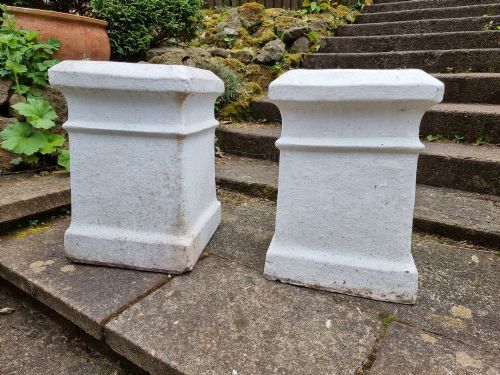
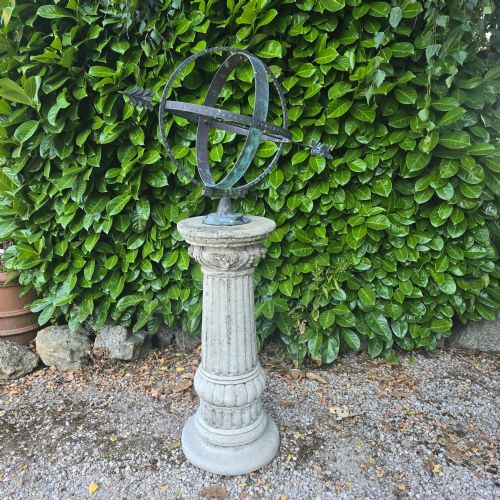
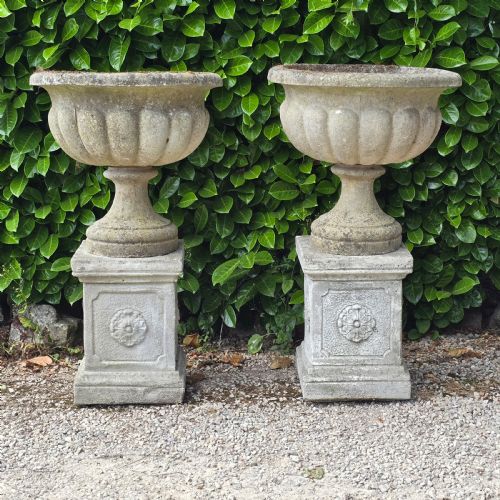
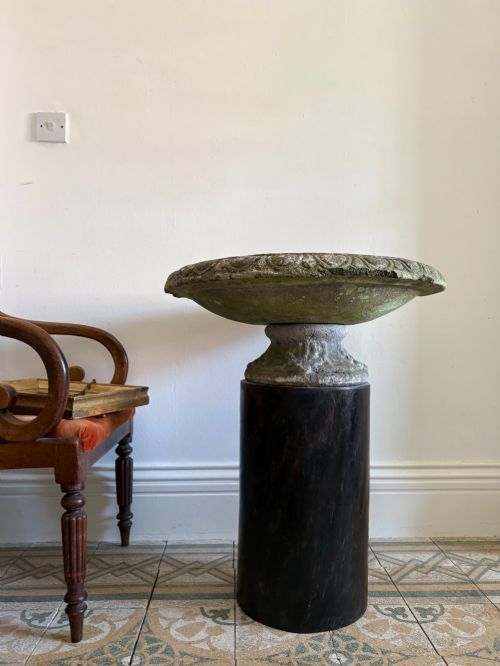
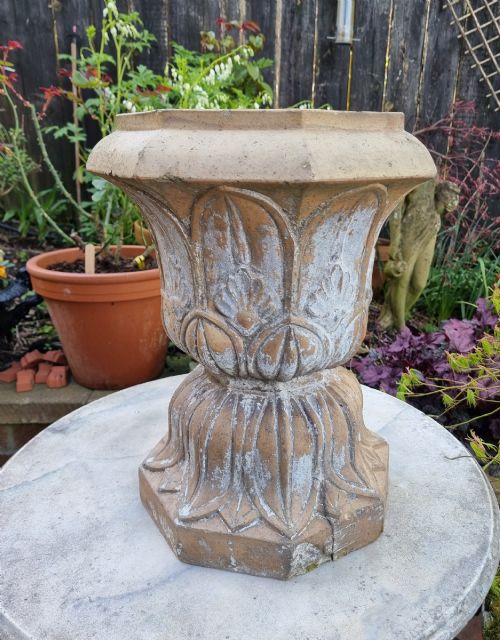
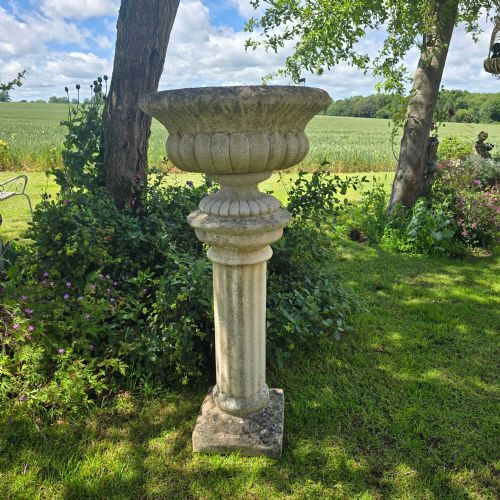
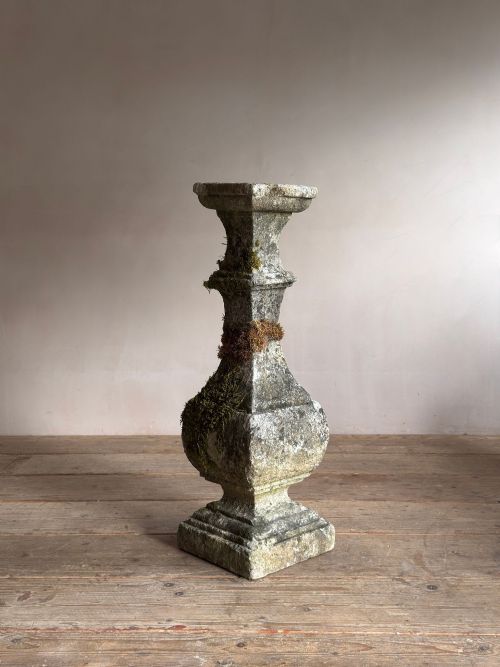
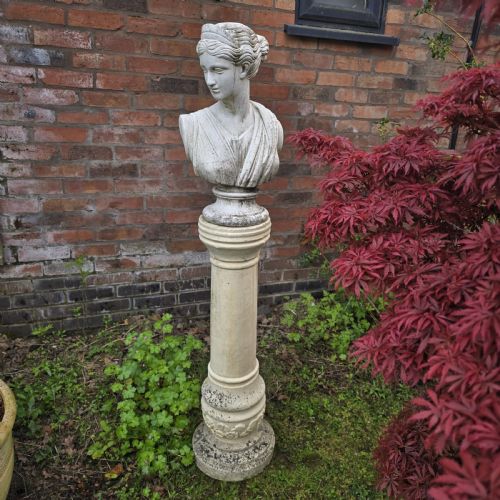
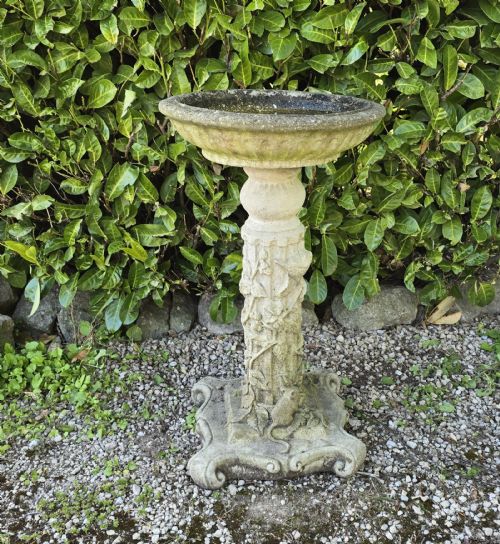
Outdoor stone pedestals comprise columns, plinths and chimney pots that serve as raised mounting bases for garden ornaments. These items appear alongside garden urns, bird baths, sundials and statues, often forming matched pairs designed to anchor an entrance or a path.
The pieces on this page span from the eighteenth century through to the mid-twentieth century, encompassing Georgian, Victorian and neoclassical designs. Buyers frequently encounter nineteenth-century composite stone and reconstituted stone variants alongside weathered limestone and sandstone examples.
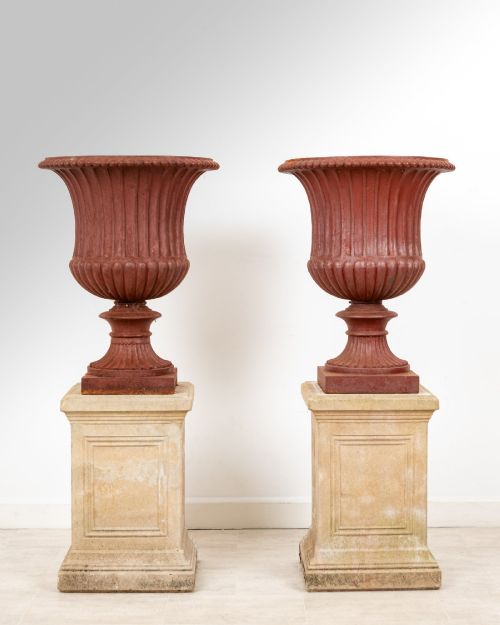
Functionally, these supports lift heavy planters and statuary above ground level to improve drainage and visual impact. They act as independent architectural focal points in garden design, carrying everything from classical busts to cast iron campana urns.
Materials and Construction
Maker construction methods rely heavily on durable exterior media, notably hand-carved natural sandstone and limestone alongside cast and reconstituted stone. These heavy mineral substances withstand sustained outdoor exposure while developing characteristic surface patination over decades.
Many structural bases incorporate moulded terracotta or salt-glazed stoneware sections, occasionally paired with cast iron elements or granite tops. The casting and carving techniques employed create rigid load-bearing columns capable of supporting weighty garden statuary and planted vessels.
The listings span from the eighteenth century to the mid-twentieth century, featuring natural sandstone, limestone, terracotta and reconstituted stone.
Evaluating Quality and Age
Quality rests in the crispness of the modelling and the integrity of the stone, where hand-carved acanthus leaves or classical columns display superior artistic definition. Mass-produced cast pieces from later periods show softer edges compared to deeply carved eighteenth-century or early nineteenth-century originals.
The depth of natural weathering dictates visual appeal, as decades of exposure impart organic lichen growth and stable surface patination that chemical treatments cannot replicate. Structural soundness remains paramount, ensuring the column bears the weight of urns or busts without internal fracturing.
Andrew Handyside
The Outdoor Stone Pedestals Glossary
- Plinth
- A heavy rectangular or square block that serves as the base for a statue, urn or column. It elevates the ornament above ground level to create a distinct focal point in a garden scheme.
- Campana Urn
- A bell-shaped garden vessel with an everted rim and a pedestal foot. These classic planters are frequently mounted directly onto stone pedestals or plinths.
- Reconstituted Stone
- A durable composite material made from crushed stone aggregate mixed with a binder to imitate natural stone. It became a popular medium for architectural garden ornaments during the nineteenth and twentieth centuries.
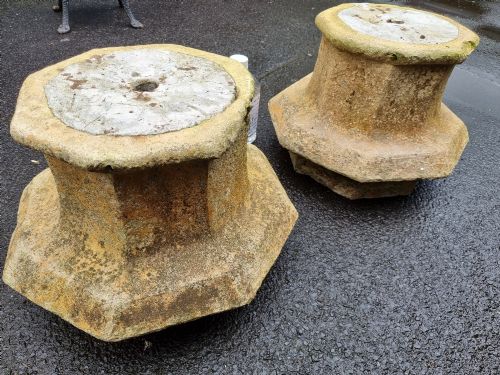
- Staddle Stone
- A mushroom-shaped stone support originally used to elevate granaries off the damp ground to deter vermin. Today these utilitarian blocks function as rustic garden pedestals.
- Armillary Sphere
- An astronomical instrument composed of metal rings representing celestial circles, commonly mounted on stone pedestals or sundial plinths.
Outdoor Stone Pedestals: Frequently Asked Questions
What were outdoor stone pedestals originally used for?
These architectural supports were utilised to elevate garden urns, sundials and statuary above the damp earth. Raising the ornaments protected them from ground moisture while improving their sightlines within formal landscape designs.
Over time, homeowners incorporated them as permanent structural focal points along garden terraces, pathways and lawn borders.
How do I care for antique stone plinths outdoors?
Antique stone requires minimal intervention, allowing natural weathering, moss and lichen to develop patination safely over the decades. Routine cleaning should only involve gentle brushing with water to remove accumulated debris without damaging the surface.
During freezing winter conditions, ensure water does not pool in recessed top sections to prevent potential cracking of porous cast or natural stone.
How can I tell nineteenth-century pedestals from later pieces?
Nineteenth-century examples typically display hand-carved detailing or early composite stone mixes with deep organic weathering and mineral encrustation. Later twentieth-century pieces often utilise smoother reconstituted stone with more uniform colouring and less pronounced surface erosion.
Examining the crispness of decorative motifs like acanthus leaves helps reveal the period and manufacturing technique.
Can these pedestals support heavy cast iron urns?
Solid stone and heavy cast columns are engineered specifically to bear significant weight from metal urns, stone busts and large planters. The substantial mass of the base prevents tipping even when topped with heavy garden ornaments.
Ensure the mounting surface is completely level before placing heavy items on top to distribute the load evenly.