




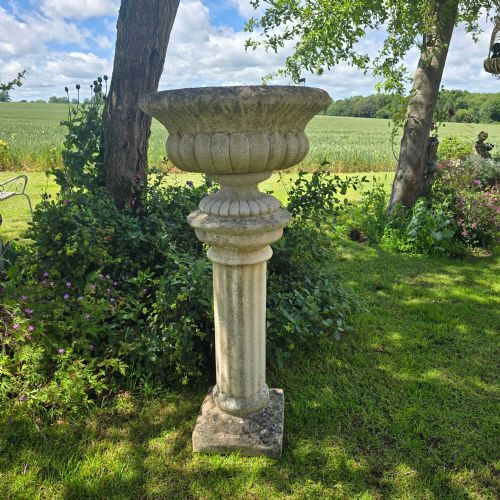
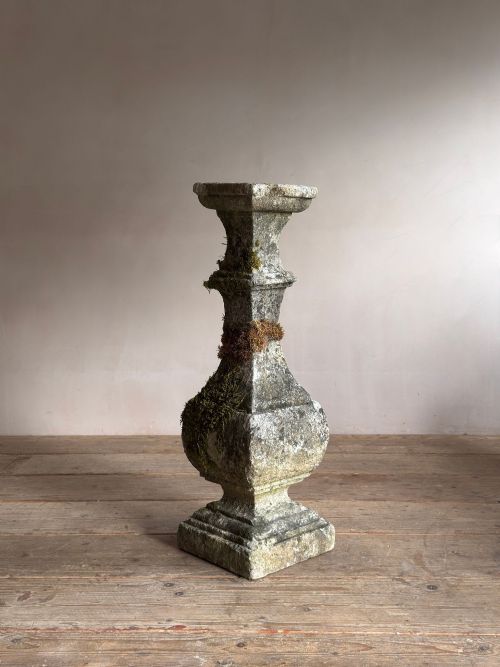

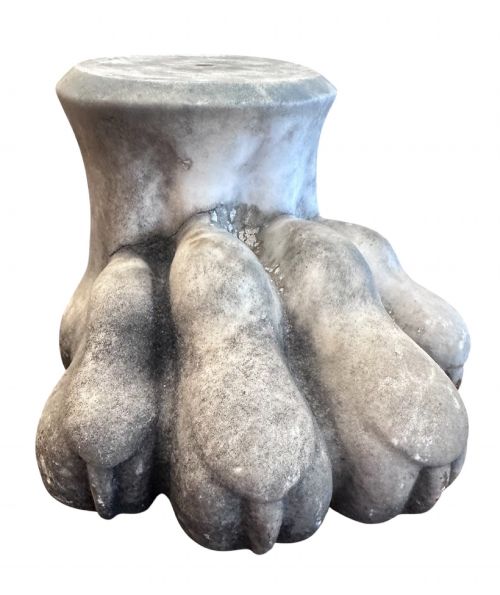


Grey Stone Plinth
A grey stone plinth elevates garden statues, urns, and architectural ornaments with classical weight and enduring presence.
Grey Stone Plinth
A grey stone plinth provides a stable architectural base for displaying garden statuary, busts, and urns. Pieces matching this phrase appear across Georgian, Victorian, Edwardian, and mid-twentieth century periods.
The selection on this page ranges from simple nineteenth century stoneware plinths to detailed pedestals supporting figures of Athena, David, and Roman funerary altars. Many examples integrate directly with garden urns and planters as matched pairs.
Makers and foundries such as Andrew Handyside contributed cast iron elements, while traditional carvers shaped limestone, marble, and reconstituted stone into classical forms.
Materials and construction
Craftsmen shaped these objects using natural media like limestone, carved stone, Carrara marble, and alabaster alongside moulded cast stone and reconstituted stone. Masons utilised hand chisels for detailed architectural work on capitals and pedestals.
Foundries produced metal variants using cast iron, while weathering naturally coats exterior surfaces in moss over decades of outdoor exposure.
Grey Stone Plinth Retail Price Guide 2026
Typical asking prices for grey stone plinth among the pieces listed under this phrase on Sellingantiques today, from the lower quarter to the upper quarter. They describe what is for sale here now, not the wider market.
Evaluating craftsmanship and proportion
Quality rests in the precision of the carving, the purity of the marble or limestone, and the structural balance of the pedestal. Finer examples display crisp moulding lines and harmonious classical proportions suited to supporting heavy stone statuary.
Surface texture and weathering also define the character of an individual plinth, where genuine age shows through natural patination rather than artificial distress.
Andrew Handyside
The Grey Stone Plinth Glossary
- Plinth
- A heavy base or pedestal supporting a statue, column, or urn. It elevates the sculpture above ground level for prominent display.
- Reconstituted stone
- A durable composite material made from crushed stone and cement binder moulded into architectural shapes. It mimics the appearance of natural carved stone.
- Campana
- A bell-shaped garden urn often mounted upon a matching pedestal. This classical form originates from ancient Roman pottery designs.
- Corinthian capital
- The ornate crowning feature of a classical column decorated with acanthus leaves. Examples appear carved in nineteenth century limestone.
- Neoclassical
- An artistic style inspired by the classical art and architecture of ancient Greece and Rome. This aesthetic dominates the proportions of many pedestals and statues.
Grey Stone Plinth: Frequently Asked Questions
What is a grey stone plinth used for?
A grey stone plinth serves as an elevated platform for garden statues, busts, and decorative urns. It improves visibility and protects outdoor sculptures from damp ground.
These architectural supports anchor heavy stone and iron ornaments firmly within formal gardens or interior spaces.
How do I date a stone plinth?
Dating relies on identifying material composition, tool marks, and stylistic indicators such as Victorian classical moulding or Georgian proportions. Natural weathering patterns also help confirm genuine age.
Comparing the decorative motifs against documented nineteenth or twentieth century architectural styles provides further chronological context.
Can these plinths stay outdoors?
Most stone, cast stone, and reconstituted stone plinths withstand outdoor weathering year-round. Natural materials like limestone and granite endure frost when properly sited.
Porous stones and marble benefit from shelter during severe winter freezes to prevent moisture expansion and surface cracking.
How do I match a plinth to a statue?
Matching involves balancing the weight, footprint, and stylistic period of the sculpture with the pedestal. Neoclassical statues pair naturally with classical revival or architectural plinths.
Proportion remains paramount so that the base neither overwhelms the mounted bust nor looks too fragile for the weight above.