


Weathered Stone Plinths
Weathered stone plinths are architectural supports and garden mounts shaped from stone that bring height and classical order to outdoor sculptures and urns.

Weathered Stone Plinths
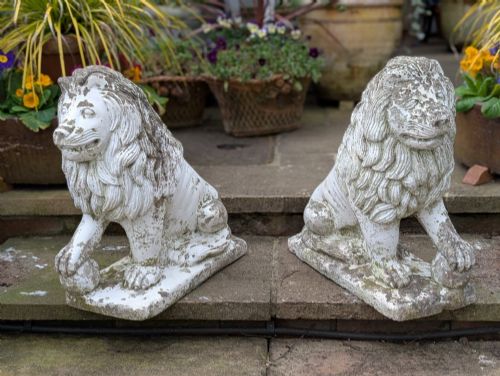
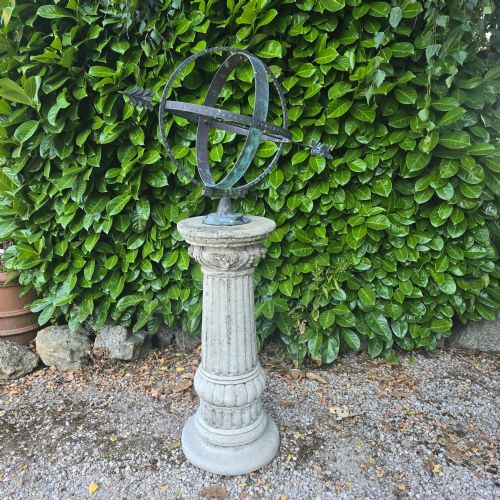
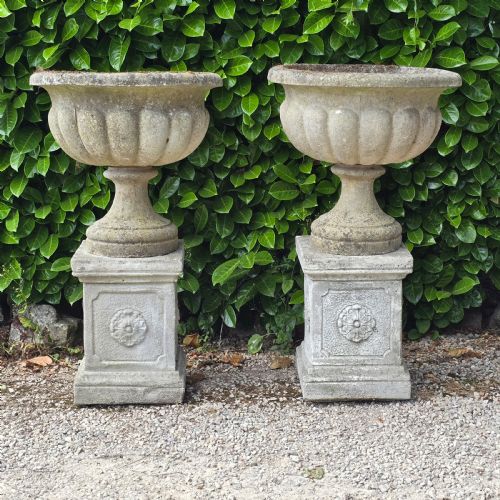
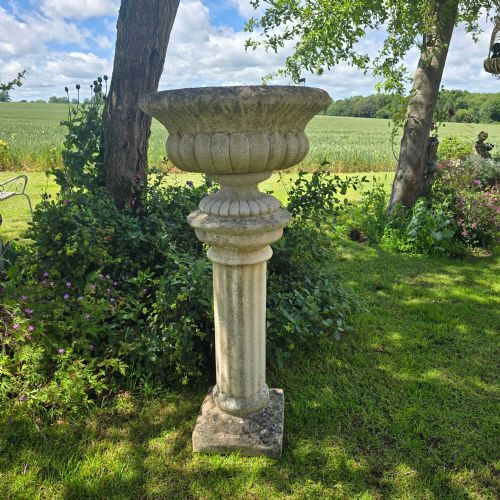
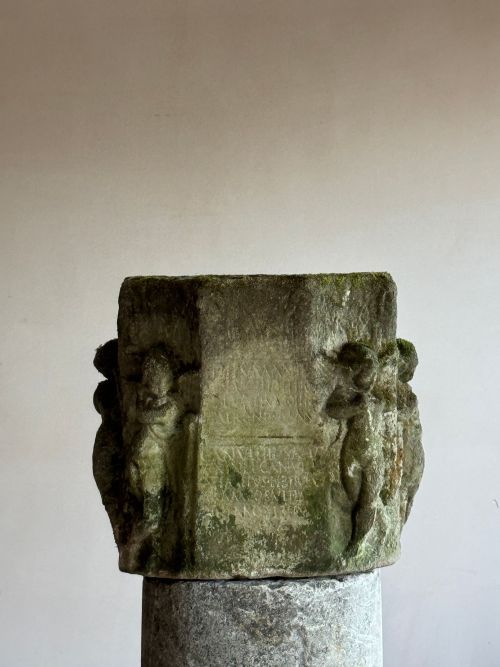
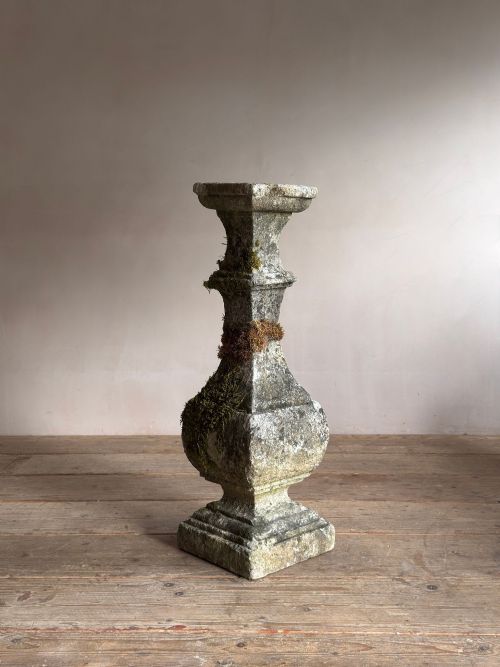
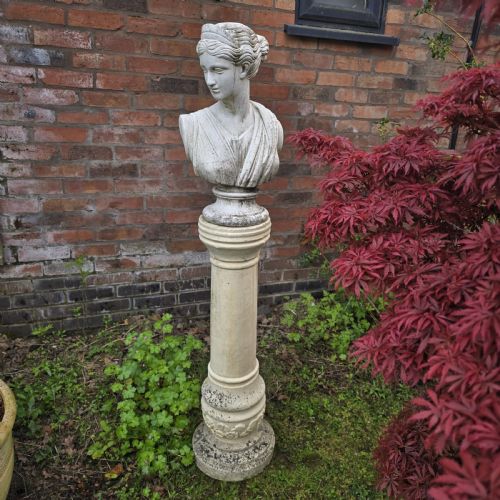
Weathered stone plinths form the solid architectural bases that elevate garden statues, sundials, and urns above the ground. You will encounter these supports in various forms, from simple cylindrical columns to square pedestals that carry classical busts or carved lions.
The selections span distinct historical periods, including examples from the nineteenth century, the Edwardian era, and mid-twentieth-century productions. These pieces often arrive paired or as single pedestals designed to anchor focal points within a landscape.
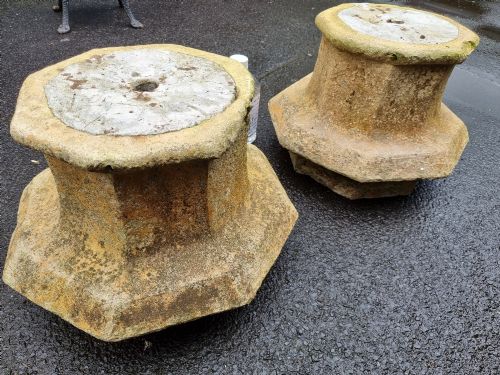
Makers shaped these supports using materials that range from natural limestone and carved stone to reconstituted and cast stone. They frequently reflect architectural revivals, displaying neoclassical or Gothic details that suit formal gardens and terraces.
Judging Quality and Proportion
Quality rests in the sharpness of the original carving or moulding and the balance of the proportions. Superior examples maintain crisp architectural details on capitals and sides, whereas lesser pieces show soft edges or hurried casting lines.
The depth and character of the weathering also distinguish the range. Naturally aged surfaces that show genuine organic patination carry a visual weight that synthetic ageing cannot replicate.
Some nineteenth-century lions on plinths have spent so long outdoors that local birds treat their stone heads as permanent outlook posts.
The Weathered Stone Plinths Glossary
- Plinth
- The heavy base or pedestal that supports a statue, urn, or column. It lifts garden ornaments to eye level.
- Reconstituted stone
- A manufactured material made from crushed stone aggregate mixed with a binder to imitate natural stone. It is cast in moulds to create garden pedestals and architectural ornaments.
- Corinthian
- A classical order of architecture defined by ornate capitals decorated with acanthus leaves. This style frequently appears on stone columns and pedestals.
- Neoclassical
- A style inspired by the classical architecture and art of ancient Greece and Rome. It guides the symmetrical forms and formal decorative motifs found on many garden plinths.
Weathered Stone Plinths: Frequently Asked Questions
How do I place a plinth in the garden?
Position your stone plinth on a firm, level foundation such as stone paving or compacted gravel to prevent shifting over time. Ensure the weight of the base is evenly distributed to keep any mounted statue or urn secure.
Allow enough surrounding clearance so the piece acts as a natural focal point along a pathway or at the end of a lawn vista.
Can these stone plinths stay outside in winter?
Most stone and reconstituted stone plinths are built to withstand year-round outdoor conditions. Natural limestone and cast stone endure seasonal frost well, provided water does not pool in unsealed crevices.
Check that any mounted sundials or loose architectural elements are secured against strong winter winds.
How do I clean a weathered stone plinth?
Wash the stone gently with water and a soft brush to remove loose dirt and debris. Avoid harsh chemical cleaners or pressure washers, which can strip away the aged patina and erode the stone surface.
Preserve the accumulated moss and lichen where possible, as these organic layers contribute to the historical character of the piece.
What goes on top of a garden plinth?
Mount garden urns, classical busts, bronze armillary spheres, or stone statues on your plinth to add vertical interest to planting schemes. Paired plinths often flank pathways, entrance gates, or formal steps.
Match the scale of the object on top to the width and height of the supporting base for a balanced appearance.