



Classical Garden Plinths
Classical garden plinths elevate urns, statues, and busts to command attention in outdoor spaces through enduring historical forms.
Classical Garden Plinths
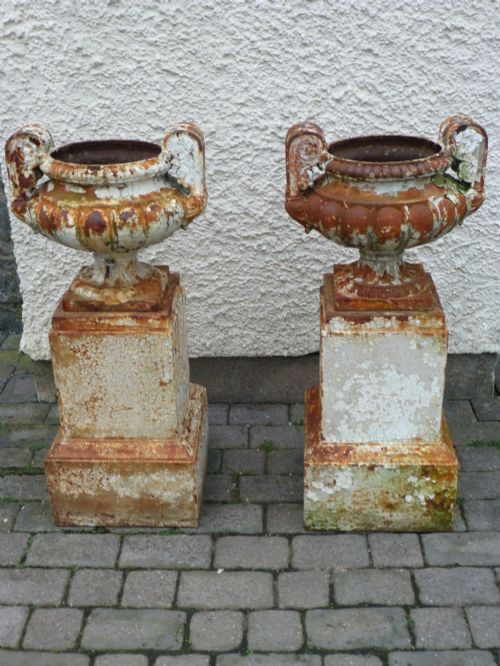
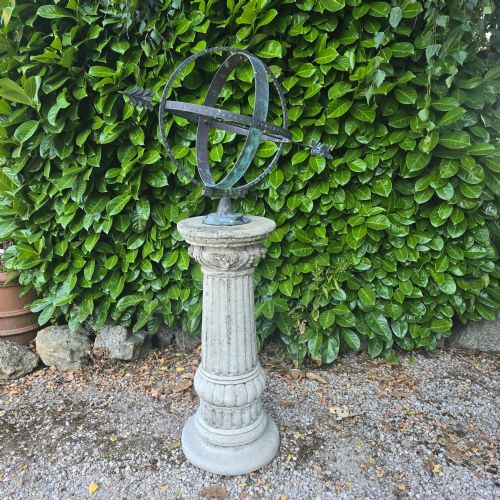
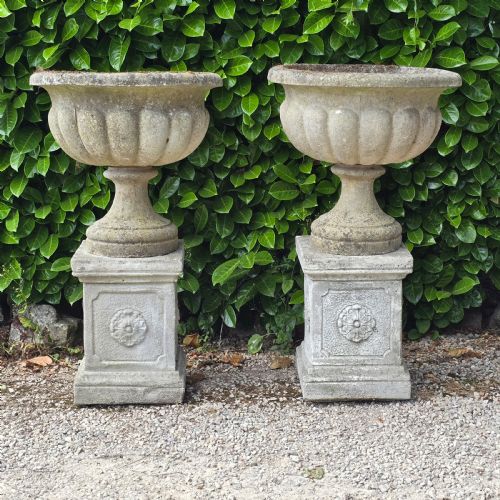
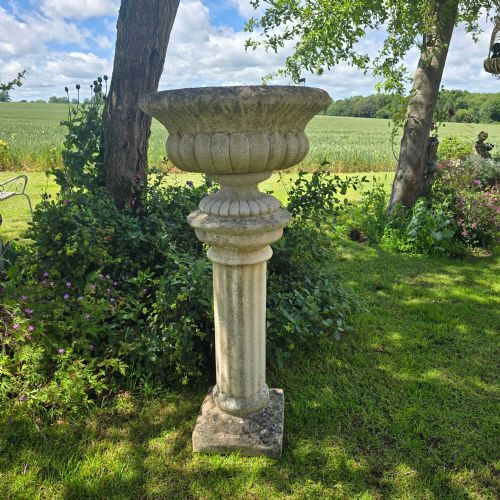
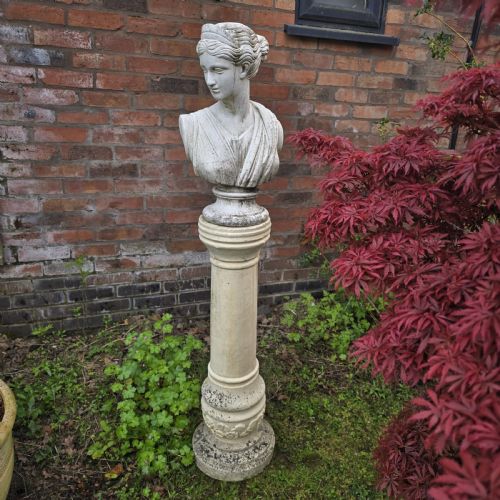
Classical garden plinths provide the foundational pedestals and columns that display statues, urns, and sundials across historic and mid-century gardens. These structural supports lift sculptural works to eye level, creating focal points in lawn and terrace layouts. When exploring classical garden plinths, buyers encounter architectural elements ranging from simple stone columns to ornate pedestals paired with campana urns or busts.
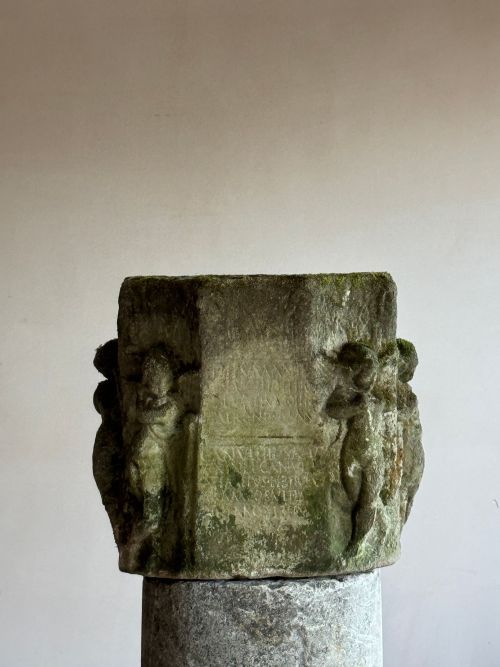
The pieces listed span periods from Georgian and Regency eras through the Victorian, Edwardian, and mid-twentieth century. Reconstructions of ancient forms, such as Roman funerary altars and Corinthian capitals, appear alongside sturdy cast iron planters and stone display columns. This variety allows landscape arrangements to adopt formal neoclassical proportions or weathered nineteenth-century character.
How they were made
Cast iron and reconstituted stone dominate the fabrication of these structural supports, alongside natural limestone, marble, and terracotta. Foundries utilised sand-casting methods for heavy iron urns and pedestals, pouring molten metal into moulds to achieve crisp acanthus leaf details and gadrooned rims. Stone masons carved limestone and marble directly, while later twentieth-century pieces employed moulded cast stone and reconstituted aggregates.
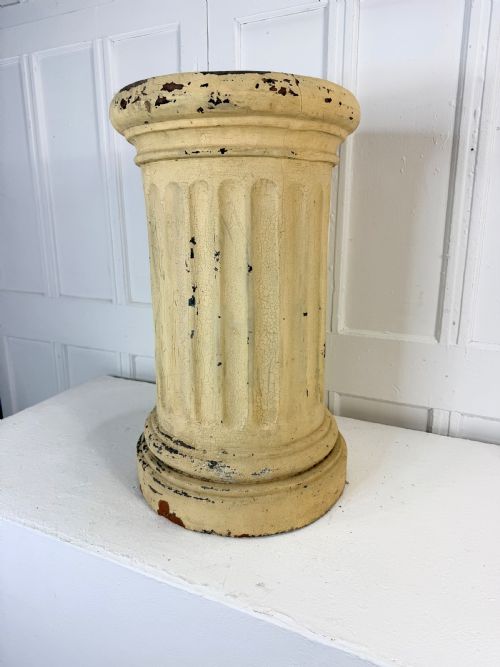
Surface finishes include aged paint layers and natural weathering that develop over decades outdoors. Bronze components occasionally crown stone bird baths or sundials, contrasting with the heavier mineral bases beneath them. These combined materials ensure the pedestals withstand exterior conditions while maintaining their classical silhouettes.
Listings feature classical garden plinths in materials spanning cast iron, reconstituted stone, limestone, terracotta, and marble.
What varies in quality
Quality in classical garden plinths rests upon the crispness of the architectural moulding and the integrity of the chosen material. Superior examples display sharply defined relief work on capitals, gadrooning, and acanthus leaves, whereas lesser pieces suffer from softened details and blurred casting seams. The depth of the modelling directly affects how light and shadow articulate the classical proportions.
The harmony between the pedestal and the mounted urn or bust dictates visual balance. Original pairs matching a foundry or period carry greater architectural coherence than assembled combinations. Natural weathering that deepens the stone or iron evenly enhances the surface, distinguishing robust historic fabric from flat modern substitutes.
Falkirk Carron foundry·Andrew Handyside
The Classical Garden Plinths Glossary
- Campana urn
- A bell-shaped garden vessel with an everted rim, frequently mounted upon a column or plinth. These vessels derive from ancient Roman metal and ceramic forms.
- Gadrooned
- Ornamented with a series of convex curves or flutes moulding the lower bowl of an urn or the edge of a pedestal. This decorative carving reflects classical architectural motifs.
- Reconstituted stone
- A manufactured material composed of crushed natural stone and cement binder moulded into architectural shapes. It provides the heavy texture of quarried stone for garden statuary.
- Corinthian capital
- The uppermost member of a column featuring carved acanthus leaves and scrolls. These capitals define the classical orders seen on display stands and pedestals.
Classical Garden Plinths: Frequently Asked Questions
What goes on a garden plinth?
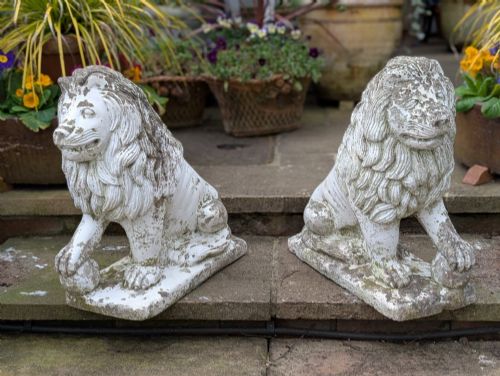
These architectural supports hold garden urns, statuary, sundials, and portrait busts. Placing sculpture upon a pedestal creates a distinct focal point in a garden or courtyard.
Heavier items like cast iron campana urns and stone figures require sturdy limestone or iron columns to support their weight safely outdoors.
Are these plinths weather resistant?
Materials such as cast iron, reconstituted stone, limestone, and terracotta endure outdoor elements throughout changing seasons. Over decades, exposure to rain and wind develops a characteristic weathered patina across the surfaces.
Heavier stone and iron structures remain stable on lawns and terraces without requiring permanent ground fixings.
How do I date a stone plinth?
Dating relies on stylistic details, material composition, and manufacturing marks from foundries or stonemasons. Pieces range from Georgian and Regency hand-carved limestone to Edwardian cast stone and mid-century reconstituted aggregates.
Surface weathering and lichen growth offer further clues to age, though environmental conditions vary widely between locations.
Can plinths and urns be separated?
Many listings present urns and statues paired directly with their original pedestals or columns as cohesive sets. Certain designs allow the top vessel to lift off the base for easier transport and repositioning.
Matching the proportions of the upper sculpture to the supporting column remains essential for visual balance in landscape design.