


Georgian Garden Ornament
These georgian garden ornament pieces bring weathered stone, cast iron and lead into the open air.
Georgian Garden Ornament
When you search for a georgian garden ornament, you are looking at architectural salvage and decorative items designed for domestic grounds during the eighteenth and nineteenth centuries. The selections on this page span vernacular items from the Georgian and Regency periods alongside works dated around eighteen hundred.
The forms range from carved stone baskets and putti to granite staddle stones and bronze sundials cast in Edinburgh. Each piece carries the marks of weather and age accumulated across generations.
Materials and construction
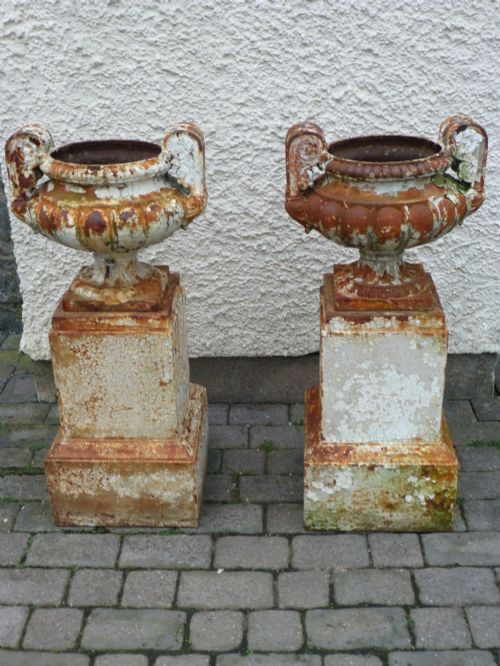
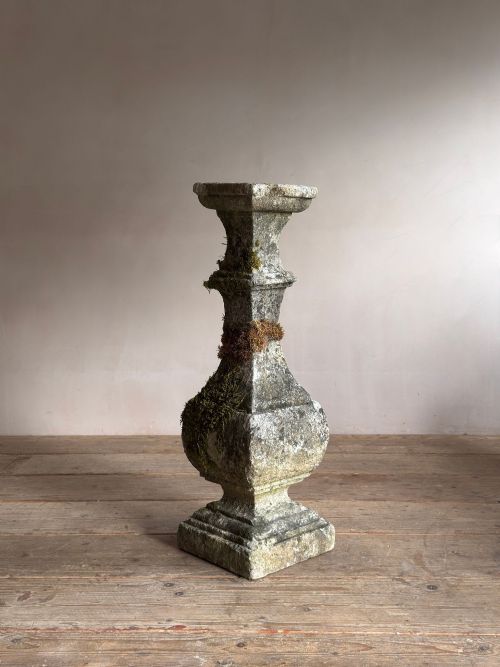
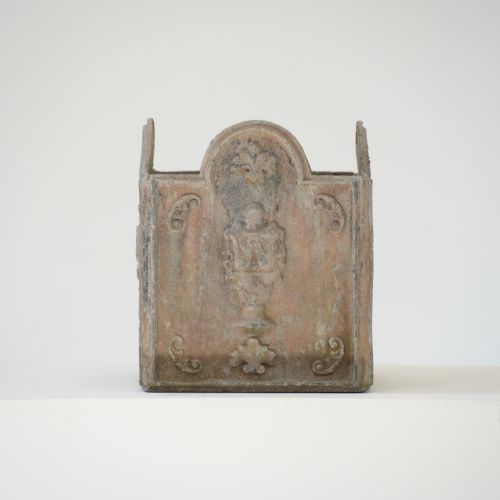
Makers shaped these items from limestone, sandstone, Cornish granite and carved stone using traditional masonry techniques. Founders also poured lead and cast iron into moulds to create urns, figures and planters.
Ironwork involved forging wrought iron for items like boot scrapers and weathervanes. Sundials combined cast bronze faces with stone or slate plinths, often bearing maker inscriptions.
Listings feature limestone, sandstone, Cornish granite, slate, cast iron, wrought iron, lead, paint and moss.
Judging quality in early garden metal and stone
Quality rests in the crispness of the original carving or casting and the integrity of the material. Heavy granite and dense sandstones retain their form better through centuries of weathering than softer clays or porous stones.
The presence of original surfaces, such as early paint on iron or aged patination on bronze and lead, elevates a piece. Maker signatures on metalwork add definite attribution to an otherwise vernacular object.
Falkirk Carron foundry·Miller and Adie
The Georgian Garden Ornament Glossary
- Staddle stone
- A mushroom-shaped stone support originally used to elevate granaries above damp ground and deter vermin. These are now widely used as garden ornaments.
- Boot scraper
- A small iron or steel blade fixed near a doorway for scraping mud from footwear. Georgian examples often feature simple scrollwork or heavy frames.
- Putto
- A figure of a small chubby boy, often winged, used in classical sculpture and garden statuary. Lead examples from the eighteenth century appear in this category.
- Keystone
- The central wedge-shaped stone at the apex of an arch. Red sandstone examples survive as standalone architectural salvage.
Georgian Garden Ornament: Frequently Asked Questions
What is a staddle stone used for?
Staddle stones originally served as sturdy masonry foundations for granaries and rick stands, keeping timber floors clear of damp earth and pests.
Today, they are placed in gardens as decorative architectural elements, often arranged in formal patterns across lawns.
How do I maintain lead garden ornaments?
Lead ornaments require very little intervention because the metal naturally forms a protective outer layer when exposed to the elements. You should avoid harsh scrubbing or chemical cleaners that might strip this stable patina.
Simply let moss and lichen settle naturally if you prefer an aged look, or wash gently with plain water to clear debris.
Are bronze sundials weather resistant?
Bronze develops a dark, stable oxide layer over decades outdoors that protects the underlying metal from deep corrosion. This natural weathering gives early sundials their characteristic deep green and brown tones.
Ensure the gnomon remains rigid and the stone or slate plinth sits level on firm ground to prevent shifting.
How can I tell a Regency urn from an 18th century one?
Regency ironwork often displays cleaner classical proportions and sharper casting details linked to industrial foundries like Falkirk Carron. Eighteenth-century stone and lead pieces tend to show heavier vernacular hand-carving and softer surface transitions.
Comparing the recorded materials and foundry marks helps clarify the manufacturing era.