

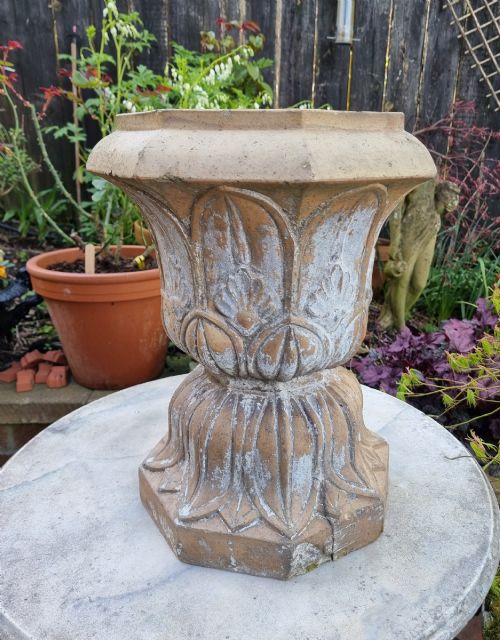


Buff Terracotta Planter
A buff terracotta planter brings warmth and texture to a garden, offering a porous, breathable home for established plants.
Buff Terracotta Planter
When you search for a buff terracotta planter, you are looking at garden vessels and pots made from pale clay, often originating from the Victorian, Edwardian, and late nineteenth centuries. These pieces encompass garden planters, urns, and specialised items like strawberry planters and chimney pots repurposed for the garden.
You are most likely to meet nineteenth-century examples and early twentieth-century pots finished in pale buff clay, occasionally showing the distinctive output of potteries such as Compton. Forms range from classical urns and pedestals to rustic farmhouse pancheons and tall tree planter bases designed for orangeries and patios.
The aesthetic bridges formal Neoclassical and Victorian styling with rustic English country and Arts and Crafts sensibilities. Their appeal lies in the weathered surfaces and natural tones that complement garden foliage without competing with it.
How they were made
Makers utilised buff clay, terracotta, and salt-glazed stoneware, shaping the material by hand or in moulds to achieve sturdy garden vessels. Earthenware and ceramic bodies were fired to create porous walls that allow air and moisture to reach plant roots.
Surface finishes include natural weathering, salt glazing, and faux bois modelling that mimics natural wood grain on clay surfaces. Many pieces exhibit patination built up over decades of outdoor exposure.
Buff Terracotta Planter Retail Price Guide 2026
Typical asking prices for buff terracotta planter among the pieces listed under this phrase on Sellingantiques today, from the lower quarter to the upper quarter. They describe what is for sale here now, not the wider market.
One stubborn strawberry planter managed to survive a century disguised with faux bois bark before turning up on a patio.
What varies in quality
The distinction between standard utility pots and finer garden ornaments lies in the crispness of the moulded detail, such as Neoclassical swags or Arts and Crafts plant motifs. Superior examples display harmonious proportions and well-balanced forms, whether working as simple pancheons or elaborate urns.
Surface character also separates pieces, where genuine age yields a deep, stable patination and pleasing weathering across the buff clay. The integrity of the fired body, free from modern repairs, determines how well the vessel handles frost and outdoor planting.
The Buff Terracotta Planter Glossary
- Buff terracotta
- A pale, brownish-yellow earthenware clay used for garden pots and architectural ceramics. It fires to a warmer, lighter hue than standard red terracotta.
- Pancheon
- A wide, shallow earthenware vessel traditionally used in dairies for setting milk, now frequently repurposed as a garden planter. These heavy-rimmed bowls offer a substantial planting footprint.
- Salt-glazed stoneware
- Pottery that has been glazed by throwing common salt into the kiln during the high-temperature firing. This produces a durable, slightly textured finish resembling orange peel.
- Faux bois
- Imitation of wood in other materials, such as clay or stone. In garden antiques, this technique renders planters with realistic bark and twig textures.
- Compton
- A pottery associated with the Arts and Crafts movement, known for distinctive frost-proof buff terracotta garden ornaments and pots. Pieces from this tradition often feature naturalistic relief decoration.
Buff Terracotta Planter: Frequently Asked Questions
Can I leave a buff terracotta planter outside in winter?
Most nineteenth-century and early twentieth-century buff clay and salt-glazed stoneware vessels tolerate outdoor conditions well, provided they have adequate drainage. Raising pots off the ground on feet prevents water at the base from freezing and cracking the clay.
Very large urns and tree planter bases are heavy enough to remain in position year-round. However, emptying delicate or highly porous earthenware in severe frost offers extra protection.
How do I date an antique terracotta planter?
Dating relies on stylistic clues, manufacturing marks, and the specific composition of the clay and glaze. Victorian and Edwardian pieces often display Neoclassical or Arts and Crafts ornamentation that reflects the design vocabulary of the period.
Tool marks, weight, and the character of the weathering also help distinguish nineteenth-century production from later twentieth-century reproductions. Examining the base and interior surfaces reveals how the pot was formed.
What plants suit a buff terracotta planter?
The porous nature of buff terracotta makes these planters ideal for plants that prefer well-drained soil and dry roots, such as Mediterranean herbs, pelargoniums, and small conifers. The breathable walls prevent waterlogging.
Larger structural pieces like tree planter bases and sturdier urns accommodate small shrubs and ornamental grasses. Strawberry planters suit trailing plants and cascading flowers in specialised pockets.
How should I clean an antique garden pot?
Gentle washing with water and a soft brush removes excess soil and loose debris while preserving the historic patina and moss growth. Avoid harsh chemical cleaners and pressure washers, which damage the soft buff clay surface.
Allowing the natural weathering to remain maintains the character accumulated over decades in the garden. Patination is an integral part of an antique planter's visual appeal.