
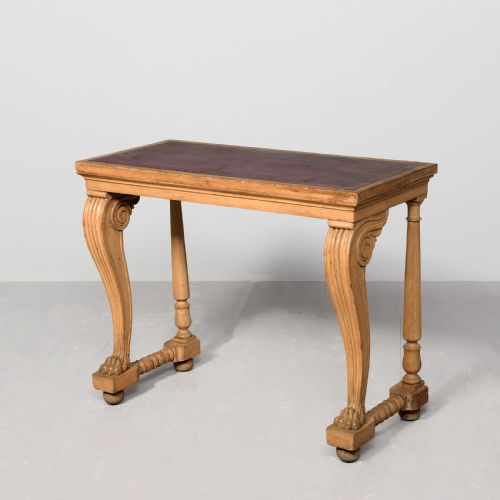
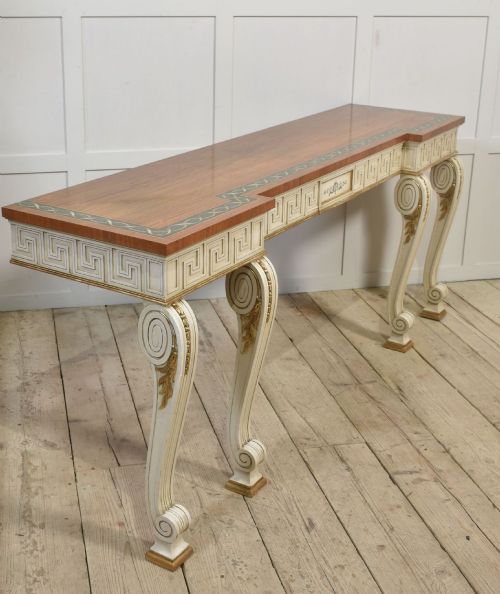
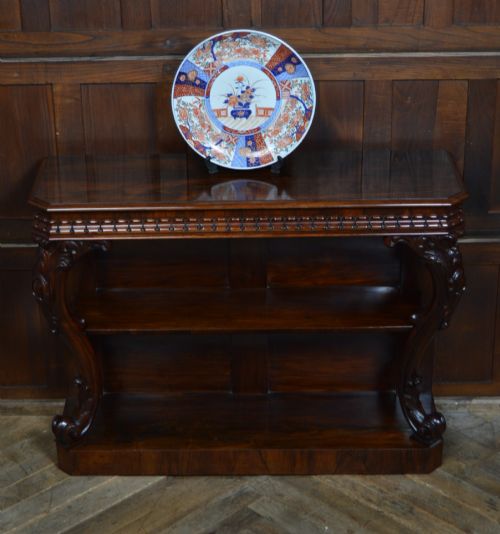
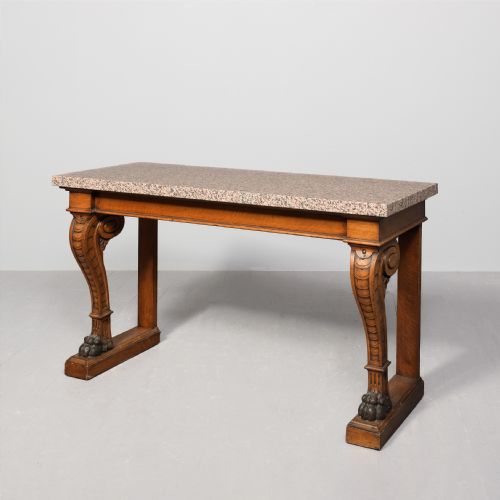


Carved Scroll Leg Console Table
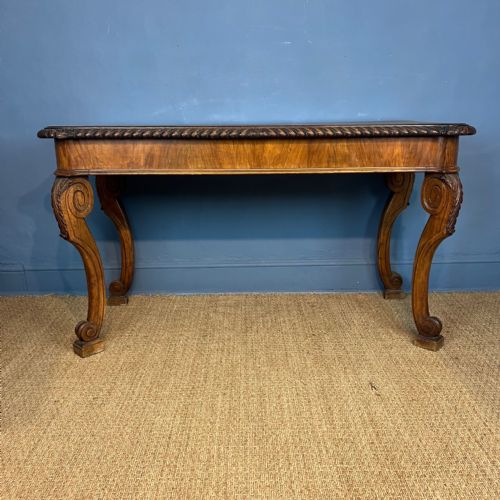
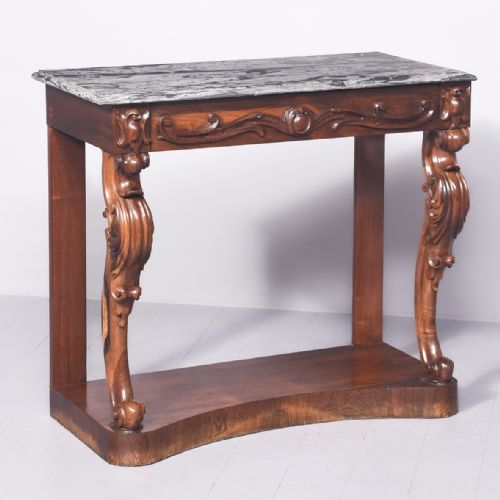
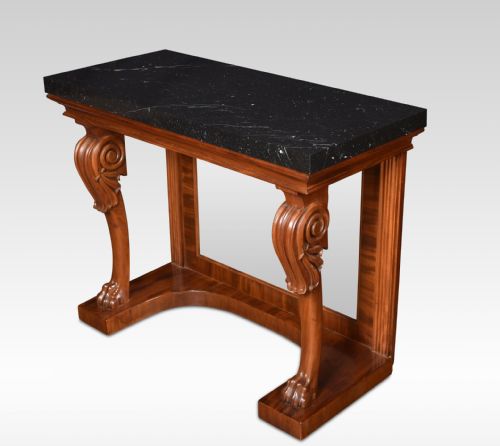
These carved scroll leg console table examples bring architectural weight and rich timber grain to narrow hallways and principal reception rooms.
Carved Scroll Leg Console Table
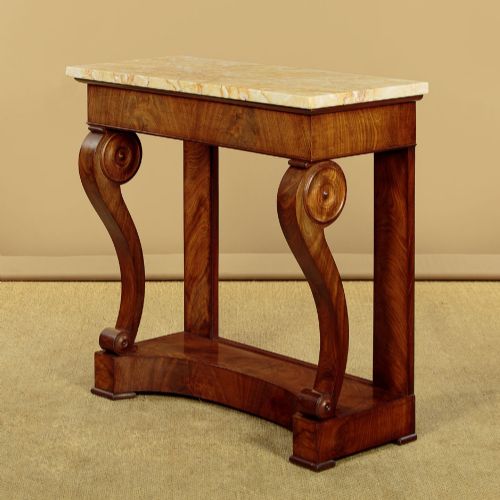
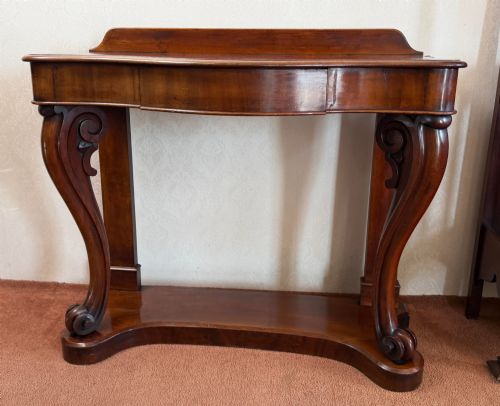
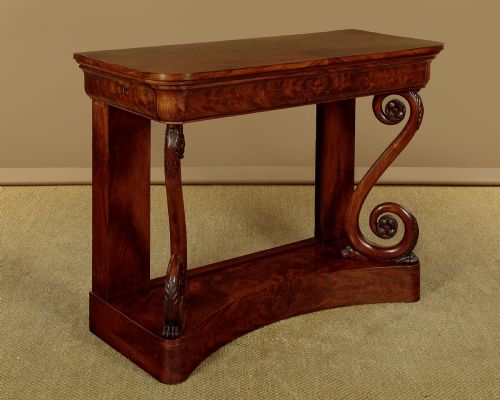
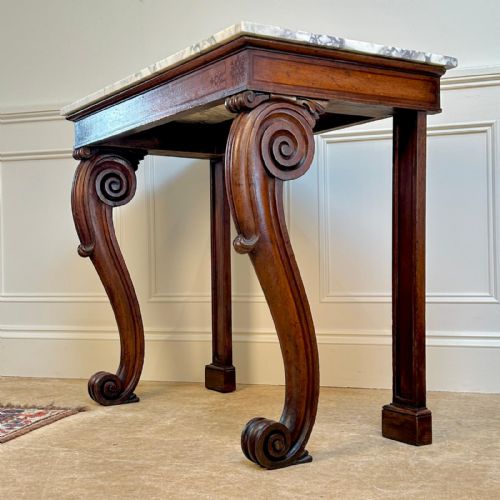
A carved scroll leg console table serves as a striking focal point against a wall, traditionally designed with shallow depth to sit flush without obstructing pathways. The listings show forms ranging from serpentine fronted mahogany pieces to marble topped specimens.
Originating predominantly from the Georgian, Regency, and Victorian periods, these tables showcase varied regional interpretations including Anglo-Indian padouk and Chinese Qing Dynasty hardwoods. The most frequent encounters on this page are nineteenth century mahogany and rosewood iterations featuring distinct scrollwork supports.
Beyond standard console tables, the evidence includes related forms such as pier tables, altar tables, and serving tables that share the characteristic wall-facing orientation and structural scroll legs. Each variation retains the fundamental architectural purpose of displaying decorative objects beneath a wall mirror or painting.
Evaluating craftsmanship and proportion
The distinction between standard examples and superior pieces lies in the crispness and depth of the hand carving on the scroll legs, where fluid lines indicate a master hand. Timber selection also dictates grade, with highly figured burr walnut or dense grain rosewood commanding greater visual presence than plain utility woods.
Proportion and structural harmony separate workshops of note from regional vernacular output. Finer tables integrate the carved supports seamlessly with the frieze, whereas lesser pieces often display heavier, less balanced joins between the legs and the tabletop.
Period origins span Georgian, Regency, William IV, and Victorian eras, alongside Anglo-Indian and Qing Dynasty examples.
James Mein of Kelso·Robert Strahan·Alexander McKenzie of Glasgow·Gillows·Whytock and Reid
The Carved Scroll Leg Console Table Glossary
- Console table
- A table designed to stand against a wall, traditionally secured to the vertical surface with brackets or freestanding on shaped legs. These pieces anchor interior schemes in halls and drawing rooms.
- Pier table
- A specialised console table specifically built to stand against the wall space between two windows, frequently positioned beneath a matching pier glass mirror. They share the shallow depth characteristic of console forms.
- Scroll leg
- An architectural support shaped in a continuous spiral curve, often seen on the front corners of Regency and Victorian tables. This decorative element adds visual movement to heavy timber furniture.
- Serpentine shape
- A front edge or surface characterised by a central convex curve flanked by two concave curves. This undulating profile requires precise woodworking and adds considerable elegance to side tables.
- Frieze
- The horizontal band situated immediately beneath the tabletop, sometimes left plain or decorated with carved mouldings and mounts. On better tables, this section houses concealed drawers.
Carved Scroll Leg Console Table: Frequently Asked Questions
What is a console table?
A console table is a narrow piece of furniture designed to stand flat against a wall, making it ideal for corridors, entryways, and reception rooms where floor space is limited.
Historically, these tables provided a surface for decorative objects, lamps, or urns, often positioned beneath wall mirrors to complete an interior architectural scheme.
How do I date a console table?
Dating relies on examining the timber species, construction methods, and stylistic motifs present in the carved scroll legs and frieze. For instance, heavy mounts and dark dense rosewood often point toward the Victorian era, while crisper neoclassical lines suggest Regency or Georgian origins.
Comparing the secondary woods used for drawer linings and internal framing also helps narrow down the period of manufacture.
Where should I place a console table?
These tables find their natural home in entrance halls, living rooms, and dining spaces where their shallow depth allows them to sit against a wall without obstructing foot traffic.
Pasing a console table beneath a large mirror or painting creates a balanced focal point in an interior room layout.
Are marble top tables original?
Many nineteenth-century console and pier tables were manufactured specifically to house heavy marble or granite slabs inset into the timber frame. These stone surfaces provided a cool, durable working area and added considerable weight to anchor the freestanding base.
Inspecting the rebate where the stone rests helps confirm whether the top belongs to the original construction of the base.