
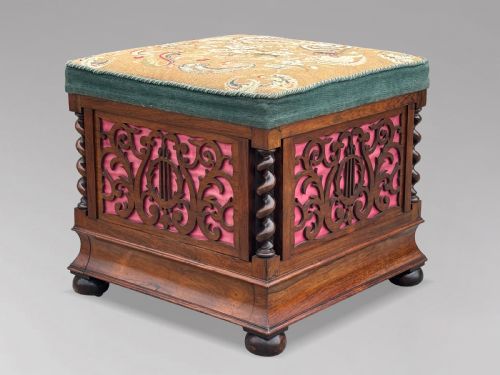
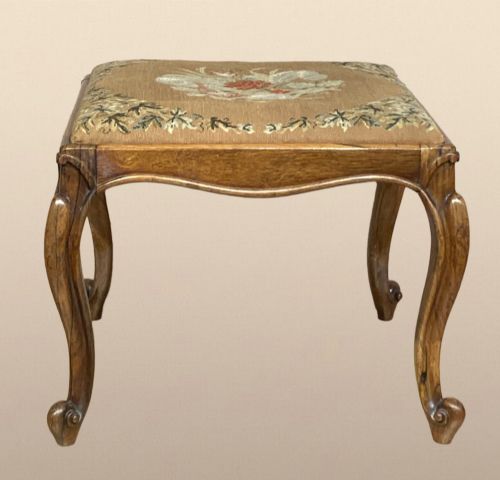


Carved Rosewood Piano Seat
A carved rosewood piano seat offers solid timber construction and period upholstery, serving as a functional music stool or dressing seat.
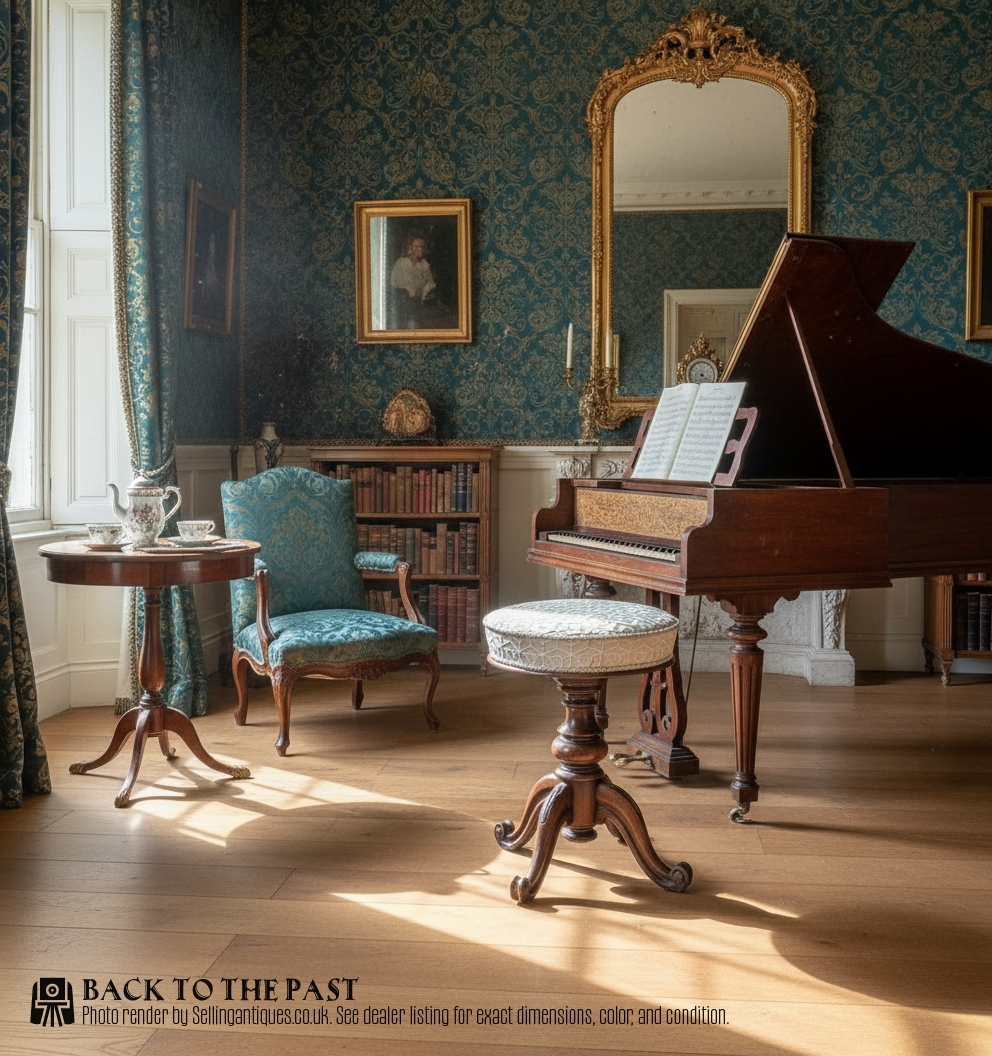
Carved Rosewood Piano Seat
A carved rosewood piano seat is a seating piece designed for musicians at the keyboard, appearing in formats like adjustable stools, revolving tops, and rising seats. These pieces emerge from periods such as the Georgian, Regency, William IV, and Victorian eras.
Buyers meet variations featuring cabriole legs, cross frames, and oblong shapes with lift-out upholstered seats. The primary material used across these examples is rosewood, often paired with fabrics like velvet, tapestry, and wool.
Originating predominantly from the nineteenth century, including specific dates around eighteen-thirty, eighteen-fifty, and eighteen-sixty, these stools function equally well as dressing stools and footstools.
How they were made
Cabinet makers utilised dense rosewood timber for the frames, applying carving techniques to shape cabriole legs and structural supports. Iron and brass components frequently form the internal mechanisms of adjustable and revolving seats.
Upholstery methods involved securing fabrics such as wool, velvet, and tapestry over padding, creating lift-out seats or fixed cushions. Cross-frame and X-framed designs required precise timber joinery to support weight while allowing movement.
Listings feature rosewood timber combined with brass, iron, velvet, wool, and tapestry across nineteenth-century Victorian, William IV, Regency, and Georgian periods.
What varies in quality
Quality differences stem from the depth and crispness of the timber carving on the rosewood frame. Superior examples display refined proportions and smooth operation in their adjusting or revolving mechanisms.
The choice of covering material and the preservation of the original upholstery contribute to the standing of a piece. Robust joinery in the legs and frame structure marks the distinction between standard utilitarian items and finer workshop productions.
The Carved Rosewood Piano Seat Glossary
- Rosewood
- A heavy, dense tropical timber known for its dark grain and capability to take a high polish. It forms the primary structural material for these stools.
- Cabriole leg
- A furniture leg that curves out and then narrows inward, terminating in a foot. This style appears frequently on Victorian examples.
- Revolving piano stool
- A seat featuring a threaded spindle that allows the top to turn and adjust in height. This mechanism often incorporates brass or iron components.
- X-framed stool
- A seating form constructed with intersecting diagonal timbers that cross to form an X shape. These provide stable support beneath upholstered tops.
- Tapestry fabric
- A thick, woven textile frequently utilised for the upholstery of nineteenth-century seat pads. It displays patterned designs using wool or other threads.
Carved Rosewood Piano Seat: Frequently Asked Questions
What is a carved rosewood piano seat used for?
These pieces provide seating for musicians at keyboard instruments, offering adjustable or fixed heights for comfortable playing. They also function as dressing stools or footstools in various rooms.
Their compact size allows them to sit easily beneath dressing tables or in hallways, combining practical utility with period timber aesthetics.
How do you adjust the height on these piano seats?
Many examples utilise a revolving mechanism where the upholstered top spins on a threaded screw to raise or lower the seat level. Other variants employ rising seat mechanisms or fixed frames.
Internal brass or iron parts typically facilitate the turning action, allowing the user to find a comfortable playing position.
What periods do these piano stools come from?
The listings span the Georgian, Regency, William IV, and Victorian periods, with a strong concentration of pieces originating in the nineteenth century. Specific dates associated with these items include eighteen-thirty, eighteen-fifty, and eighteen-sixty.
Stylistic shifts across these decades influence the leg shapes, from straight Regency lines to ornate Victorian Rococo Revival curves.
Are the upholstery fabrics original?
Upholstery materials on these stools include velvet, wool, tapestry fabric, and standard fabric. Surviving textiles reflect the preferences of their respective nineteenth-century periods.
Many pieces feature lift-out upholstered seats which facilitate re-covering or conservation when original materials show wear.