

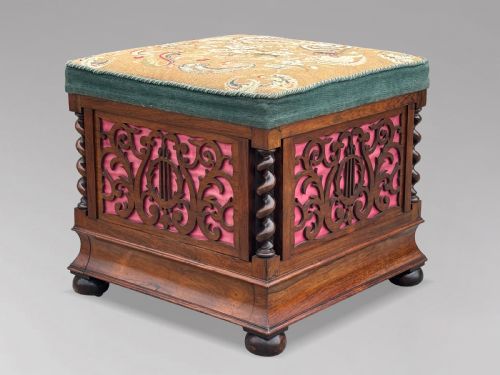
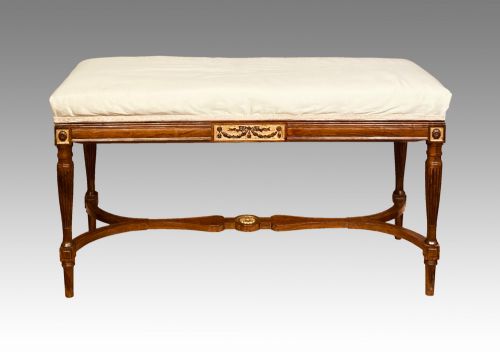


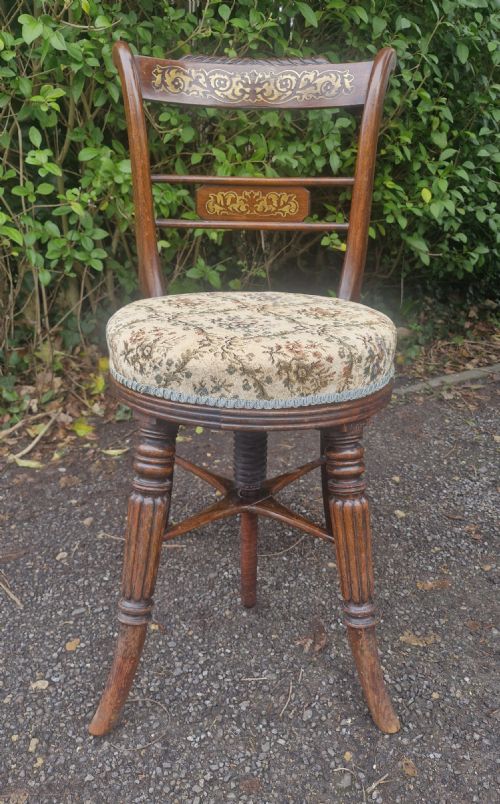


Rosewood Music Seat
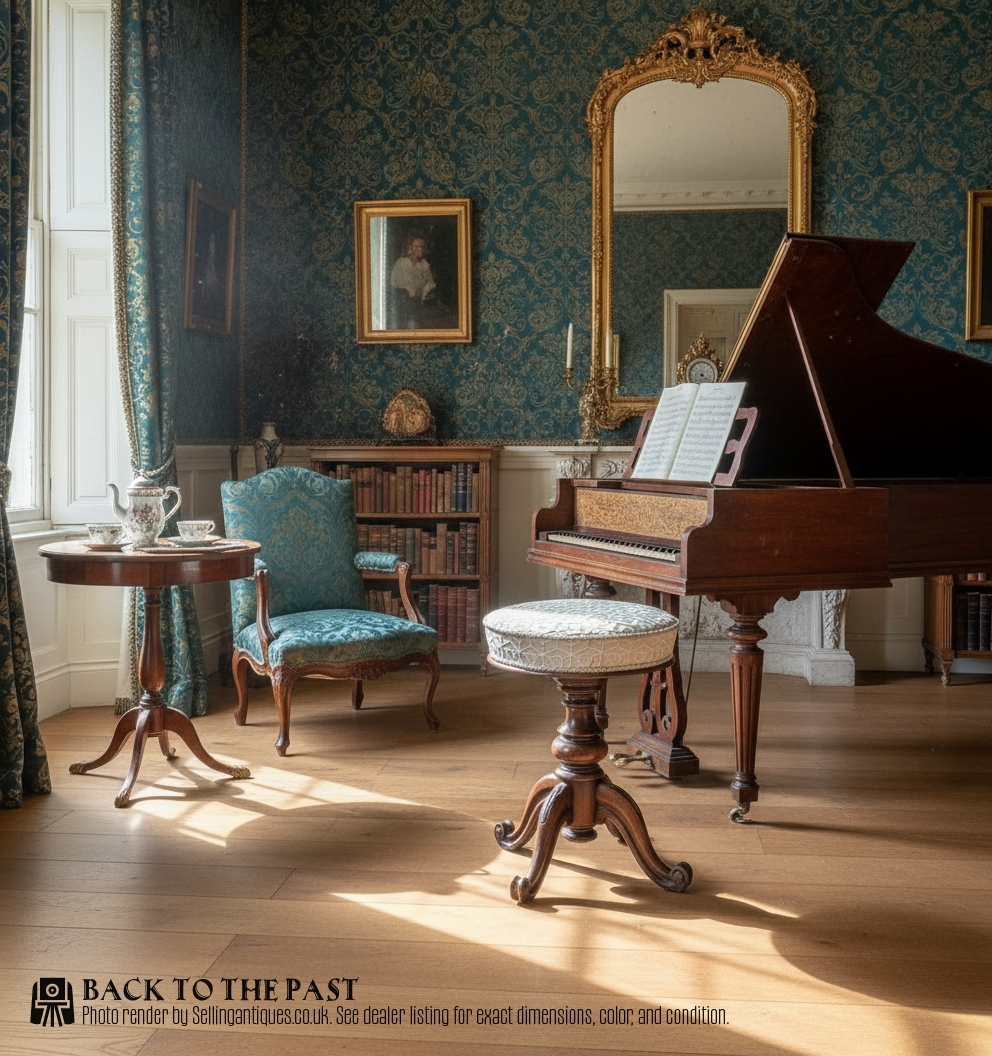
A rosewood music seat sits at the keyboard or harp, offering the adjustable height and steady support that nineteenth-century musicians needed.
Rosewood Music Seat
A rosewood music seat brings together the nineteenth-century forms of piano stools, music chairs, and dressing stools built for daily domestic use. These pieces appear across Georgian, Regency, William IV, and Victorian periods, alongside later Victorian Arts and Crafts examples.
The most common versions met on this page are revolving or rise and fall piano stools, designed with adjustable mechanisms to suit different players. Buyers also encounter specialised harpist chairs and dressing table stools sharing the same timber and purpose.
Makers shaped these seats to serve practical musical duties in the parlour while matching the formal furniture of the room. Their origins stretch from the early nineteenth century through to the late Victorian era.
How they were made
Cabinet makers utilised dense rosewood for the primary frames, often enriching the timber with boxwood inlay, giltwood touches, or brass mounts. Simulated rosewood surfaces also appear alongside solid timber construction.
Upholstery forms a vital part of the construction, utilising fabrics, velvet, tapestry, and other textiles fixed over the rising or revolving seats. Mechanical brass components allowed the tops to turn or adjust in height.
The listings show pieces spanning from the Georgian period through Regency, William IV, and Victorian eras up to eighteen-ninety.
What varies in quality
The sophistication of the adjusting mechanism distinguishes standard seating from finer examples, with smooth revolving actions and reliable rise and fall screws showing superior workshop skill. The integration of brass inlay and boxwood details adds distinction to the design.
The choice of dense, richly figured rosewood timber and the survival of original upholstery materials dictate the standing of an individual piece. Proportion and structural balance further separate ordinary output from high quality work.
Charles Nosotti
The Rosewood Music Seat Glossary
- Rosewood
- A heavy, dark timber prized for its rich grain and deep colour, frequently used in high quality nineteenth-century furniture. It takes a fine polish and forms the primary material for these music seats.
- Rise and fall
- A mechanical system enabling the seat height to be adjusted by turning the top or using a screw mechanism. This allowed musicians to set the correct posture at the piano.
- Revolving
- A pivoting top design that turns on a central spindle to allow movement while seated. This action is commonly found on Victorian piano stools.
- Boxwood inlay
- Contrasting pale wood inserted into the darker rosewood surface in geometric or floral patterns. This decorative technique marks finer Regency and Victorian pieces.
- Simulated rosewood
- Painted or stained timber imitating the distinctive grain of genuine rosewood. Makers employed this method to achieve a uniform appearance across lesser known pieces.
Rosewood Music Seat: Frequently Asked Questions
How do I adjust the height?
Many of these seats feature a revolving top or a screw mechanism hidden beneath the upholstery. Turning the seat clockwise or anti-clockwise raises or lowers the height.
Older examples rely on threaded wooden or metal spindles that require steady handling. Care should be taken not to force the mechanism beyond its natural limit.
Can I use it at a modern piano?
These historical seats often adjust to standard heights required for keyboard playing. Their vintage mechanisms accommodate various sitting positions.
Buyers should check the specific height range of each individual stool before pairing it with a modern instrument. The solid rosewood construction provides adequate stability for daily use.
How do I care for rosewood and upholstery?
Rosewood benefits from occasional treatment with appropriate wax polish to maintain the finish and depth of grain. Avoid placing the timber in direct sunlight or near heat sources.
Fabric and velvet coverings require gentle brushing or professional cleaning depending on the textile. Original tapestries need protection from excessive wear and moisture.
How do I tell Regency from Victorian pieces?
Regency and William IV pieces often display restrained classical lines, brass inlay, and simulated surfaces. They date from the earlier decades of the nineteenth century.
Victorian examples tend to feature heavier proportions, carved details, and revolving mechanisms that became popular later in the century. Arts and Crafts pieces show simpler, hand-finished construction.