


Carved Rosewood Fire Screen
These carved rosewood fire screens combine heavy tropical timber with intricate needlework, serving practical hearth warmth and fine Victorian decoration.
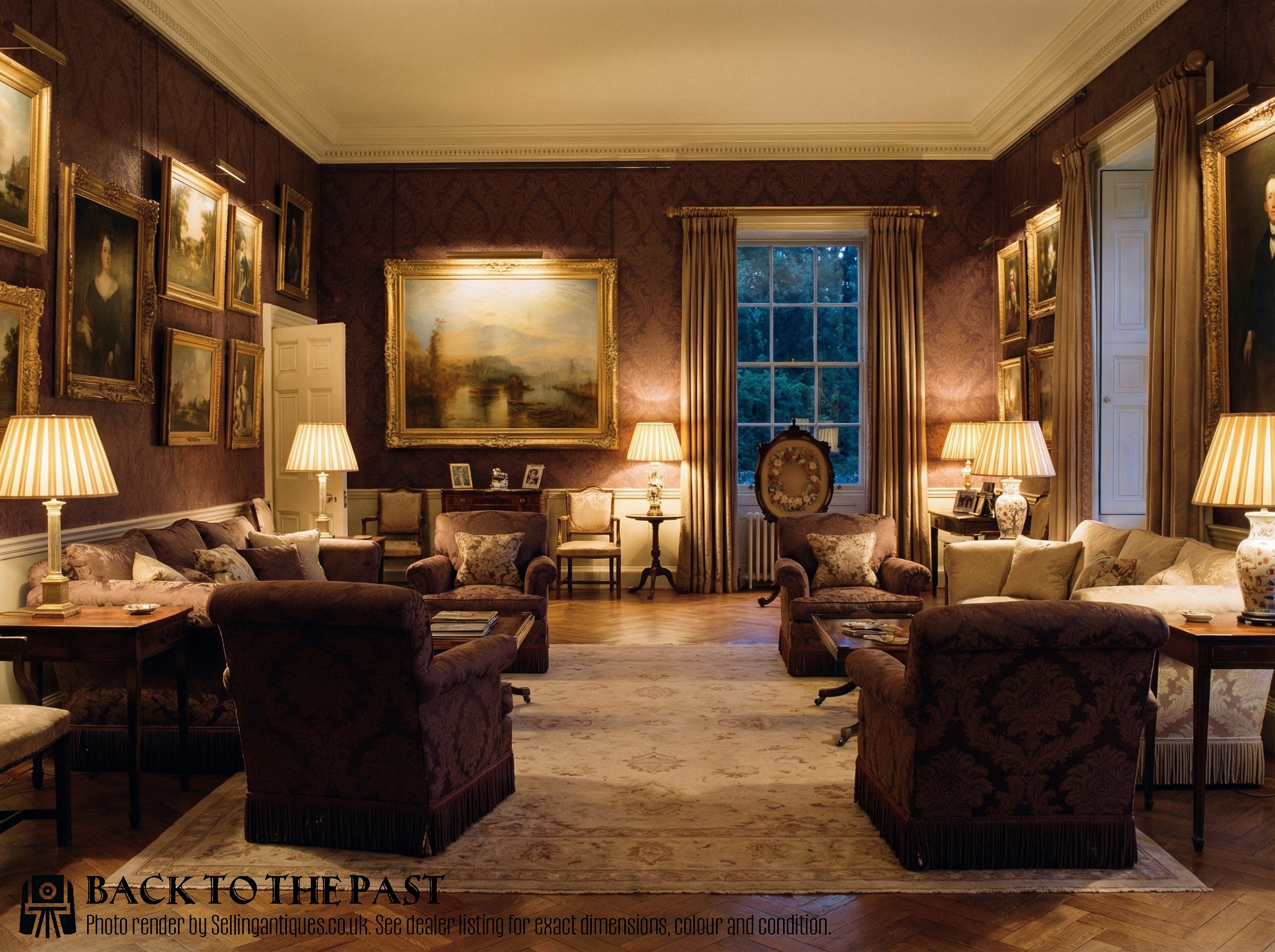
Carved Rosewood Fire Screen
A carved rosewood fire screen stands as a decorative shield designed to protect a person's face from the intense radiant heat of an open coal fire. Most examples encountered here belong to the nineteenth century, spanning the Regency, William IV and Victorian periods.
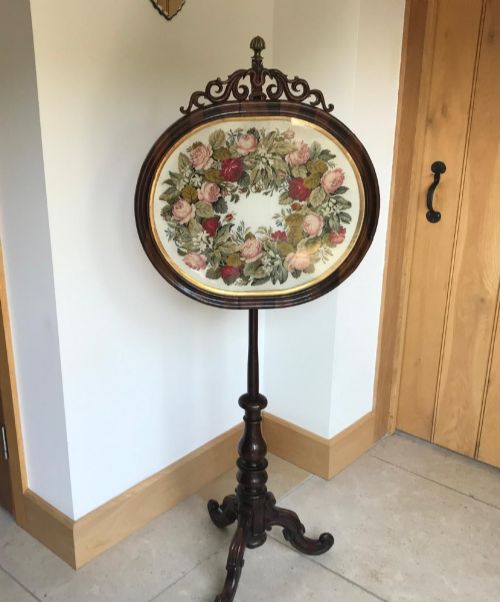
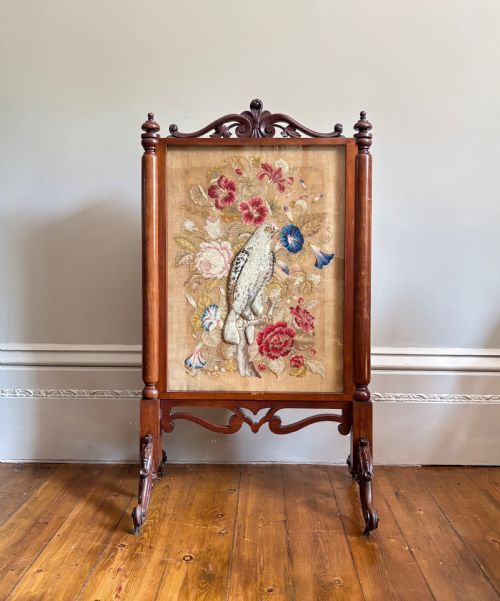
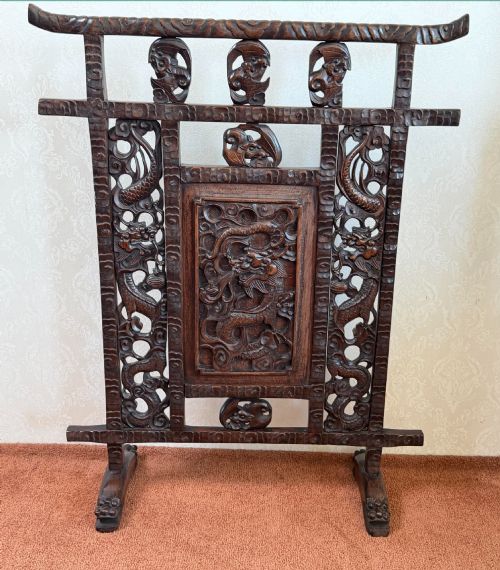
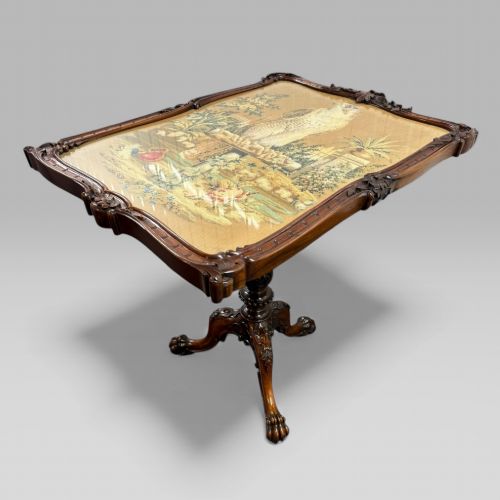
The dominant form is the pole screen, featuring a vertical standard upon which an adjustable needlework panel slides up and down. Other variations include cheval screens and table screens, alongside Chinese hardwood interpretations.
These pieces originated in grand formal parlours where managing hearth temperature and shielding complex complexions mattered greatly to ladies of the household. Today they function primarily as decorative furniture anchors for period rooms and traditional interiors.
What varies in quality
Quality rests upon the crispness of the timber carving and the complexity of the turned tripod base, where finer pieces exhibit deep undercut foliage and solid proportions. Plain turnings and softer mouldings sit at the simpler end of the scale.
The needlework panel introduces another tier of distinction, marked by the density of the hand-stitched petit point and the artistic merit of the pastoral or floral design. Original hand-woven tapestries command greater interest than later replacements or simpler machine-finished textiles.
Carved Rosewood Fire Screen Retail Price Guide 2026
Typical asking prices for carved rosewood fire screen among the pieces listed under this phrase on Sellingantiques today, from the lower quarter to the upper quarter. They describe what is for sale here now, not the wider market.
Listings feature brass fittings, hand-woven tapestries, and dense rosewood timber across nineteenth century English and Chinese workshops.
Gillows
The Carved Rosewood Fire Screen Glossary
- Pole screen
- A type of fire screen consisting of a tall vertical wooden standard supported by a tripod base, carrying an adjustable sliding panel. The screen can be raised or lowered to deflect heat from the face.
- Berlin work
- A style of charted needlework popular during the nineteenth century, worked in wool on canvas from printed pattern sheets. It allowed makers to produce shaded pictorial scenes with high colour detail.
- Cheval screen
- A freestanding floor screen mounted on two side uprights or trestle feet, allowing the large rectangular frame to tilt or swing on axis pivots. These offered a broader barrier against hearth heat than standard pole designs.
- Needlepoint
- A form of canvas work stitched by hand using wool or silk threads to create dense pictorial or geometric surfaces. It forms the primary decorative display element on nineteenth century screens.
- Tripod base
- A three-legged support structure commonly turned and carved, providing stable footing for slender vertical pole screens on uneven floorboards.
Carved Rosewood Fire Screen: Frequently Asked Questions
How did people use a pole screen?
Users placed the pole screen between their seating position and the open fireplace to block the harsh radiant heat from scorching their skin and melting heavy cosmetics.
The adjustable panel slid along the vertical pole so occupants could raise or lower the textile shield depending on whether they sat or stood.
Can the needlework panel be adjusted?
Yes, traditional pole screens utilise a small brass thumb screw or a friction collar hidden behind the sliding panel frame to hold it at the desired height.
This mechanism allows the textile picture to move freely up and down the turned wooden standard.
Are these screens stable on carpets?
The heavy tripod base provides a wide footprint designed to keep the tall vertical standard balanced securely on timber floors or rugs.
Heavier rosewood construction adds necessary mass at the bottom, though care remains sensible in busy hallways.
What is the difference between William IV and Victorian screens?
William IV examples often display bolder scrolling carved details, heavier architectural turnings on the pedestal, and robust proportions typical of the 1830s.
Victorian pieces frequently shift toward slender standards, more intricate floral needlework, and varied revival styles running through the later decades of the nineteenth century.