


Carved Rosewood Dining Set
A carved rosewood dining set brings heavy, figured timber and period joinery to the table, usually found in matched sets of chairs from the Regency and Victorian eras.
Carved Rosewood Dining Set
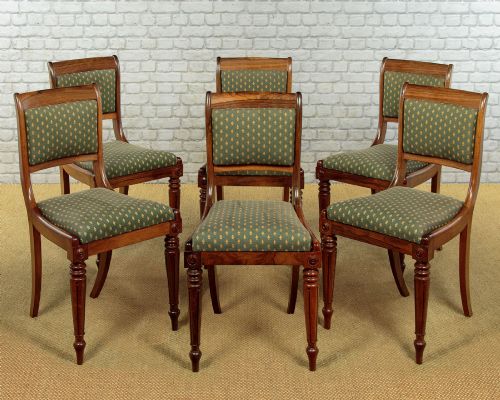
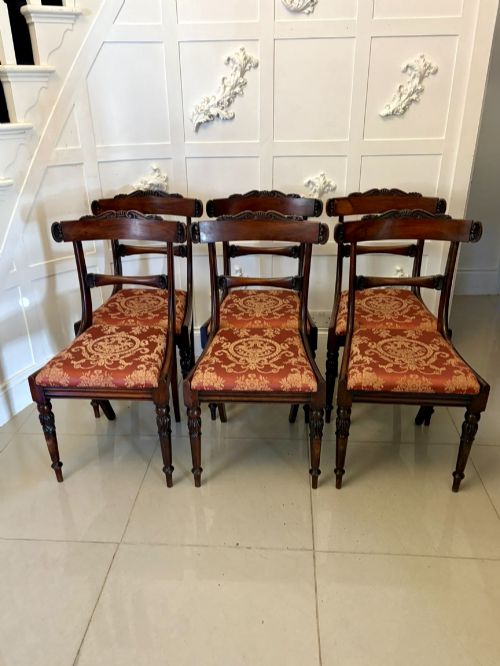
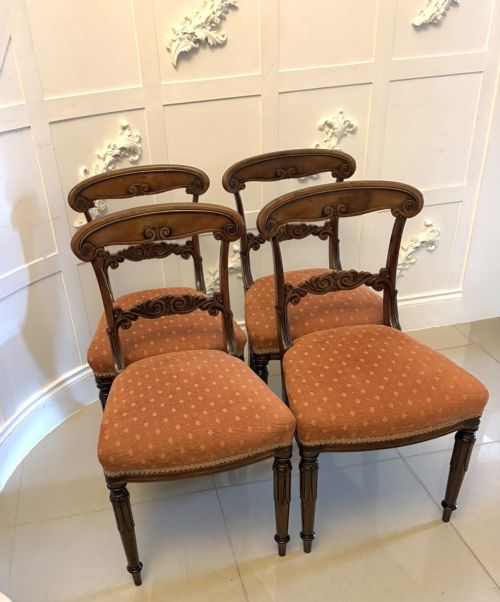
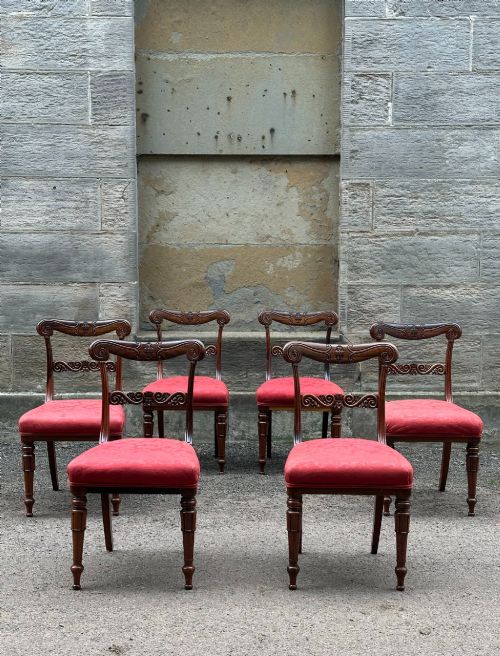
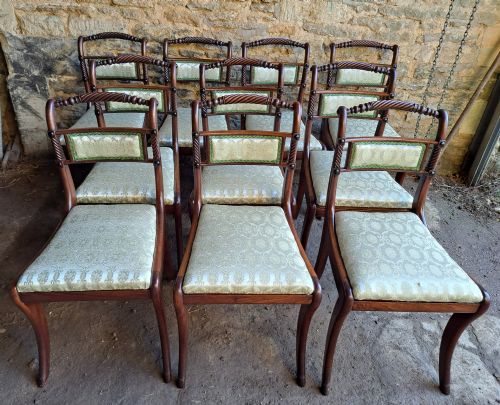
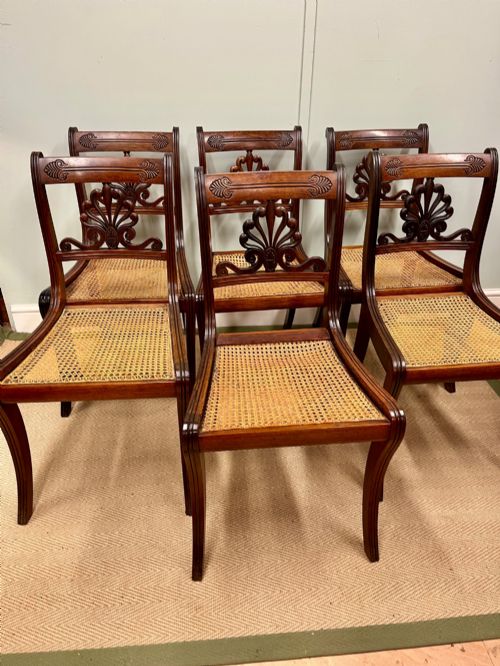
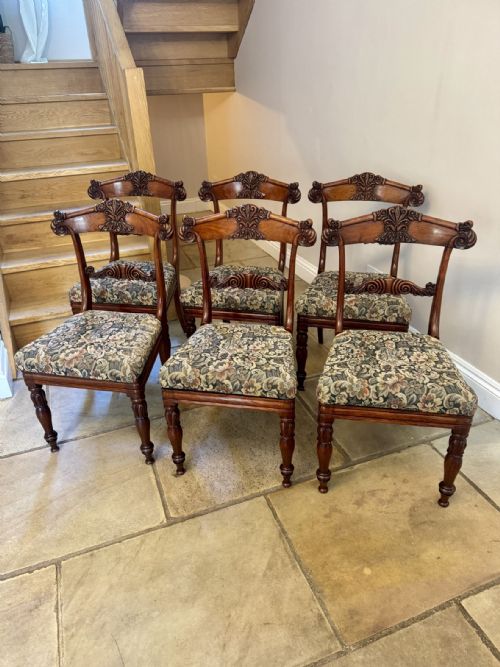
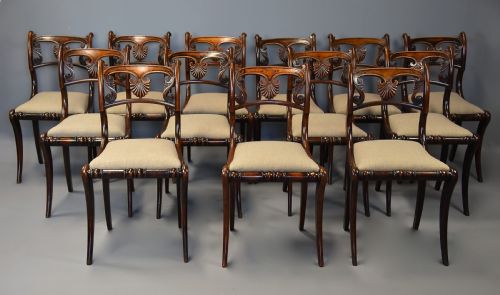
A carved rosewood dining set primarily consists of matching groups of dining chairs, frequently numbering four, six, eight, or ten pieces, originating from the Regency, William IV, and Victorian periods. These suites demonstrate the high status of nineteenth-century dining rooms, where timber selection matched the gravity of the room.
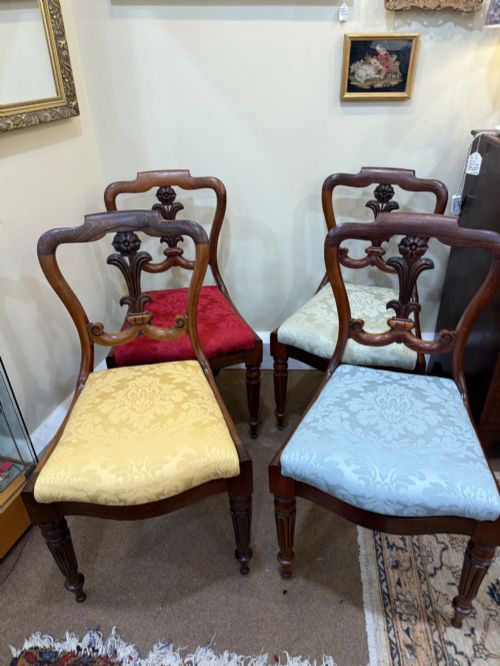
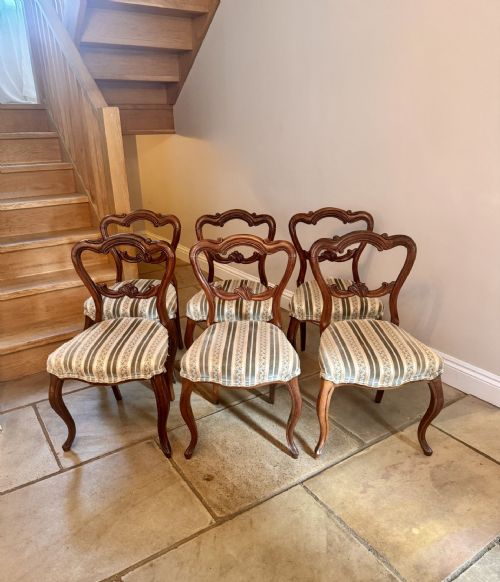
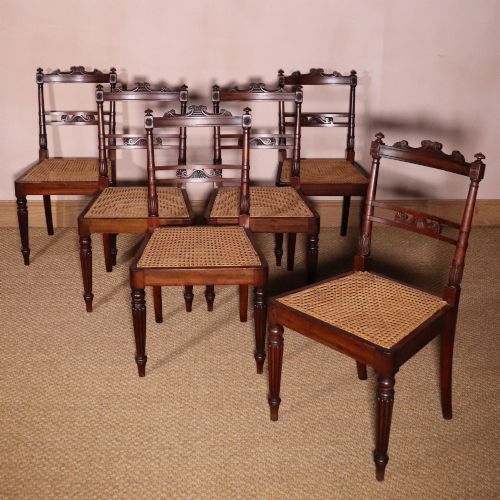
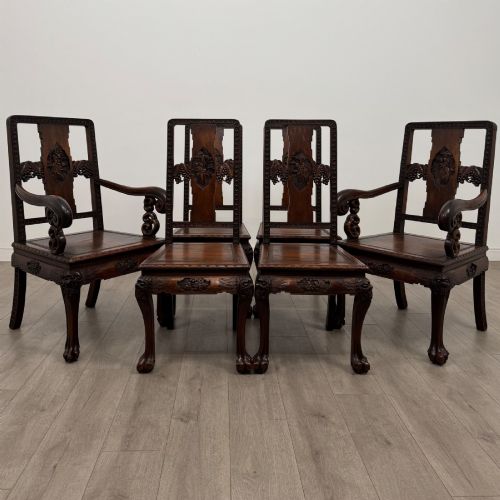
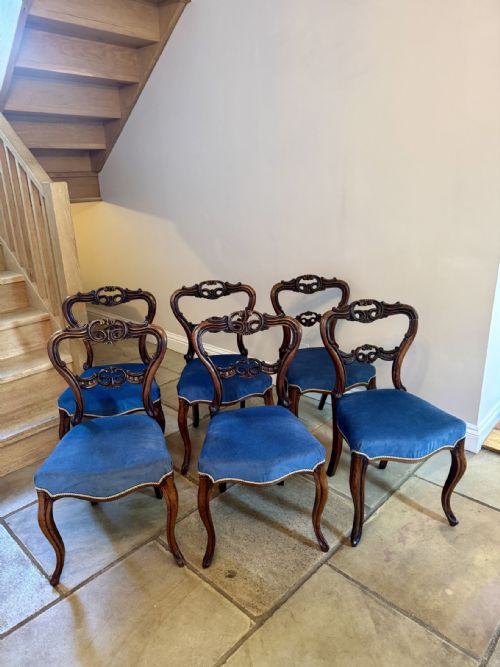
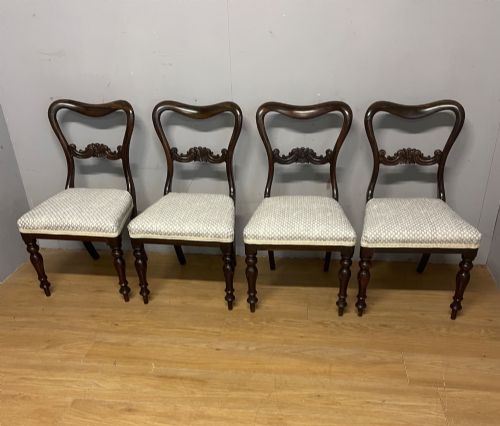
The sets on this page span several decades of design, including early nineteenth-century Regency and George IV examples alongside later Victorian balloon-back and Chinese Export pieces. Buyers most often encounter sets of six or eight chairs designed around a unified frame pattern, occasionally incorporating carvers for the heads of the table.
Object types on offer are strictly dining chairs rather than complete tables, meaning collectors assemble their dining spaces by pairing these substantial timber seats with appropriate period dining tables. The presence of brass inlay, carved scrollwork, and needlepoint upholstery identifies these as formal dining furniture rather than casual seating.
Materials and Construction Methods
Cabinetmakers relied on solid rosewood and simulated rosewood, sometimes augmented by brass inlay and structural elements of Gonçalo Alves, to build dense, heavy dining chairs that withstand generations of use. Simulated rosewood surfaces appear on turned and polished frames where painters painstakingly grained native timbers to mimic exotic hardwoods.
Upholstery forms an integral part of the construction, utilising materials such as fabric, velvet, cane, and textile over stuffed seat pads, with specific examples retaining duck egg blue needlepoint seats. Brass pins, inlay strips, and robust joinery secure the frames, ensuring the structural integrity of chairs subjected to daily dining room use.
Distinctions in Quality
Quality in a carved rosewood dining set rests upon the depth and crispness of the carving, the figure of the timber, and the consistency across the entire group of chairs. Sets that maintain uniform grain patterns and matching wood coloration from the first chair to the tenth demonstrate superior workshop selection.
The refinement of the joinery and the presence of sophisticated details like intricate brass inlay or precise balloon-back curves separate standard production seating from exceptional cabinetmaking. Greater attention to the underside construction and the retention of original upholstery foundations signal the higher tiers of nineteenth-century craftsmanship.
The Carved Rosewood Dining Set Glossary
- Carver
- An armchair with side supports, traditionally placed at the head and foot of a dining table. These larger seats matched the simpler side chairs in a dining set.
- Balloon-back
- A chair back style shaped in a continuous oval curve resembling a balloon, popular during the Victorian era. This form allowed for ergonomic support while showcasing the figured grain of the rosewood.
- Brass Inlaid
- The technique of recessing thin strips or motifs of brass into the wooden surface of the chair frame. This decorative method defined much of the Regency aesthetic.
- Gonçalo Alves
- A dense exotic hardwood with striking dark brown and light figuration, frequently utilised for nineteenth-century dining chair frames. It shares many visual and physical properties with rosewood.
- Needlepoint
- A form of counted thread embroidery stitched on canvas, often applied to the drop-in seat pads of Victorian dining chairs. It provides a durable and colourful textile surface for daily seating.
Carved Rosewood Dining Set: Frequently Asked Questions
What periods do these dining sets date from?
The dining sets on this page span the Regency, William IV, and Victorian periods, largely covering the nineteenth century from approximately 1820 to the late 1800s. Occasional Edwardian interpretations also appear.
Buyers will find that earlier Regency sets often feature brass inlay and clean classical lines, while mid-to-late Victorian examples favour curved balloon backs and carved rosewood frames.
Do these sets include dining tables?
The listings under this search comprise dining chairs rather than complete suites of tables and chairs. Cabinetmakers of the nineteenth century typically sold seating separately from the dining tables themselves.
Collectors acquire these sets of four, six, eight, or ten chairs to pair with an antique dining table of a complementary timber and period.
How do I identify simulated rosewood?
Simulated rosewood involves painting and graining a substitute timber, such as beech or birch, to imitate the dark, richly figured appearance of genuine exotic rosewood. This technique was common in early nineteenth-century production.
Close inspection of the grain continuity and the weight of the timber helps distinguish a painted surface from solid rosewood construction.
What are carver chairs?
Carver chairs are armchairs designed to match the smaller side chairs in a dining set, traditionally positioned at the ends of the dining table. Larger sets often include a pair of these armchairs alongside six or eight standard chairs.
The added arms provided a more commanding seat for the host while maintaining visual harmony around the dining room.