



Vintage Rosewood Dining Chairs
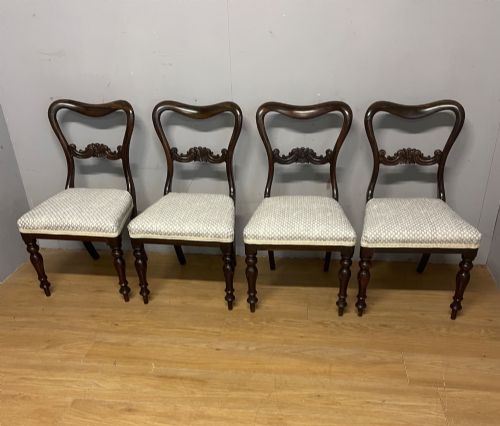
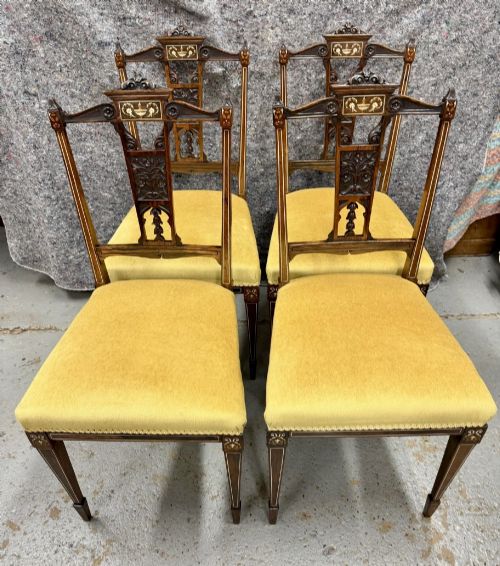
These vintage rosewood dining chairs bring warmth and heavy grain to a room, ranging from brass-inlaid Regency sets to carved Victorian balloon backs.
Vintage Rosewood Dining Chairs
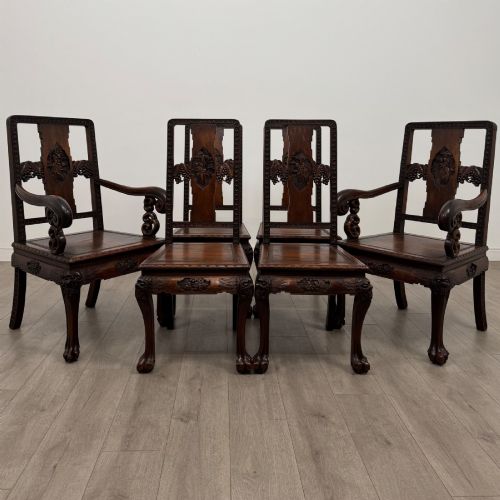
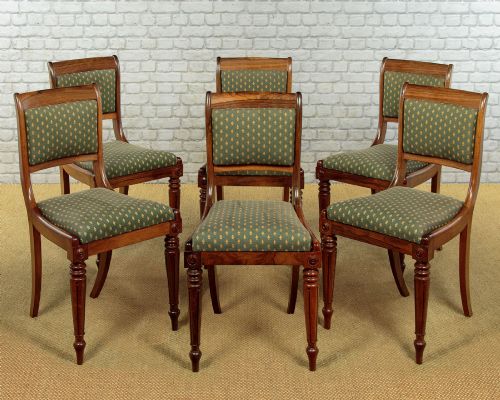
Vintage rosewood dining chairs span the Regency, William IV and Victorian eras, taking the form of sets of four, six or eight chairs alongside occasional pairs and single armchairs. Dining chairs predominate, though desk chairs and side chairs also appear.
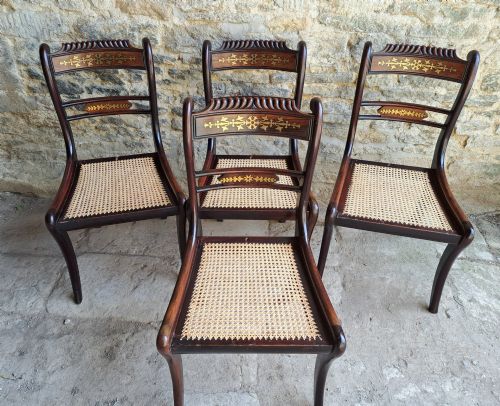
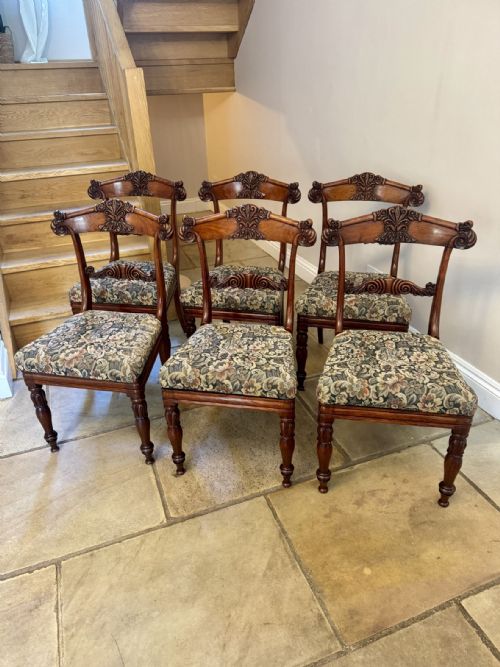
The Regency and William IV examples often feature brass inlay and carved rails, whilst Victorian interpretations lean towards balloon backs and serpentine seats. Sets range from small pairs up to gatherings of nine.
Makers such as Gillows contribute to the higher end of these offerings, set alongside simpler workshops from the nineteenth century.
What varies in quality
The refinement of the carving and the precision of the brass inlay distinguish standard sets from the finest pieces. Timber selection and grain density also play a part in setting examples apart.
Larger sets matching in timber and form command greater attention than mismatched groups assembled later.
Gillows
The Vintage Rosewood Dining Chairs Glossary
- Balloon back
- A rounded, oval-shaped chair back popular in the Victorian period. This profile offers lumbar support whilst showing off the rosewood grain.
- Brass inlay
- Metal strips set flush into the timber surface to form geometric or floral patterns. It appears frequently on Regency pieces.
- Faux rosewood
- Painted or grained timber simulating the appearance of genuine rosewood. Craftsmen utilised this technique when solid stock was scarce.
- Serpentine seat
- A seat frame curved in a gentle wave shape, swelling outwards at the centre. This profile requires precise woodworking.
- William IV period
- The transitional style era between Regency and early Victorian design, spanning the 1830s. Furniture from this time typically exhibits heavier proportions.
Vintage Rosewood Dining Chairs: Frequently Asked Questions
How do I spot a genuine Regency rosewood chair?
Regency chairs typically display characteristic brass inlay, sabre legs or carved top rails reflecting the neoclassical tastes of the early nineteenth century. Look for dense, dark rosewood timber beneath the polish.
Check the joinery methods and the integration of the seat frame to confirm period construction rather than later reproduction work.
Are rosewood chairs durable for daily dining?
Rosewood is a hard and heavy timber well suited to the structural demands of seating. Most antique chairs have withstood generations of use.
Maintenance involves feeding the timber periodically and protecting the upholstered or cane seats from heavy wear.
What is the difference between Regency and Victorian styles here?
Regency models tend to feature architectural lines, brass stringing and restrained carving. They evoke classical antiquity.
Victorian pieces, particularly the balloon back variants, introduce curved silhouettes and more exuberant ornamentation.
Can I find large matching sets of six or eight?
Sets of four, six and even eight chairs appear across the nineteenth-century listings. Complete sets maintain uniform timber grain and matching upholstery.
Larger gatherings require careful checking of individual chairs to ensure they originated together as a single suite.