
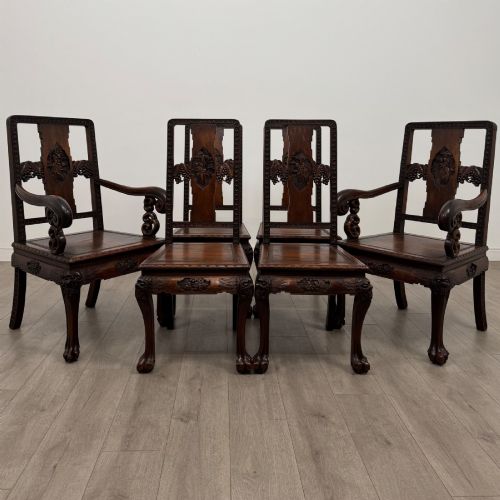
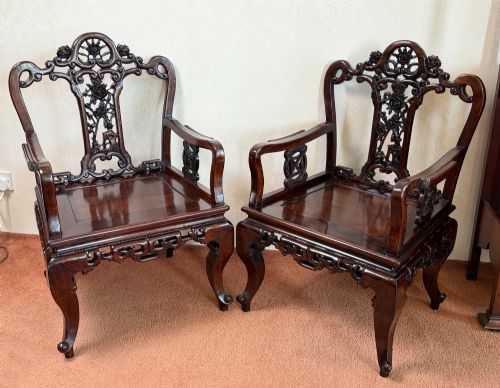


Hardwood Oriental Side Chairs
Hardwood oriental side chairs are solid timber seating pieces originating from Chinese traditions, offering rigid support and intricate carvings for sophisticated interiors.
Hardwood Oriental Side Chairs
Hardwood oriental side chairs comprise various wooden forms created in traditional Chinese styles, ranging from the Qing Dynasty to the early twentieth century. These seating pieces appear as individual items, matched pairs, or larger dining sets including carvers.
Makers shaped these items from dense timbers such as rosewood, huanghuali, and elm, sometimes integrating marble inserts, cane panels, or lacquer finishes. The listings demonstrate a predominance of nineteenth century examples alongside eighteenth century pieces and Edwardian or Victorian periods.
The objects serve multiple interior functions, functioning as dining chairs, hall furniture, or standalone armchairs with elbow seats. Their structural forms reflect classical Chinese joinery methods intended for formal spaces.
How they were made
Craftsmen utilised dense tropical hardwoods, particularly rosewood and huanghuali, alongside elm to construct durable frames without modern fasteners. These timbers were selected for their natural strength and deep grain patterns.
Surfaces received intricate hand carving depicting traditional motifs, paired with inset marble panels or woven cane seats where appropriate. Some pieces also feature dark lacquer finishes applied over the wooden substrate.
Some chairs retain the ghosts of ancient tea spills in their lacquer, reminding us they survived centuries of family life.
What varies in quality
The refinement of the hand carving separates standard regional production from exceptional workshop output, with superior examples displaying crisp depth and balanced symmetry. Finer pieces maintain tight joinery using dense timbers like huanghuali or rosewood rather than softer alternative woods.
The integrity of secondary materials, such as closely woven cane panels or unblemished marble inserts, distinguishes higher grade items. Complete sets or matching pairs demonstrate greater consistency in timber selection and decorative detail than assembled groups.
The Hardwood Oriental Side Chairs Glossary
- Rosewood
- A heavy, dense timber prized for its deep reddish brown colour and distinct grain. Craftsmen utilise this durable material for intricate structural carving.
- Cane
- Woven material derived from rattan palm used for chair seats. It provides a flexible yet supportive surface.
- Qing Dynasty
- The final imperial dynasty of China, lasting from sixteen forty-four to nineteen twelve. Furniture from this period is characterised by robust construction and elaborate ornamentation.
- Carver
- An armchair designed with elbow rests, traditionally placed at the head of a dining table. These pieces match the style of surrounding side chairs in a set.
Hardwood Oriental Side Chairs: Frequently Asked Questions
What defines hardwood oriental side chairs?
Hardwood oriental side chairs are traditional seating items built from dense timbers like rosewood and huanghuali following classical Chinese designs. They lack arms and typically feature upright backs with intricate carvings.
These pieces emerged across various historical periods, including the Qing Dynasty and the nineteenth century. Their construction relies on traditional joinery techniques rather than modern metal hardware.
How were these chairs used historically?
These chairs functioned primarily as formal seating within traditional Chinese homes, often positioned against walls in reception halls rather than around dining tables. They demonstrated the social standing of the household through their material quality and decorative carving.
Pairs and larger sets accommodated guests during formal gatherings and tea ceremonies. Their rigid upright posture supported proper etiquette.
How should I live with these chairs?
Integrate these chairs into modern interiors as accent seating in hallways, living rooms, or studies where their carved wooden details remain visible. Pair them with contemporary furnishings to create a balanced contrast of styles.
Protect the timber from direct sunlight and extreme humidity fluctuations to preserve the finish and prevent wood movement. Maintain cane seats by keeping them clean and avoiding excessive weight loads.
How do I identify different periods?
Differentiating periods relies on examining construction methods, timber choice, and the style of the carving. Eighteenth century examples often feature huanghuali and restrained, elegant lines.
Nineteenth century and Qing Dynasty pieces tend towards heavier construction and more elaborate ornamentation. Edwardian and Victorian listings reflect European interaction with Chinese export aesthetics.