


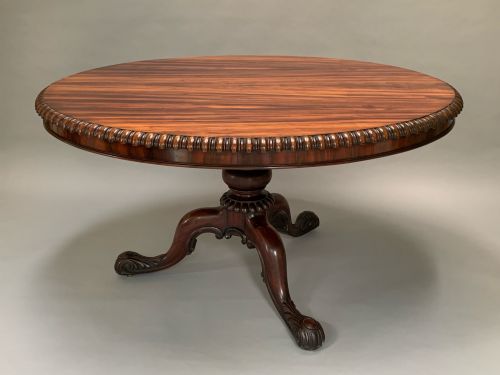
Carved Pedestal Tilt Table
A carved pedestal tilt table brings centuries of flexible timber engineering into a room, offering a functional surface that tips out of the way when not in use.
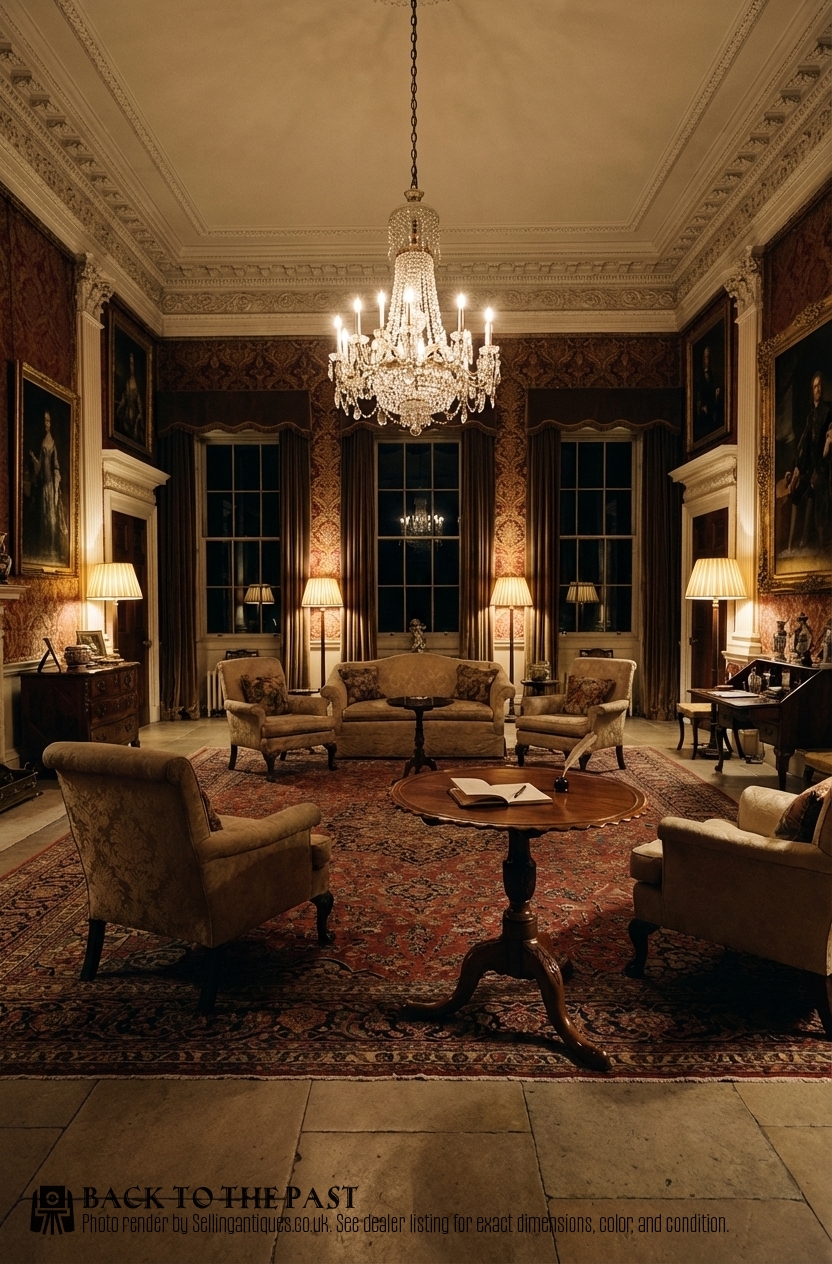
Carved Pedestal Tilt Table
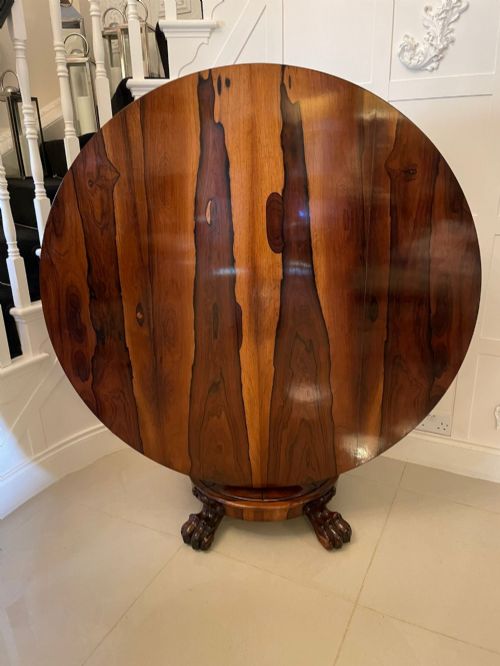
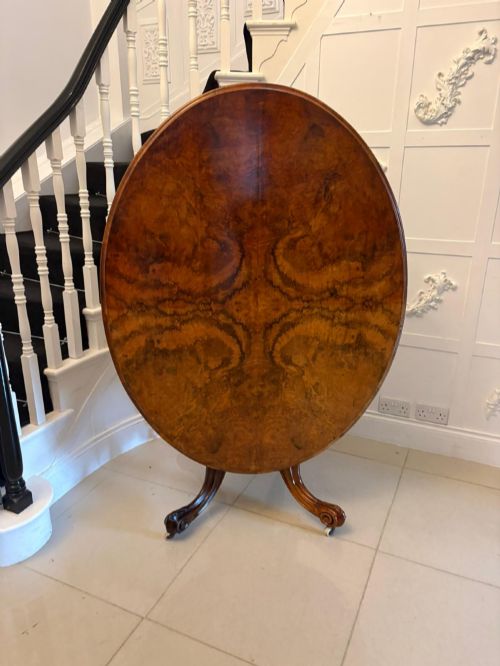
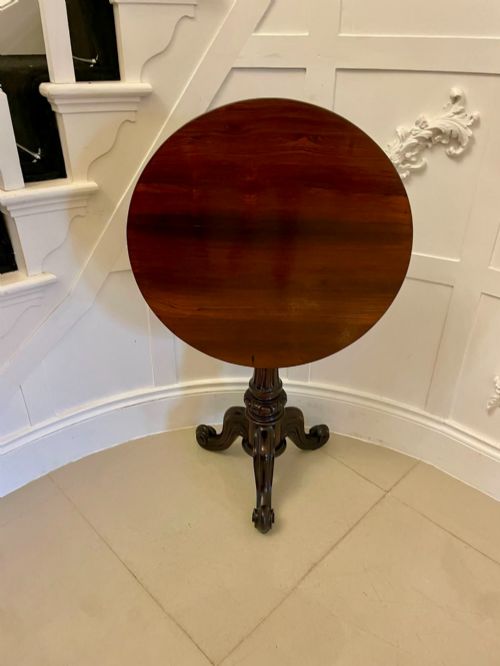
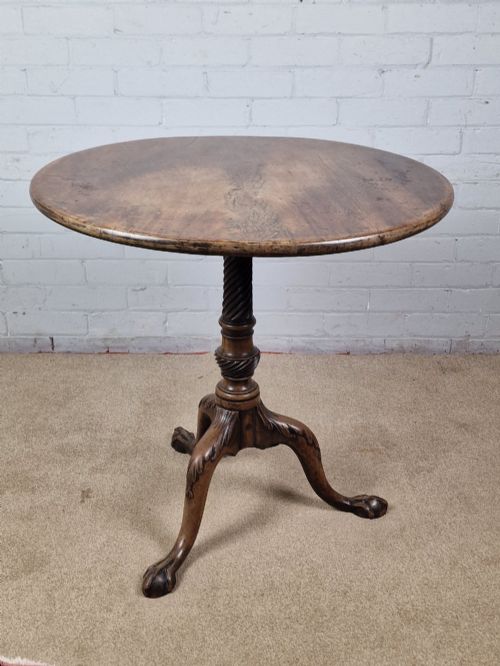
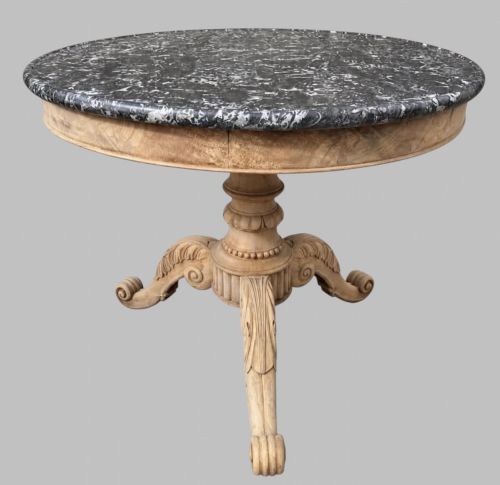
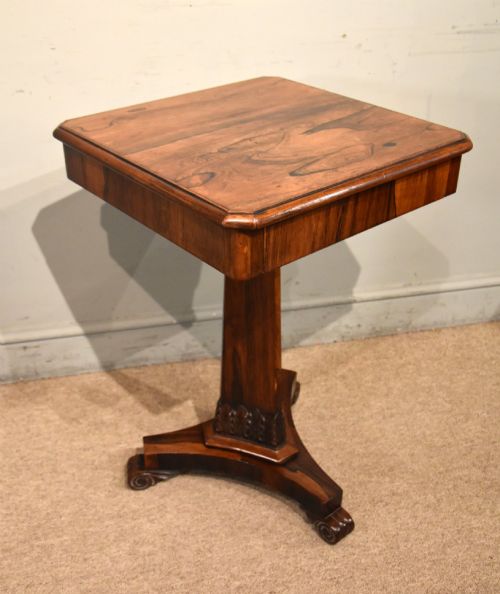
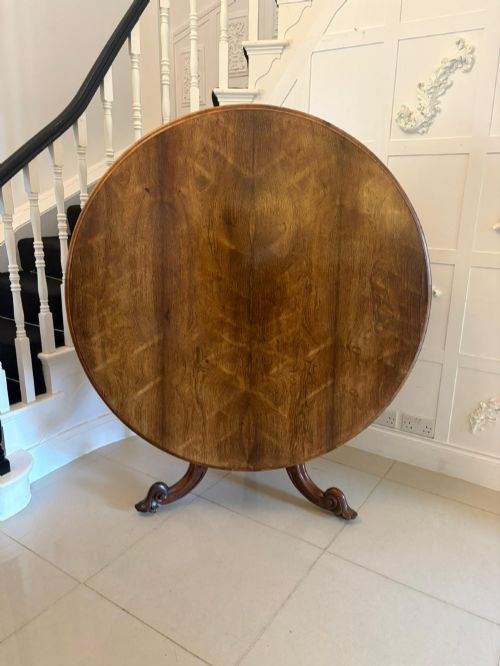
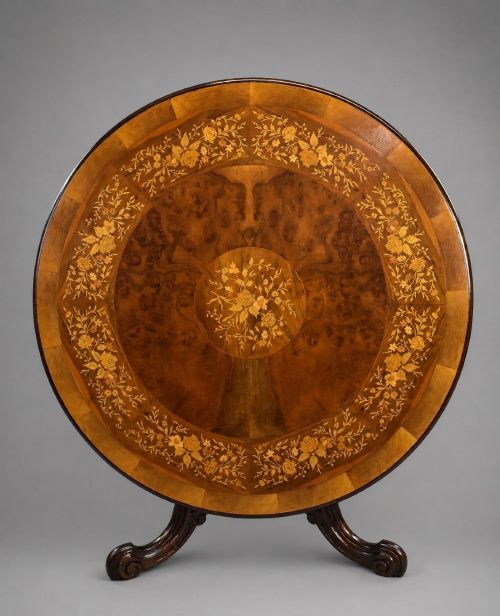
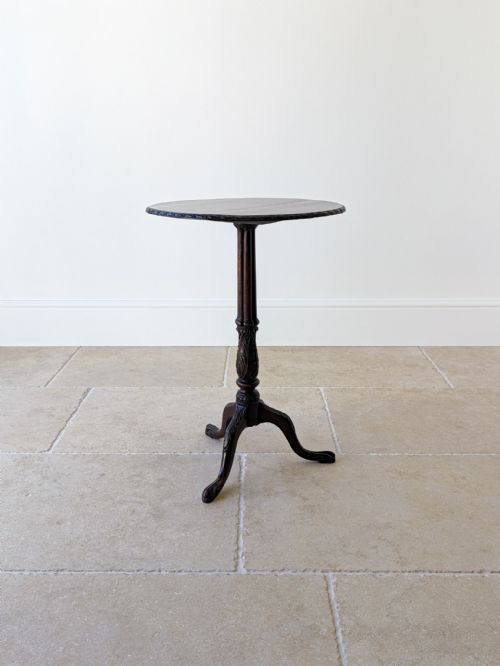
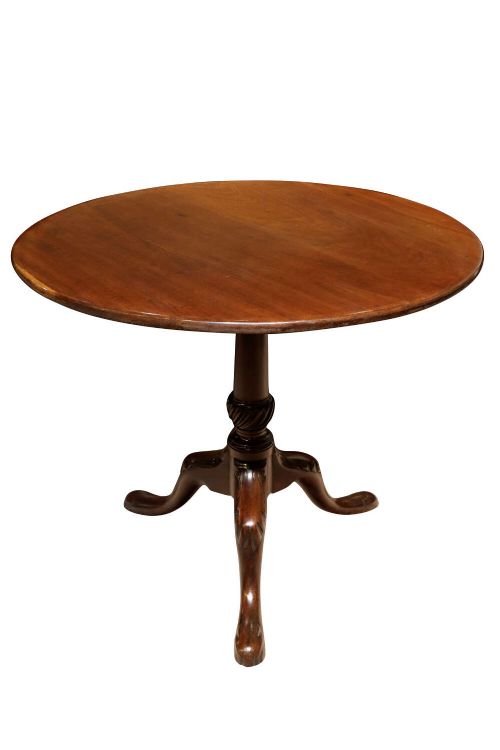
A carved pedestal tilt table is a versatile form designed to serve as a dining, breakfast, centre, or occasional table depending on its scale and period. The pieces gathered here span from the 18th century through the Victorian era, encompassing Georgian, Regency, William IV, and Edwardian aesthetic movements.
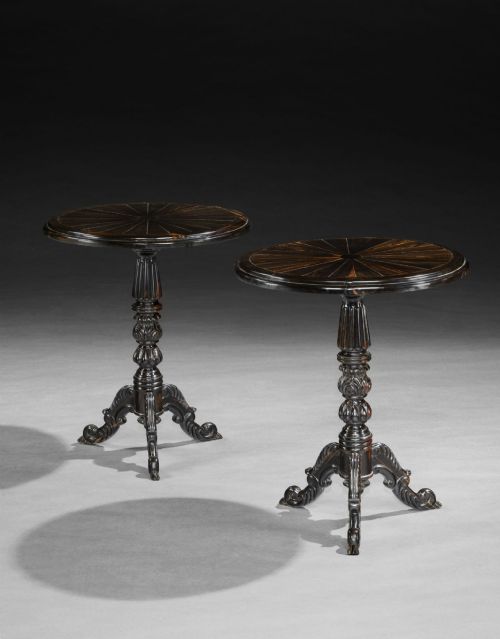
Regional variations appear alongside domestic British production, including Anglo-Indian, Ceylonese, and Italian interpretations in exotic timbers. These tables move easily between formal dining spaces and intimate lamp table settings.
How they were made
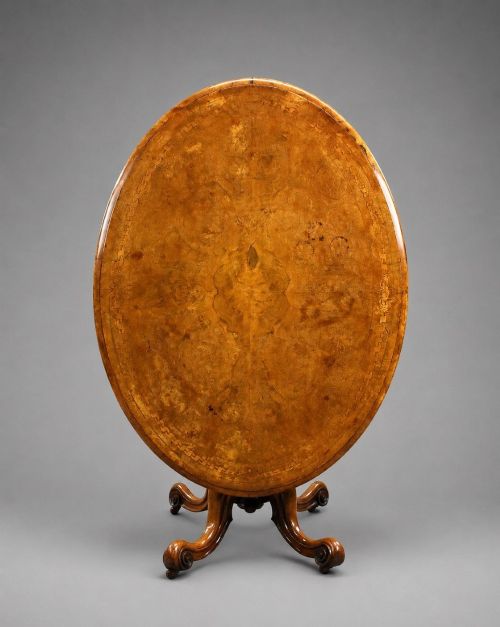
Cabinetmakers constructed these tables using dense hardwoods such as rosewood, mahogany, and walnut, frequently selecting burr veneers to create figured top surfaces. Boxwood inlay, marquetry, and marble inserts add decorative contrast to the primary timber.
The pivoting mechanism relies on a catch and block arrangement beneath the top, allowing the surface to fold vertically via a brass or iron release mechanism. Pedestals feature hand-carved foliage, reeding, or scrolls flowing down to sturdy solid wood feet.
Carved Pedestal Tilt Table Retail Price Guide 2026
Typical asking prices for carved pedestal tilt table among the pieces listed under this phrase on Sellingantiques today, from the lower quarter to the upper quarter. They describe what is for sale here now, not the wider market.
Many of these tables spent their quiet hours folded flat and parked politely against the parlour wall like polite wooden sentries.
What varies in quality
The ambition of the carving on the pedestal and the crispness of the turning dictate the initial grade of the piece. Superior examples display deep, undercut relief work on the pillar and base rather than shallow, mechanical stamping.
Timber selection and veneer matching across large circular or oval tops separate standard workshop production from master cabinet work. A well-chosen piece exhibits continuous grain flow or balanced symmetry in its burr walnut or rosewood figures.
Gillows
The Carved Pedestal Tilt Table Glossary
- Tilt top
- A table mechanism allowing the surface to pivot flat for use or upright for storage against a wall.
- Triform base
- A three-sided pedestal support, frequently resting on scroll or paw feet.
- Quadrapod base
- A four-legged pedestal support that provides increased stability for large oval breakfast tables.
- Loo table
- A large Victorian card and conversation table, typically circular or oval and mounted on a tilt mechanism.
- Marquetry
- Decorative patterns formed by fitting together thin veneers of different coloured woods.
Carved Pedestal Tilt Table: Frequently Asked Questions
How do I use a tilt table daily?
These tables function as standard dining, breakfast, or lamp surfaces during daily use. When floor space is required, simply release the brass or wooden catch beneath the top and pivot the surface into a vertical position.
Storing the table upright protects the surface from accidental marks and showcases the decorative grain of the timber against the wall.
What rooms suit a pedestal table?
Compact wine and lamp tables fit comfortably beside armchairs or in hallways as occasional surfaces. Larger circular breakfast tables anchor a reception room or serve as centre tables in wider spaces.
Oval dining versions provide flexible seating for multiple guests without the visual bulk of traditional four-legged dining furniture.
How do I identify the period?
Examine the pedestal turning, base geometry, and timber choices to determine the era of production. Georgian and Regency examples often feature crisp mahogany tripod legs, while William IV and Victorian pieces tend to showcase heavier rosewood or burr walnut pillars with elaborate carving.
Inlay styles and secondary woods provide further clues to dating, distinguishing late 18th-century craftsmanship from 19th-century revival work.
Are these tables sturdy enough for dining?
Solid pillar construction and heavy tripod or quadrapod bases provide stable support for everyday dining and entertaining. The locking mechanism secures the top firmly in place while horizontal.
Care should be taken when leaning heavily on the extreme outer edges of very large tilt tops, as the central pivot bears the weight.