
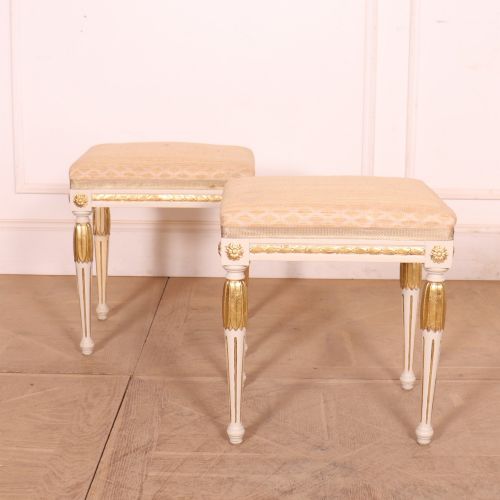


Carved Painted Footstool
These carved painted footstool examples bring decorative timber and upholstery together in domestic spaces.
Carved Painted Footstool
A carved painted footstool combines timber framing with surface decoration and upholstered seating, serving as a low support for the feet or as a small seat. The selections available encompass forms from the nineteenth century onward, reflecting varied regional tastes and domestic uses.
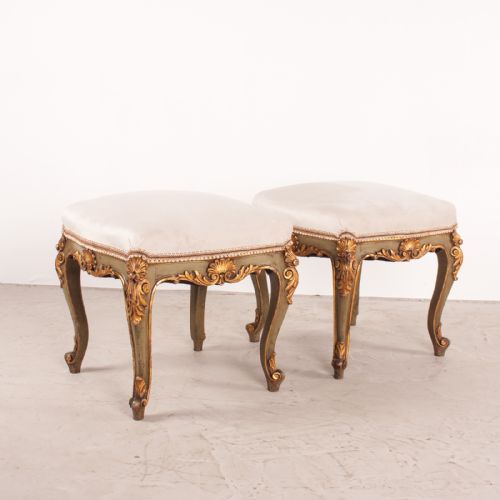
Makers drew upon diverse styles such as Gustavian, Louis XV, Regency and Continental Rococo to shape these pieces. Buyers frequently encounter French and Swedish origins among the options, featuring painted wood structures paired with fabric or textile coverings.
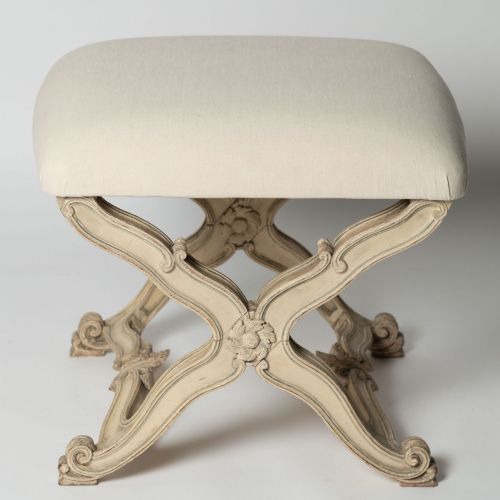
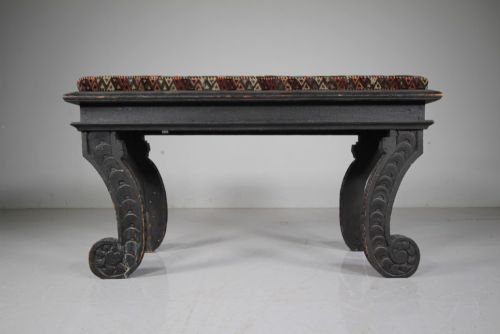
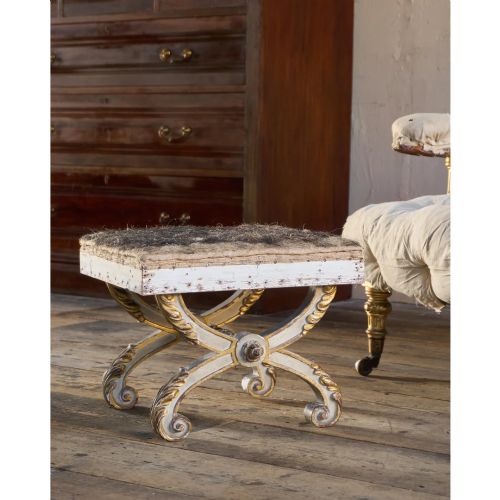
Forms range from simple low stools to X-frame curule designs and window seats. These objects function equally well in period interiors and eclectic modern rooms as movable seating.
What varies in quality
The refinement of the timber carving distinguishes finer examples from simpler vernacular pieces, with crisp details on floral motifs or scrollwork indicating skilled workmanship. Proportions and the symmetry of the frame structure further separate standard production from elevated design.
Surface treatments show significant variation, ranging from plain painted coats to intricate gilding and layered polychrome finishes. Original paint surfaces preserved beneath later layers hold greater interest for collectors than stripped or heavily repainted items.
Some nineteenth-century makers sculptively incorporated entire animal anatomy into seating, producing wooden elephant stools complete with carved tusks.
Miles & Edwards
The Carved Painted Footstool Glossary
- Gustavian
- The Swedish interpretation of French neoclassical design characterised by pale painted finishes and restrained classical carving. It emerged during the late eighteenth century and persisted through nineteenth-century revivals.
- Curule stool
- An ancient Roman magistrate chair form featuring intersecting curved legs that form an X-shape. Nineteenth-century cabinet makers revived this geometric silhouette for formal seating.
- Polychrome
- The practice of decorating architectural elements or furniture in multiple colours. Artisans applied various pigments to highlight carved wooden details on frames.
- Gilding
- The application of gold leaf or powder to a surface to impart a metallic sheen. Craftsmen used this technique on selected mouldings and carved ornaments.
- Window seat
- An elongated stool or small bench designed to fit within a window recess. These domestic furnishings appeared frequently in nineteenth-century English and continental interiors.
Carved Painted Footstool: Frequently Asked Questions
What is a carved painted footstool?
A carved painted footstool is a low wooden seat featuring decorative surface pigment and carved detailing. These pieces served domestic functions in period interiors.
They combine timber structures with upholstered pads, functioning as footrests or auxiliary seats in sitting rooms and bedrooms.
How do I date these stools?
Dating relies on stylistic clues, construction methods, and the type of paint finishes applied to the timber frame. Nineteenth-century examples often exhibit neoclassical or rococo revival motifs.
Examining the underside and joinery helps determine the approximate period of manufacture alongside regional stylistic traits.
Where were these stools made?
The pieces originate from various European workshops, with strong representation from Sweden, France, Italy, and England. Each region developed distinct decorative vocabularies.
Swedish makers favoured pale Gustavian finishes while French artisans leaned towards ornate Louis XV and provincial styles.
How should I clean painted wood?
Maintenance requires gentle dusting with a soft dry cloth to protect the historic paint layers from abrasive particles. Moisture and harsh cleaning agents can damage delicate finishes.
Preserving the original surface condition ensures the longevity and character of the antique timber decoration.