
Carved Oval Wall Mirror
A carved oval wall mirror brings immediate vertical grace and reflected light to a dark hallway or drawing room.

Carved Oval Wall Mirror
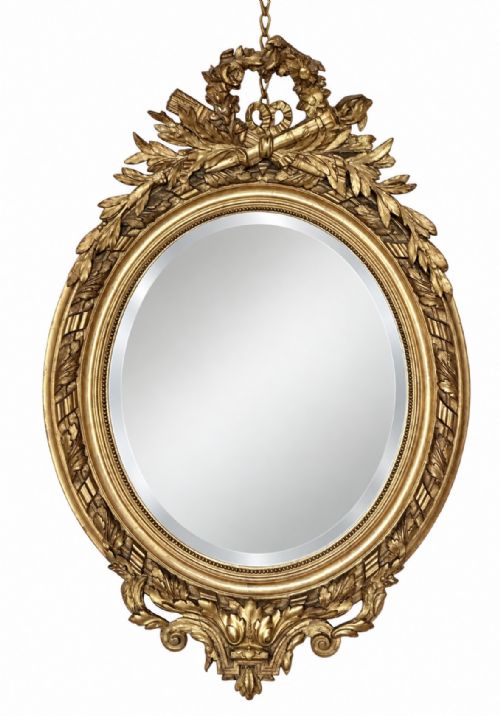
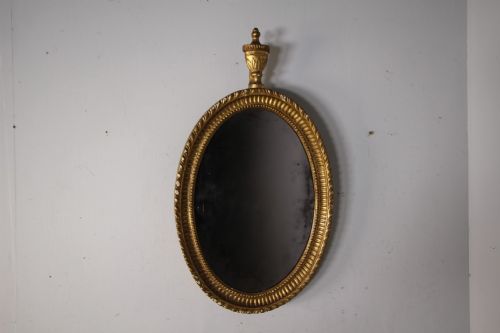
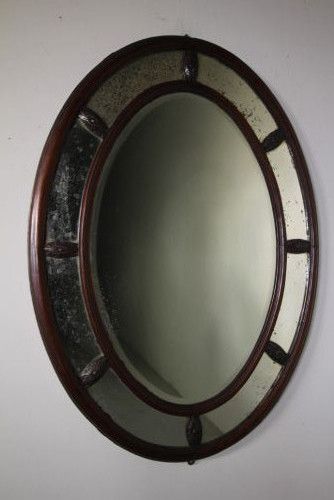
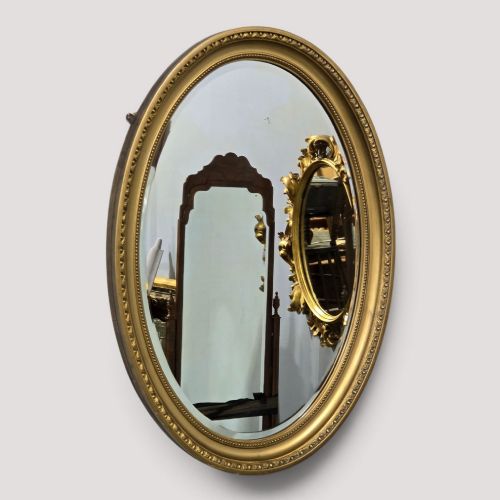
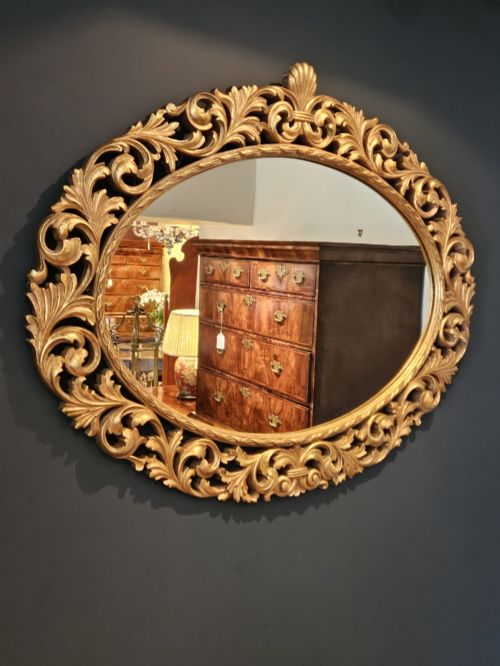
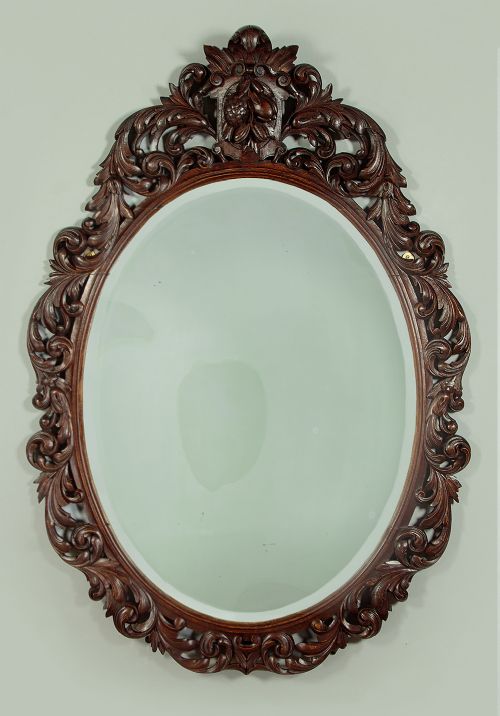
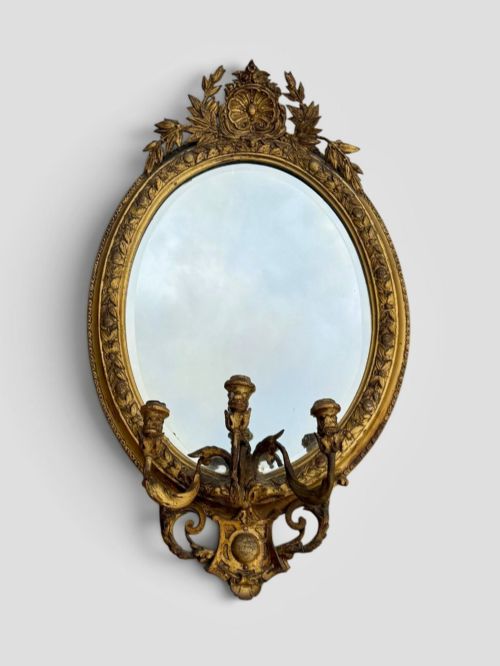
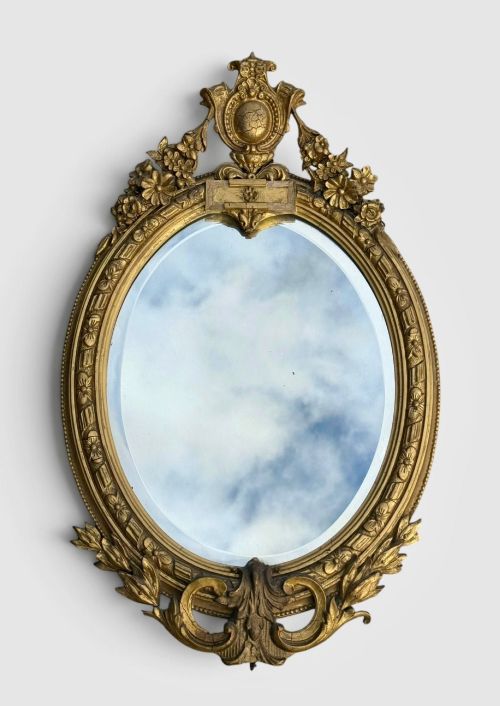
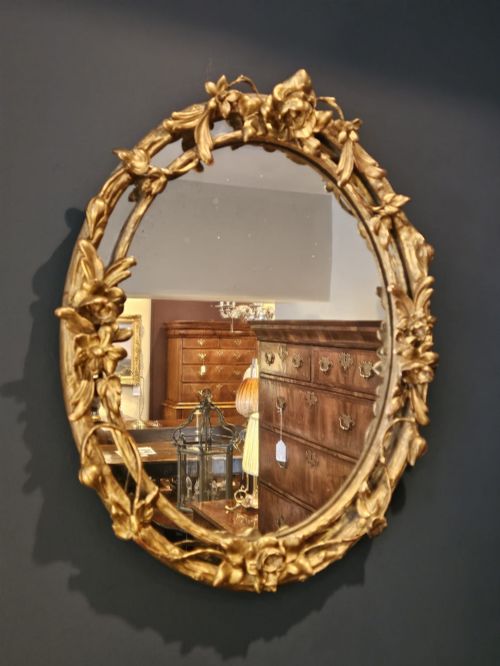
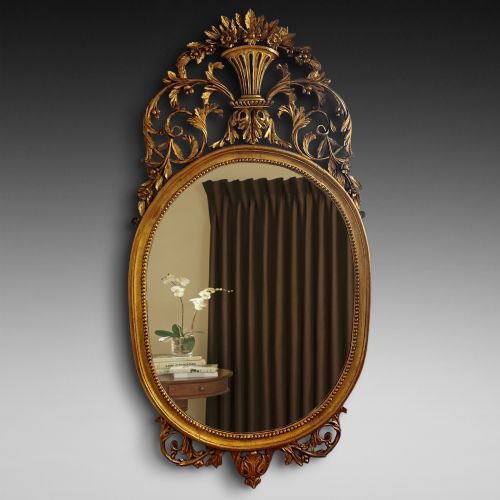
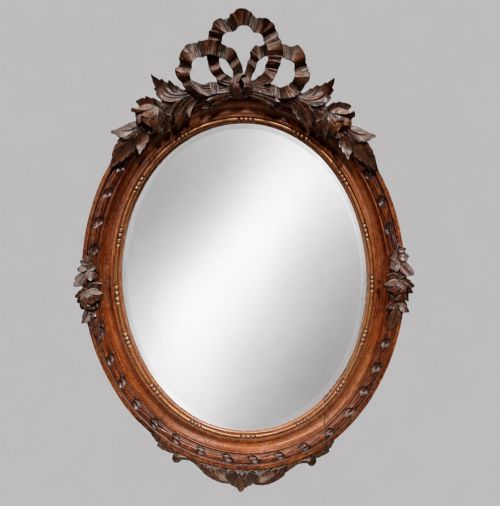
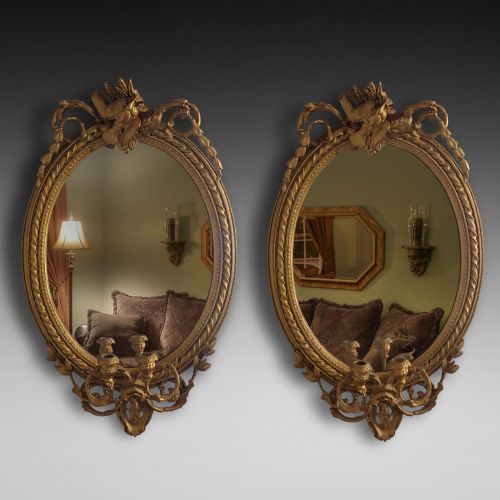
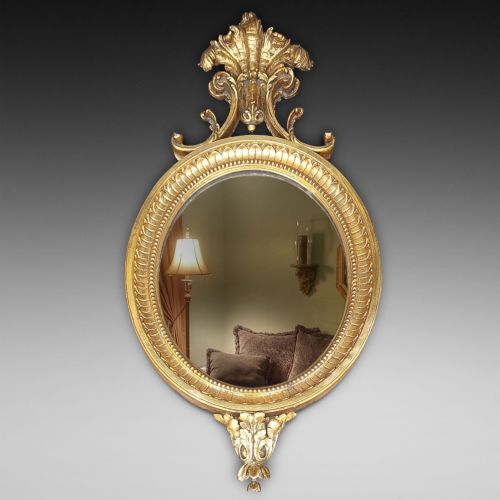
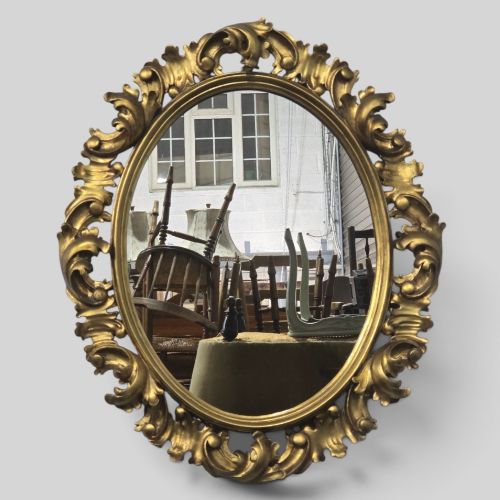
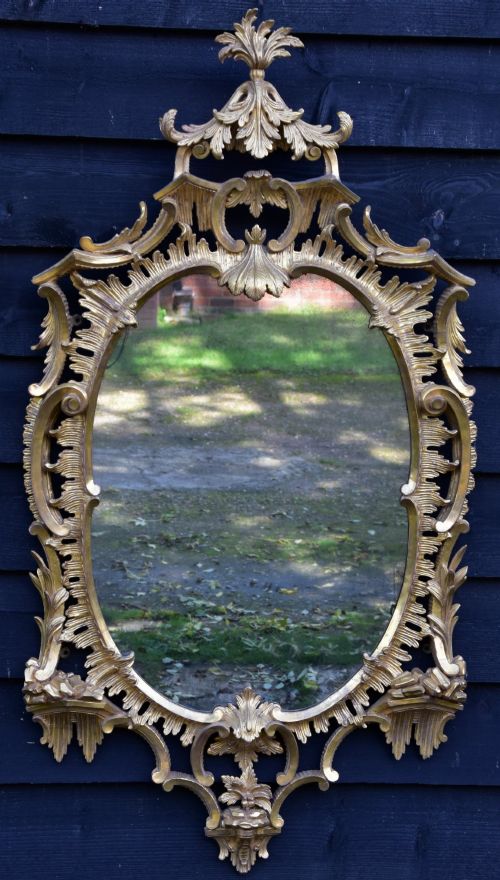
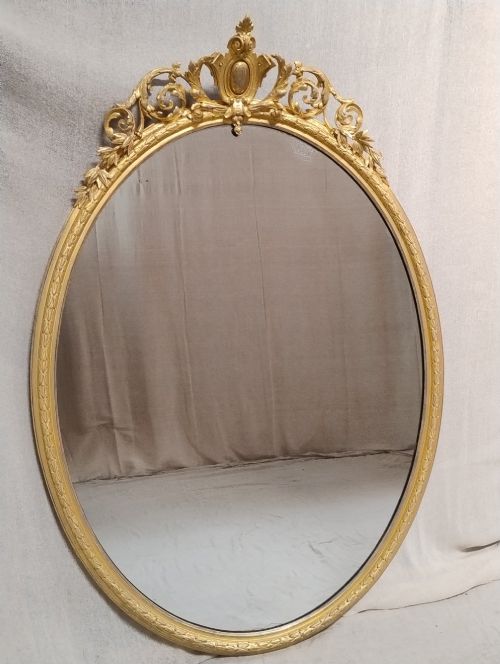
The versions met most frequently on this page belong to the nineteenth century and the Georgian period, rendered in giltwood, carved timber, or oak. Examples range from compact country house designs in plain mahogany to ornate Victorian girandoles set with candle sconces and French Rococo flourishes.
How they were made
Carved timber, oak, and mahogany form the foundational structure of these frames, worked by hand with chisels and gouges. Artisans applied layers of gesso over the carved wood to build up intricate relief details like vine leaves, scrolls, and bead reels before applying gold leaf or paint.
Early glass plates were silvered using mercury, creating a characteristic heavy, undulating reflection with subtle dark spots. Later nineteenth-century manufacturing introduced flat float glass and improved silvering techniques that produced a clearer, brighter mirror surface.
Carved Oval Wall Mirror Retail Price Guide 2026
Typical asking prices for carved oval wall mirror among the pieces listed under this phrase on Sellingantiques today, from the lower quarter to the upper quarter. They describe what is for sale here now, not the wider market.
Several mirrors capture the Victorian enthusiasm for viticulture with heavy carved vine leaves creeping around the looking glass.
What varies in quality
The depth and crispness of the hand carving separate simpler country pieces from high-status urban commissions. Crisp undercut foliage and sharply defined moulding show an artisan working without haste, whereas shallow, rounded relief indicates a more standard commercial output.
The preservation of the original gilt surface and mercury glass plate dictates desirability among collectors. Intact gold leaf with natural ageing outlasts heavily retouched surfaces, while surviving early glass plates maintain the authentic character of the period.
The Carved Oval Wall Mirror Glossary
- Giltwood
- Timber that has been coated with a thin layer of gold leaf over a prepared gesso base. This technique provides a warm, reflective metallic surface that catches candlelight and natural daylight.
- Gesso
- A plaster mixture applied to carved wood frames to provide a smooth, malleable surface for detailed moulding. It accepts gilding and paint readily, allowing for elaborate decorative relief.
- Girandole
- A wall mirror featuring attached candle sconces or arms that project outwards. The glass reflects the candlelight to multiply the illumination within the room.
- Mercury Plate
- An early mirror glass produced by applying a tin and mercury amalgam to the back of the glass sheet. It is recognised by its characteristic mottled appearance and deep, dark reflection.
- Rococo
- An ornate design style from the eighteenth century characterised by asymmetry, C-scrolls, and naturalistic shell or floral motifs. It experienced revivals during the Victorian era.
Carved Oval Wall Mirror: Frequently Asked Questions
Where should I hang a carved oval wall mirror?
These mirrors work best on focal walls above a fireplace mantel, a pier table, or a commode where their curved frame breaks up the straight lines of interior architecture. They also suit narrow hallway spaces by drawing light into darker corners and creating an illusion of depth.
Ensure the wall fixings match the weight of the timber and gesso frame, particularly for larger nineteenth-century examples. Hanging them at eye level allows the carved details to be appreciated directly.
How do I identify a Georgian mirror from a Victorian one?
Georgian mirrors often display restrained classical proportions, architectural symmetry, and precise hand-carved mouldings in pine or mahogany. Victorian interpretations tend towards heavier ornamentation, incorporating dense gesso relief work, rustic vine motifs, or exuberant Rococo Revival asymmetry.
Examining the timber behind the gesso and checking the construction joints helps confirm the period of manufacture. Original mirror plates also offer clues, as older mercury glass differs noticeably from later industrial float glass.
How do I care for antique giltwood frames?
Dust the carved surfaces gently with a soft, dry brush to prevent accumulation in the recesses of the gesso relief. Avoid using modern liquid cleaning sprays, water, or chemical solvents, as moisture lifts gold leaf and damages the underlying preparation layers.
Keep the mirror away from direct sunlight and damp conditions to preserve the stability of the wood and the integrity of the antique silvering on the glass plate.