
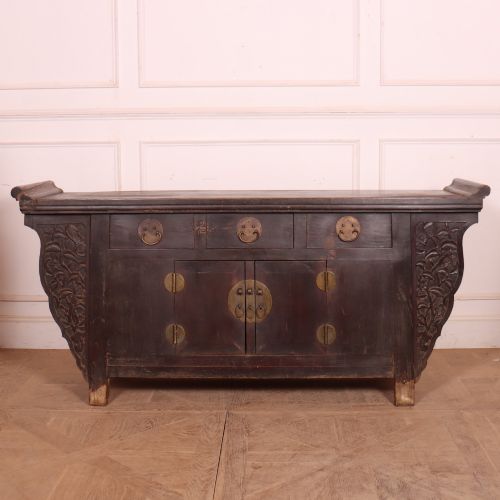
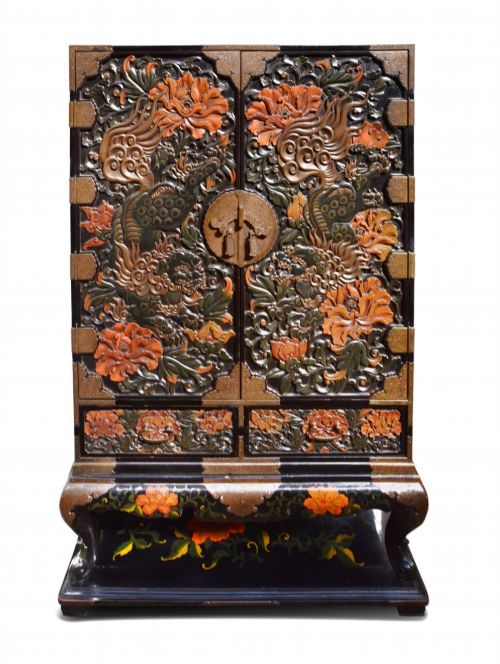


Carved Oriental Chest
A carved oriental chest brings aromatic timber, deep relief carving and useful storage into a room.
Carved Oriental Chest
When you search for a carved oriental chest, you encounter sturdy blanket boxes, storage trunks and occasional cabinets originating from Chinese export workshops and broader Asian trade routes. These pieces combine utilitarian storage with elaborate surface decoration, frequently taking the form of camphor wood trunks or teak coffers.
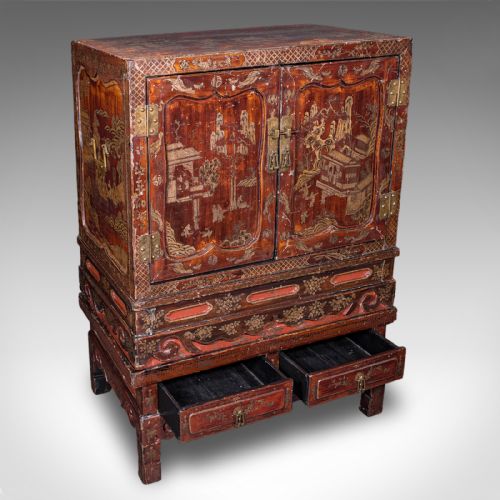
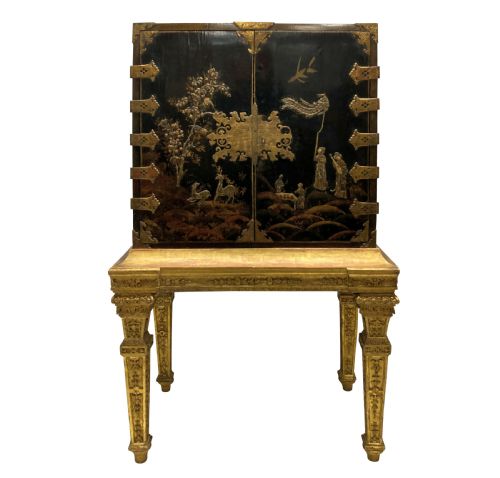
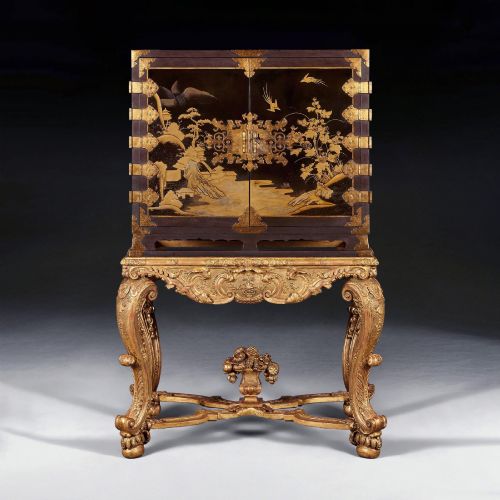
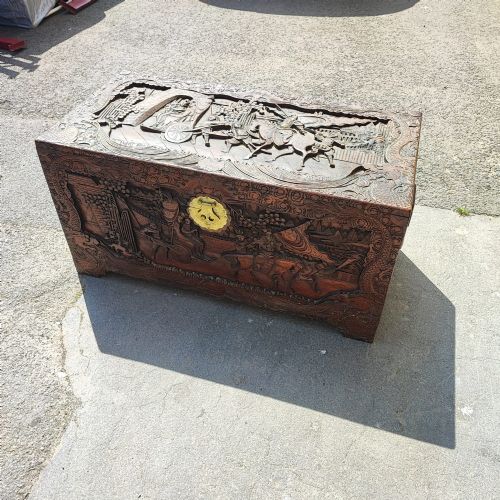
The version you are most likely to meet on this page is a nineteenth-century or early twentieth-century camphor wood chest featuring deep pictorial carving across the lid and sides. Alongside these standard storage boxes, the selection includes elevated cabinets on stands and specialised travel trunks from periods spanning the seventeenth century to the Art Deco era.
How They Were Made
Carpenters utilised aromatic timbers like camphor wood, teak and rosewood to construct the primary body of each chest, relying on the natural oils of the wood to protect stored garments. These durable hardwoods provided a stable canvas for dense, hand-chiselled relief scenes depicting traditional landscapes, figures and floral motifs.
Many examples incorporate brass corner plates, straps and heavy carrying handles fixed with pins to reinforce the joints for long-distance travel. Surface finishes range from natural waxed grain to glossy black or red lacquer, occasionally enriched with gilt details or inlaid mother of pearl.
The lingering scent of camphor travels across the centuries, whispering of long sea voyages and tea-clipper holds.
What Varies in Quality
The depth and precision of the chisel work dictate the visual success of the piece, separating flat, mechanical scoring from spirited relief carving with distinct spatial layers. Crisp detailing in figures and foliage demonstrates superior workshop execution.
The selection of timber grain and the integrity of the internal construction also determine the standing of an individual box. Uniform colour in the hardwood, tight joinery and heavy, well-cast brass hardware distinguish the finer examples from standard commercial output.
Harrods
The Carved Oriental Chest Glossary
- Camphor wood
- An aromatic timber traditionally utilised for storage chests because its natural scent deters insects from damaging textiles. It displays a pale brown grain that darkens with age and exposure to light.
- Zanzibar chest
- A heavy travel trunk originating from East trade routes, characterised by dense hardwood construction and elaborate brass studwork or strapwork. These pieces were built for maritime journeys.
- Chinoiserie
- European imitation and adaptation of Chinese artistic traditions, popular in furniture decoration during periods such as the seventeenth century. It typically involves lacquered surfaces and painted figures in gold.
- Cabinet on stand
- A two-part form comprising an enclosed storage cupboard resting on a separate supporting base with legs. The stands frequently reflect distinct European styles contrasting with the cabinet body.
- Lacquer
- A durable resin finish applied in multiple layers to wood surfaces to create a smooth, protective coating. It forms the foundation for polished black or red decorative schemes.
Carved Oriental Chest: Frequently Asked Questions
What were carved oriental chests used for originally?
These chests served primarily as secure storage trunks for valuable garments, silks and personal belongings during maritime transport or domestic retention. The dense timber protected contents from moisture and insects.
In domestic settings, they functioned as blanket boxes at the foot of beds or as prominent furniture pieces in reception rooms. Their sturdy flat lids also allowed them to double as temporary tables or window seats.
How do I identify camphor wood?
Camphor wood is recognised by its distinct, medicinal aroma, which often remains perceptible when lifting the lid of a vintage chest. The timber exhibits a pale honey or light brown tone with a varied grain.
Over decades, exposure to air deepens the colour of the wood while softening the intensity of the scent. The lightweight yet durable nature of the timber distinguishes it from denser tropical hardwoods like teak.
Are these chests suitable for modern living rooms?
These pieces integrate easily into contemporary interiors by providing concealed storage for bulky items such as spare bedding, cushions or media equipment. Their carved surfaces introduce texture and warmth to neutral spaces.
Placing a chest at the foot of a bed or utilising a smaller box as a coffee table offers practical surface space alongside enclosed storage. The mix of dark timber and brass hardware complements both traditional and modern decor.
How can I tell the age of a chest?
Dating relies on examining construction methods, hardware styles and the character of the wood finish rather than relying on carved motifs alone. Nineteenth-century examples often feature hand-cut dovetails and heavy, patinated brass fittings.
Later twentieth-century versions display machine-cut elements and distinct lacquer treatments associated with the Art Deco period. Comparing the interior lining and hinges provides further clues regarding the manufacturing era.