


Carved Oak Welsh Tridarn
These carved oak Welsh tridarn pieces are grand three-tier cupboards that anchor a room with centuries of rural craft.
Carved Oak Welsh Tridarn
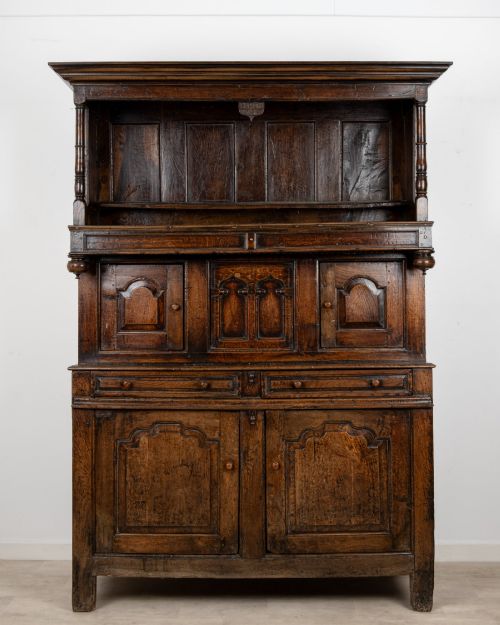
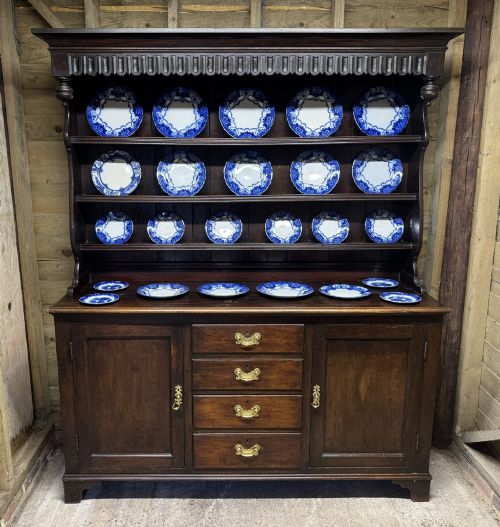
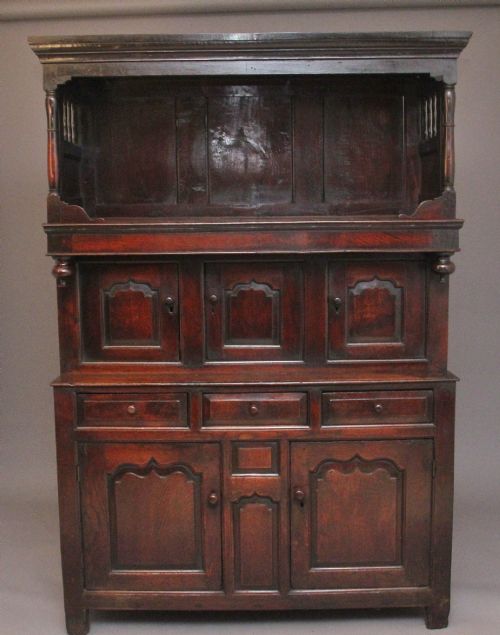
A carved oak Welsh tridarn is a substantial three-tier piece of vernacular furniture, combining an open or enclosed upper stage, a middle section with hanging panels or cupboards, and a base fitted with drawers or a larger cupboard. These imposing storage cupboards emerge primarily from Welsh regional workshops during the seventeenth and eighteenth centuries, reflecting the domestic needs of prosperous rural households.
Buyers browsing this selection will frequently encounter authentic examples bearing dates from the early eighteenth century alongside related two-part deuddarn cupboards and regional dressers. The form represents the pinnacle of Welsh country joinery, where practical storage meets elaborate architectural detailing on a domestic scale.
Materials and construction
Makers built these pieces primarily using solid native oak, frequently paired with secondary woods and occasionally utilising yew-wood for specific regional examples from areas such as Snowdonia. Construction relies on traditional joined framework, utilising pegged mortise and tenon joints to build the heavy three-tier carcasses that define the form.
Surface decoration relies heavily on gouge carving, incised geometric patterns, and panel moulding rather than applied veneers. Hardware typically incorporates wrought iron hinges and brass fittings that secure the heavy doors across the multi-tiered structure.
Listings span four centuries, featuring oak, yew, brass, and wrought iron across Georgian and Welsh vernacular styles.
Factors of quality
The distinction between ordinary and exceptional examples rests upon the ambition of the original design and the crispness of the regional carving. Pieces featuring documented dates, original surface patination, and scarce timbers like yew stand apart from plainer utilitarian storage.
Proportion and structural integrity dictate the standing of a tridarn within the tradition. Tighter integration between the three distinct tiers and minimal structural alteration elevate an example above heavily adapted or reconstituted pieces.
The Carved Oak Welsh Tridarn Glossary
- Tridarn
- A traditional Welsh three-tier piece of furniture comprising an upper section, a middle stage, and a lower cupboard base. This form provides expansive storage and display capacity within rural homes.
- Deuddarn
- A two-part Welsh cupboard lacking the uppermost tier found on a tridarn. It shares the same regional vernacular joinery and heavy oak construction.
- Vernacular
- Furniture built by local joiners using regional traditions and native materials rather than following metropolitan London fashions. These pieces reflect the specific character of Welsh country workshops.
- Joined
- A method of cabinet making using framed construction with mortise and tenon joints secured by wooden pegs. This technique creates robust carcasses that outlast simpler boarded furniture.
- Cwpwrdd
- The Welsh term for cupboard, frequently prefixed to traditional furniture descriptions in this regional tradition. It denotes enclosed storage space within the tridarn structure.
Carved Oak Welsh Tridarn: Frequently Asked Questions
What is a tridarn?
A tridarn is a traditional three-tier Welsh cupboard designed for storage and display in domestic interiors. The structure stacks an upper canopy or cabinet upon a middle section and a lower base.
These imposing pieces represent the highest expression of Welsh vernacular cabinet making during the seventeenth and eighteenth centuries.
Where were these cupboards made?
These cupboards originated in Welsh regional workshops, with specific examples associated with areas like Snowdonia. Local joiners utilised native timber available in the Welsh countryside.
The distinct carving styles often point to specific valleys or regional traditions within rural Wales.
How do you date an old tridarn?
Dating relies upon construction methods, timber characteristics, and occasionally carved initials or dates directly onto the woodwork. Seventeenth-century examples display different moulding profiles compared to mid-eighteenth-century pieces.
Changes in joinery techniques and hardware styles help place undated examples within the seventeenth, eighteenth, or nineteenth centuries.
How should I live with one?
Living with a tridarn requires placing it against a stable interior wall away from direct heat sources to protect the dry oak. The substantial proportions demand a room with adequate ceiling height and floor space to accommodate the multi-tier structure.
Use the deep shelves and cupboards for practical storage while letting the aged timber patination warm the room.