




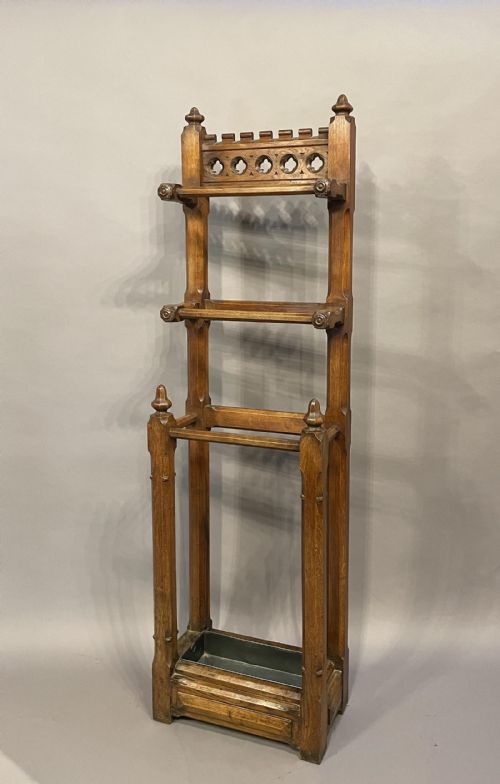

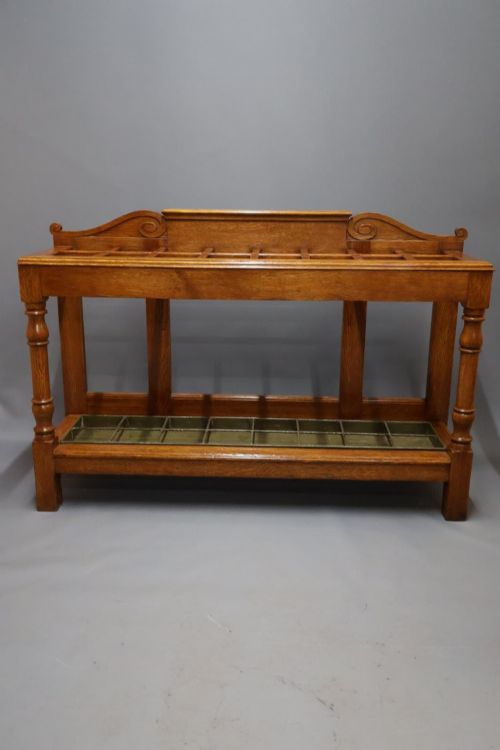


Carved Oak Tray
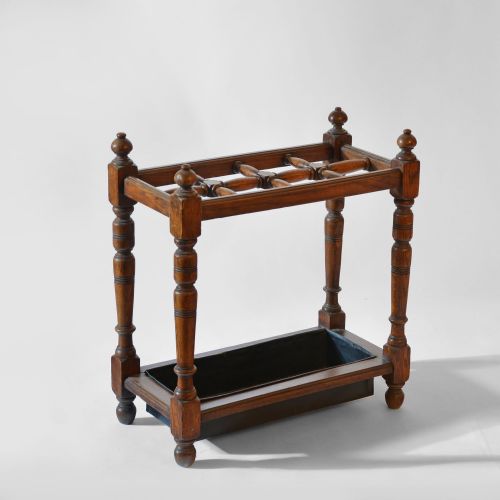
A carved oak tray brings substantial timber and period detail to a room, serving functional purposes from Butler service to holding walking sticks.
Carved Oak Tray
When you search for a carved oak tray, you encounter items ranging from Butler's trays on folding stands to smaller cutlery trays and tea trolleys. The pieces appearing here span the nineteenth century and the Edwardian era, reflecting domestic utility of those periods.
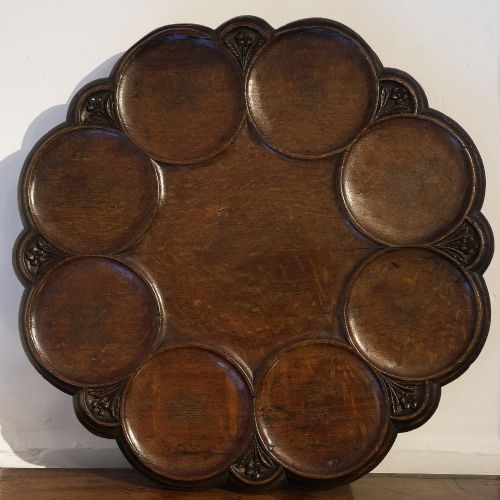
Butler's trays dominate the larger formats, often accompanied by dedicated stands for serving or display. Smaller cutlery trays and lazy Susans also appear, showing how oak served both grand reception rooms and country house kitchens.
The aesthetic vocabulary stretches from Gothic Revival and Jacobean Revival to Arts and Crafts and Aesthetic Movement designs. These diverse styles share a reliance on solid oak timber shaped by period workshops.
How they were made
Maker's hands shaped these pieces using solid oak, frequently employing heavy carving, fretwork, and panel construction. Metal elements such as brass handles, copper insets, and bronze brackets appear alongside the timber to add structural support and contrast.
Folding wooden stands and wheeled trolleys required sturdy joinery to bear weight during daily domestic service. Surface finishes relied on traditional waxing and polishing to protect the grain while accentuating the depth of the carved motifs.
Carved Oak Tray Retail Price Guide 2026
Typical asking prices for carved oak tray among the pieces listed under this phrase on Sellingantiques today, from the lower quarter to the upper quarter. They describe what is for sale here now, not the wider market.
Listings feature oak combined with diverse materials including brass, copper, glass, and zinc across multiple nineteenth-century and Edwardian styles.
What varies in quality
The crispness of the carving separates standard utilitarian items from pieces that received greater attention from the artisan. Depth of relief and symmetry in motifs like sunflowers or Gothic tracery indicate the skill invested in the timber.
The integration of secondary materials, such as heavy brass hardware or mirrored centres, influences the overall character of the piece. Substantial oak construction with intact original stands demonstrates superior original manufacture.
The Carved Oak Tray Glossary
- Butler's tray
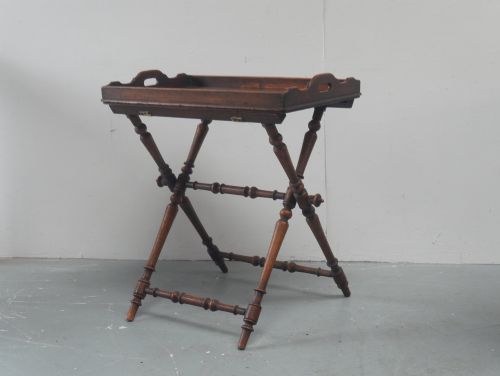
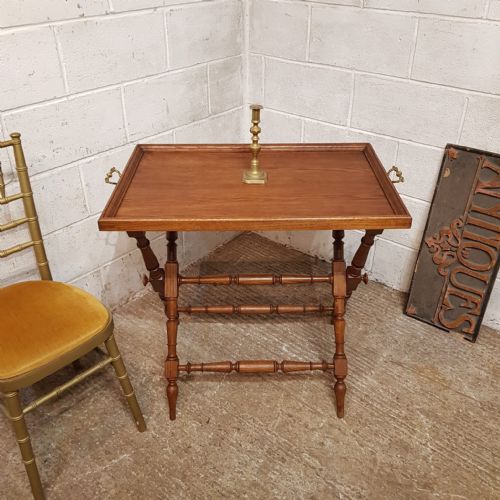
- A portable rectangular wooden tray with hinged or cutout handles designed for carrying service items. It frequently pairs with a folding X-frame stand.
- Cutlery tray
- A compartmented shallow wooden box used for sorting and carrying table silverware. Examples from earlier periods often feature shaped central dividing partitions.
- Gothic Revival
- A nineteenth-century design style drawing on medieval architectural motifs. Pieces display pointed arches, trefoils, and heavy structural lines.
- Arts and Crafts
- A movement prioritising visible handcraftsmanship and simple vernacular forms. Items from this tradition emphasise the natural grain of the oak.
- Lazy Susan
- A rotating revolving tray placed on a table to assist with passing dishes. These take the form of circular wooden platters mounted on turning mechanisms.
Carved Oak Tray: Frequently Asked Questions
What is a Butler's tray?
A Butler's tray is a portable wooden tray with raised sides that lifts off its support stand.
Historically, servants used these to clear tables and transport dining service between rooms.
How do I date an oak tray?
Dating relies on combining the timber characteristics, the style of carving, and the accompanying hardware.
Victorian and Edwardian pieces show specific revival motifs that distinguish them from Georgian examples.
Where were these trays used?
These items belonged in dining rooms, country house halls, and large kitchens.
They served practical domestic roles in organising cutlery, holding serving ware, or displaying items.
Are the stands original to the trays?
Many trays retain their matching folding stands or trolleys designed specifically for them.
Construction methods and timber matching help confirm whether the stand and tray belong together.