




Carved Oak Saints
Carved oak saints are devotional figures and panels hewn from heavy timber, prized for their solemn presence and survival from centuries past.
Carved Oak Saints
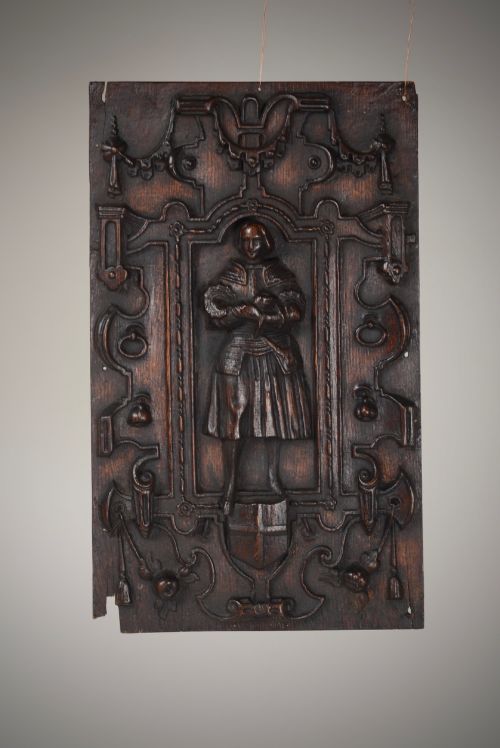
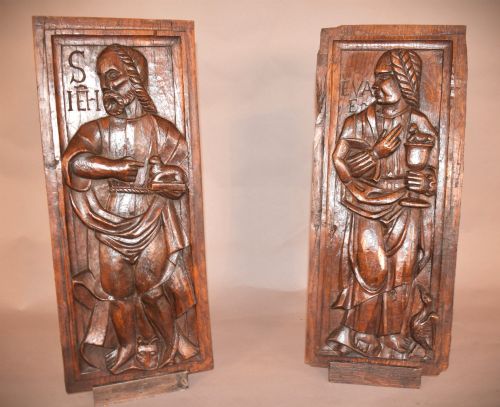
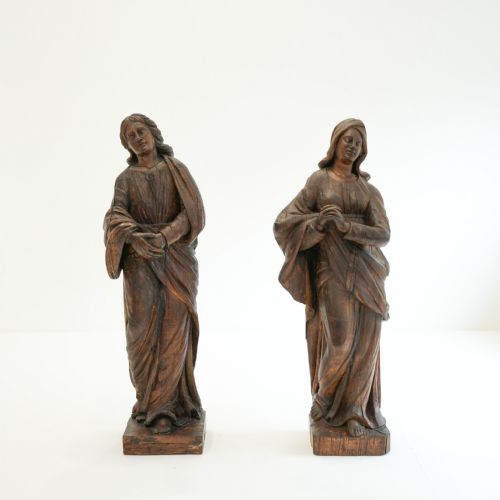
Carved oak saints are wooden sculptures and relief panels depicting holy figures, apostles, and martyrs. These pieces serve as tangible links to medieval and post-medieval devotional art.
The versions most commonly met on this page range from pre-16th century Gothic fragments and figures to 17th-century panels and later 19th-century revivals. They appear as single statues, pairs, and framed wall carvings.
Originating from workshops across Europe, including Germany, Flanders, and France, these sculptures embody regional stylistic shifts from Late Gothic to Renaissance and Baroque forms.
Materials and methods
Many early surfaces retain traces of polychrome paint and gilding applied over a gesso ground, adding rich colour to the natural wood. Metal elements occasionally reinforce structural joints or form attributes held by the figures.
Listings span periods from pre-16th century Gothic work through to 19th-century revivals, executed in oak, polychrome paint, and metal.
Judging quality and depth
Quality rests in the anatomical proportion and the crispness of the chisel work within the oak. Master carvers achieved fluid movement in heavy fabric and realistic depth in facial expressions, whereas lesser examples remain stiff and shallow.
The survival of original surface treatments, such as early paint and gilding, elevates a piece significantly. Alterations, heavy later cleaning, or extensive replacement of limbs alter the integrity of the sculpture.
Franz Keller
The Carved Oak Saints Glossary
- Polychrome
- Painted in several colours, often applied over gesso on wooden sculptures to enhance realism. This finish frequently survives only in fragments on early pieces.
- Gothic Revival
- An architectural and decorative style from the 19th century that emulated medieval forms. Makers during this period produced pieces inspired by earlier saints and tracery.
- Donor figure
- A sculpture depicting the person who commissioned a religious work, often shown kneeling in prayer beside a saint. These figures provide important social and costume context.
- Tracery
- Ornamental stonelike openwork pattern used in Gothic architecture and replicated in wooden panels. It often frames or supports carved figures.
- Anna Selbdritt
- A devotional subject showing Saint Anne with the Virgin Mary and the Christ Child. This grouping is frequently found in late medieval German and Flemish carvings.
Carved Oak Saints: Frequently Asked Questions
How do I date a carved oak saint?
Dating relies on stylistic clues such as the cut of the garments, the posture, and the tool marks left on the oak timber. Comparing the piece to documented examples from specific regions helps narrow the century.
Changes in carving depth and the transition from Gothic rigidity to Renaissance naturalism provide further chronological markers for these sculptures.
Where were these figures originally displayed?
These carvings originally stood in churches, domestic chapels, and monastic settings as focal points for prayer and contemplation. Many formed parts of larger altarpieces or rood screens.
Later pieces often served decorative or devotional functions within private homes during the Gothic Revival period.
How should I clean an antique wood carving?
Dust the surface gently with a soft, dry brush to remove settled particles without disturbing the aged wood or fragile paint remnants. Avoid using water, oils, or modern chemical polishes on old oak.
Maintaining a stable indoor humidity prevents the timber from splitting or warping over time.
Are all these figures made of oak?
While the majority of the pieces are carved from oak timber, some listings record broader categories of carved wood or specific applications of polychrome paint and metal.
Regional preferences often dictated the wood used, though oak remained the primary medium for northern European sculpture due to its durability.