

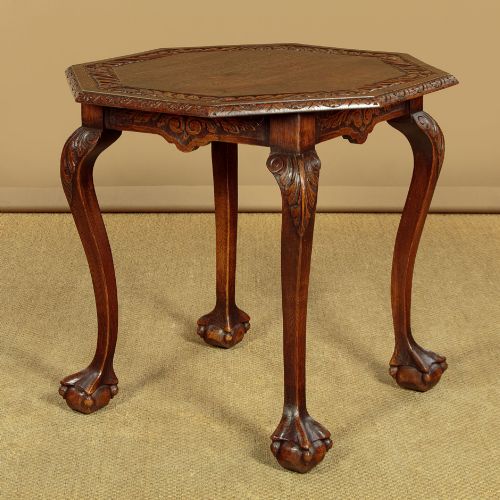


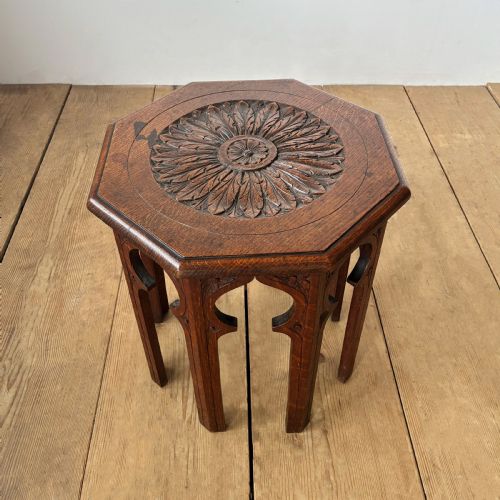
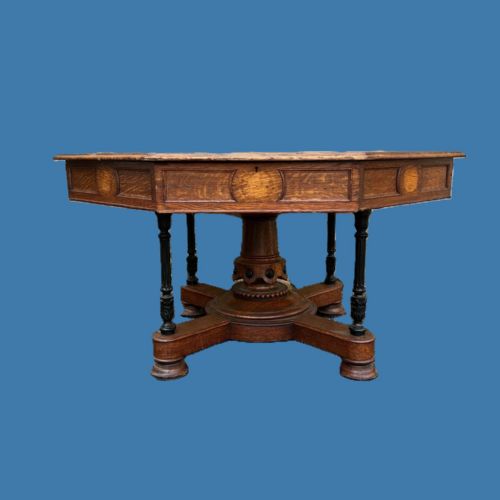


Carved Oak Octagonal Table
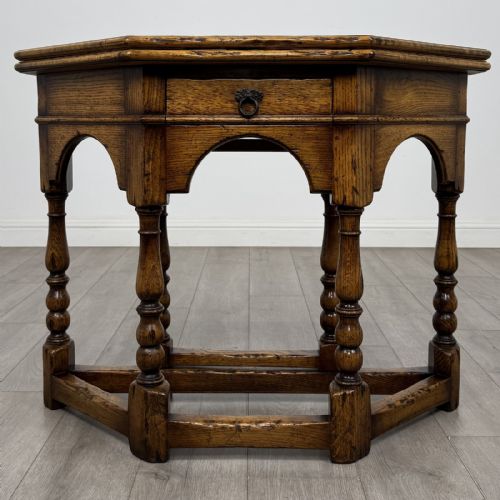
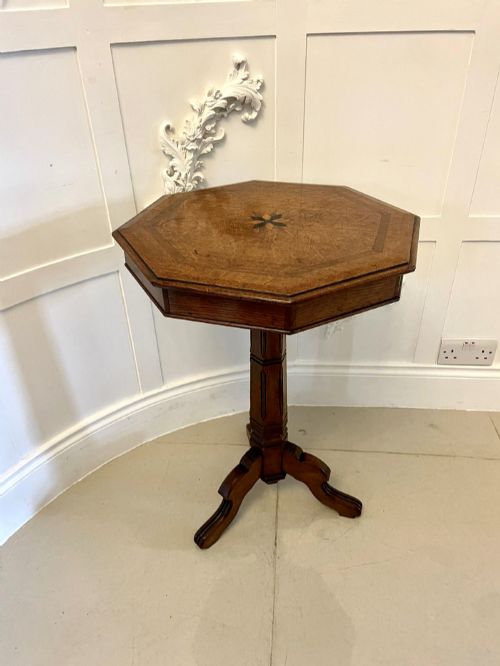
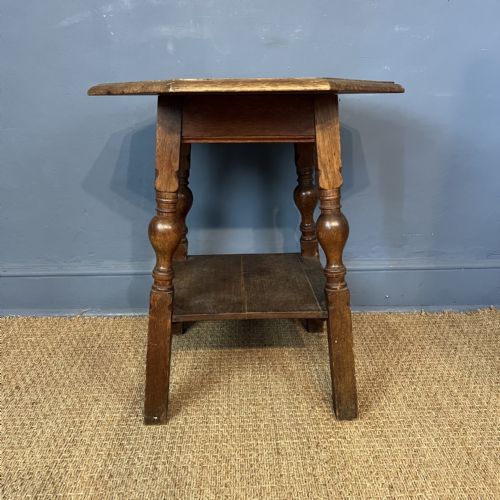
A carved oak octagonal table brings substantial presence and geometric interest to a room through robust timber and distinct multifaceted surfaces.
Carved Oak Octagonal Table
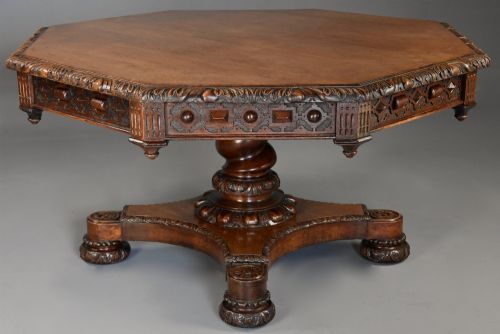
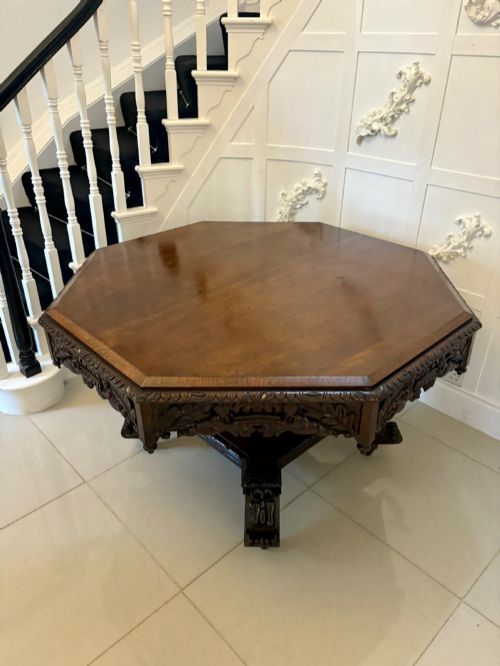
A carved oak octagonal table is a sturdy domestic surface defined by its eight-sided top and prominent use of solid timber. You will frequently encounter these pieces across Victorian, Edwardian, and Arts and Crafts periods, often taking the form of side tables, centre tables, or occasional tables.
The architectural shaping draws heavily on historical revivals, including Jacobean, Gothic, and Moorish influences. Makers utilised the octagonal format to display deep relief carving along the edges and aprons, making these items functional centrepieces for libraries, halls, and parlours.
How they were made
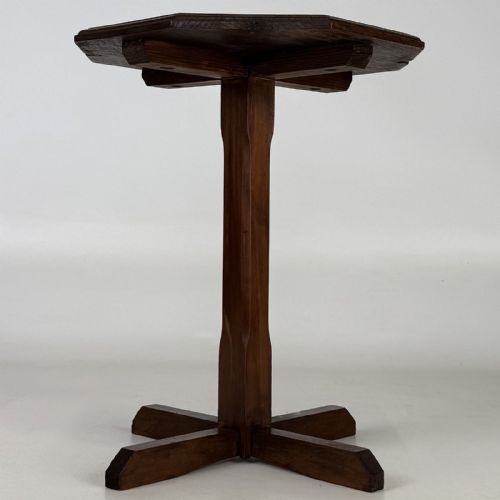
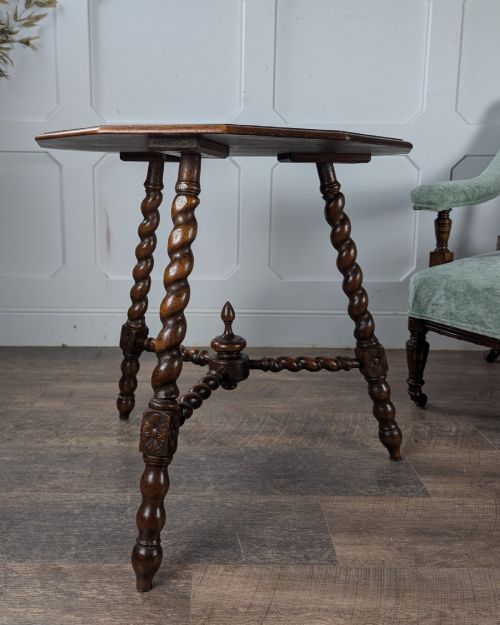
Craftsmen built these tables using solid oak, sometimes supplemented by ebonised wood, hardwood, or brass fittings. Timber boards were joined to form the eight-sided top, often supported by barley twist legs, carved pedestals, or intersecting stretchers.
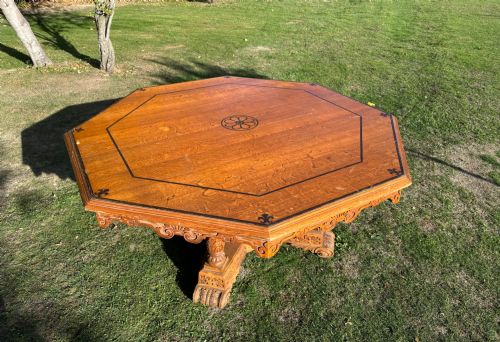
Surface enrichment relied on hand-chwed detailing, geometric wood inlay, and occasionally metal insets such as copper or iron. Bleached finishes or natural golden oak tones were left to highlight the dense grain of the wood.
Carved Oak Octagonal Table Retail Price Guide 2026
Typical asking prices for carved oak octagonal table among the pieces listed under this phrase on Sellingantiques today, from the lower quarter to the upper quarter. They describe what is for sale here now, not the wider market.
Materials appearing across the inventory include solid oak, ebonised wood, hardwood, brass, copper, and leather.
What varies in quality
Quality rests upon the crispness of the hand carving and the structural integrity of the eight-sided joinery. Superior examples demonstrate deep, deliberate chisel work rather than shallow mechanical stamping, along with well-balanced proportions that prevent wobbling across the multiple angles.
The choice of timber selection also divides the range, with dense golden oak or thoughtfully figured grain standing apart from plain utilitarian stock. Attribution to notable retail houses or documented design influences further elevates a piece above standard workshop production.
Liberty and Co·Gillows
The Carved Oak Octagonal Table Glossary
- Octagonal top
- A geometric table surface featuring eight distinct sides and angles. This shape became particularly popular during the Victorian and Arts and Crafts periods for occasional and library tables.
- Barley twist
- A turned wooden furniture leg resembling a twisted rope. This technique added vertical movement and decorative flair to late 19th-century side tables.
- Gothic Revival
- An architectural and decorative style drawing inspiration from medieval design. Pieces often incorporate pointed arches, heavy tracery, and robust oak construction.
- Arts and Crafts
- A design movement prioritising handcraftsmanship and simple vernacular forms over mass production. Tables from this tradition frequently display honest construction and minimal, elegant carving.
- Centre table
- A freestanding piece designed to be viewed from all sides rather than pushed against a wall. These substantial tables usually occupy the middle of a room or library.
Carved Oak Octagonal Table: Frequently Asked Questions
Where should I place an octagonal table?
An octagonal table works exceptionally well in the middle of a room as a centrepiece or library table, where its multi-sided shape can be appreciated from all angles.
You can also position one in a corner or beside seating as a functional side table or occasional table, making effective use of the compact yet generous surface area.
How do I identify the period of these tables?
Dating relies heavily on observing the combination of decorative styles and construction methods, such as distinguishing heavy Gothic Revival and Victorian carving from cleaner Arts and Crafts lines.
Examining the tone of the oak, whether golden, bleached, or ebonised, alongside specific leg turnings like barley twists, helps narrow down whether a piece originates from the mid-19th century or the Edwardian era.
Were these tables used for dining?
While many examples served as occasional, library, or side tables, larger formats were occasionally constructed as dining or breakfast tables.
The sturdy solid oak construction and generous eight-sided surface provided adequate space for meals and household tasks in Victorian homes.
How do I care for antique oak furniture?
Maintain the timber by keeping the table away from direct heat sources and sudden temperature shifts that might cause the solid oak panels to split.
Apply a traditional beeswax polish sparingly and buff with a soft cloth to nourish the grain and preserve the natural sheen of the wood over time.