
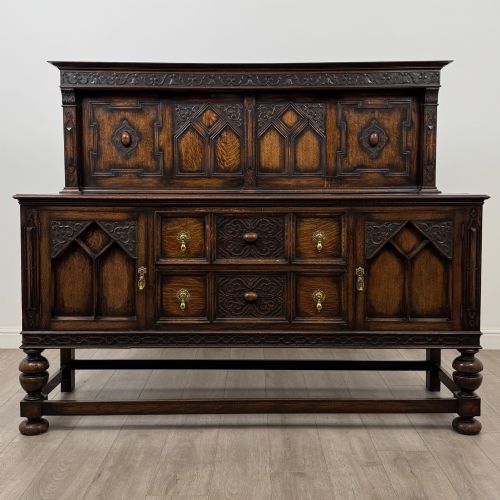
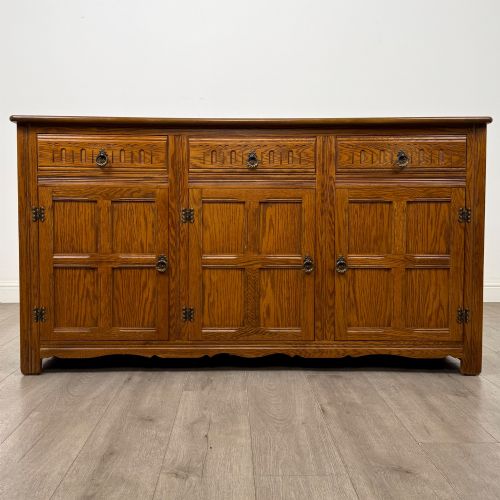
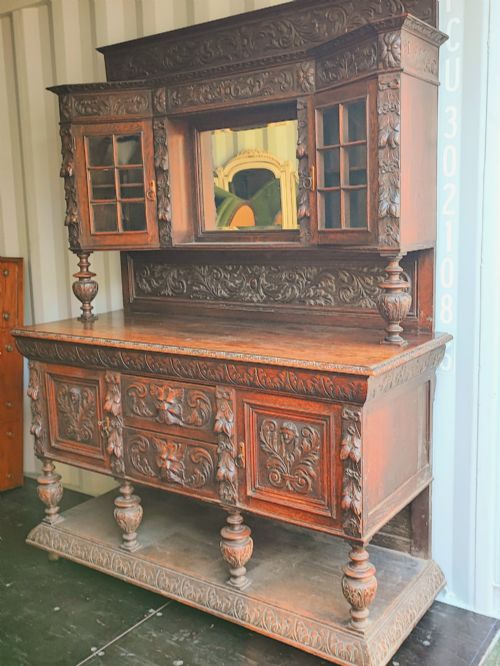
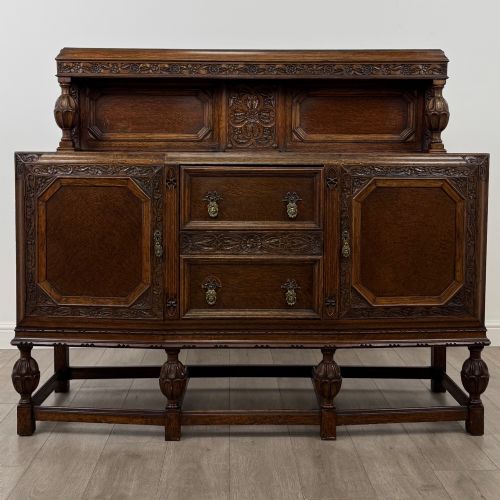


Carved Oak Dining Dresser
A carved oak dining dresser brings robust timber and deep relief carving into a room, serving both as a functional sideboard and a display piece.
Carved Oak Dining Dresser
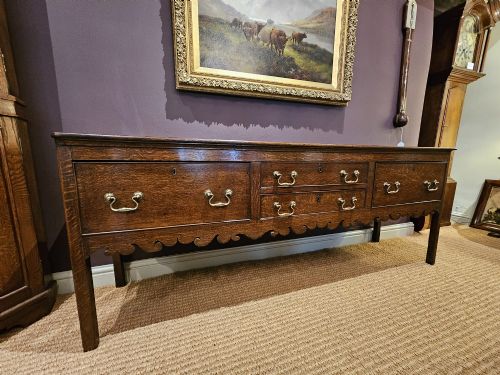
When you search for a carved oak dining dresser, you are looking at substantial timber furniture designed for storage and display in dining spaces. The pieces gathered here span centuries, ranging from eighteenth-century country examples to Victorian, Edwardian, and twentieth-century revivals.
You will frequently encounter forms described as sideboards, buffets, and dresser bases alongside traditional Welsh dressers. These variations combine cupboards, drawers, and occasionally mirror backs or plate racks into singular architectural units for the home.
Origins stretch across English workshops and continental provincial makers, utilising solid timber and golden or pollard oak varieties. The selection reflects domestic dining traditions from the eighteenth century through to the nineteen-thirties.
How they were made
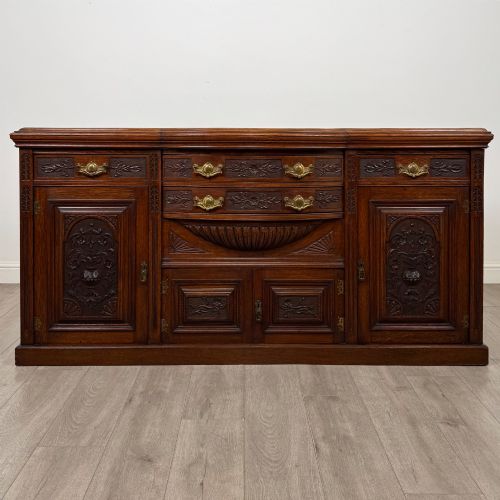
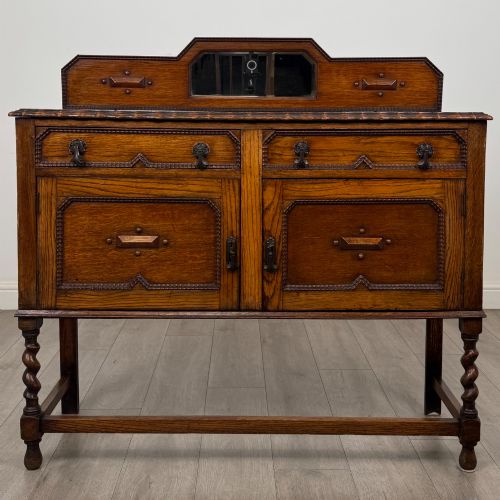
Constructed predominantly from solid oak, these pieces often feature specialist decorative veneers such as pollard oak to add grain movement to drawer fronts and panels. Brass and metal hardware, including drop handles and escutcheons, punctuate the dense timber surfaces alongside integrated mirror glass in later mirror-back variations.
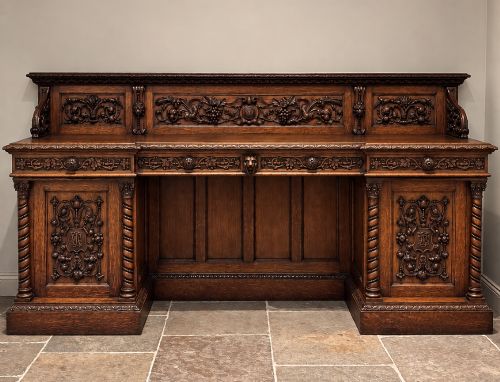
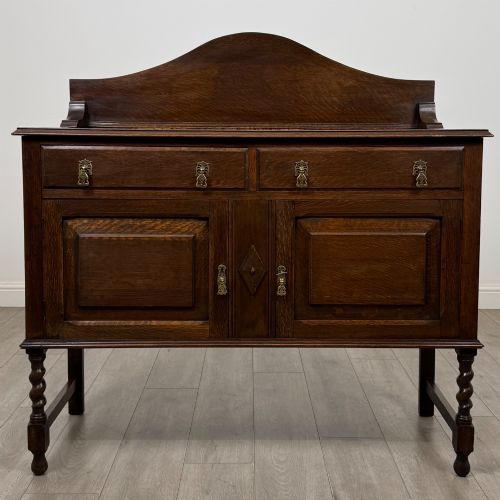
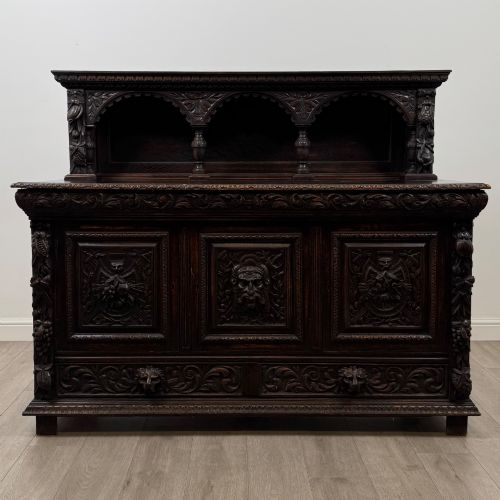
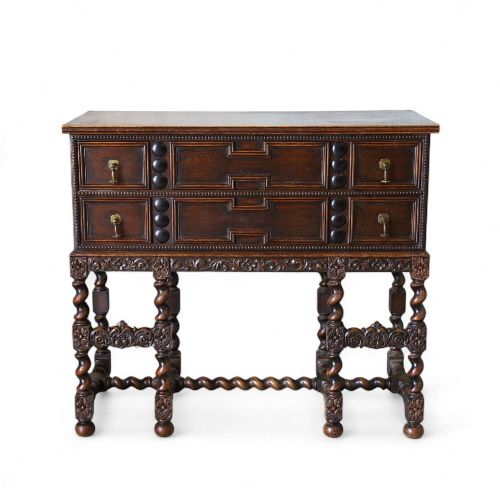
Makers utilised traditional joinery methods alongside heavy surface carving, employing relief motifs, linenfold, and turned supports like barley-twist legs. Carolean and Jacobean revivals brought deep, profuse hand-chiselled detailing to panels, friezes, and structural uprights.
Keep an eye out for hidden Green Man faces peering through the dense foliage carvings, watching over your dining room.
What varies in quality
The standard of carving distinguishes one piece from another, moving from shallow mechanical stamping to crisp, deep-relief hand work that defines architectural mouldings and figural motifs such as Green Man masks. Timber selection also creates distinction, where figured pollard oak or warm golden oak highlights the grain far beyond standard dark planks.
Structural integrity and proportion set apart the finest examples, seen in the weight of the timber, the snug fit of breakfront drawers, and the integration of original brass hardware. Pieces retaining their matching mirror backs or original pegged joints demonstrate superior cabinet-making pedigree.
T Simpson and Son
The Carved Oak Dining Dresser Glossary
- Barley-twist
- A type of turning shaped to resemble a spiralling rope or column. This decorative technique appears frequently on the table legs and structural supports of Edwardian and revival sideboards.
- Pollard oak
- Timber taken from trees that have been pollarded, producing a clustered, highly figured grain pattern. Cabinet makers utilised this prized material for decorative drawer fronts and statement panels.
- Breakfront
- A piece of furniture featuring a central section that projects forward from the flanking cupboards or drawers. This architectural arrangement creates depth and shadow across the frontal elevation.
- Green Man
- A sculptural architectural motif depicting a human face carved with leaves, vines, or foliage emerging from the mouth. It appears frequently as a prominent feature on heavily carved Victorian woodwork.
Carved Oak Dining Dresser: Frequently Asked Questions
What is a carved oak dining dresser?
A carved oak dining dresser is a heavy storage item intended for dining rooms, combining cupboards, drawers, and sometimes display shelving or mirror backs.
These pieces use solid oak and feature stylistic revivals from Jacobean, Carolean, and Arts and Crafts traditions.
How do I identify an Edwardian sideboard?
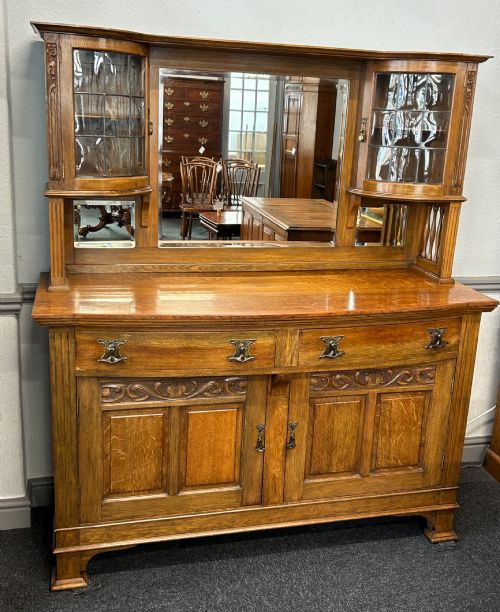
Edwardian examples often display lighter golden oak tones, cleaner lines, and influences from the Arts and Crafts movement or simplified revival styles.
They frequently incorporate mirror backs, brass fittings, and less profuse carving than their Victorian predecessors.
Where were these dressers used?
They functioned primarily in dining rooms and large kitchens to store tableware, linens, and serving dishes while displaying ceramic plates.
The surface top also served as a staging area during family meals or formal dining events.
How do I care for antique oak furniture?
Keep the timber away from direct heat sources and sudden humidity changes to prevent the solid oak panels from splitting or warping.
Apply traditional beeswax occasionally to nourish the grain and maintain a soft, protective sheen on the carved surfaces.
What is a mirror back sideboard?
A mirror back sideboard is a variation featuring a tall wooden superstructure fitted with an integrated mirror and display shelves above the main counter.
This design reflects light into the room and allows for the presentation of decorative ceramics and glassware.