


Carved Oak Coffer Trunk
A carved oak coffer trunk brings centuries of utility and dense regional character directly into a modern room.
Carved Oak Coffer Trunk
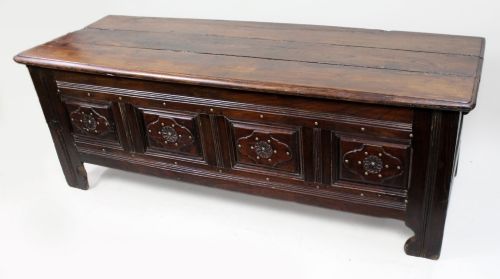
A carved oak coffer trunk is a heavy timber storage box used for centuries to hold textiles, valuables, and household goods. When searching for a carved oak coffer trunk, a buyer encounters pieces originating from the sixteenth century onwards, with seventeenth-century examples appearing frequently alongside later Georgian and revival forms.
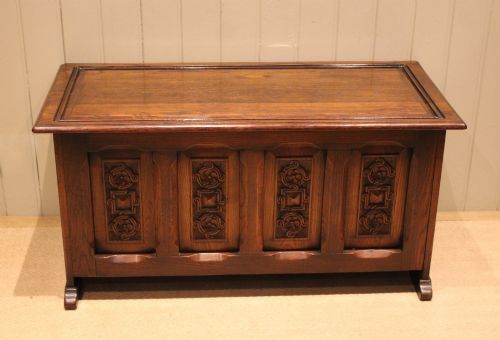
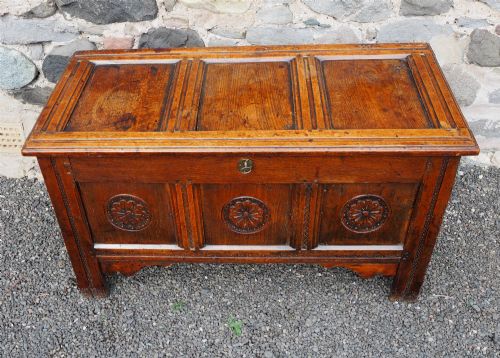
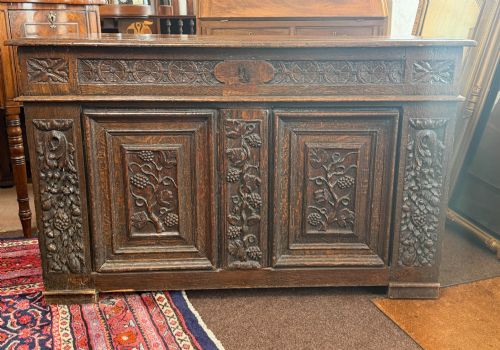
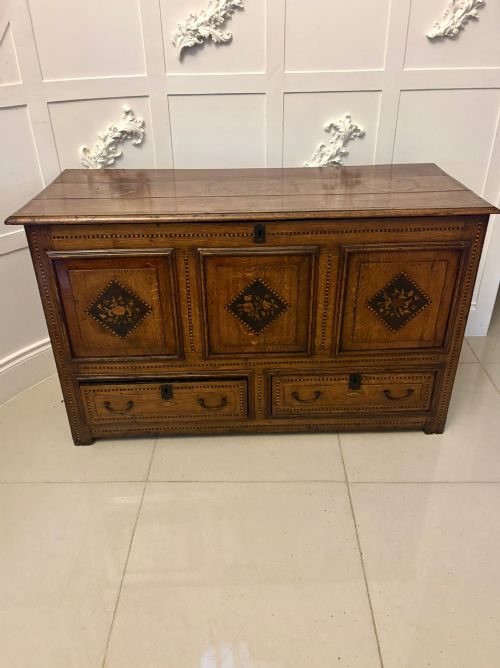
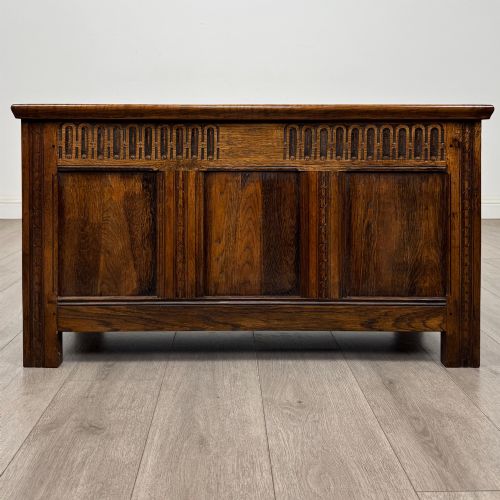
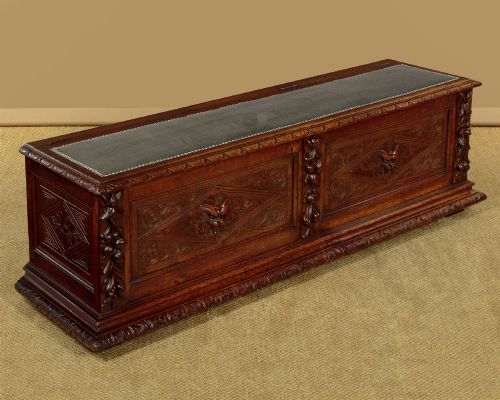
The pieces on this page span vernacular English, Welsh, and French provincial workshops, taking the form of joined chests, mule chests with lower drawers, and panelled storage boxes. Construction relies on solid timber frames holding thin inset panels, creating robust receptacles designed to withstand generations of daily domestic service.
How They Were Made
Joiners built these boxes using solid oak boards joined by mortise and tenon frames secured with wooden pegs rather than metal nails. Panels within the front and sides were often bevelled to float freely within grooves, accommodating seasonal timber movement without splitting.
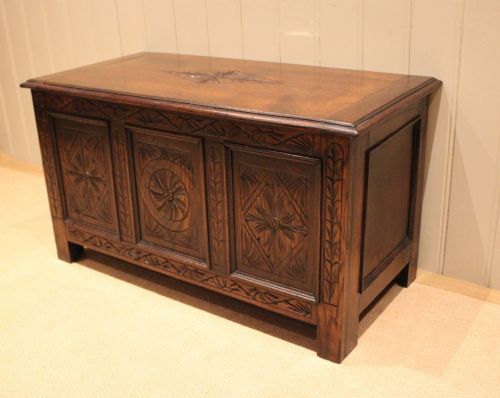
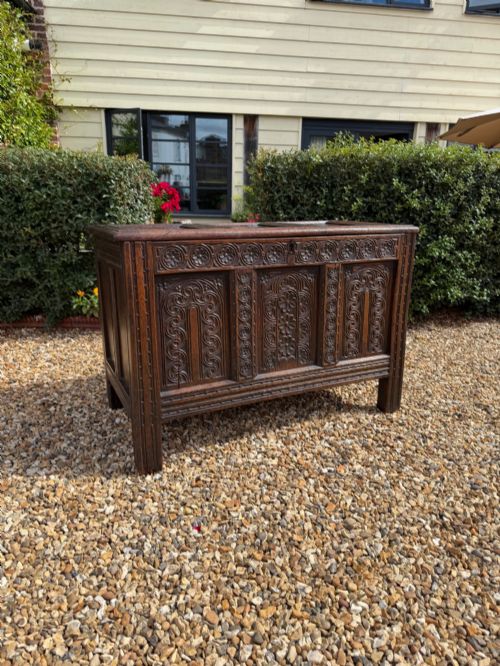
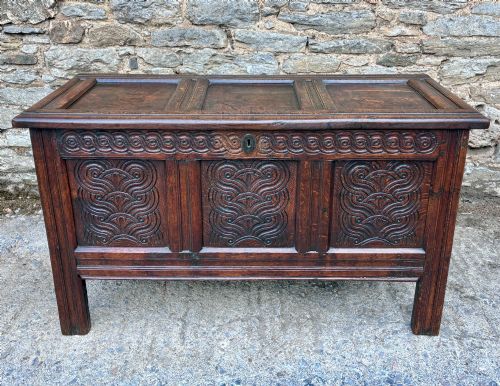
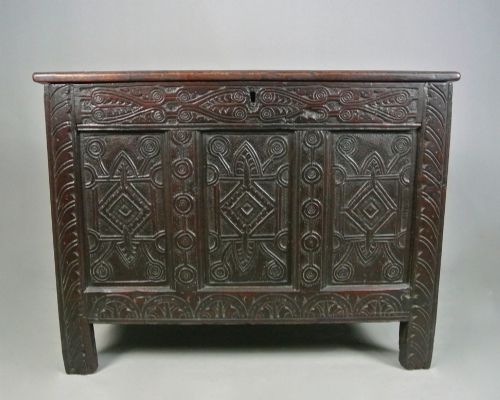
Surface ornament relied on hand chiselling directly into the dense grain, producing chip-carved lunettes, geometric strapwork, and arcaded panels. Selected examples incorporated contrasting marquetry inlay woods or iron and brass hardware such as strap hinges and locking plates.
Some seventeenth-century lids still bear faint chalk tallies left by joiners calculating timber lengths in draughty woodland workshops.
What Varies in Quality
The distinction between ordinary and exceptional examples rests upon the ambition of the joinery and the crispness of the hand carving. Deeply relief-carved friezes executed with confident proportion command greater attention than hurried geometric scoring applied to lesser timber boards.
Proportion and untouched original surface patination also define the upper tier of survivors. Pieces retaining their original boarded lids, floor timbers, and subdued wax finishes demonstrate an integrity that heavily restored or altered trunks lack.
The Carved Oak Coffer Trunk Glossary
- Mule chest
- A storage chest fitted with one or more drawers at the base beneath the main compartment. This form evolved during the late seventeenth and eighteenth centuries to improve internal accessibility.
- Joined construction
- A method of furniture making utilising interconnected frames of stiles and rails held together by pegged mortise and tenon joints. This technique replaced earlier dugout or boarded trunk methods.
- Marquetry
- The art of applying decorative patterns using thin veneers of various coloured woods to a solid timber carcase. It frequently appears on seventeenth-century and revival pieces.
- Strapwork
- A flat, ornamental carving style resembling interlaced leather bands or straps. It is commonly found decorating the friezes and stiles of Jacobean furniture.
Carved Oak Coffer Trunk: Frequently Asked Questions
What were carved oak coffer trunks used for?
These robust chests originally served as secure storage for household valuables, silver, linen, and ecclesiastical vestments. Because houses lacked fitted wardrobes, families relied on them to protect textiles from dampness and pests.
Over subsequent centuries, their role shifted toward general domestic storage before becoming decorative furniture items in drawing rooms and hallways.
How do I live with an antique coffer?
Position your chest away from direct heat sources such as radiators and fireplaces to prevent the oak timbers from drying out and splitting. Maintaining a stable indoor humidity preserves the structural integrity of the mortise and tenon joints.
The flat top surface makes these pieces ideal for displaying lamps, books, or ceramics while keeping bulky items neatly concealed inside.
How can I tell a seventeenth-century coffer from a later revival piece?
Seventeenth-century examples display hand-split oak boards, irregular tool marks, and construction methods characteristic of early joined carpentry. The timber develops a deep, mellow patination over centuries of handling and waxing.
Nineteenth and twentieth-century revival pieces often reveal uniform machine sawing, standardised joinery, and sharper, less organic carving depths upon close inspection.
What is the difference between a coffer and a mule chest?
A standard coffer consists of a single deep compartment accessed exclusively by lifting the hinged lid from the top. This design requires unloading top items to reach anything stored at the bottom.
A mule chest incorporates one or more drawers beneath the main chest cavity, allowing easier access to frequently used garments without disturbing items on the lid.