



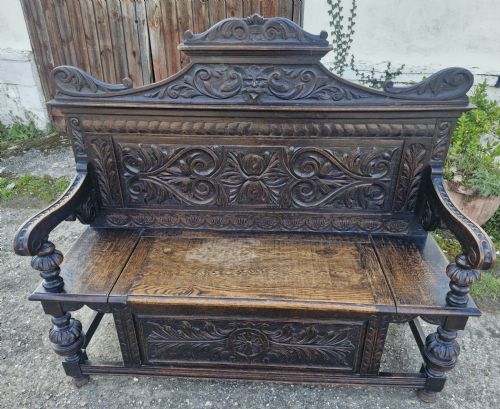


Carved Oak Blanket Bench
These carved oak blanket bench examples offer practical storage and robust seating, combining period character with everyday utility.
Carved Oak Blanket Bench
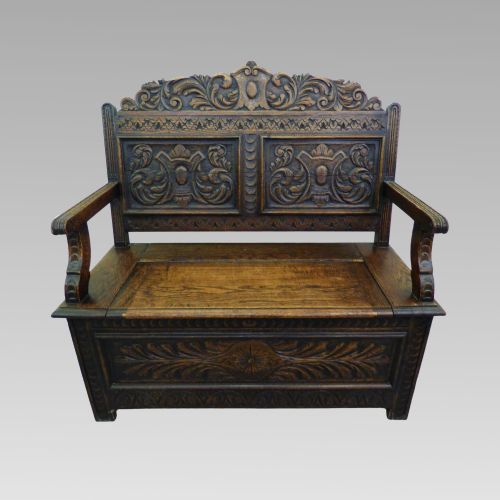
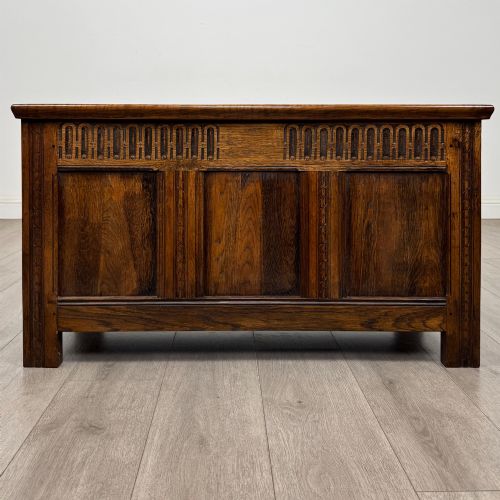
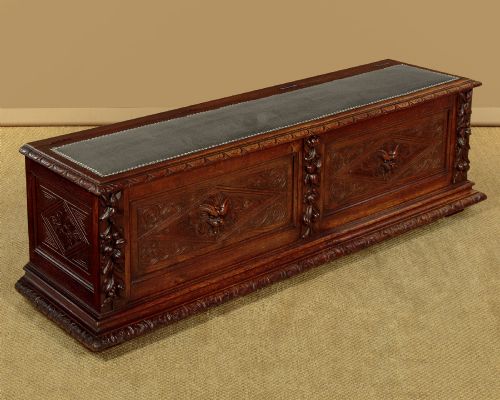
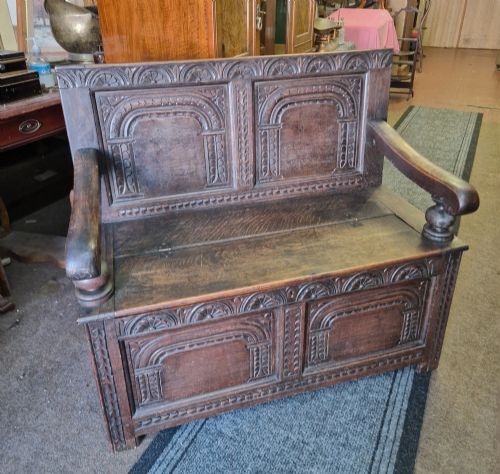
A carved oak blanket bench bridges the gap between functional storage and sturdy seating, appearing in forms such as settles, coffers, mule chests, and monks benches. When searching for this type, buyers encounter pieces spanning from the late seventeenth century through the Edwardian era and the twentieth century, reflecting enduring British cabinet-making traditions.
The selections on this page lean heavily towards traditional English forms, including high-backed settles with integrated box seats and coffer-style benches. These items served multi-purpose roles in historic hallways and chambers, storing textiles while providing a heavy wooden seat for household members and guests.
Origins range across distinct periods, from William III pieces dated around seventeen hundred to Victorian and Art Nouveau interpretations. Each era introduces subtle shifts in proportion and decorative carving, allowing buyers to match specific historical aesthetics to their interiors.
Materials and Construction Methods
Solid oak serves as the primary structural material across these listings, valued for its density and durability. Craftsmen utilised heavy timber panels, often joined with traditional framing techniques to create robust lids, backs, and seats.
Metal hardware in iron and brass frequently appears on these pieces for hinges, handles, and lock plates, providing necessary functional support to heavy lids. Occasional variations introduce walnut timbers or leather upholstery details, adding texture and contrast to the dominant oak construction.
Carved Oak Blanket Bench Retail Price Guide 2026
Typical asking prices for carved oak blanket bench among the pieces listed under this phrase on Sellingantiques today, from the lower quarter to the upper quarter. They describe what is for sale here now, not the wider market.
Current listings span periods from seventeen hundred through the Edwardian era, predominantly featuring solid oak construction with iron and brass hardware.
Distinguishing Quality in Oak Benches
Quality in a carved oak blanket bench reveals itself through the depth, crispness, and execution of the woodwork ornament. Finer examples display deeply undercut relief carving, such as intricate foliage, panels, or figural motifs like the Green Man, executed by skilled hands rather than hurried mechanical production.
Proportion and structural integrity separate exceptional pieces from simpler utilitarian items. The balance between the storage box base and the backrest or arm supports dictates the visual harmony of settles and monks benches, while the original patination of the timber reflects centuries of careful handling.
The Carved Oak Blanket Bench Glossary
- Settle
- A wooden bench with a high back, solid wooden arms, and often a box seat compartment beneath. This form kept drafts away from occupants in large, cold halls.
- Coffer
- A large wooden chest used for storing valuables, linen, or blankets, which frequently doubles as a seat when fitted with a flat lid. These form the direct ancestors of many bench hybrids.
- Mule chest
- A storage chest featuring one or more drawers beneath the main coffer compartment. This design evolved to provide easier access to smaller items without disturbing the items stored in the top section.
- Monks bench
- A convertible piece of furniture featuring a hinged back that folds down over the arms to transform a high-backed seat into a flat table surface. They are characteristic of versatile historic interior furnishings.
- Green Man
- A decorative architectural motif depicting a human face carved with leaves, vines, or branches sprouting from the mouth. This ancient symbol appears frequently in traditional wood carving.
Carved Oak Blanket Bench: Frequently Asked Questions
What is a carved oak blanket bench?
A carved oak blanket bench is a traditional dual-purpose item of furniture combining a wooden storage chest with a built-in seat. These pieces range from simple coffer benches to high-backed settles.
They originated to provide secure storage for textiles and garments while offering practical seating in hallways and living spaces.
How were these benches used historically?
Historically, these benches served as primary seating and essential household storage in English homes. Families used the internal compartment for blankets, heavy linens, and winter clothing.
In draughty halls, high-backed settle versions also helped block cold air currents around the hearth or entryway.
How do I date an antique oak bench?
Dating an antique oak bench involves examining the construction methods, joinery, timber shrinkage, and the style of the carved ornamentation. Earlier pieces from the seventeenth and eighteenth centuries often display hand-pegged joints and simpler panel construction.
Later Victorian, Edwardian, and twentieth-century revivals typically incorporate machine-sawn elements alongside historical decorative motifs.
Where should I place a blanket bench?
These benches suit entrance halls, bedrooms, and living rooms where both seating and enclosed storage prove useful. Their substantial wooden presence anchors a room's layout effectively.
In a bedroom or landing, they function well at the foot of a bed for spare bedding and cushions.
How do I care for antique oak furniture?
Caring for antique oak involves maintaining stable indoor humidity levels to prevent the timber from splitting or warping. Direct sunlight should be avoided to protect the natural finish and colour of the wood.
Regular dusting with a soft cloth and occasional application of traditional beeswax help preserve the historic surface patination.