

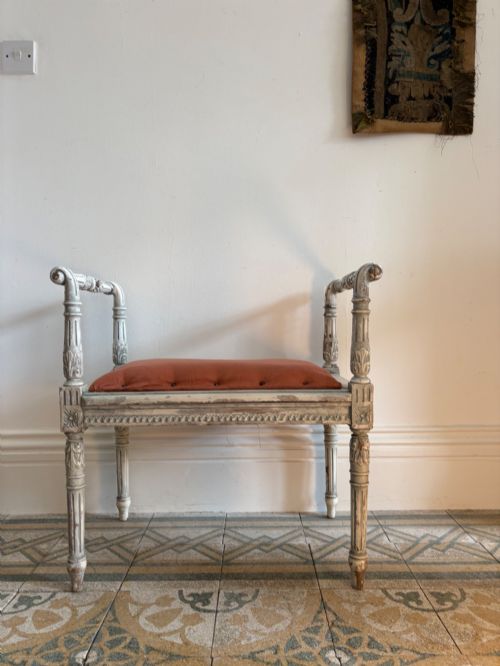
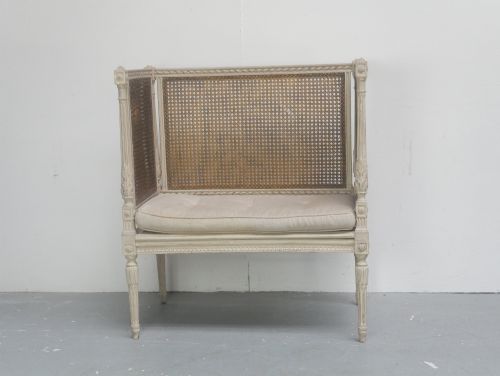
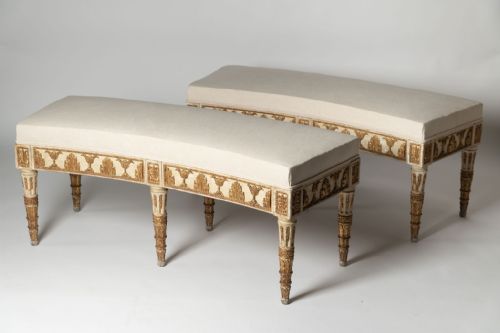


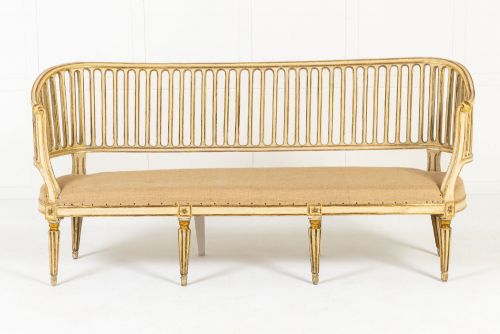


Carved Neoclassical Window Seat
These carved neoclassical window seat examples bring classical symmetry and refined seating to a room, spanning periods from the eighteenth century to the early twentieth century.
Carved Neoclassical Window Seat
A carved neoclassical window seat combines classical architectural motifs with domestic seating, appearing in forms ranging from neat stools to larger settees and duet stools. Pieces found on this page span the eighteenth century, the Georgian period, the nineteenth century, and into the early twentieth century.
The stylistic influences are broad, drawing on French neoclassical, Louis XVI style, Gustavian neoclassical, Italian neoclassical, Adam style, Empire, and George III designs. These variations reflect the enduring appeal of classical antiquity across different European traditions and subsequent revival periods.
Makers and craftsmen utilised standard seating formats such as X-frame stools, curule stools, and long benches designed to sit beneath large windows or along hallways. Upholstery varies across the selection, featuring silk, linen, fabric, and red damask.
Proportion and Carving
Quality in a carved neoclassical window seat rests upon the crispness of the timber carving and the elegance of the overall proportions. Finer examples display deeply undercut foliage, clean architectural lines, and well-balanced frames that reflect academic design principles rather than rote manufacture.
The treatment of the finish distinguishes the tiers of production, separating simple painted surfaces from meticulously prepared giltwood and gesso applications. The choice of covering material, from standard fabric to bespoke silk and damask, further indicates the original commission level of the piece.
Carved Neoclassical Window Seat Retail Price Guide 2026
Typical asking prices for carved neoclassical window seat among the pieces listed under this phrase on Sellingantiques today, from the lower quarter to the upper quarter. They describe what is for sale here now, not the wider market.
Upholstery options recorded across the selection include silk, linen, fabric, and red damask.
The Carved Neoclassical Window Seat Glossary
- Neoclassical
- A style spanning the eighteenth and nineteenth centuries that revives the classical forms and motifs of ancient Greece and Rome. It emphasises straight lines, symmetry, and architectural details.
- Giltwood
- Timber that has been coated with a thin layer of gold leaf over a prepared base such as gesso. This finish creates a luminous, reflective surface popular in formal European seating.
- Curule stool
- An ancient Roman magistrate's chair shape featuring two curved legs intersecting in an X-form. Revival pieces adopt this resilient folding geometry for rigid fixed seating.
- Gustavian
- The Swedish interpretation of French neoclassical and Louis XVI styles, characterised by lighter proportions and pale painted finishes. It prioritises restrained elegance over heavy ornamentation.
- Damask
- A reversible figured fabric traditionally woven on a drawloom with patterns formed by contrasting warps and wefts. It appears frequently as a rich upholstery choice on antique seats.
Carved Neoclassical Window Seat: Frequently Asked Questions
Where should I place a window seat?
These seats suit placement beneath large windows, in wide hallways, or at the foot of a bed.
Their restrained depth allows them to occupy circulation spaces without blocking movement through a room.
How do I identify French neoclassical style?
Look for rectilinear frames, tapered fluted legs, and carved motifs derived from classical architecture.
French pieces often incorporate gilt finishes and symmetrical floral or ribbon carvings.
What is an X-frame stool?
An X-frame stool utilises intersecting diagonal supports that form an X shape when viewed from the side.
This ancient structural form provides sturdy support while maintaining a light profile.
Can I reupholster an antique seat?
Upholstery can be replaced using traditional methods and materials appropriate to the period of the frame.
Preserving the underlying webbing and padding structure helps maintain the integrity of the piece.
How do Georgian and Regency styles differ?
Georgian pieces often display robust mahogany carving influenced by Chippendale, Adam, or Hepplewhite designs.
Later nineteenth-century interpretations lean towards heavier Empire or continental revival aesthetics.