




Louis XVI Window Seat
A louis xvi window seat brings refined French Neoclassical symmetry and understated elegance to any room.
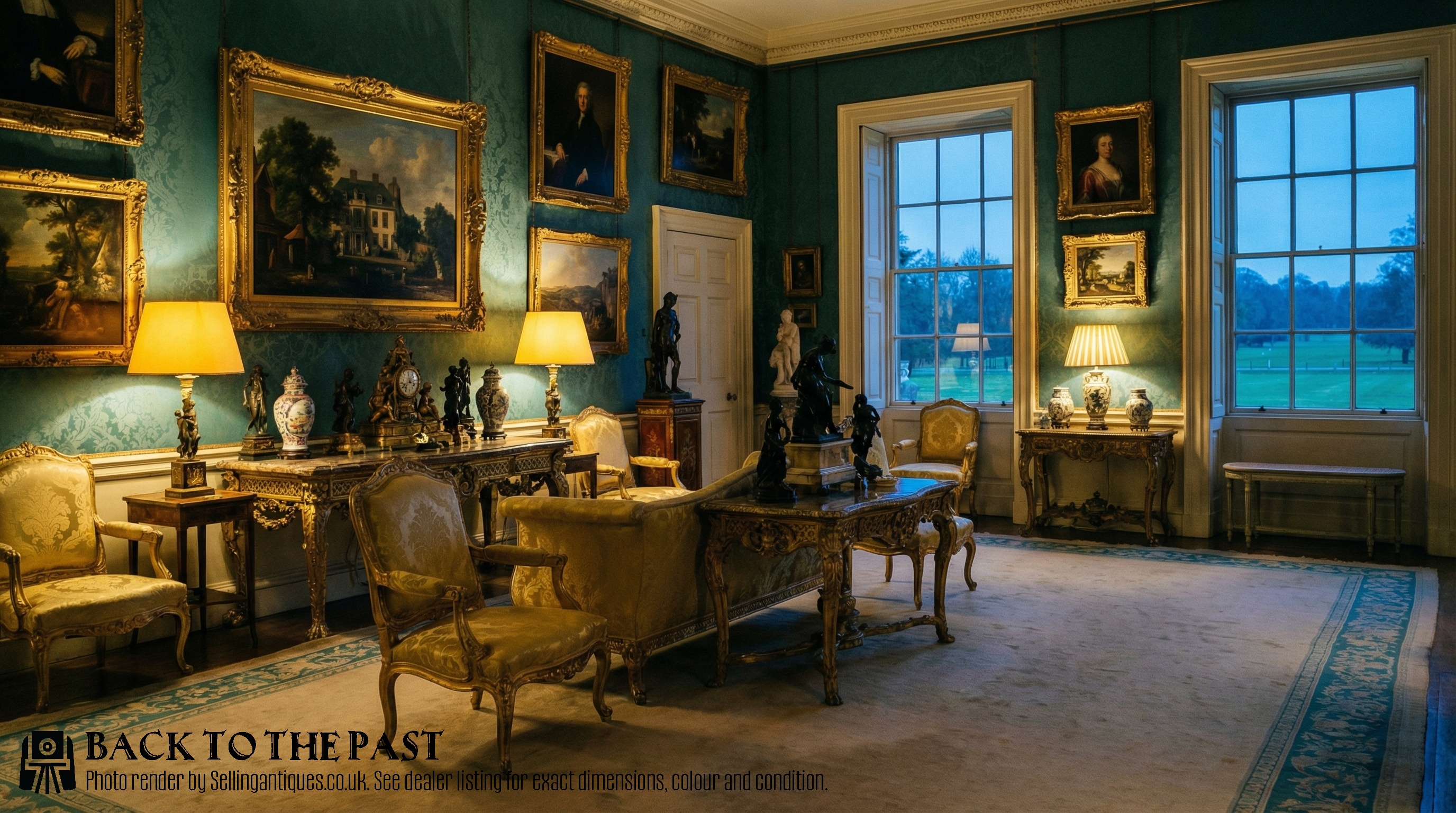
Louis XVI Window Seat
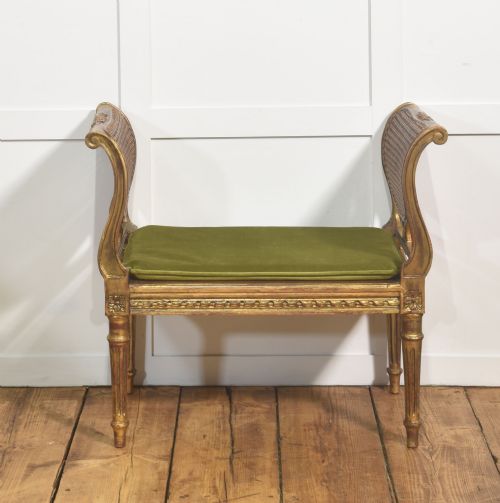
A louis xvi window seat is an occasional form designed to fit within the embrasure of a window or along a hall, bridging the gap between a stool and a settee. These pieces appear in styles such as French Neoclassical, Louis XVI Style, Neoclassical Revival, French Chateau, and Adam Style, dating from the nineteenth century through the early twentieth century.
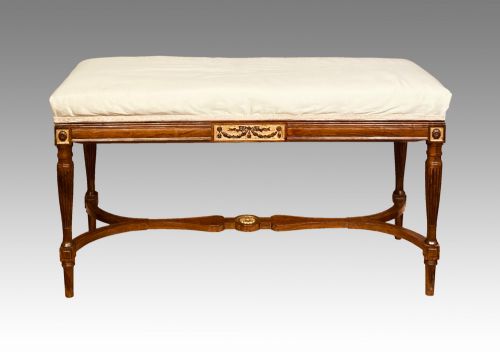
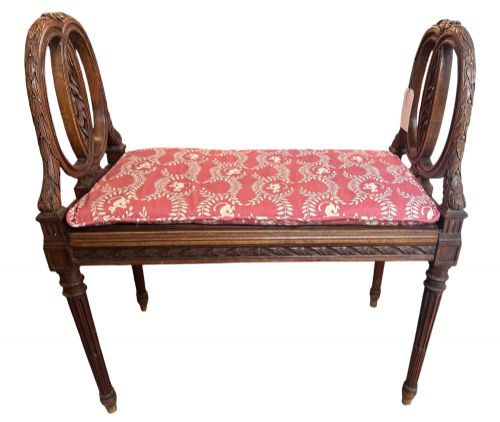
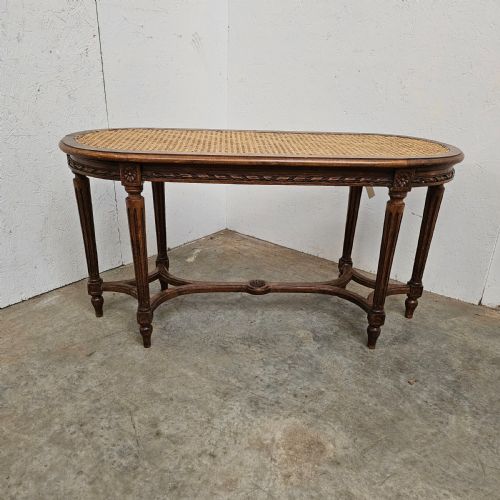
The standard version you will meet on this page is a rectilinear or oval bench framed in giltwood, beech, walnut, rosewood, or painted wood, frequently featuring cane panels or upholstered tops in fabric and velvet. Such seating includes variations designated as window stools, duet stools, banquettes, and music stools.
Makers and workshops across the nineteenth century and the early decades of the twentieth century produced these benches to echo the architectural restraint of the eighteenth-century French court. Pieces range from simple painted wooden frames to richly carved giltwood structures with cane or textile seats.
Materials and Construction
Craftsmen built these seats using hardwoods like beech, walnut, and rosewood, which provided the structural integrity needed for slender, fluted legs and carved frames. Giltwood finishes and painted wood surfaces were applied to achieve the polished aesthetic characteristic of French Neoclassical design.
Cane work and textile upholstery, including velvet and standard fabric, formed the seating surfaces, sometimes combined with internal padding for duet music stools and ottoman configurations. Carved wooden decoration defined the rails and corners, frequently employing classical motifs derived from French Chateau traditions.
Listings feature pieces spanning the 19th Century, Victorian era, and early 1900s, constructed in giltwood, cane, walnut, beech, rosewood, and painted wood.
Distinctions in Quality
The refinement of the carving on the wooden frame separates standard joinery from superior work, distinguishing pieces with crisp, hand-chiselled details from simpler moulded elements. The selection of primary timbers, whether solid walnut, rosewood, or finely gilded beech, dictates the foundational substance of the seat.
The integrity of the structural joinery and the execution of applied finishes, such as the depth of the gilding or the smoothness of the painted surfaces, determine the overall execution. Furthermore, the preservation of original cane work or high-grade textile upholstery contributes to the enduring integrity of the bench.
Charles Nosotti
The Louis XVI Window Seat Glossary
- Giltwood
- Wood that has been covered with a thin layer of gold leaf or gilt powder. This finish was widely utilised on French Neoclassical seating to impart a bright, reflective surface.
- Cane
- Woven rattan or split reed used to form supportive panels for seats and backs. It provides a lightweight, resilient surface often seen on French window stools.
- Duet Stool
- An extended bench designed to seat two people side by side, frequently associated with music rooms and piano playing. These forms offer a wider seating platform than standard window seats.
- Neoclassical Revival
- A nineteenth-century stylistic movement that drew inspiration from classical Greece and Rome, as well as the reign of Louis XVI. Pieces in this style emphasise symmetry, straight lines, and classical ornamentation.
- Banquette
- An upholstered bench or long seat without a backrest. This form sits low and serves as flexible seating in hallways and bedrooms.
Louis XVI Window Seat: Frequently Asked Questions
Where should I place a window seat?
These benches sit comfortably beneath low windows, along long hallways, or at the foot of a bed. Their slender proportions allow them to occupy circulation spaces without blocking light or movement.
They also function effectively as piano benches or occasional seats in reception rooms, adding a distinct architectural presence to smaller areas.
How do I identify the Louis XVI style?
Look for straight, fluted legs that taper toward the foot, contrasting with the curving cabriole legs of the earlier Louis XV period. Rectangular geometries, crisp right angles, and classical motifs like acanthus leaves and beaded mouldings define the aesthetic.
Frames are typically symmetrical, reflecting an architectural discipline drawn from classical antiquity.
Can I use these seats daily?
Most of these pieces are sturdy enough for regular sitting, provided the timber frame and joinery remain sound. Upholstered versions with modern padding offer comfortable support for daily use in living spaces.
Cane seats require slightly more care to prevent drying and breaking, but function reliably under normal household conditions.