

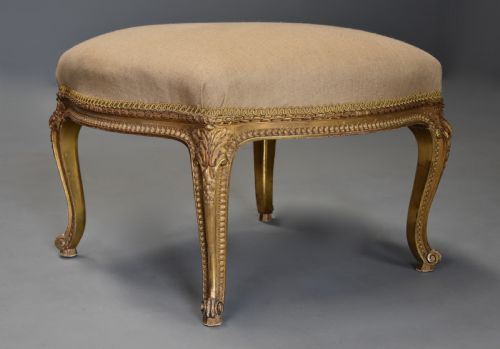


Gilded Wood Stool
A gilded wood stool brings immediate warmth and sculptural presence to a room, offering versatile seating that shifts easily from dressing table to window seat.
Gilded Wood Stool
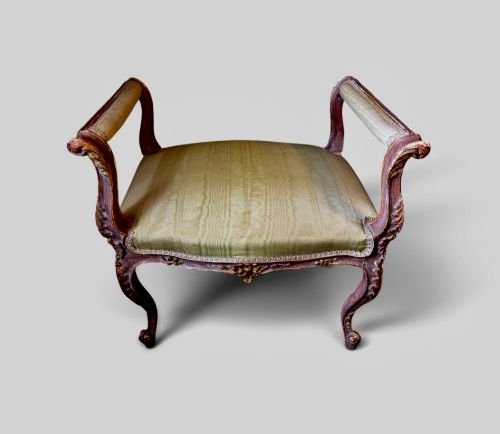
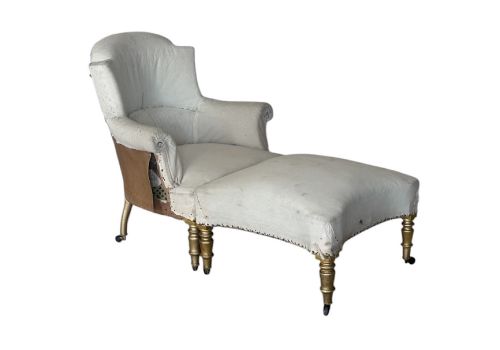
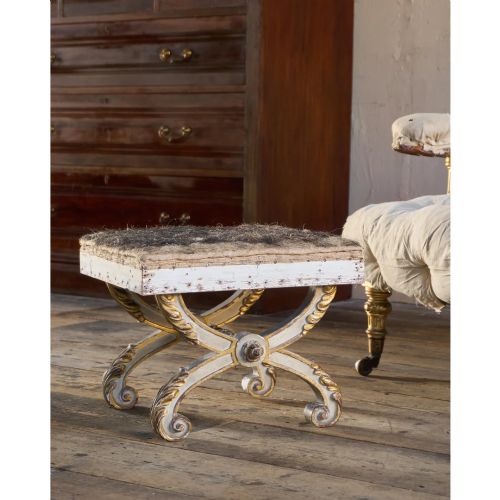
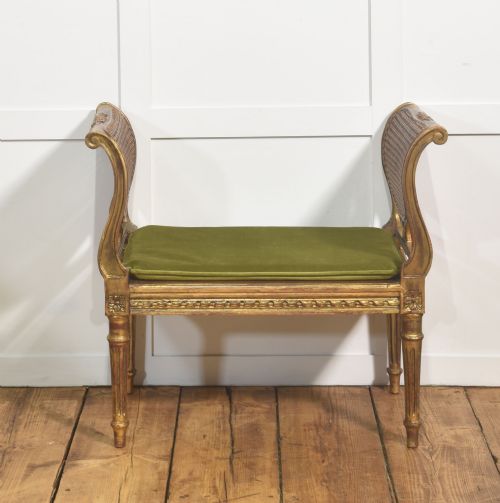
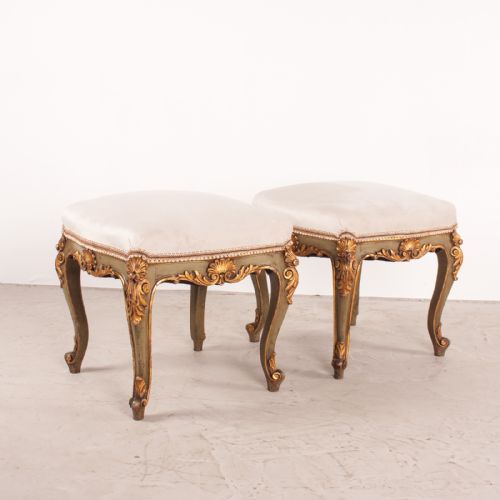
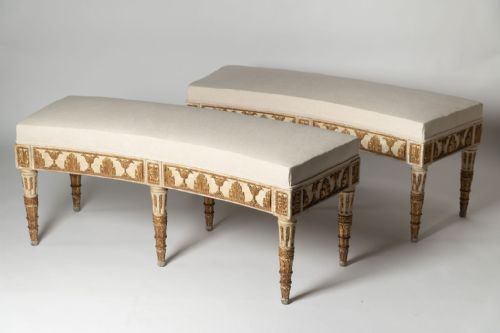
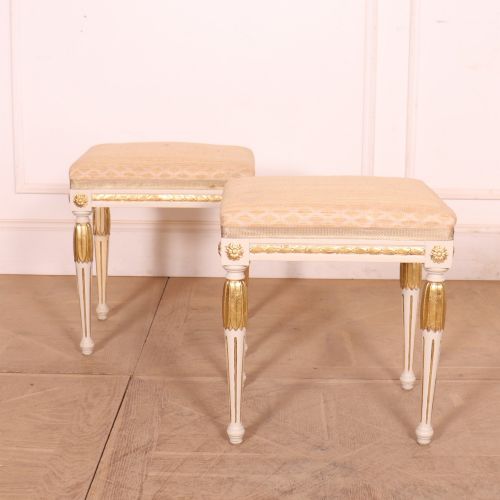
A gilded wood stool is a low seating piece finished in gold leaf or paint, drawing on French Neoclassical, Louis XVI, and Victorian traditions. These objects range from simple footstools and adjustable piano seats to grand window benches and decorative X-frame curule designs.
The version most commonly met on this page is the nineteenth-century piece carrying French or Italian styling, often featuring hand-carved details and upholstered tops in silk, linen, or fabric. Buyers seek these out to introduce a touch of historic European ornament into traditional or modern interiors.
How they were made
The construction of a gilded wood stool relies on solid timbers such as oak or other hardwoods, shaped by hand carving or turned on a lathe. Artisans applied thin layers of gold leaf or gilt paint over a prepared gesso ground to achieve the characteristic metallic sheen.
Upholstery techniques varied from drop-in padded seats covered in durable linen or patterned fabric to woven cane panels fitted within wooden frames. Structural stability was often reinforced through brass elements, particularly in adjustable forms like screw-top piano stools.
Materials recorded across the selection include solid wood, giltwood, gold leaf, brass, paint, linen, and woven cane.
What varies in quality
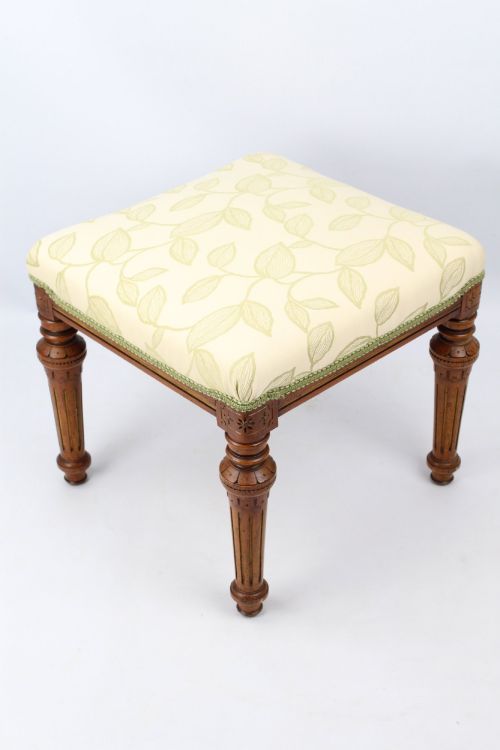
Quality in a gilded wood stool is defined by the depth and precision of the carved ornamentation on the wooden frame, where crisp floral garlands and fluted legs distinguish superior examples from plain forms. Maker stamps and documented workshop origins further separate standard production pieces from exceptional items.
The integrity of the surface finish also determines standing, as original gold leaf patinates with a soft warmth that differs from flat modern repainting. Additionally, the robustness of the underlying timber frame and the quality of the textile upholstery reflect the original tier of manufacture.
Miles And Edwards·Loidrault Freres Paris
The Gilded Wood Stool Glossary
- Giltwood
- Wood that has been coated with thin sheets of gold leaf or gold dust. This finish gives furniture a bright, reflective metallic appearance.
- Curule stool
- An ancient Roman shape featuring two intersecting curved legs forming an X-frame. This classic form appears frequently in nineteenth-century neoclassical revival seating.
- Louis XVI style
- A French design period characterised by straight lines, classical symmetry, and restrained ornamentation. Stools in this style often feature fluted legs and carved rosette details.
- Gesso
- A plaster-like mixture applied to wood surfaces as a smooth base for gilding or painting. It allows carvers to achieve sharp relief details before the gold leaf is laid down.
Gilded Wood Stool: Frequently Asked Questions
Where should I place a gilded wood stool?
These compact seats work well positioned beneath a dressing table, placed at the foot of a bed, or set beside a window as a low bench. Their reflective finishes allow them to catch light in darker corners without dominating the floor space.
Because they combine decorative carving with practical seating, they also serve effectively as movable accent pieces in drawing rooms or hallways.
How do I care for the gold leaf surface?
Dust the gilded frame gently with a soft, dry cloth and avoid using liquid cleaners, abrasive pads, or chemical polishes that can lift the delicate metal leaf. Keeping the piece away from direct sunlight and excessive moisture helps preserve the historic finish.
If the wood or gesso beneath the gold shows movement or vulnerability, consult a specialist in gilded furniture restoration rather than attempting home repairs.
Are these stools comfortable for daily sitting?
Many examples are designed primarily as decorative accents, footstools, or low window seats rather than for long periods of upright work. Padded versions upholstered in fabric or linen offer a softer sit, while rigid wooden or cane tops function best for brief use.
Adjustable piano stools and larger upholstered benches provide more supportive seating options among the available forms.
How can I tell a nineteenth-century stool from a later copy?
Examine the construction joints, the tool marks left by hand carving, and the natural ageing of the gesso and gold leaf layers. Nineteenth-century pieces often display subtle irregularities in symmetry and hand-applied finishes that mass-produced reproductions lack.
Makers' stamps, traditional joinery methods, and the type of underlying timber also help confirm the historical period.