



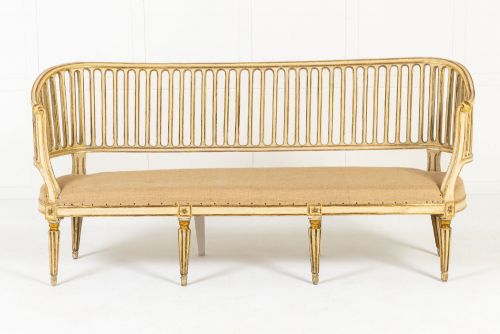
Fluted Leg Window Bench
A fluted leg window bench offers slender classical proportions and versatile seating, anchoring a bay or hallway with quiet architectural elegance.
Fluted Leg Window Bench
A fluted leg window bench combines classical joinery with elongated seating designed for placement beneath casements or in narrow hallways. These forms span Georgian, Regency, and Victorian eras alongside continental French Neoclassical, Louis XVI style, and Gustavian models.
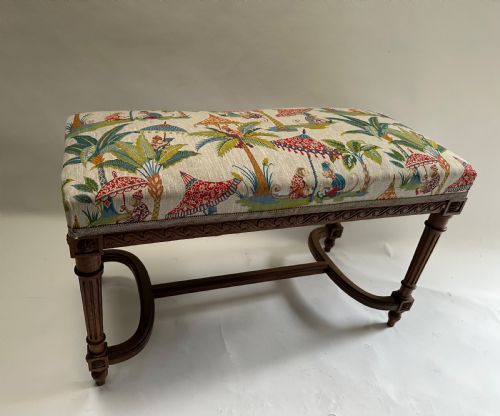
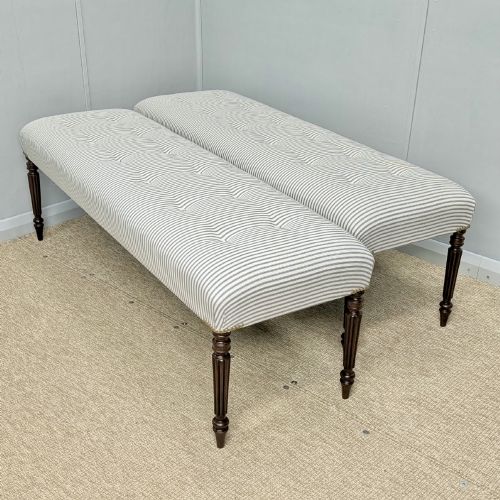
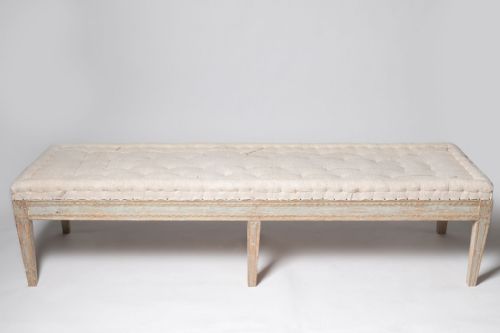
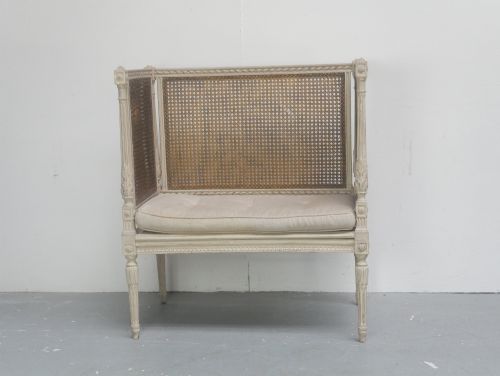
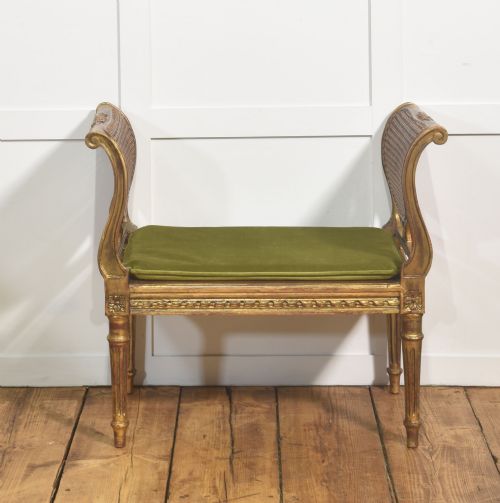
The inventory on this page ranges from compact nineteenth century walnut seats to longer mahogany benches and painted oval frames. Buyers frequently encounter examples finished in cane, giltwood, or upholstered leather.
Object classifications across these listings extend beyond benches to include window seats, banquettes, settees, and stools. Each variation shares the characteristic vertical channeling carved into the wooden supports.
Materials and construction methods
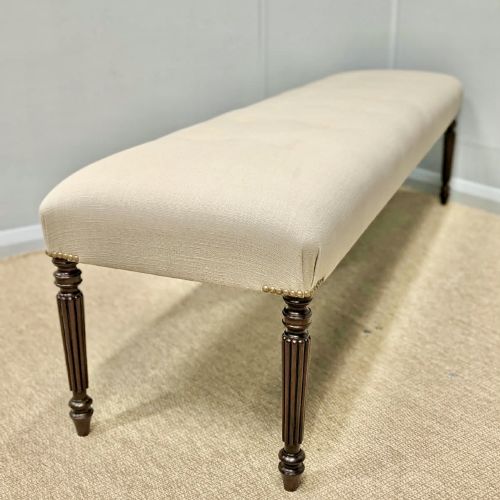
Makers primarily utilised hardwoods such as mahogany, walnut, beech, and giltwood to build these seating frames, often applying painted finishes or hand-carved decorative motifs. Structural integrity relies on traditional joinery techniques suited to long, narrow proportions.
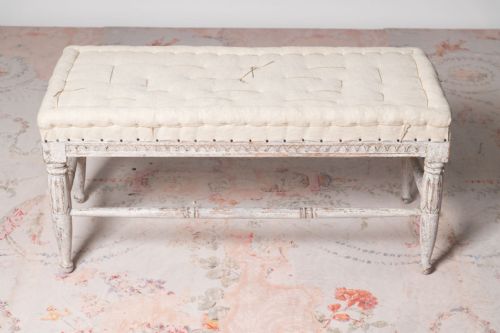
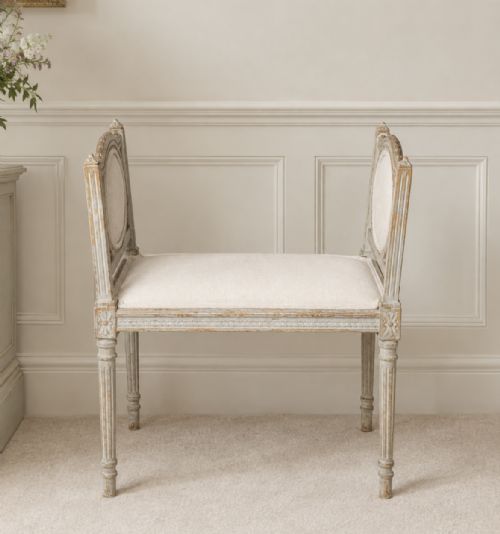
Upholstery methods vary from cane webbing panels to buttoned leather fastened with brass studs and modern beige linen coverings. Gilded and painted surfaces demonstrate the decorative restraint typical of neoclassical and period design.
Fluted Leg Window Bench Retail Price Guide 2026
Typical asking prices for fluted leg window bench among the pieces listed under this phrase on Sellingantiques today, from the lower quarter to the upper quarter. They describe what is for sale here now, not the wider market.
The inventory records stylistic influences spanning English Georgian, Regency, French Louis XVI, and Swedish Gustavian traditions.
Markers of distinction in design
Quality rests in the precision of the carved fluting along the legs and the crispness of the surrounding woodwork, which distinguishes provincial output from sophisticated urban workshop production. Finer frames exhibit balanced proportions and integrated structural ornamentation rather than superficial applied decoration.
The integrity of the original materials, whether tightly woven cane or patinated leather, determines the enduring character of each piece. Superior examples maintain their structural joinery without excessive timber replacement or compromised framing.
The Fluted Leg Window Bench Glossary
- Fluting
- Vertical rounded grooves carved into the surface of a leg or column. This decorative detail derives from classical architecture and defines the aesthetic of neoclassical furniture.
- Giltwood
- Timber coated with a thin layer of gold leaf or gesso. It provides a luminous finish frequently found on formal eighteenth and nineteenth century frames.
- Banquette
- A long upholstered bench or settee without a backrest, or with a very low back. These pieces were often tailored for placement along walls or beneath windows.
- Regency
- An English design period spanning the early nineteenth century. It is characterised by classical archaeological motifs and refined proportions.
- Gustavian
- The Swedish interpretation of French neoclassical design, notable for pale painted finishes and restrained ornamentation.
Fluted Leg Window Bench: Frequently Asked Questions
Where should I place a window bench?
These pieces suit narrow transitional spaces such as hallways, entryways, and landings where deep seating would obstruct movement.
They also function effectively beneath low window sills, providing a comfortable perch without blocking natural light.
How do I identify a neoclassical style bench?
Neoclassical pieces feature straight tapered legs with vertical fluting, geometric symmetry, and restrained classical carving.
They discard the exuberant curves of earlier rococo designs in favour of architectural clarity and proportion.
What is the difference between a stool and a settee?
Stools provide compact, backless seating designed for one or two occupants in secondary living spaces.
Settees and banquettes offer extended seating capacity, occasionally incorporating low armrests or upholstered ends.
Are these benches suitable for daily use?
Period benches constructed from solid hardwoods like mahogany and walnut offer robust structural support for everyday seating.
Cane seats and antique leather upholstery require mindful care to preserve their original materials over time.