
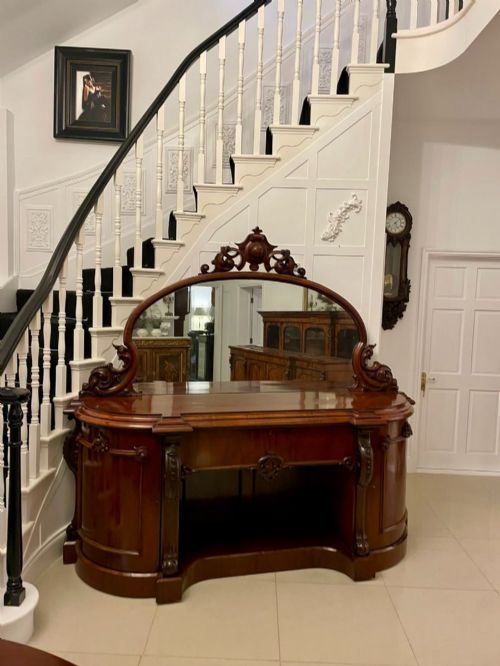
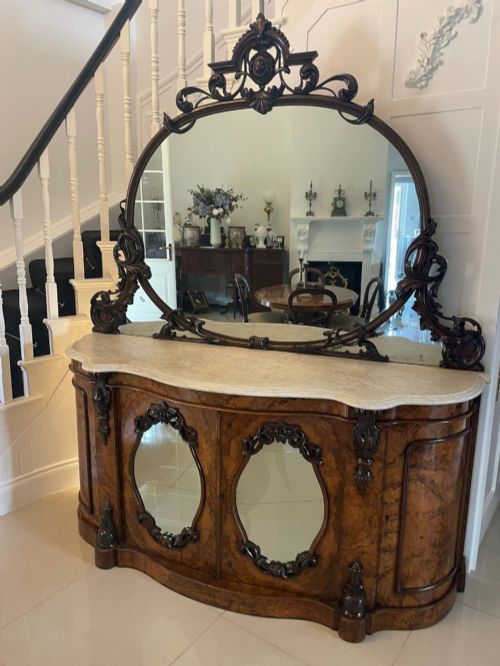
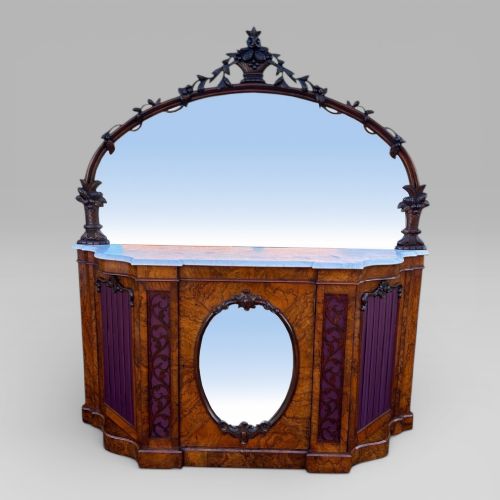
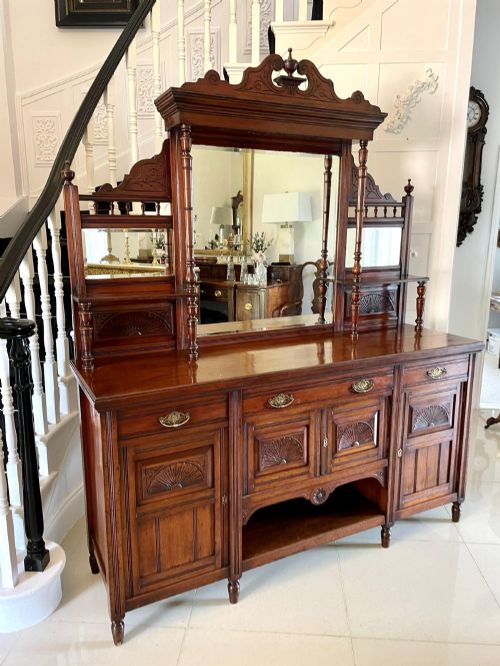
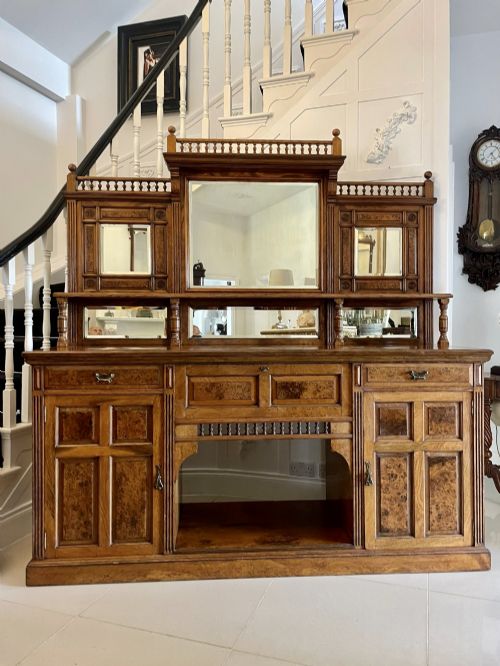
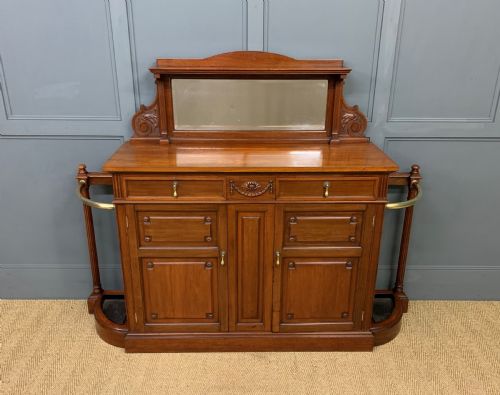
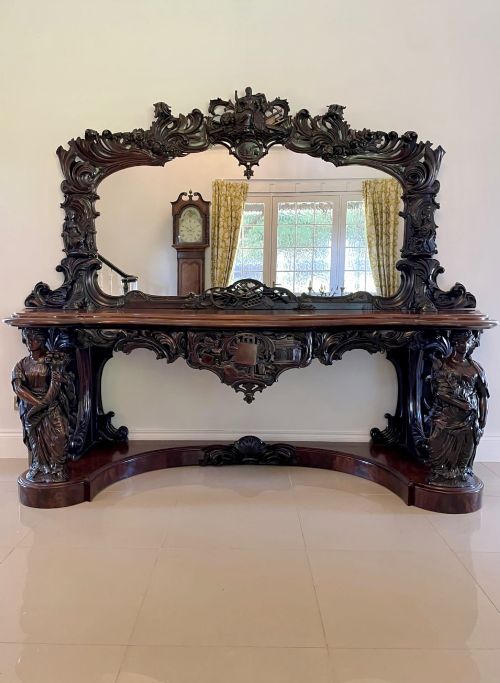
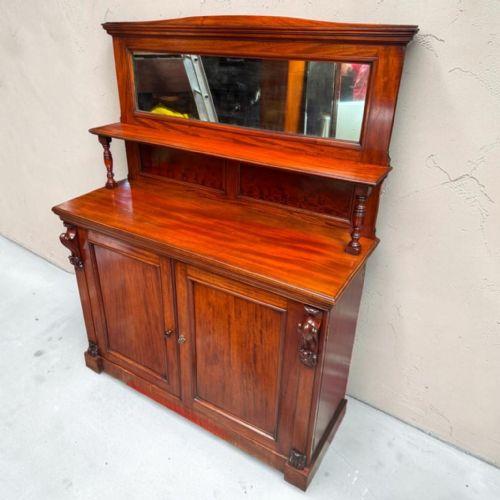
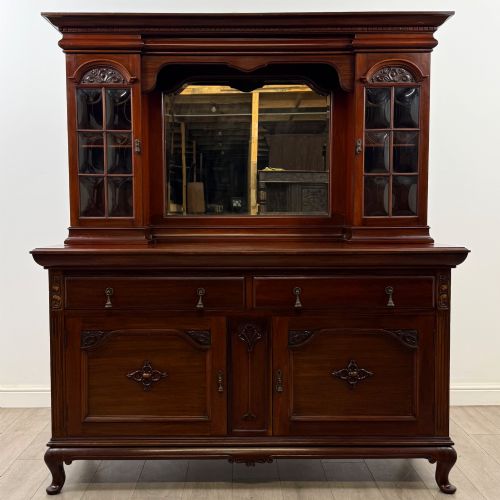
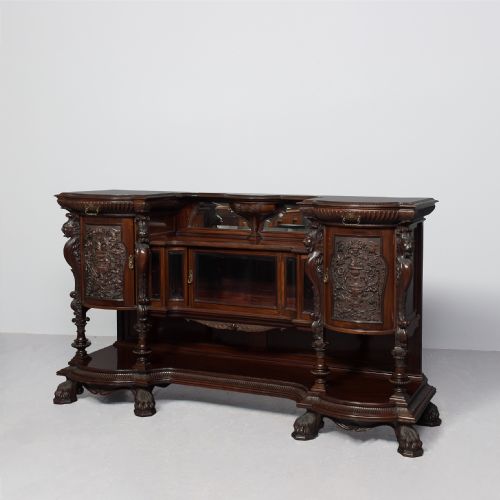
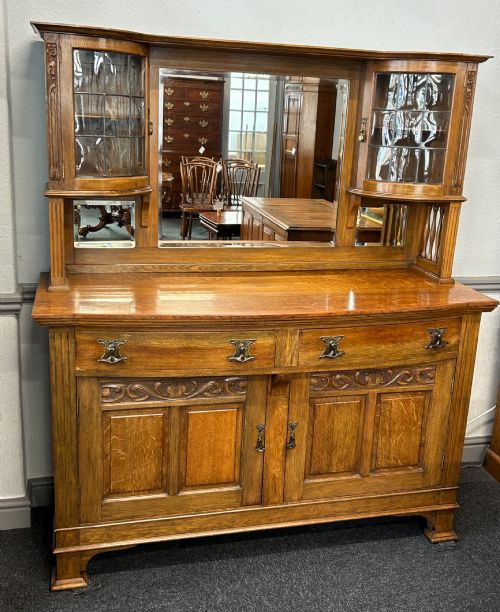
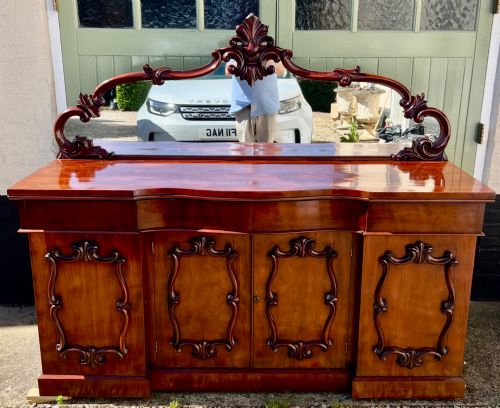
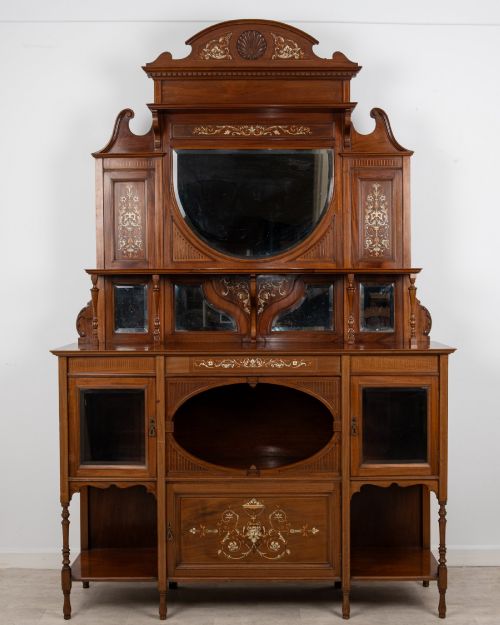
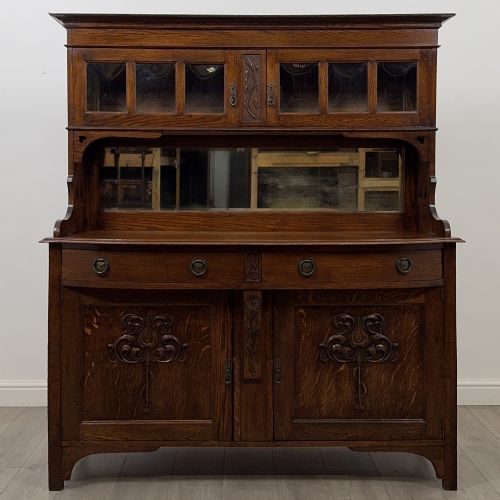


Carved Mirror Back Sideboard
A carved mirror back sideboard brings substantial presence and deep timber tones to a dining room or hall, combining practical storage with a decorative glass display.
Carved Mirror Back Sideboard
A carved mirror back sideboard functions as a substantial dining room or hallway cabinet designed for serving and storage, featuring an integrated upright mirror. These pieces combine a large timber base fitted with cupboards or drawers with an upper superstructure that frames a glass panel.
Victorian examples dominate the selection, spanning periods from the mid to late nineteenth century alongside Edwardian variations. The form manifests in dark hardwoods and figured veneers, often incorporating architectural mouldings or figural motifs into the timber frame.
Makers and workshops of the nineteenth and early twentieth centuries produced these items in various regional styles, ranging from heavy oak interpretations to polished mahogany and burr walnut formats. Buyers encounter robust pedestal layouts as well as more compact chiffonier and credenza formats.
What Varies in Quality
The choice of timber and veneer figure dictates the visual impact of the piece, with richly grained burr walnut or flame mahogany sitting at the higher end of the range. Heavier, deeply carved figural ornamentation and superior architectural joinery separate exhibition quality examples from standard utility pieces.
The integration of the mirror superstructure and the weight of the timber base reflect the original maker's ambition. Pieces bearing documented workshop stamps or attribution to notable firms demonstrate finer detailing in the hardware and carving execution.
Materials recorded on this page include mahogany, oak, walnut, burr walnut, rosewood, brass, and marble.
Shoolbred and Co·T Simpson and Son·James Simpson and Sons
The Carved Mirror Back Sideboard Glossary
- Mirror back
- A wooden superstructure incorporating a glass mirror fitted to the rear of a sideboard or credenza. This feature reflects light and displays objects placed on the top surface.
- Credenza
- A low dining room or parlour cabinet used for storing tableware and serving food. These items frequently lack the tall superstructure seen on typical sideboard formats.
- Chiffonier
- A compact sideboard or cabinet equipped with enclosed cupboards and occasionally a small shelf or mirror above. The form evolved during the nineteenth century for smaller drawing rooms.
- Pedestal sideboard
- A heavy dining room cabinet featuring two substantial cupboards flanking a central recessed section or drawers. The design provides maximum storage capacity within the timber base.
- Burr walnut
- A prized timber veneer obtained from the knot growths of walnut trees. It yields complex, swirling grain patterns highly valued by nineteenth century cabinet makers.
Carved Mirror Back Sideboard: Frequently Asked Questions
Where should I place a mirror back sideboard?
These large cabinets suit dining rooms, grand hallways, or spacious living areas where their height and reflective glass can brighten the space. Position them against a solid wall capable of supporting a substantial timber frame.
Ensure the room has sufficient clearance to allow the heavy doors and drawers to open fully without obstruction from nearby seating or tables.
How do I care for the timber and mirror?
Dust the carved wooden surfaces regularly with a soft, dry cloth and apply a quality beeswax periodically to nourish the grain. Avoid using modern silicone polishes that can build up a cloudy residue over time.
Clean the integrated mirror glass gently with a mild glass cleaner applied to a cloth rather than sprayed directly, preventing moisture from seeping behind the silvered backing.
Can I use these sideboards for modern storage?
The deep cupboards and wide drawers provide ample space for storing heavy tableware, linens, or modern dining accessories. The sturdy top surface also serves well for displaying ceramics or serving food during gatherings.
Internal configurations vary by period, so check the depth of the shelves to ensure they accommodate your specific storage requirements.
How do I distinguish Victorian from Edwardian pieces?
Victorian examples generally feature heavier proportions, dark mahogany or walnut timbers, and elaborate carvings such as fruit, foliage, or figural motifs. The ornamentation tends to be dense and deeply sculpted.
Edwardian interpretations often lighter in visual weight, frequently utilising lighter oak or simpler Arts and Crafts lines with restrained geometric or naturalistic carving.