
Carved Marble Console Table
A carved marble console table brings classical proportion and substantial stone surfaces to a hallway or reception room.
Carved Marble Console Table
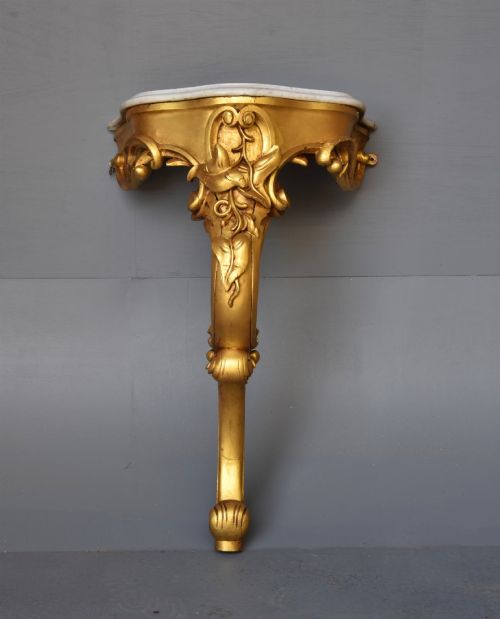
A carved marble console table combines a heavy stone slab with a decorative wooden base designed to stand against a wall. The form includes console tables, side tables, and occasional centre tables adapted for wall placement.
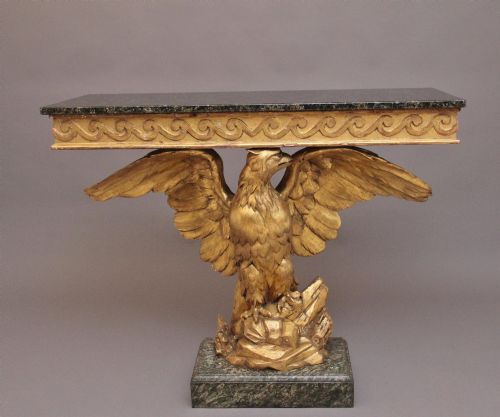
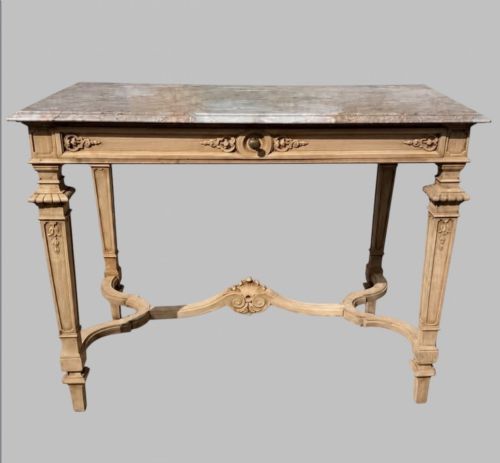
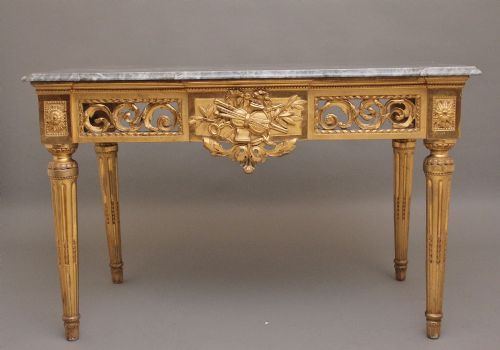
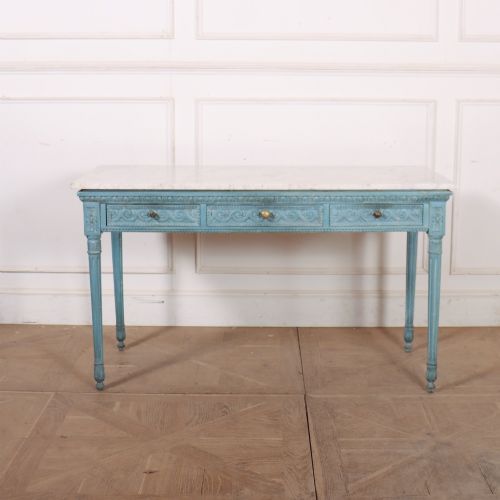
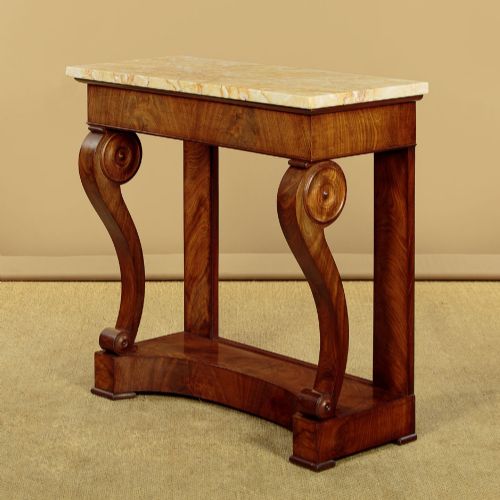
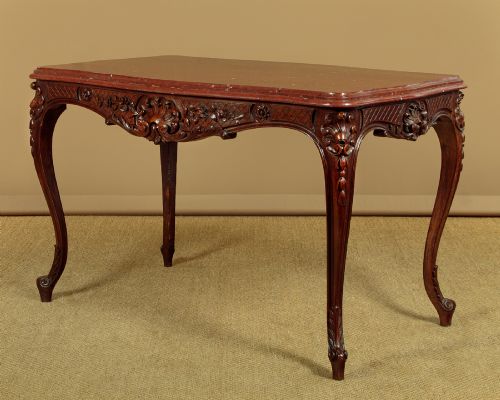
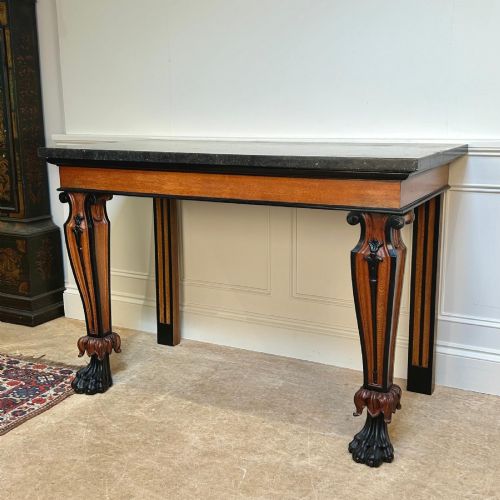
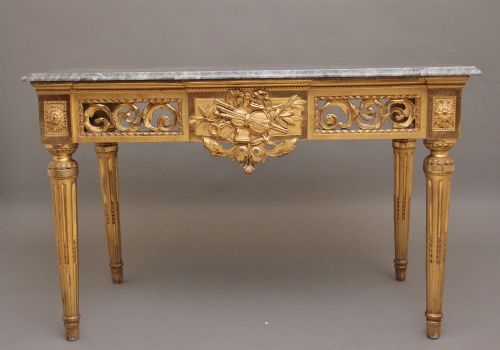
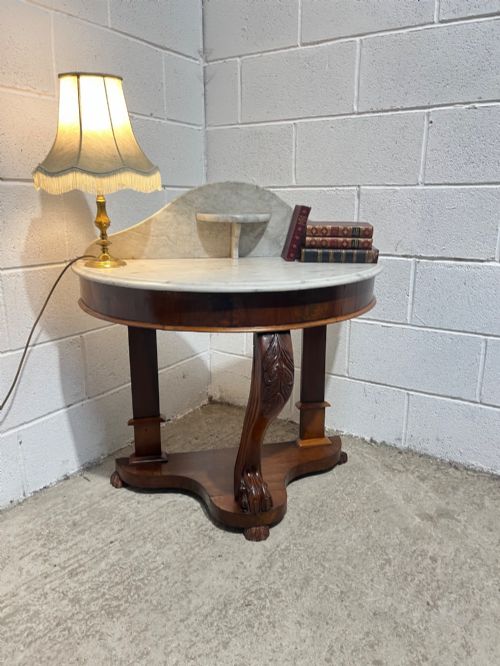
The selections on this page span from eighteenth-century Italian and French examples to nineteenth-century Victorian, Regency, and twentieth-century interpretations. Giltwood frames and shaped marble slabs dominate the selection, alongside walnut, mahogany, and oak variations.
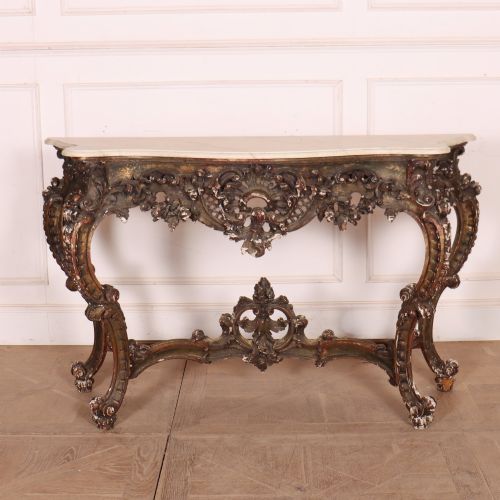
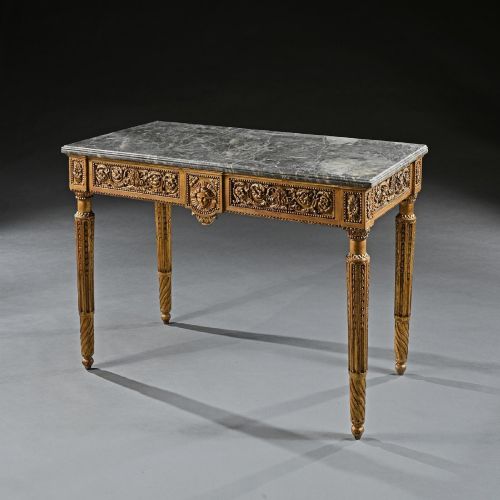
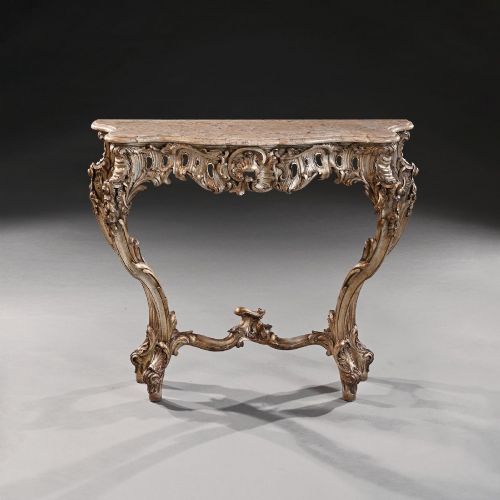
Italian Neoclassical and French Rococo styles appear frequently among the listings, often featuring elaborate carving and shaped marble surfaces. Simpler country house versions in oak or mahogany offer a more restrained alternative to heavily gilded designs.
Materials and Construction
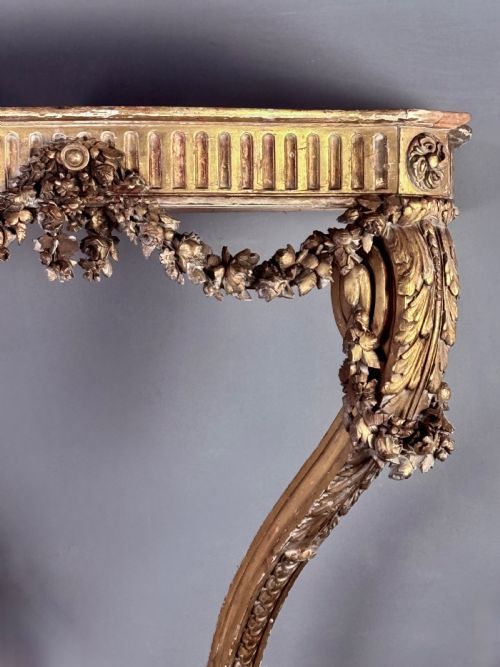
Carved wooden frames provide the structural support, utilising timbers such as mahogany, walnut, oak, and fruitwood alongside gesso and giltwood applications. Artisans shaped these woods into cabriole legs, fluted columns, and intricate foliage motifs.
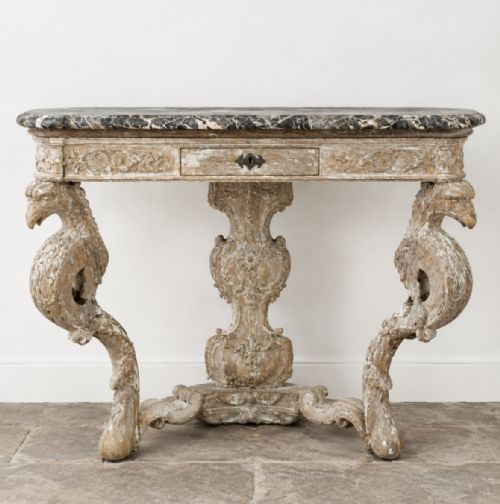
Heavy marble slabs form the tops, ranging from plain white varieties to figured types like breche d'alep and siena marble. These stone surfaces were cut and polished to fit the serpentine or rectangular contours of the wooden bases below.
Listings feature items from the eighteenth, nineteenth, and early twentieth centuries, incorporating both French and Italian regional designs.
Indicators of Execution and Age
The depth and crispness of the wood carving dictate the distinction between standard production and master craftsmanship. Pierced work, undercut foliage, and smooth symmetry demonstrate superior hand-tool manipulation by the maker.
The selection of the marble top and its integration with the frame reveal the tier of the piece. Thick, well-figured stone slabs fitted precisely into rebated wooden borders denote high workshop standards.
Amleto Bertoni·JACOB·Gillows
The Carved Marble Console Table Glossary
- Console table
- A table designed to stand against a wall, traditionally fixed with brackets or resting on front legs. These tables often feature decorative carving on the front and sides while the back remains plain.
- Giltwood
- Timber coated with a thin layer of gold leaf over a prepared gesso ground. This finish reflects light and highlights the carved details of the frame.
- Serpentine
- A curved shape that undulates inward and outward in a continuous wave. This contour is frequently seen on eighteenth and nineteenth-century marble tops and wooden aprons.
- Cabriole leg
- A furniture leg that curves outward at the knee and tapers inward toward the foot, resembling animal limbs. It is common in Rococo and Victorian revival designs.
- Gesso
- A plaster-like mixture applied to wood surfaces as a smooth base for gilding or painting. It holds fine detail during the carving and preparation stages.
Carved Marble Console Table: Frequently Asked Questions
How do I secure a wall-mounted console table?
Many traditional console tables rely on the wall for balance, utilising brackets or fixings attached to the rear frame. Ensuring proper anchoring into solid masonry prevents the heavy marble top from tipping forward.
Professional installation is often required for antique wall-mounted pieces to distribute the weight of the stone safely without damaging historic plaster.
How do I clean a marble console top?
Marble requires gentle cleaning with a damp cloth and neutral soap to preserve the polished surface. Acidic substances like vinegar or wine etch the stone and must be wiped away immediately.
Applying a specialist stone sealer helps protect the surface from rings and stains caused by everyday objects placed on the table.
Where should I place a console table?
Hallways, entrance passages, and living rooms serve as traditional locations for console tables, providing a surface for lamps and decorative objects. Their shallow depth allows them to sit comfortably in narrow spaces without obstructing movement.
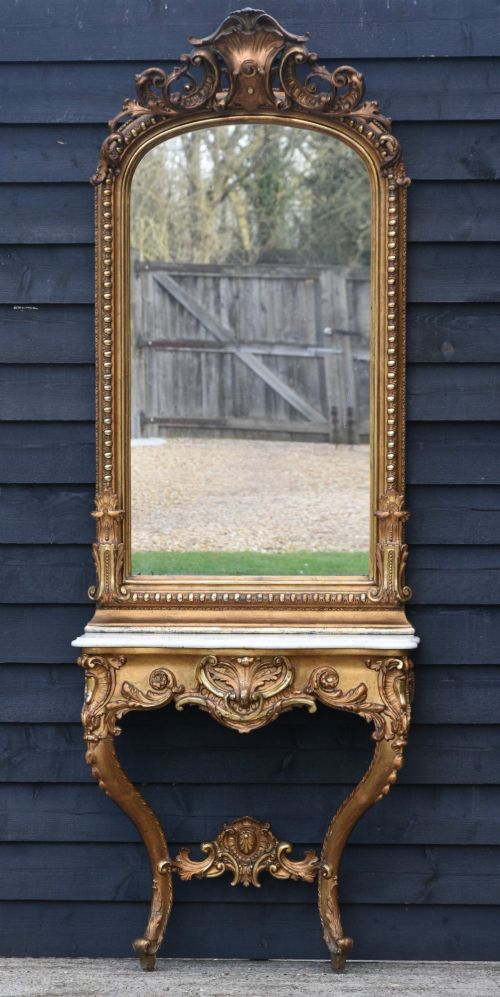
Pairing the table with a matching wall mirror, as seen in several period examples, creates a balanced focal point in a reception room.
How do I distinguish between eighteenth and nineteenth-century pieces?
Eighteenth-century examples often exhibit hand-carved details specific to Rococo or Neoclassical movements, with timber construction showing signs of early hand tools. Nineteenth-century pieces frequently revive these earlier styles while incorporating machine-assisted joinery and different secondary woods.
Examining the underside of the frame and the wear on the wooden joints helps clarify the age and manufacturing period of the table.