
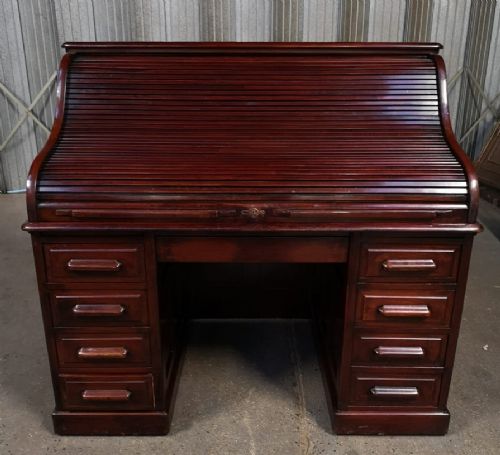
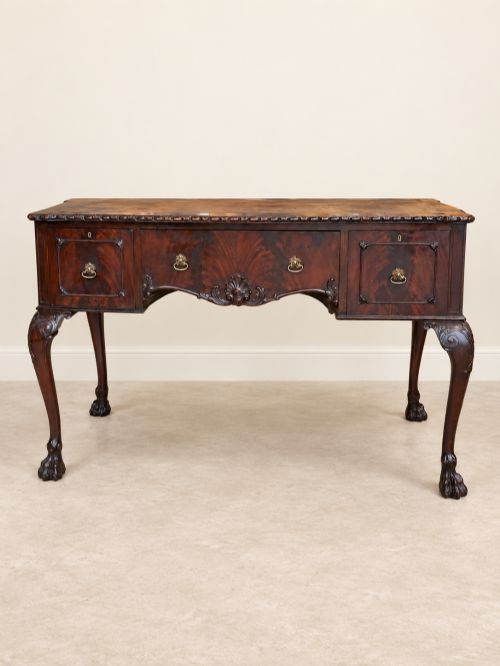
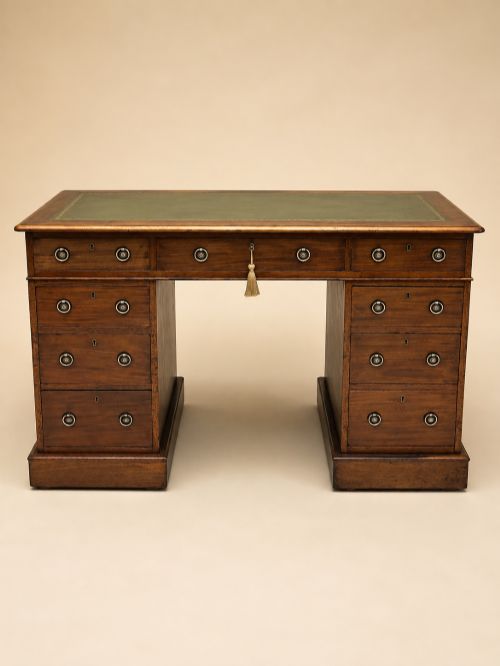
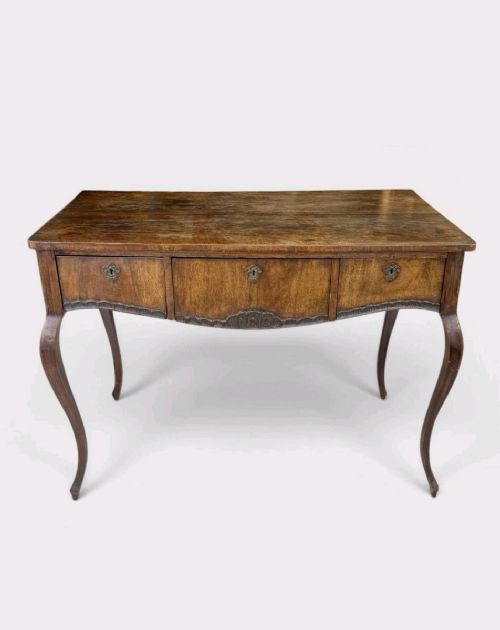
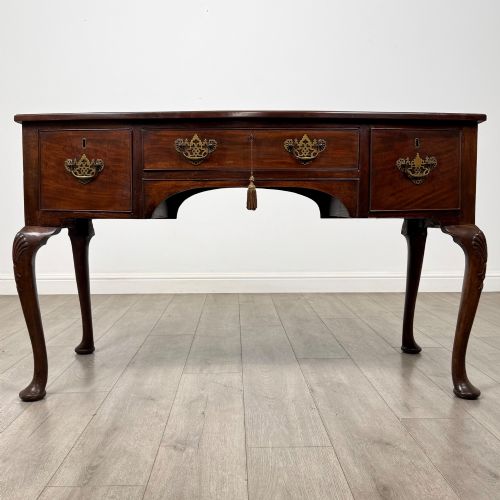
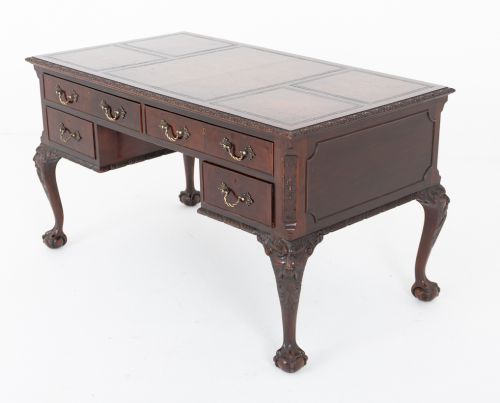
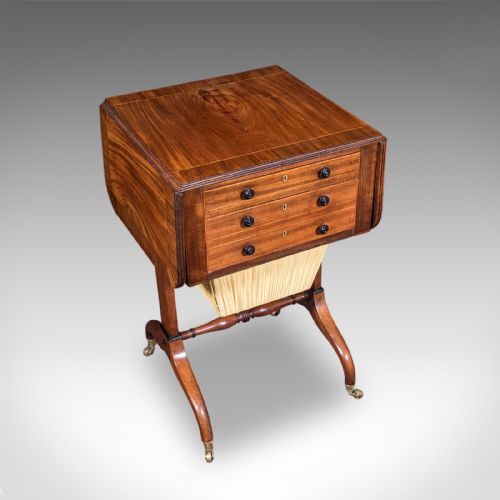
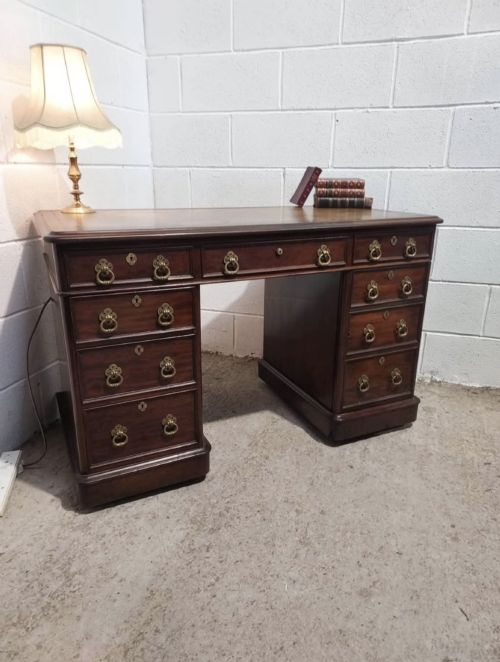
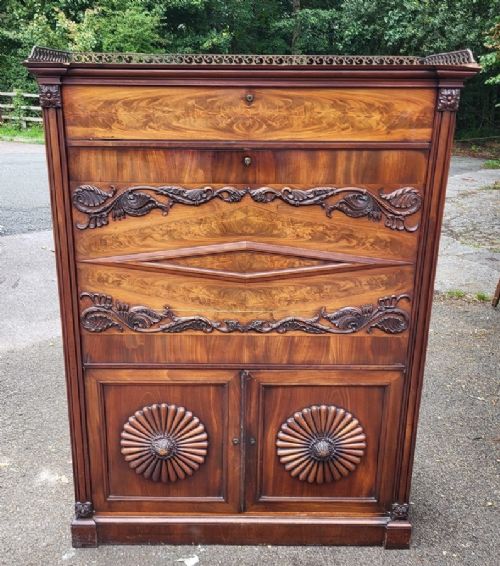
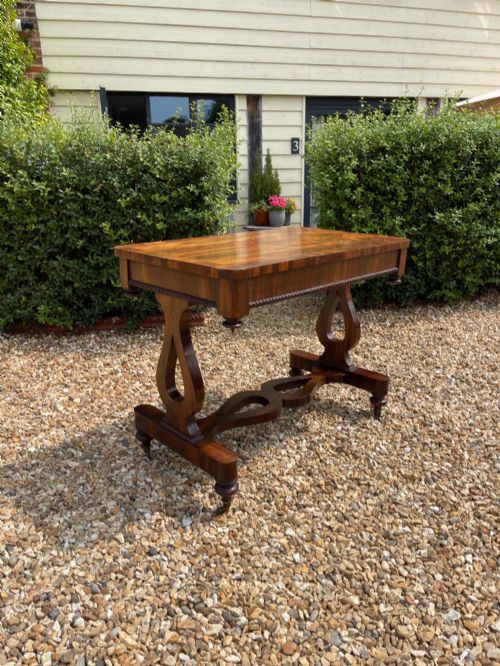

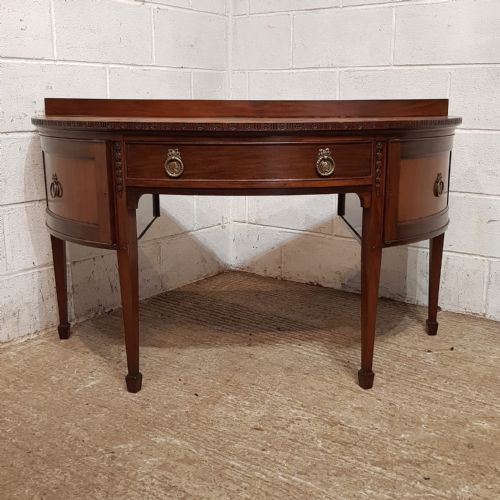
Carved Mahogany Writing Desk
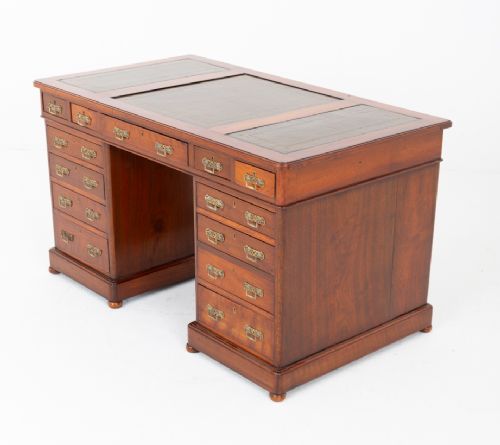
These carved mahogany writing desks combine solid timbers and detailed enrichment, offering sturdy surfaces for daily correspondence.
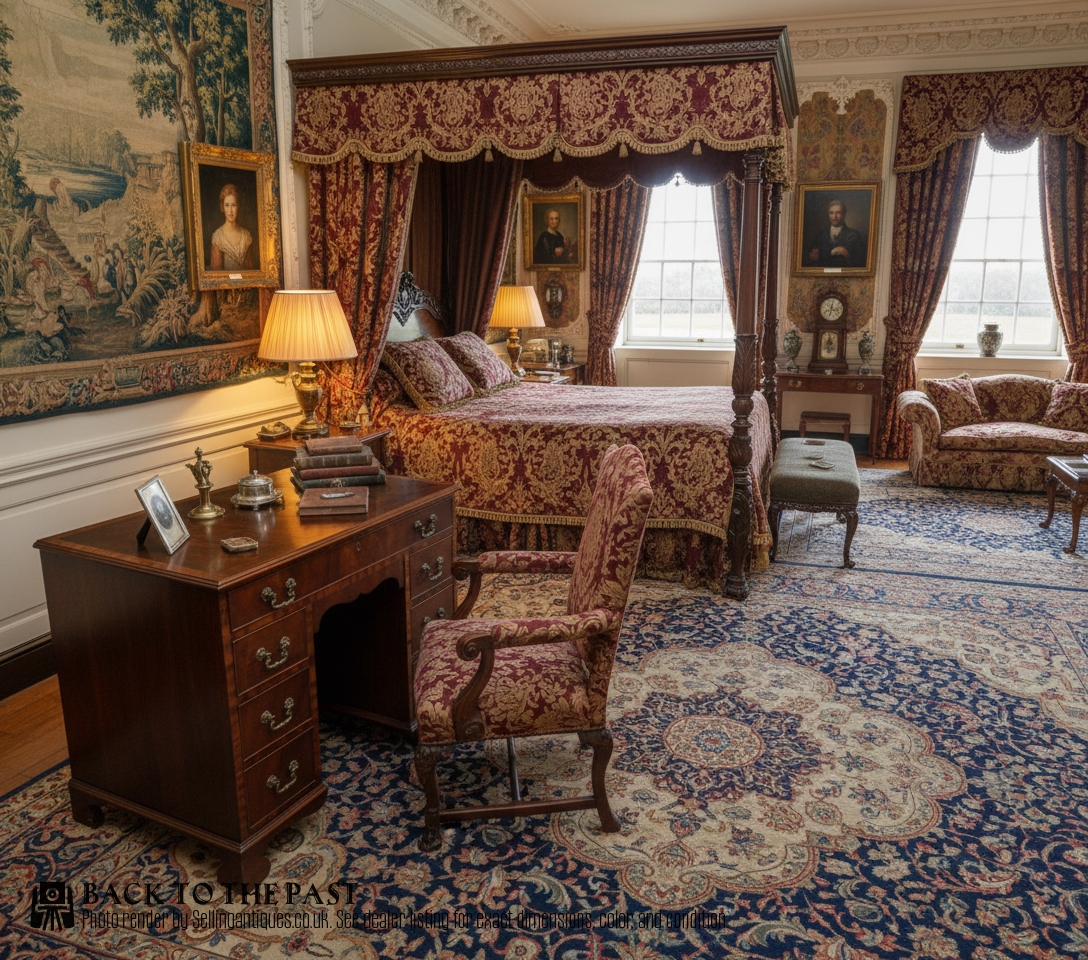
Carved Mahogany Writing Desk
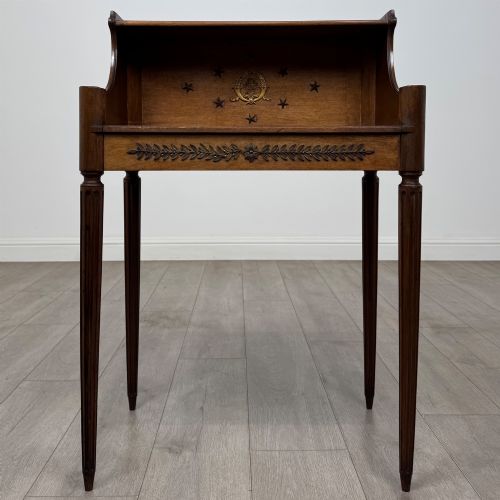
A carved mahogany writing desk encompasses various practical formats designed for correspondence and study, ranging from pedestal desks to smaller writing tables. Buyers exploring this category most frequently encounter Victorian and Edwardian examples alongside pieces influenced by earlier Georgian and Regency designs.
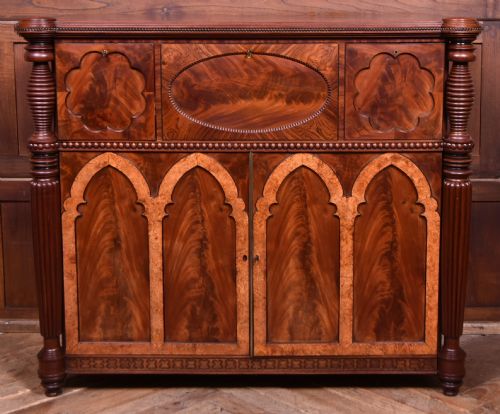
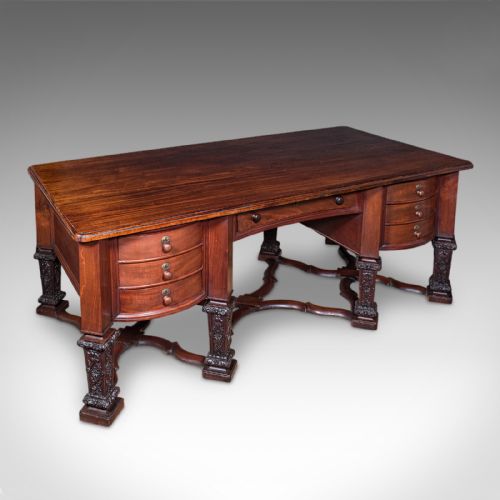
The selection includes specialised forms such as Davenport desks, partners' tables, and secretaire cabinets that incorporate fitted drawers and pigeonholes. These items originate predominantly from nineteenth and early twentieth-century workshops across Britain.
Materials and Technique
Makers utilised dense timber varieties, notably solid mahogany and highly figured flame mahogany, which provided both structural stability and rich natural grain patterns. Brass hardware, leather inserts, and occasionally glass or fabric panels complemented the primary wood construction.
Cabinetmakers applied hand-carving techniques to shape decorative borders, cabriole legs, and architectural flourishes. Joinery methods relied on traditional dovetailing for drawers and secure framing to support heavy writing surfaces.
Carved Mahogany Writing Desk Retail Price Guide 2026
Typical asking prices for carved mahogany writing desk among the pieces listed under this phrase on Sellingantiques today, from the lower quarter to the upper quarter. They describe what is for sale here now, not the wider market.
Materials documented across the inventory include solid mahogany, flame mahogany, brass hardware, and leather writing surfaces.
Evaluating Execution
Quality rests upon the depth and crispness of the hand-carving alongside the selection of timber veneers, where highly figured flame mahogany indicates superior material choice. Finer examples display meticulous attention to secondary timbers and interior drawer construction rather than surface appearance alone.
Proportion and architectural balance distinguish standard production items from bespoke pieces associated with notable cabinetmakers. The integration of original brass fittings and intact leather writing surfaces further elevates the standing of an individual desk.
Gillows·Whytock and Reid of Edinburgh·Williams and Gibton·Sigmund Jaray Wien·Maple and Co
The Carved Mahogany Writing Desk Glossary
- Pedestal desk
- A heavy freestanding desk comprising two supporting pedestals of drawers beneath a wide top. It provides substantial storage space and a finished reverse for placement in the centre of a room.
- Flame mahogany
- A veneer cut from timber where the branch meets the trunk, creating a distinctive flamelike pattern. Cabinetmakers placed these veneers symmetrically to achieve striking visual impact.
- Partners' desk
- A large double-sided desk designed for two people to work opposite one another. These pieces feature drawers and cupboards accessible from both sides.
- Davenport
- A compact Victorian writing desk featuring a sloping desktop above a bank of side drawers. The top surface typically opens to reveal a fitted interior for stationery.
Carved Mahogany Writing Desk: Frequently Asked Questions
What is a partners desk?
A partners desk is a large double-sided workspace designed to accommodate two users facing each other. These pieces incorporate drawers and cupboards on both the front and rear elevations.
Such tables originally served in libraries and administrative offices where multiple people required shared access to writing space and storage.
How do I identify Victorian pieces?
Victorian items typically display heavier proportions, darker finishes, and robust timber construction. Common markers include deep mahogany tones and functional pedestal arrangements.
Cabinetmakers during this era frequently utilised mechanical roll tops and elaborate turning alongside traditional hand-carving.
Where were these desks used?
These desks served primarily in domestic studies, libraries, and private offices of large townhouses and country estates. They provided secure storage for correspondence and account books.
Smaller variants such as writing tables and Davenport desks often occupied drawing rooms or private bedchambers for personal letter writing.
Are the leather inserts original?
Many desks retain period leather writing surfaces, though replacement remains common due to centuries of daily use. Original inserts often exhibit tool-gilded borders and signs of natural patina.
When replacement occurs, restorers attempt to match traditional calfskin styles to preserve the historical appearance of the writing surface.