
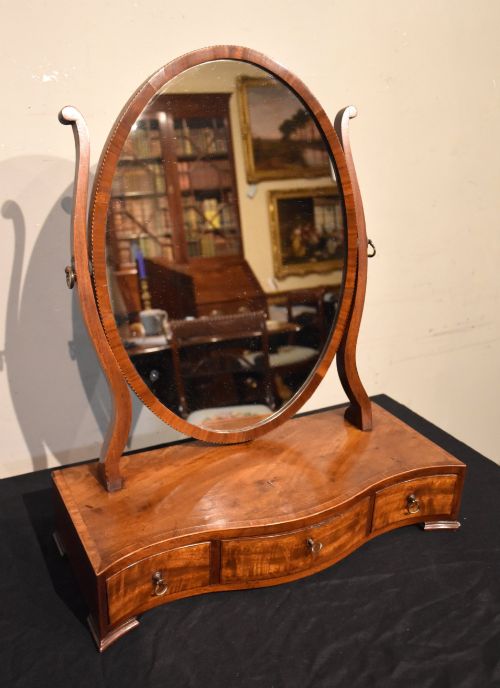


Carved Mahogany Toilet Mirror
A carved mahogany toilet mirror brings warmth and functional elegance to a bedroom surface, reflecting centuries of cabinet-making skill.
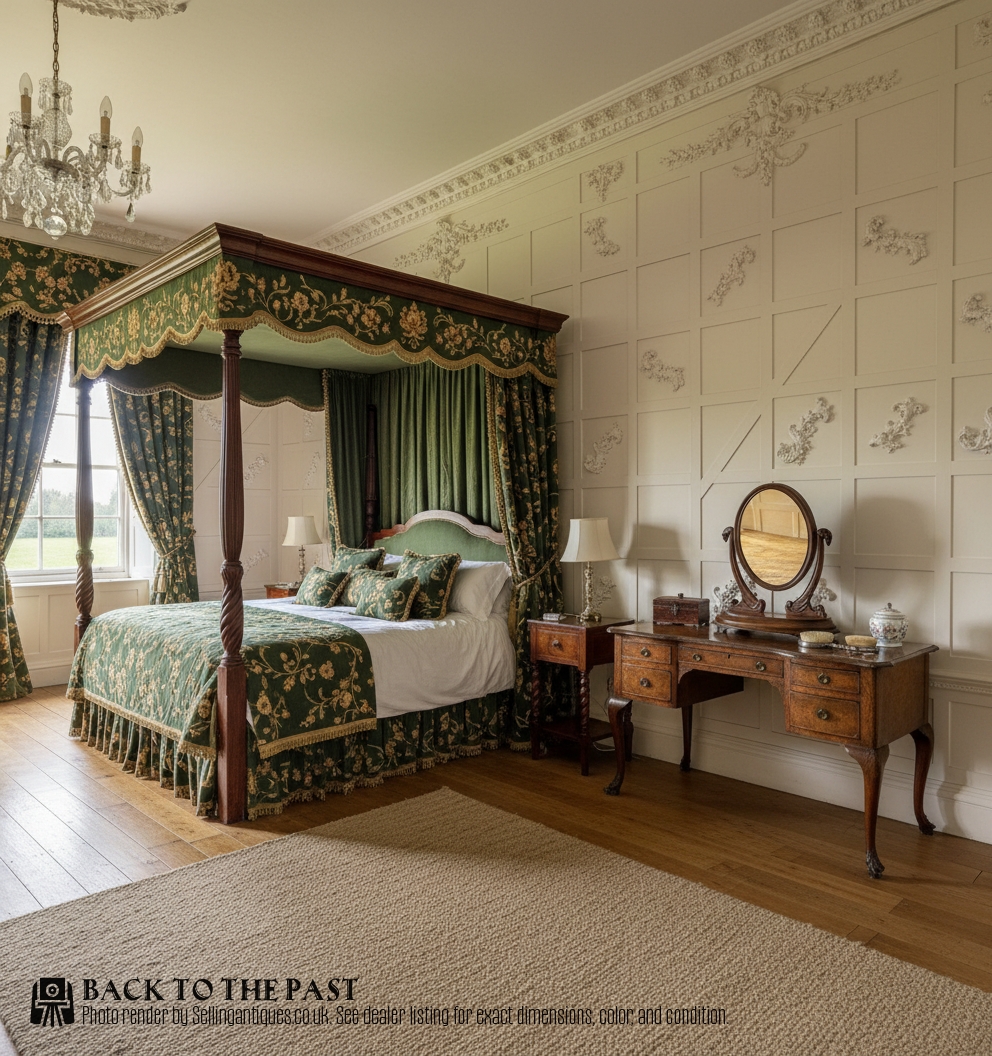
Carved Mahogany Toilet Mirror
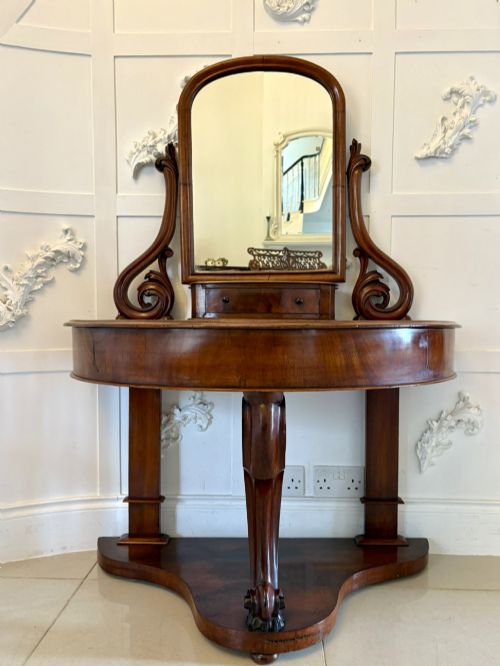
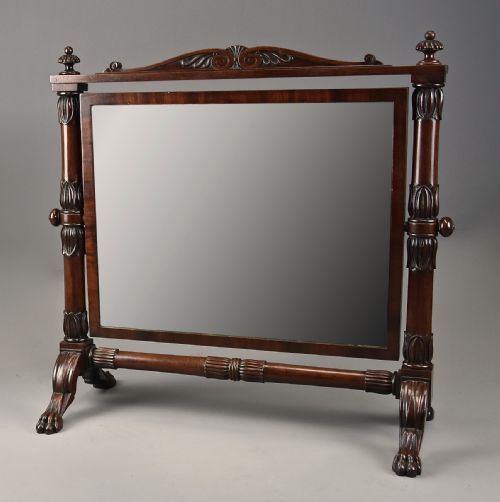
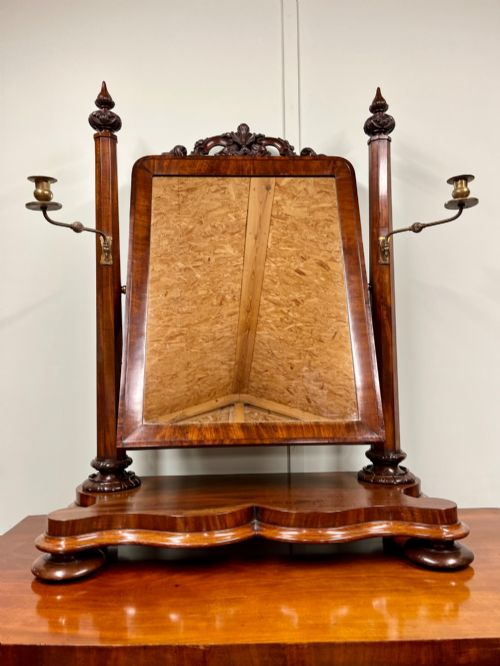
A carved mahogany toilet mirror sits upon a chest, table or dressing surface, designed to pivot between upright supports for personal grooming. These pieces range from compact tabletop swing frames to grand cheval mirrors and shaving stands.
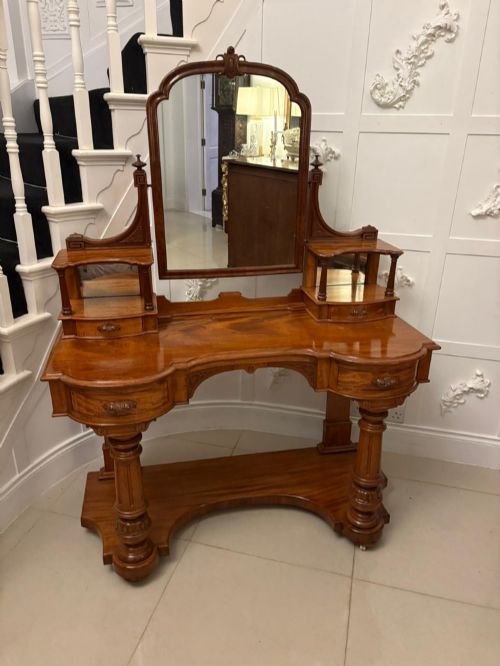
Victorian and Georgian examples dominate the selection, showing styles from early Victorian simplicity to elaborate Gothic Revival and Chippendale Revival forms. Most versions use swing mechanisms on turned columns or scroll brackets.
The assortment includes specialised pieces such as bureau mirrors, gentleman's shaving stands and serpentine fronted dressing mirrors. Buyers encounter both rectangular and oval glass plates housed within robust mahogany frames.
Materials and construction
Cabinet-makers relied heavily on solid mahogany, Cuban mahogany and flame mahogany veneer applied to secondary woods. Wood inlay, brass fittings and mirror glass complete the primary construction of these dressing pieces.
Frames rely on precision joinery, utilising turned columns, carved brackets and secure pivot screws to hold the swing mirror at the desired angle. Marble tops appear on heavier Victorian bases, adding weight and stability.
Carved Mahogany Toilet Mirror Retail Price Guide 2026
Typical asking prices for carved mahogany toilet mirror among the pieces listed under this phrase on Sellingantiques today, from the lower quarter to the upper quarter. They describe what is for sale here now, not the wider market.
Materials recur across solid mahogany, flame mahogany veneer, brass, marble and mirror glass.
Judging quality and craftsmanship
Superior examples distinguish themselves through crisp, deep carving on the frame and supports, paired with dense, highly figured Cuban or flame mahogany. The weight of the timber and the refinement of the turned columns separate standard items from exceptional ones.
Original mirror glass with correct bevels and silvering degradation adds authenticity, while robust construction in the drawer boxes and swing arms ensures longevity. The harmony of proportions between the mirror plate and the base defines the better pieces.
P & MA Nicholson·Gillows
The Carved Mahogany Toilet Mirror Glossary
- Swing mirror
- A glass plate mounted within a frame that pivots on horizontal pins between two upright supports. This allows the user to tilt the reflection angle.
- Cheval mirror
- A full-length dressing mirror supported on a freestanding frame with four legs. These larger pieces stand directly on the floor rather than resting on a table.
- Cuban mahogany
- A dense, dark timber harvested in the Caribbean, prized for its rich grain and deep colour. Makers used this premium wood for high-status furniture during the Georgian and Regency periods.
- Serpentine front
- A curved furniture front shaped with a central convex sweep flanked by concave curves. This contour requires advanced woodworking skill.
- Shaving stand
- A specialised furniture form featuring an adjustable mirror combined with a small tabletop or tripod base for grooming equipment. Gentlemen used these tall stands in bedrooms and dressing rooms.
Carved Mahogany Toilet Mirror: Frequently Asked Questions
How do I date a toilet mirror?
Examine the construction methods of the drawer boxes, the type of mahogany timber, and the style of the mirror supports. Georgian pieces often feature simpler lines and hand-cut dovetails, while Victorian examples introduce heavier carved ornamentation and turned columns.
Hardware such as brass pivot screws and backboards also provide clues to the era. Secondary woods hidden behind the main frame help confirm the period of manufacture.
What is the difference between a toilet mirror and a cheval mirror?
A toilet mirror sits upon a dressing table, chest of drawers or sideboard to assist with close-up grooming. It relies on a tabletop base or short box structure.
A cheval mirror stands independently on the floor, offering a full-length reflection. These taller pieces use a heavier four-legged frame to support the pivoting glass.
Are original mirror plates common?
Original mirror glass frequently shows signs of foxing, which manifests as small dark spots or a cloudy patina within the silvering. Many collectors prize this original glass for its authentic age appearance.
Some pieces have replacement glass fitted during their history to maintain practical reflection clarity. Inspecting the silver backing and the rebate helps determine if the plate is period-correct.
How were shaving stands used?
Shaving stands served as dedicated grooming stations in gentleman's dressing rooms and bedrooms during the Regency and Victorian eras. The adjustable mirror allowed the user to find the optimal angle for shaving.
Small surfaces and tripod legs kept shaving bowls, soap and razors within reach. These compact stands moved easily around the room to catch optimal morning light.