
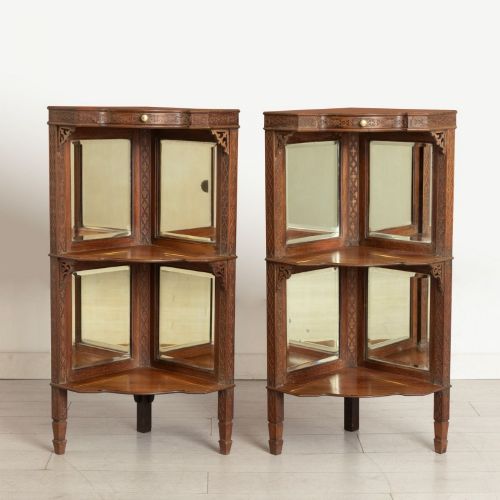


Carved Mahogany Standing Mirror
A carved mahogany standing mirror brings depth and proportion to a room, functioning as both a practical glass and a commanding architectural presence.
Carved Mahogany Standing Mirror
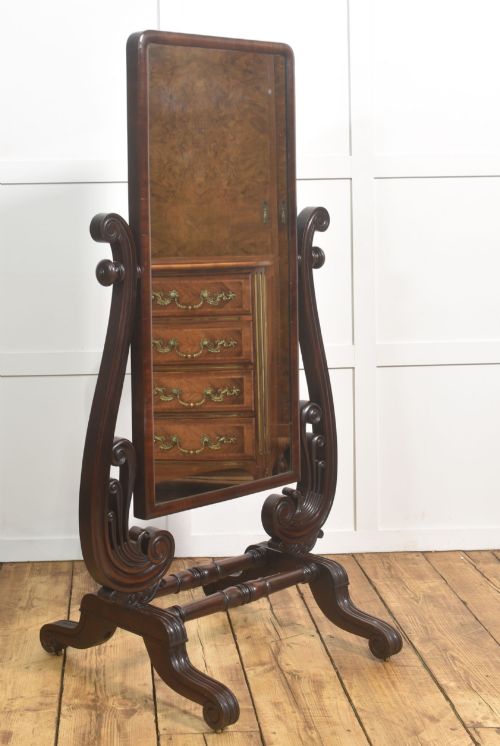
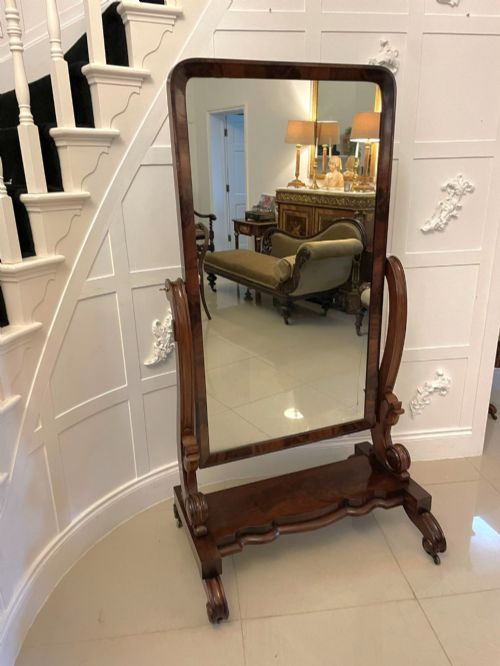
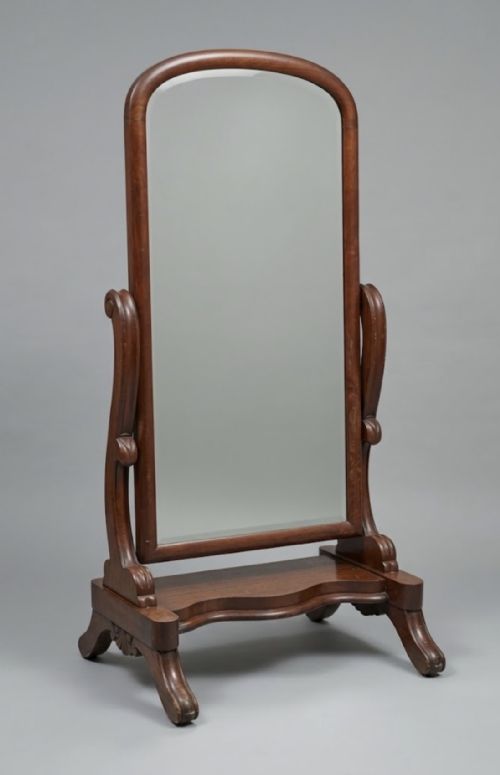
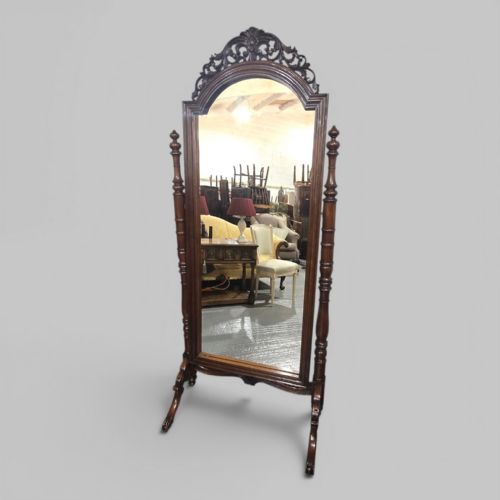
When you search for a carved mahogany standing mirror, you encounter tall, pivoting cheval frames, heavy floor-standing dressing glasses, and smaller table or tripod variations. These pieces span the nineteenth century, encompassing Regency, William IV, Victorian, and Edwardian periods.
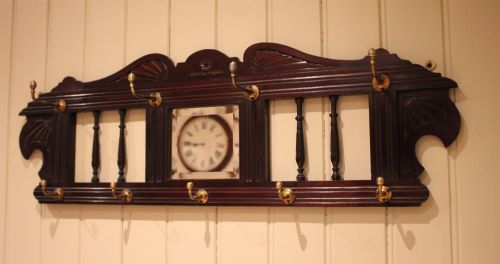
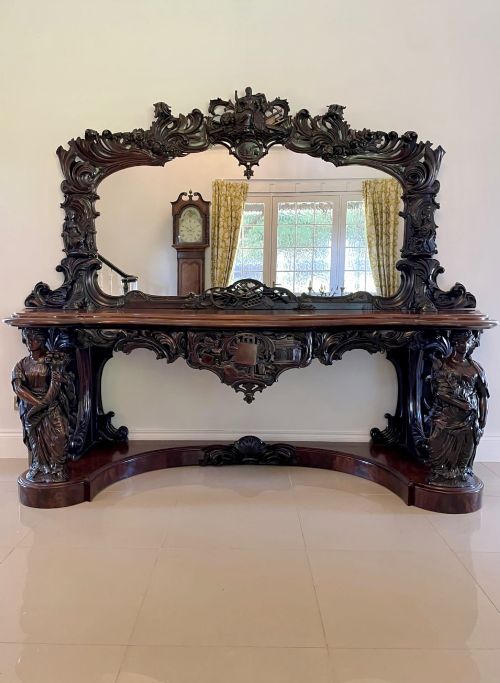
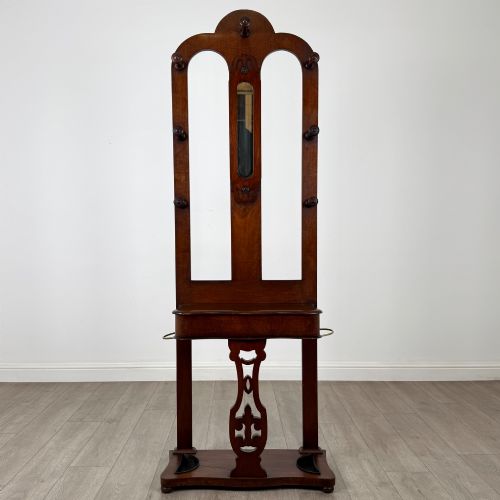
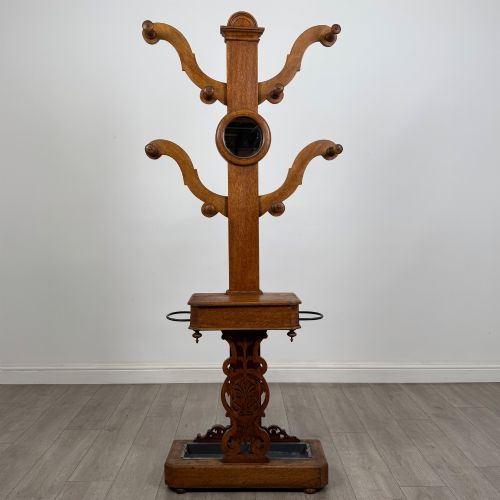
The most common form on this page is the Victorian cheval mirror, designed to swing within upright standards mounted on robust floor supports or trestles. Alongside these, the listings include related furniture incorporating mirrors, such as hall stands, console tables, and shaving stands.
How they were made
Joiners built these frames primarily using solid and veneered mahogany, often selecting flame or figured grain to accentuate the rich natural colour of the wood. Carved ornamentation, from restrained classical moulding to elaborate Victorian Rococo or Gothic Revival motifs, was shaped by hand directly into the timber.
Mirrors relied on heavy glass plates secured within adjustable swing frames, supported by brass pivots, brackets, or candle arms. Heavier structural bases sometimes incorporated secondary elements like marble shelves, cast iron components, or wood inlay to provide stability.
What varies in quality
The calibre of a carved mahogany standing mirror rests on the depth and crispness of its hand-carving and the thickness of the mahogany used in the upright standards. Superior examples display precise joinery and balanced proportions that maintain stability while supporting a large mirror plate.
Hardware also distinguishes the work, with heavy brass pivots, original casters, and well-executed wood turning indicating higher manufacturing standards. The selection of the mahogany veneer, particularly on flame grain panels, marks the difference between standard production and exhibition pieces.
Edwards & Roberts
The Carved Mahogany Standing Mirror Glossary
- Cheval mirror
- A full-length swing mirror supported by a frame with four legs or a trestle base. This design allows the glass to tilt to various angles.
- Mahogany
- A durable, reddish-brown tropical hardwood prized for its stability and grain. It was the favoured timber for high-end case furniture throughout the nineteenth century.
- Gothic Revival
- An architectural and decorative style drawing inspiration from medieval design. Pieces often feature pointed arches, quatrefoils, and heavy mouldings.
- Shaving mirror
- An adjustable dressing glass often mounted on a tripod stand or small cabinet. Gentlemen utilised these for grooming in bedrooms or dressing rooms.
Carved Mahogany Standing Mirror: Frequently Asked Questions
How do I tilt a cheval mirror?
Cheval mirrors pivot on brass screws or pins set into the upright side posts. Adjusting the tension on these side fixings allows the glass to hold its angle securely.
Over time, brass hardware can loosen, so gentle tightening of the pivot nuts maintains the desired position of the swing frame.
Where should I place a standing mirror?
These tall standing glasses suit bedrooms, dressing rooms, and spacious hallways where they reflect light and create a sense of depth. Placing them opposite a window maximises illumination.
Ensure the floor beneath the heavy wooden base is level so the frame bears weight evenly across its feet or castors.
How do I identify a Victorian mirror?
Victorian pieces often display heavier proportions and deeper carved ornamentation compared to earlier Regency designs. Common stylistic markers include Rococo scrolls and Gothic Revival pointed details.
Construction methods, such as hand-cut screws and dense mahogany timbers, help distinguish nineteenth-century examples from later reproductions.
What is the difference between a cheval mirror and a dressing mirror?
A cheval mirror stands independently on the floor at near full height, allowing a complete view of attire. These frames require substantial floor support.
A dressing mirror is smaller, intended to sit on top of a dressing table, chest of drawers, or washstand rather than directly on the floor.