

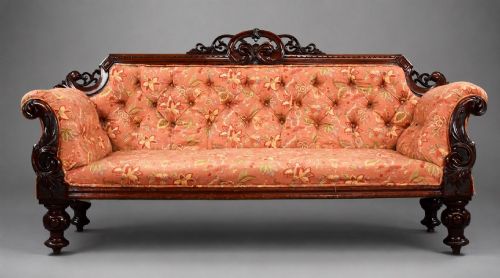

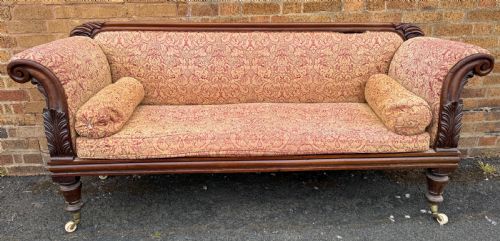


Carved Mahogany Scroll Sofa
A carved mahogany scroll sofa brings architectural presence and fluid nineteenth-century lines into a modern room.
Carved Mahogany Scroll Sofa
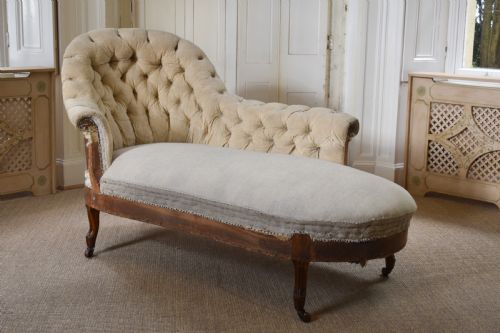
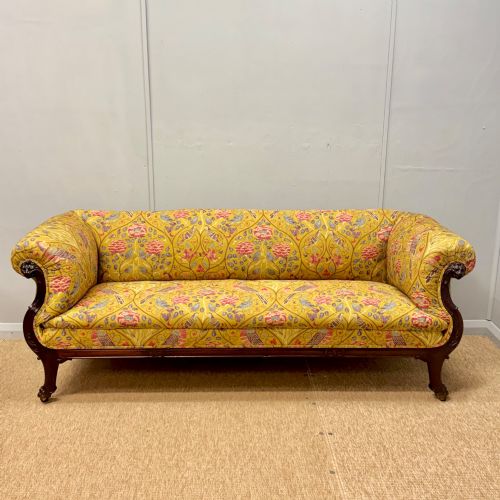
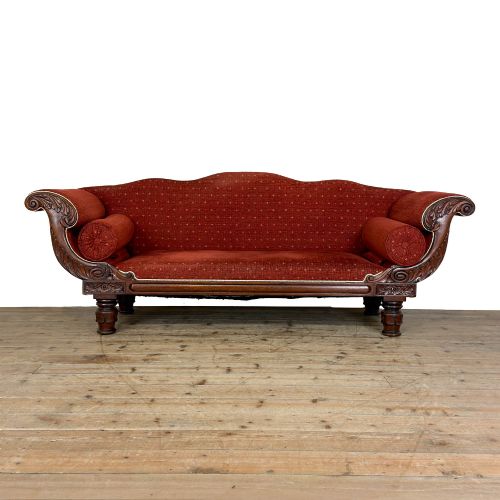
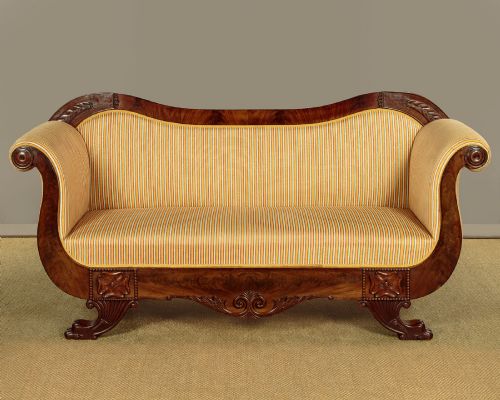
A carved mahogany scroll sofa is a substantial nineteenth-century seating form defined by sweeping scroll-ended arms and rich timber frames. You are most likely to encounter Regency, William IV, and Victorian examples on this page, ranging from grand country house settees to smaller chaise longues.
The category encompasses double-ended couches, scroll-arm settees, and framed daybeds designed for prominent drawing rooms and reception spaces. These pieces combine structural timber show-frames with deep upholstery to create an imposing focal point.
How they were made
Craftsmen built the structural frames from solid mahogany and sometimes rosewood, shaping the timber into characteristic scroll arms and supporting rails. Traditional upholstery techniques relied on hessian foundations, fabric layers, and supportive stuffing before finishing with decorative textiles or brown leather.
Details often include applied brass accents or brass castors beneath carved wooden feet to aid movement across heavy carpets. The timber frames display hand-carved decorative motifs, particularly around the show-wood borders and scrolling terminals.
Carved Mahogany Scroll Sofa Retail Price Guide 2026
Typical asking prices for carved mahogany scroll sofa among the pieces listed under this phrase on Sellingantiques today, from the lower quarter to the upper quarter. They describe what is for sale here now, not the wider market.
Mahogany is the dominant timber across these listings, occasionally joined by rosewood, brass hardware, and traditional upholstery fabric.
What varies in quality
The refinement of the timber carving separates standard production from superior pieces, with crisp, deep relief work indicating a more skilled hand. The weight and grain of the mahogany also matter significantly, alongside the integrity of the underlying frame construction.
Proportion and scale dictate the visual success of the piece, as finer examples maintain balanced lines between the generous scroll ends and the central seat. The choice of primary timber, whether rich mahogany or select rosewood, further defines the tier of the piece.
The Carved Mahogany Scroll Sofa Glossary
- Scroll end
- A characteristic nineteenth-century arm design curving outward and downward in a tight or sweeping spiral. This architectural flourish defines the silhouette of the sofa.
- Show frame
- The exposed wooden structural framework surrounding the upholstered portions of a settee or sofa. It allows the carved mahogany grain and finish to remain visible.
- Double-ended sofa
- A seating form featuring matching scroll ends of equal height at both sides, allowing a person to recline comfortably at either end. These pieces are frequently symmetrical.
- Chaise longue
- An elongated upholstered seat designed for reclining, combining the backrest of a sofa with the extended length of a daybed. Many surviving examples date from the Regency and Victorian periods.
Carved Mahogany Scroll Sofa: Frequently Asked Questions
How do I date a scroll sofa?
Dating relies on combining the stylistic details of the woodwork with the overarching period characteristics seen in the frame. Regency pieces often display cleaner, classical lines, while William IV and Victorian examples tend toward heavier proportions and bolder carving.
Examining the secondary timbers and the construction methods beneath the upholstery also helps establish the era of manufacture. Subtle shifts in the tightness of the scroll and the depth of the show frame guide accurate attribution.
Where should I place a large settee?
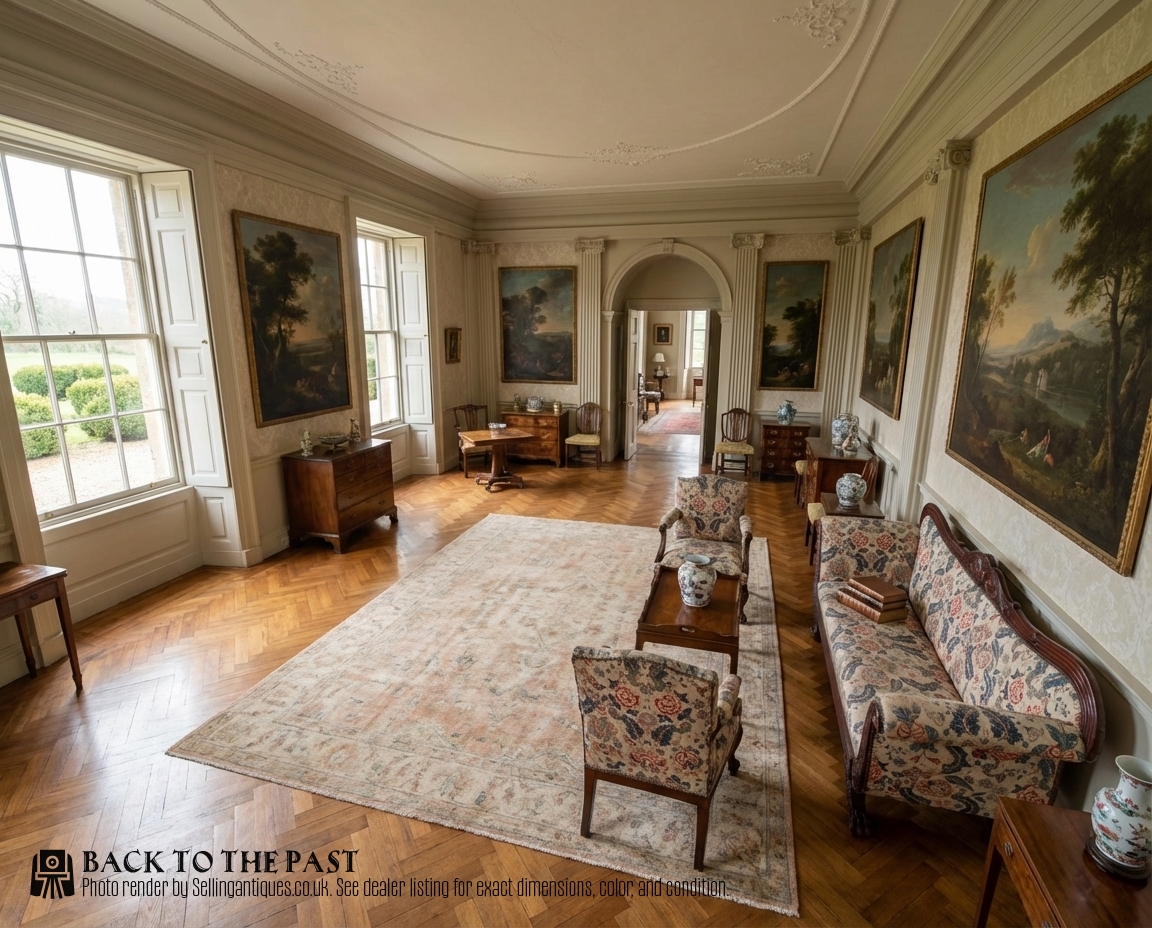
These substantial seating forms require generous room proportions to allow their architectural scroll arms and show frames proper breathing space. Freestanding placement in a drawing room or large hallway showcases the finished timber back and sides.
Because many surviving pieces are finished on all sides for central room placement, they work well floating away from walls. Pairing them with complementary centre tables enhances the nineteenth-century country house aesthetic.
Are these sofas comfortable for daily use?
Original nineteenth-century upholstery relied on traditional materials like hessian and horsehair, which offer a firmer sit than modern synthetic foam. Many surviving pieces have been restored or reupholstered to suit contemporary standards of comfort.
The generous length of double-ended settees and chaise longues makes them well-suited for lounging. Buyers should assess whether the current upholstery meets their specific requirements for daily seating.