


Antique Floral Settee
An antique floral settee brings nineteenth-century comfort and botanical textile history into a modern drawing room.
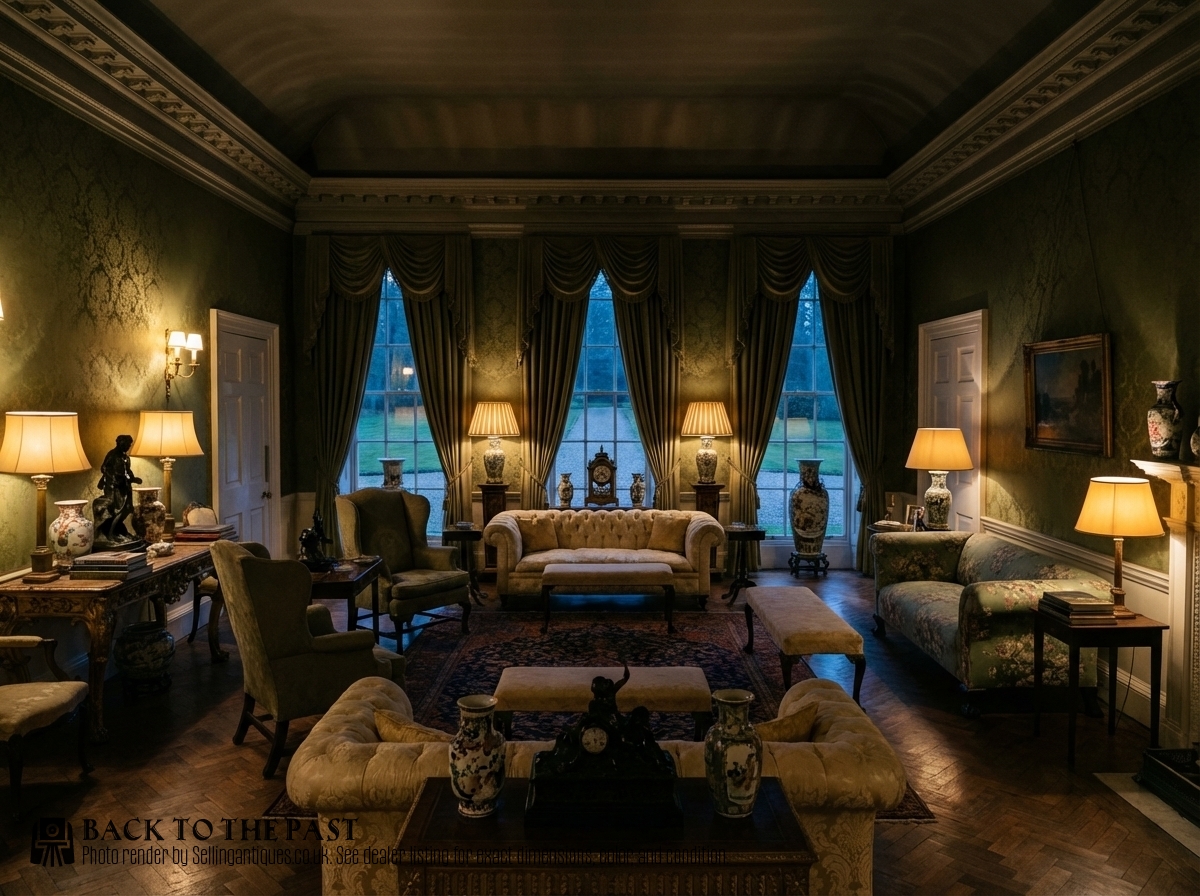
Antique Floral Settee
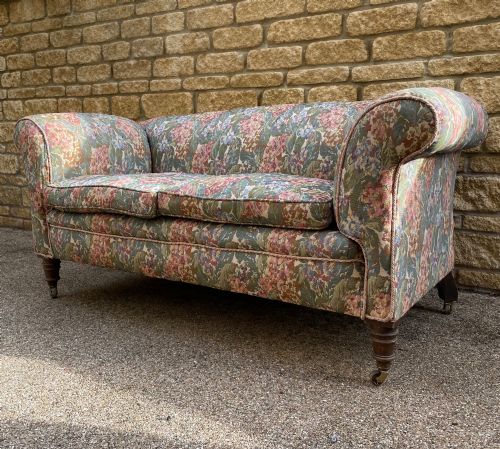
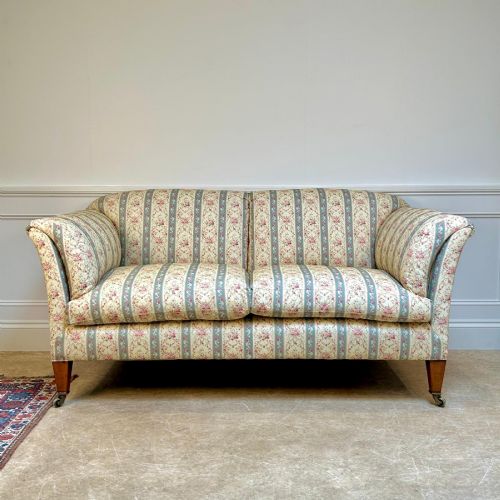
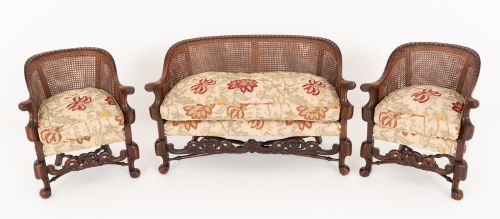
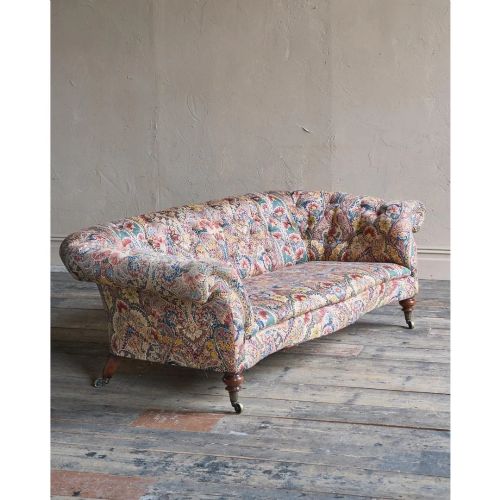
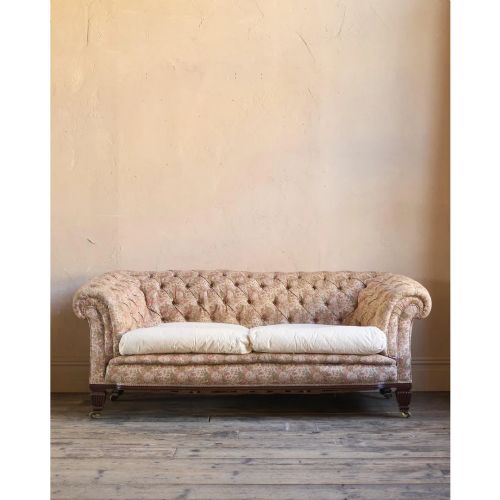
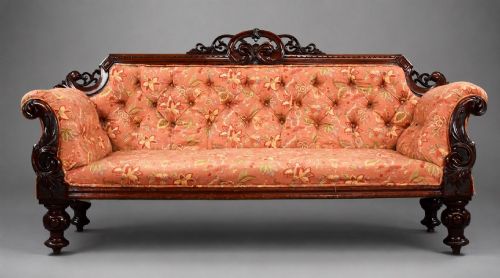
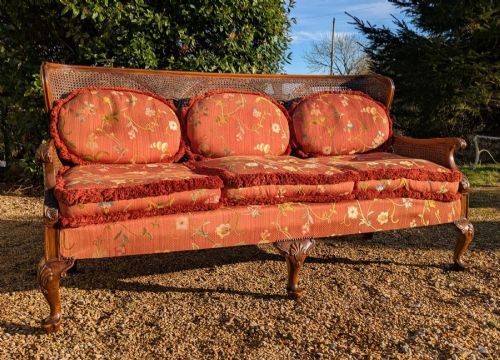
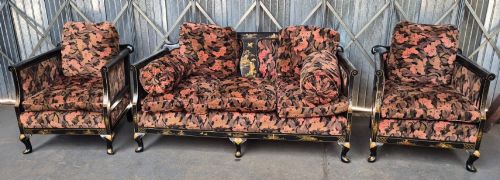
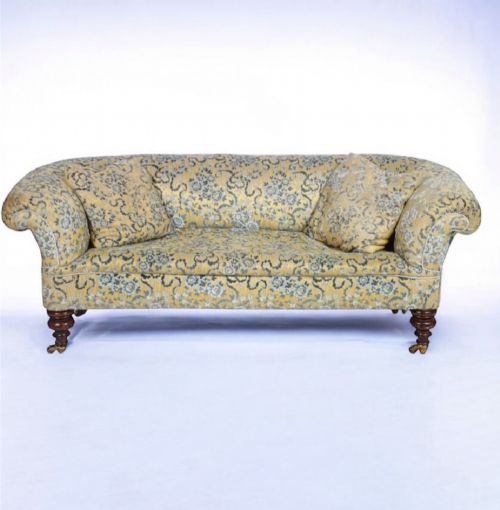
An antique floral settee encompasses nineteenth-century and early twentieth-century upholstered seating, ranging from button-backed Victorian chesterfields to Edwardian parlor pieces. The pieces encountered here span mahogany, walnut, and painted timber frames paired with period textile upholstery.
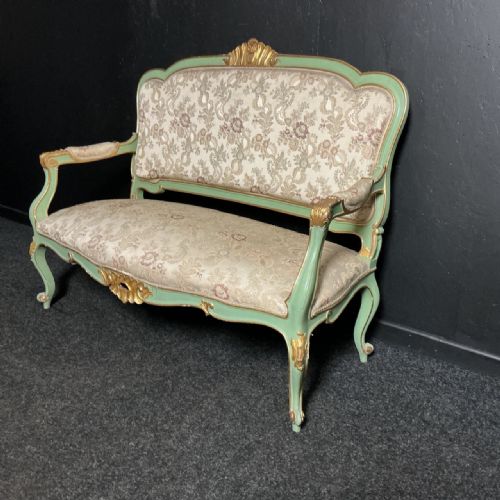
Makers and makers' marks occasionally appear on these frames, though many remain attributed solely through their distinct regional revival styles, such as Georgian, Sheraton, or Louis XV. Buyers frequently encounter two-seater drop-arm configurations alongside larger three-piece suites and chaise longue hybrids.
The enduring appeal of these settees lies in their combination of sturdy timber construction and botanical decorative upholstery. Each seating form reflects the prevailing domestic comfort priorities of the Victorian and Edwardian eras.
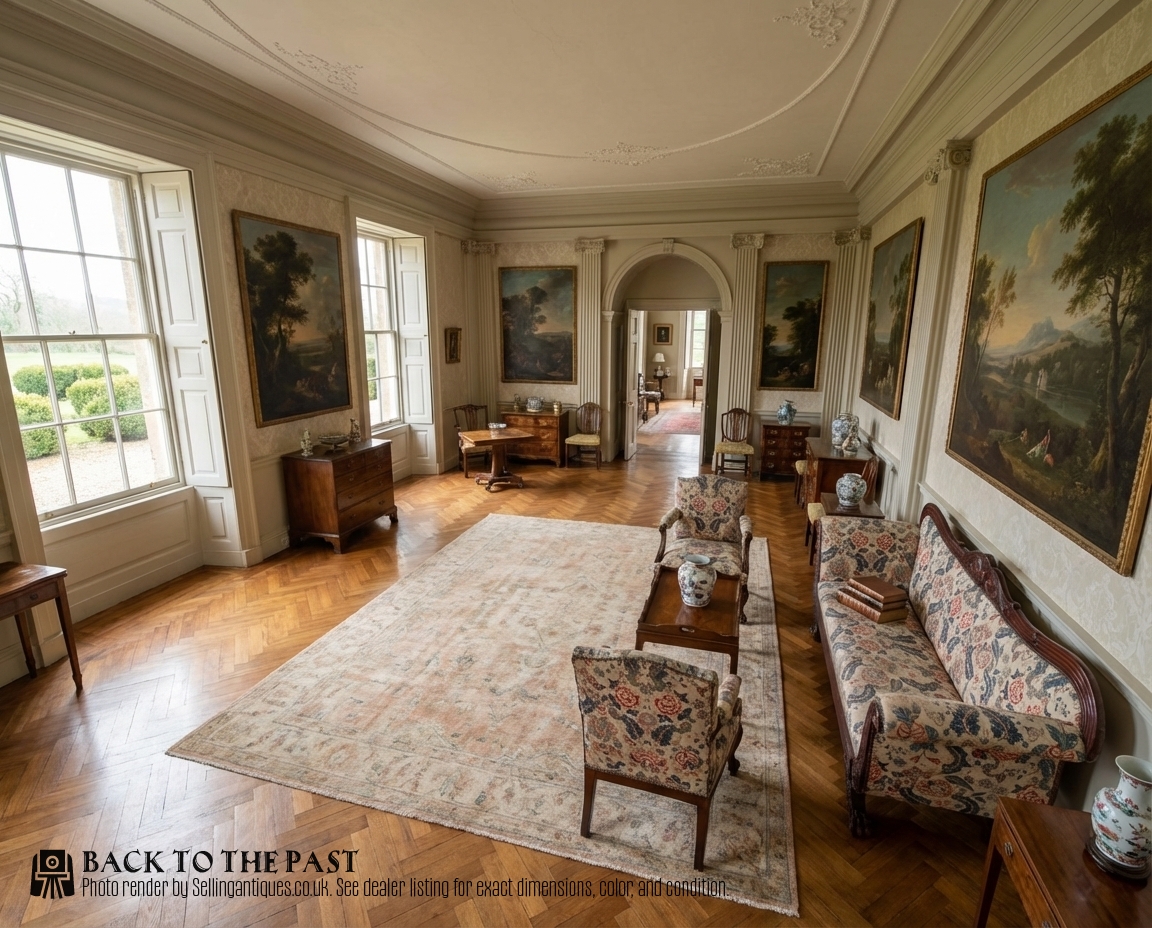
Materials and construction
Frames rely on dense native and imported hardwoods like mahogany, walnut, and satinwood, frequently shaped through hand-carving and supported by brass castors or hawk claw and ball feet. Joinery techniques from the nineteenth century prioritize rigid mortise and tenon joints to withstand heavy domestic use.
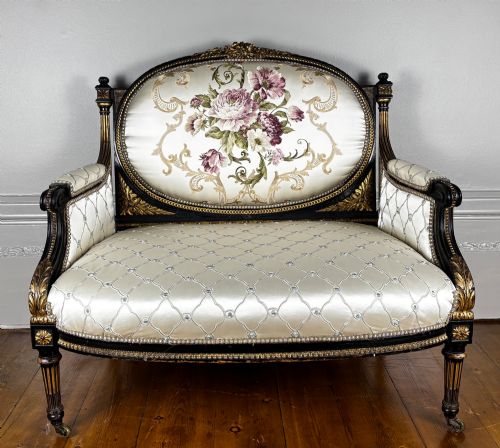
Upholstery involves layered natural stuffing materials such as horsehair, wool, and feather cushions, secured over original ticking and webbed bases before finishing with textile top layers. Ebonised, parcel gilt, and painted surface treatments provide decorative contrast to the exposed wooden framework.
Some nineteenth-century settees include hidden compartments for storing correspondence right beneath the cushion line.
Assessing quality and preservation
Quality rests in the integrity of the underlying timber frame and the retention of original upholstery components like horsehair stuffing and ticking. Finer pieces demonstrate crisp, hand-carved details on mahogany or walnut frames rather than soft, mass-produced cast ornamentation.
The distinction between standard commercial production and superior craftsmanship often appears in the subtlety of revival styling, such as accurate Georgian or Louis XV proportions. Well-preserved joinery and untouched surface patination elevate the standing of any seating piece.
Howard & Sons·H Goodall & Sons·Gillows
The Antique Floral Settee Glossary
- Chesterfield
- A deep-buttoned upholstered sofa traditionally featuring rolled arms of equal height to the back. This form emerged during the nineteenth century as a staple of domestic seating.
- Bergere
- An enclosed wooden-framed armchair or settee featuring cane or upholstered panel sides. The wooden frame is typically exposed and polished.
- Canapé
- A decorative French-style settee with an exposed carved wooden frame and upholstered seat and back. These pieces often reflect eighteenth-century revival tastes during the nineteenth century.
- Drop-arm
- A mechanical sofa or settee design allowing one or both armrests to lower into a horizontal position. This mechanism utilises brass hinges and internal ratchets.
- Marquetry
- The art of applying decorative veneer pieces in wood to form intricate patterns and floral motifs. This technique frequently ornaments nineteenth-century walnut and satinwood furniture surfaces.
Antique Floral Settee: Frequently Asked Questions
How do I date an antique settee?
Dating relies upon examining the timber species, joinery methods, and upholstery underpinnings present in the frame. Stylistic cues such as Victorian carved mahogany or Edwardian satinwood provide the primary chronological markers.
Secondary indicators include the presence of original makers' stamps, brass castors, and textile types. Comparing these construction details against documented regional workshops narrows the manufacturing window.
Are these settees suitable for daily use?
These pieces were built for endurance using dense hardwoods like mahogany and walnut, making them structurally robust for contemporary living rooms. Professional conservation of internal webbing and horsehair stuffing ensures modern seating comfort.
Care should be taken to protect delicate textile surfaces and antique wooden frames from direct sunlight and excessive humidity. Regular light dusting preserves the polished finish of the timber.
What is a Knowle sofa?
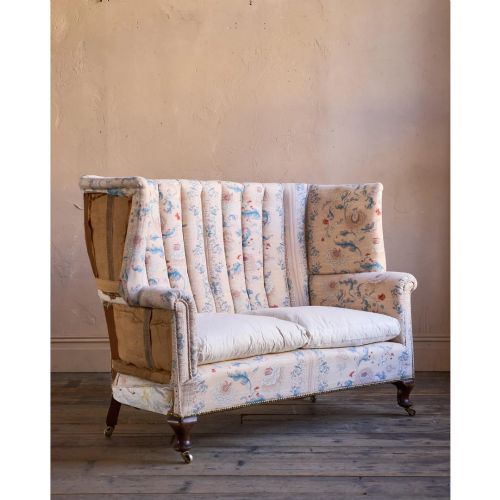
A Knowle sofa is a distinct nineteenth-century seating form characterised by high, hinged or adjustable side arms tied to the back with decorative cords. This historic design derives from the seventeenth-century original housed at Knole House in Kent.
Victorian and Edwardian iterations adapted this grand profile for domestic drawing rooms, frequently pairing the deep seat with floral upholstery. The adjustable arms offer a unique configuration among period settees.
How do I maintain floral textile upholstery?
Maintenance requires gentle, regular vacuuming with a soft brush attachment to remove surface dust without straining aged threads. Professional dry cleaning is recommended for antique fabrics to prevent shrinkage or dye transference.
Keeping the settee away from direct heat sources and bright windows prevents the fading of natural botanical dyes. Prompt attention to minor spills protects the underlying textile structure.