

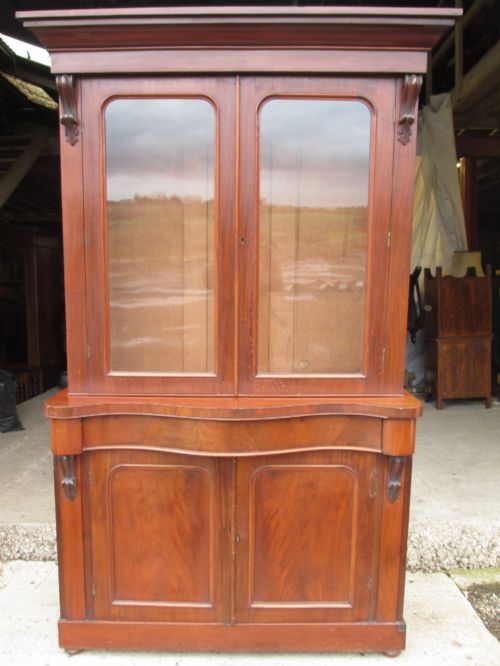
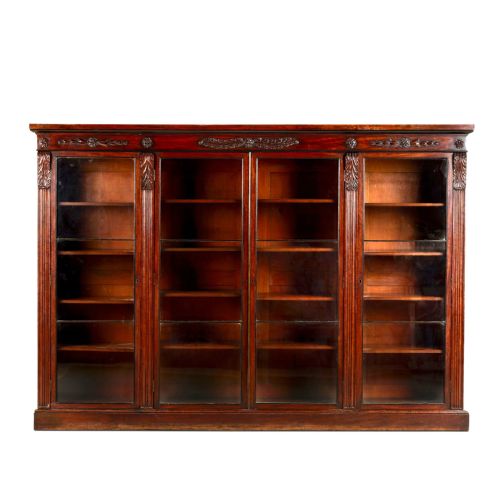
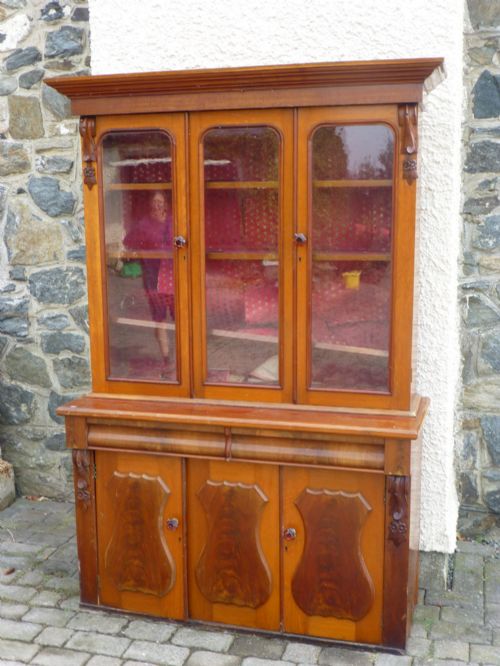
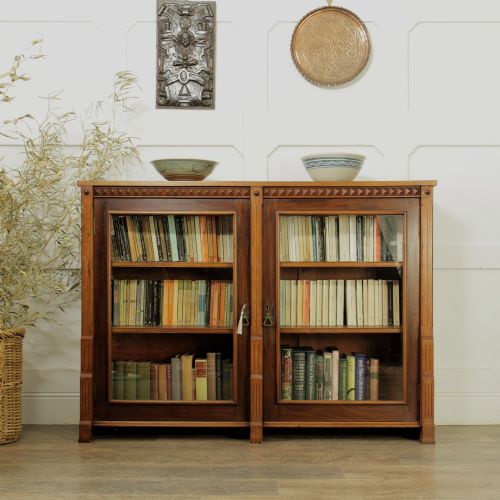
Carved Mahogany Glazed Cabinet
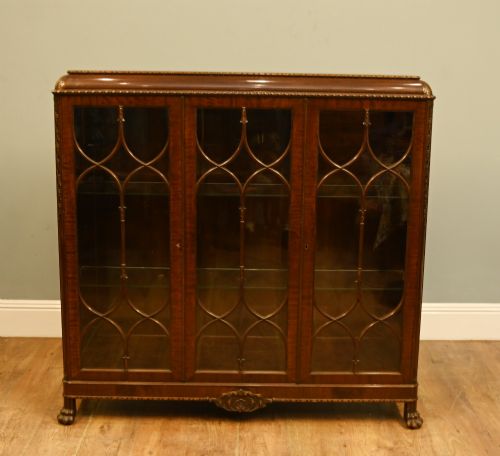
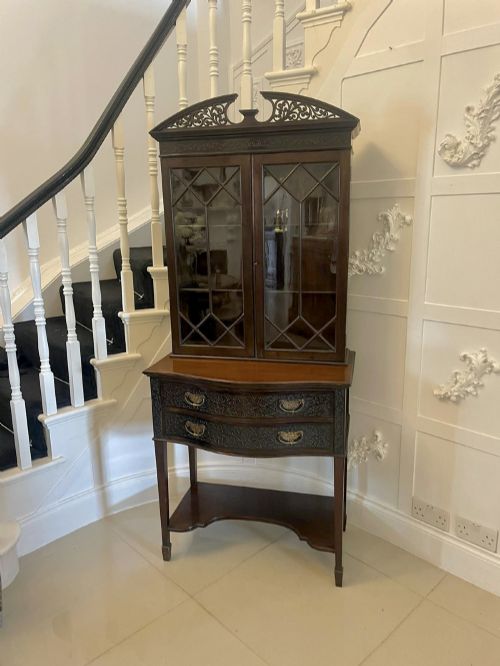
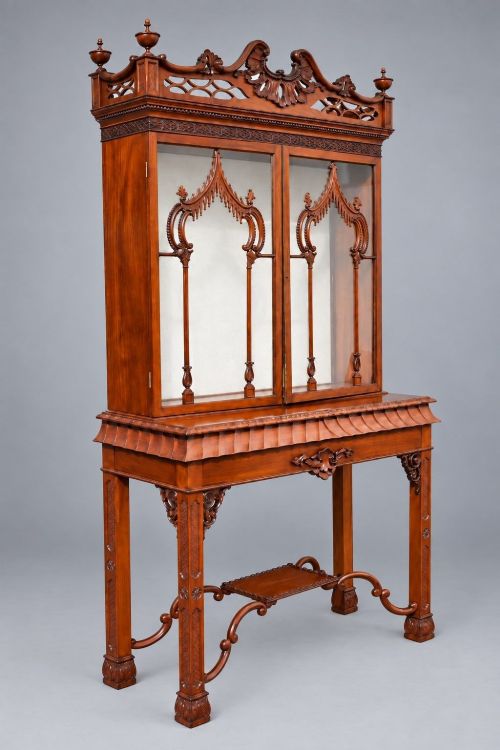
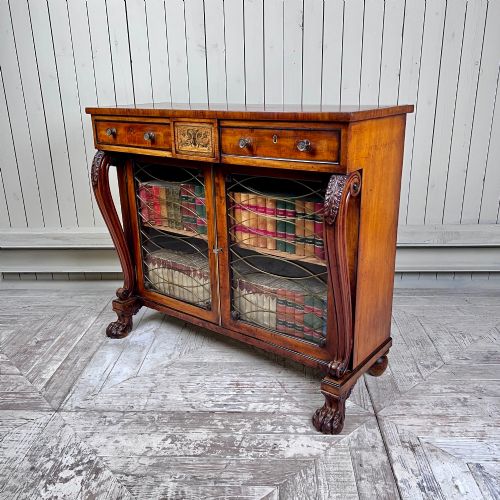
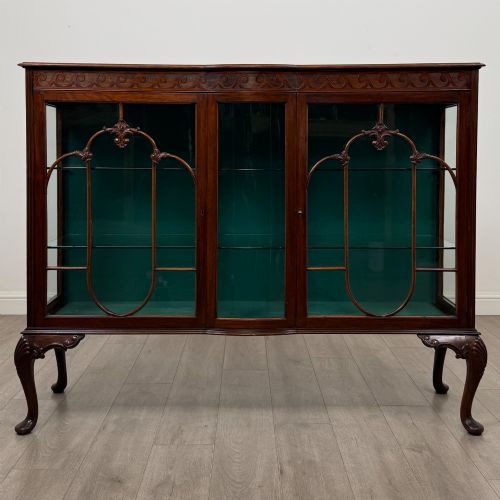
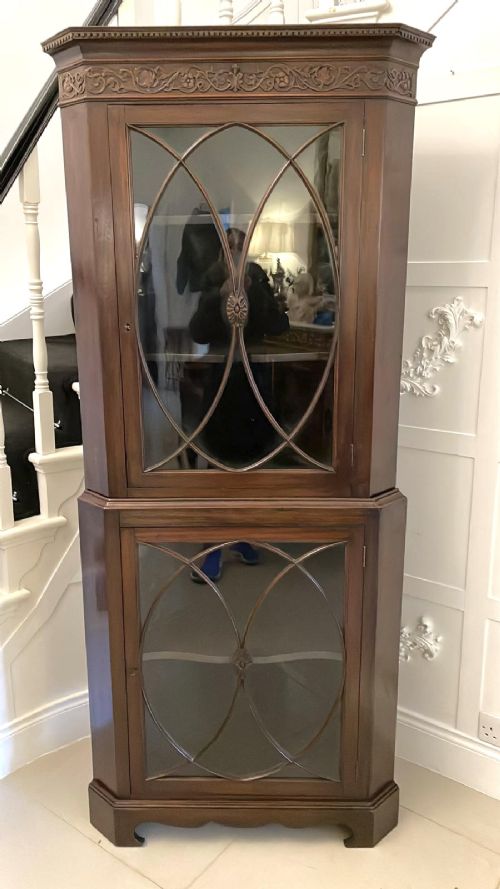
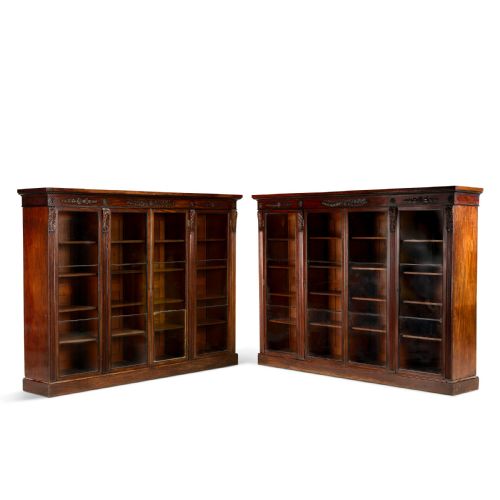
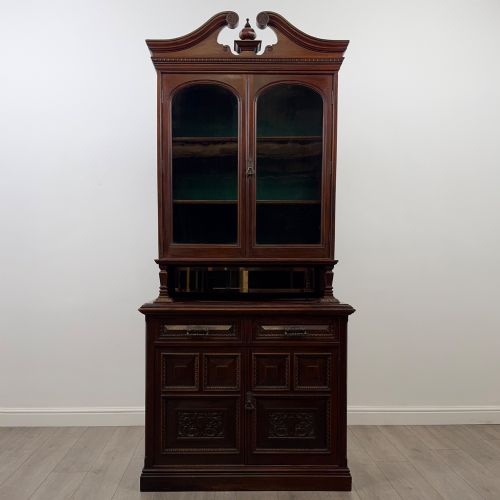
A carved mahogany glazed cabinet brings structured timber and clear display together, holding books and porcelain behind fitted glass.
Carved Mahogany Glazed Cabinet
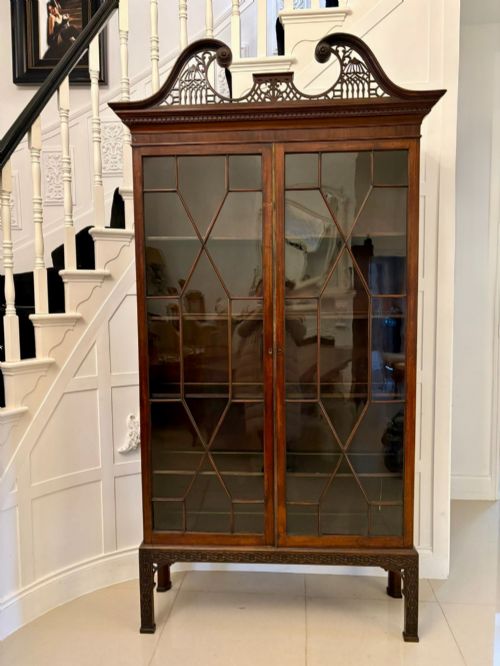
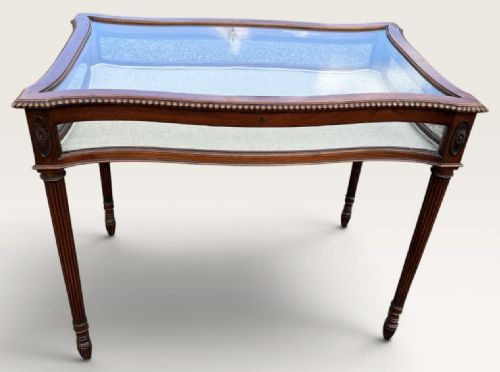
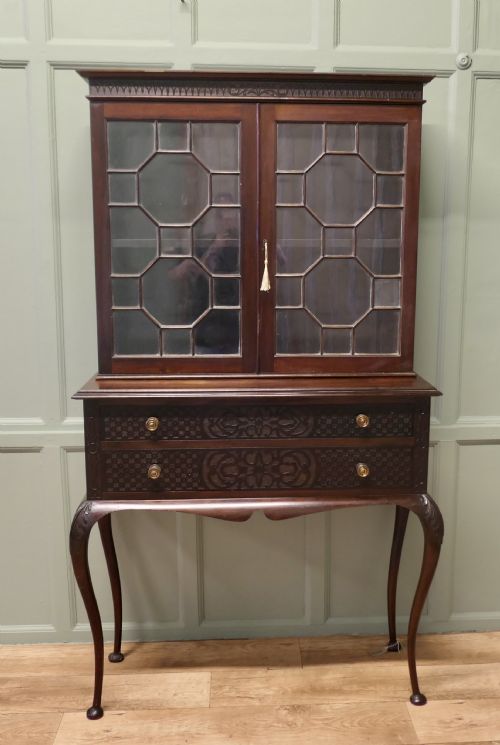
A carved mahogany glazed cabinet merges timber storage with transparent display, holding everything from library books to porcelain and curiosities. You encounter these primarily in Victorian, Edwardian, and Regency forms, spanning tall bookcases, corner units, and low display tables.
The objects take many functional shapes across this selection, including breakfront libraries, bureau cabinets, and mirror-back sideboards. Victorian and Edwardian examples dominate the offerings, often drawing on Chippendale revival motifs or simple glazed framing to exhibit collections.
How they were made
Cabinet makers constructed these pieces principally from solid and veneered mahogany, frequently incorporating glass panes within astragal frames of wood or brass. Secondary woods like oak appear in structural interiors, while walnut, ebony, and mirror glass provide contrasting accents and backings.
Joinery techniques combined traditional carcass construction with hand-carved decorative flourishes, particularly along cornices and bracket feet. Glazing bars were meticulously fitted to hold individual glass panels securely within doors that opened on brass hinges.
The listings span the nineteenth and twentieth centuries, incorporating Victorian, Edwardian, and Regency periods alongside Chippendale revival styles.
What varies in quality
The refinement of the timber and the depth of the carving determine the standing of each piece, distinguishing utilitarian storage from grand drawing-room furniture. Dense, richly figured mahogany grain paired with crisp, undercut wooden ornamentation indicates superior workshop execution.
Proportion and the integration of secondary materials like brass inlay or fitted mirrored backs set finer examples apart. The precision of the glazing bar assembly and the weight of the glass further reflect the original maker's investment in time and materials.
Maple & Co.·James Winter & Sons
The Carved Mahogany Glazed Cabinet Glossary
- Astragal
- Moulding framing the individual glass panes within a cabinet door. These slender wooden strips divide the large opening into smaller geometric sections.
- Bijouterie
- A low display table or cabinet designed specifically for small valuables and trinkets. Glass tops and shelves allow viewing from multiple angles.
- Breakfront
- A large cabinet design where the central section projects forward from the flanking wings. This architectural arrangement creates shadow and depth across the front elevation.
- Chiffonier
- A low sideboard or small cupboard cabinet developed in the Regency period. Many versions include glazed upper shelving or bookcase sections.
- Serpentine
- A curved shape undulating outwards at the centre and inwards at the sides. This flowing line softens the rigid geometry of standard timber carcasses.
Carved Mahogany Glazed Cabinet: Frequently Asked Questions
How do I clean the glass?
Use a soft microfibre cloth with a mild vinegar solution applied to the cloth rather than directly onto the wood. Keep moisture away from the timber frame and carved joints to protect the antique finish.
Dry the glass thoroughly immediately afterwards to prevent streaks and protect old putty or glazing beads from prolonged dampness.
Where should I place a cabinet?
Position your piece away from direct sunlight and strong heat sources such as radiators to prevent the mahogany timber from drying out and splitting. Stable indoor humidity keeps wood movement to a minimum.
Ensure the floor is level so the heavy glazed doors hang true and latch properly without straining the original hinges and framework.
How do I identify the period?
Examine the timber finish, hardware style, and structural characteristics against known design eras like Regency or Edwardian. Regency pieces often lean towards brass inlay and classical restraint, while Edwardian items frequently show lighter proportions.
Look for interior construction details and secondary woods like oak or pine, which help narrow down the manufacturing decade when combined with exterior stylistic cues.
Can shelves be adjusted?
Most antique cabinets feature fixed wooden supports or traditional notched interior uprights rather than modern metal peg systems. Altering shelf heights usually requires professional intervention to preserve the original interior lining.
Plan your display items around the existing shelf spacing, as historical pieces were built for specific utilitarian purposes like folio storage or porcelain sets.